Unpaid care is Africa's hidden brake on growth
Care infrastructure, childcare and fairer norms could free women's time and lift growth before rising elder care deepens the burden.
Every economy runs on work that never appears in its national accounts. Cooking, cleaning, fetching water and caring for children, the sick, and the elderly keep households and labour markets functioning, yet this work is rarely counted, let alone planned or paid for. Africa risks lower, less inclusive economic growth over the next 20 or so years if steps are not taken soon to recognise the disproportionate role women play in providing care and domestic work, and the value they add by supporting the continent’s growing population.
Although rare, some African countries have recently begun to recognise the value of care and domestic activities. In 2025, the Kenyan National Bureau of Statistics estimated the economic value of unpaid care at 23.1% of GDP for 2021, ranking behind only agriculture in terms of Gross Value Added by sector in the Kenyan economy. The gender inequality inherent in these activities becomes clear when looking at time-use data, with women putting in more than five hours of that work for every hour contributed by men.
Kenya is, of course, far from unique. Across sub-Saharan Africa, women spend about 3.7 hours a day on unpaid care and domestic work, compared with 1.2 hours for men (UN data, Chart 1). In North Africa and West Asia, the imbalance is closer to 5:1. Importantly, this burden is not only a question of fairness but also shapes who can work, study and earn, and therefore how fast African economies can grow.
The International Labour Organisation (ILO) estimates that care responsibilities kept 708 million women out of the labour force worldwide in 2023, compared with 40 million men. In Africa, there is a distinct difference between North and sub-Saharan Africa: care is the reason given by 28% of women for being outside the labour force in sub-Saharan Africa, and by 63% in North Africa. However, a large share of the women who do work in sub-Saharan Africa do so informally, as it provides the necessary flexibility to balance care work with employment.
African Futures modelling shows how slowly this gap in participation is likely to change. On the Current Path, the gap between men's and women's labour force participation in Africa narrows from 17 percentage points in 2019 to only 10 by 2043. An aggressive but realistic reduction in this gap could have clear benefits for Africa's economy: it would be US$148.2 billion larger in 2043 than it would be on the Current Path, or the business-as-usual forecast. A more holistic intervention which encompasses reductions in gender gaps in education, reproductive rights, nutrition and political participation would have a much bigger effect: raising output by US$259.4 billion in 2043, highlighting the need for interventions across societies.
Why, then, does the imbalance persist? Part of the answer lies in social norms. Africa scores 40 on the OECD's Social Institutions and Gender Index, a level classified as high discrimination, and its score for discrimination within the family is the highest of any region. A new OECD study finds that 96% of Ivorians believe men should be the main providers, while about two-thirds of women and men say men should not do care work because it is 'a woman's job'.
Changing these norms is the most durable solution to gender gaps in unpaid care and domestic work, but also the hardest to achieve. Encouragingly, the same study finds that Ivorians overestimate how conservative men are, suggesting that a more equal division of care may be more acceptable than it appears. Paternity leave and programs that engage men and boys can build on this. Yet norm change takes time, while the care burden grows more complex as child dependency falls and the need for specialised care for an ageing population increases with life expectancy and the prevalence of non-communicable diseases expected to rise. In the meantime, the more immediate lever is to make care lighter for whoever does it.
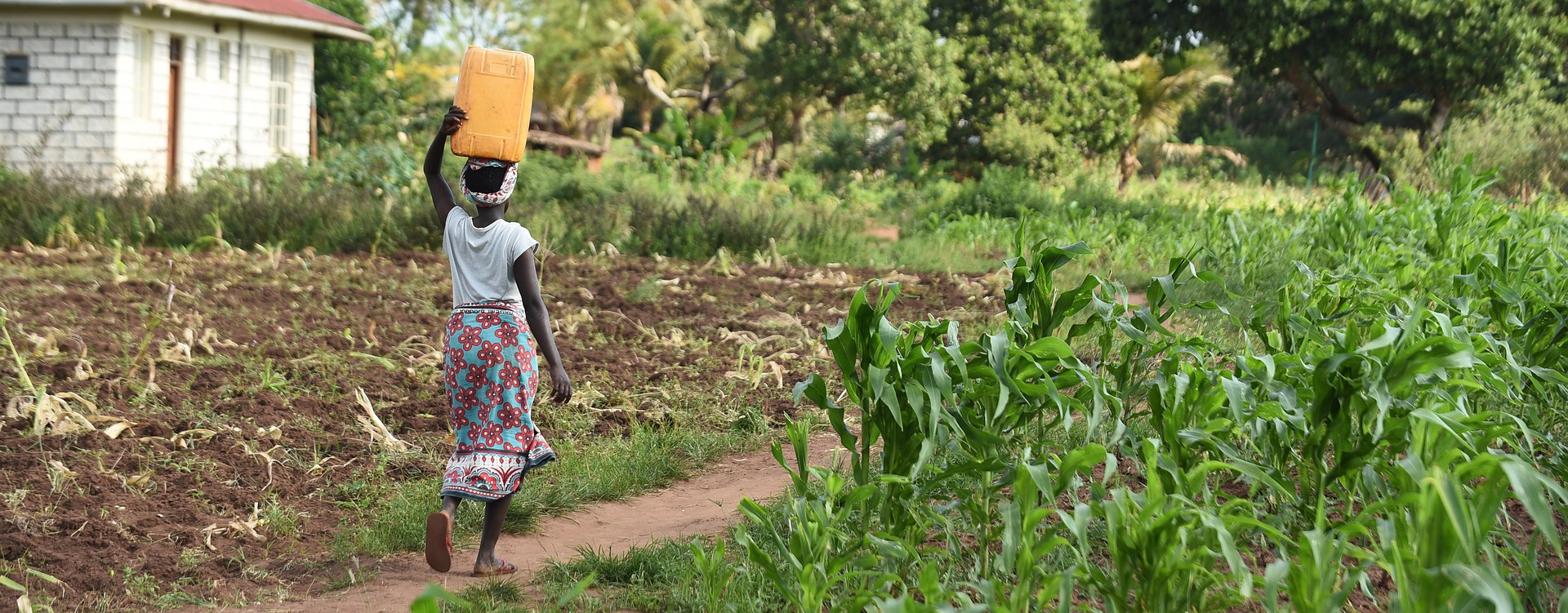
Infrastructure offers a double return. Worldwide, women and girls are the main water collectors in 7 of 10 households without water on the premises. Sub-Saharan African countries account for the majority of countries where water still needs to be collected off-premises, and in all of them, women and girls are the ones chiefly responsible. About four in five people living in sub-Saharan Africa still cook with polluting fuels, and the International Energy Agency estimates that clean cooking would save households about 1.5 hours a day, globally. On both fronts, Africa will continue to struggle for the foreseeable future: by 2050, 1.1 billion Africans will still lack access to safely managed water, while 28.8% of households will still use traditional cookstoves that burn polluting fuels.
The benefits of closing these infrastructure gaps extend well beyond women's time. Household air pollution caused 2.9 million deaths worldwide in 2021, with women and children bearing the brunt of the burden due to increased levels of exposure, while fuel collection exposes them to skeletal injury and violence. In South Africa, rural electrification raised women’s employment within five years. Taps, power lines and clean stoves are, in effect, care policies, and they make communities healthier, safer and more productive.
Taps, power lines and clean stoves are, in effect, care policy, and they make communities healthier, safer and more productive
Childcare is the next crucial piece of the care and domestic work puzzle. First, it frees mothers to earn: subsidised daycare in Nairobi's informal settlements raised mothers’ employment by 8.5 percentage points. Childcare at public works sites in Burkina Faso increased women's salaried work and earnings. Second, it builds human capital. Children in the Burkina Faso trial developed better motor skills, and in a DR Congo pilot, children's development scores rose by 7% as mothers' incomes grew by more than a fifth. Across 12 low- and middle-income countries, children who attended early childhood programs stayed in school a year longer and later held more skilled jobs.
Third, childcare creates employment. Turning care into paid work is a promising strategy, but one that requires scrutiny. The ILO estimates that investing in childcare, long-term care and care leave could create up to 299 million jobs worldwide by 2035. Yet many existing care jobs are among the worst paid: 81% of the world's domestic workers are informal, and most lack basic protections, with a third not entitled to annual leave or covered by laws on weekly rest. Moving care from unpaid to underpaid and underprotected work misses the opportunity of creating decent work, which would be a more resilient and effective long-term development strategy for Africa.
Moving care from unpaid to underpaid and underprotected work misses the opportunity to create decent work
The care challenge will change over the next few decades. Africa's population aged 65 and over is projected to more than triple, from about 51 million in 2022 to 163 million by 2050. That care comes almost entirely from families, mostly women, and carries financial, psychological and physical dangers for caregivers over the long term. Longer life expectancies also mean this care will have to be provided for a longer time, adding to the opportunity cost of family members who are not able to undertake paid employment, gain education or suffer from deteriorating health.
The ILO's 5R framework, recognising, reducing and redistributing unpaid care work while rewarding and representing care workers, points to five priorities for African countries:
The first step is simply to count care. Regular time-use surveys and satellite accounts such as Kenya's should inform national budgets, closing one of the gender data gaps that leave policymakers blind to women's realities. Crucially, the generation of these data must be prioritised in national budgets, especially as external funding continues to decline.
Second, water, energy and transport should be treated as care infrastructure and judged partly by the hours they return to households, starting in rural areas, where access is weakest.
Third, governments should expand affordable care for young and old through existing systems, such as public works, health hubs and schools, and community-based support for older people and their carers, starting where access is weakest, given that long-term care is nearly non-existent in most African countries.
Fourth, care should be shared more equally. Men do more unpaid care when fathers have longer paid leave, yet 39% of countries worldwide offer fathers no statutory leave. Paid paternity leave and programmes that engage men and boys can turn shifting attitudes into practice.
Fifth, paid care must be decent work, with minimum wages, social protection, training for domestic and care workers, and the right to organise and bargain collectively.
Funding will remain a challenge for countries with limited tax bases and high debt-servicing costs, but the investment partly pays for itself: ILO modelling suggests that at least 17.5% of additional public spending on care is recovered in the short run through tax revenue. Phasing investment, using public works and social protection budgets, and improving how taxes are targeted and collected can expand fiscal space for the rest.
Africa's long-term development plans already rely on women's unpaid time. The sooner governments recognise and invest in care, the faster women, children and older people alike will be able to share in the continent's growth.
Image: alkags/Pixabay
Republication of our Africa Tomorrow articles only with permission. Contact us for any enquiries.