Fairer global finance starts with the G20

A global system that prices Africa out of development will not change unless borrowing costs reflect economic fundamentals, not distorted perceptions.
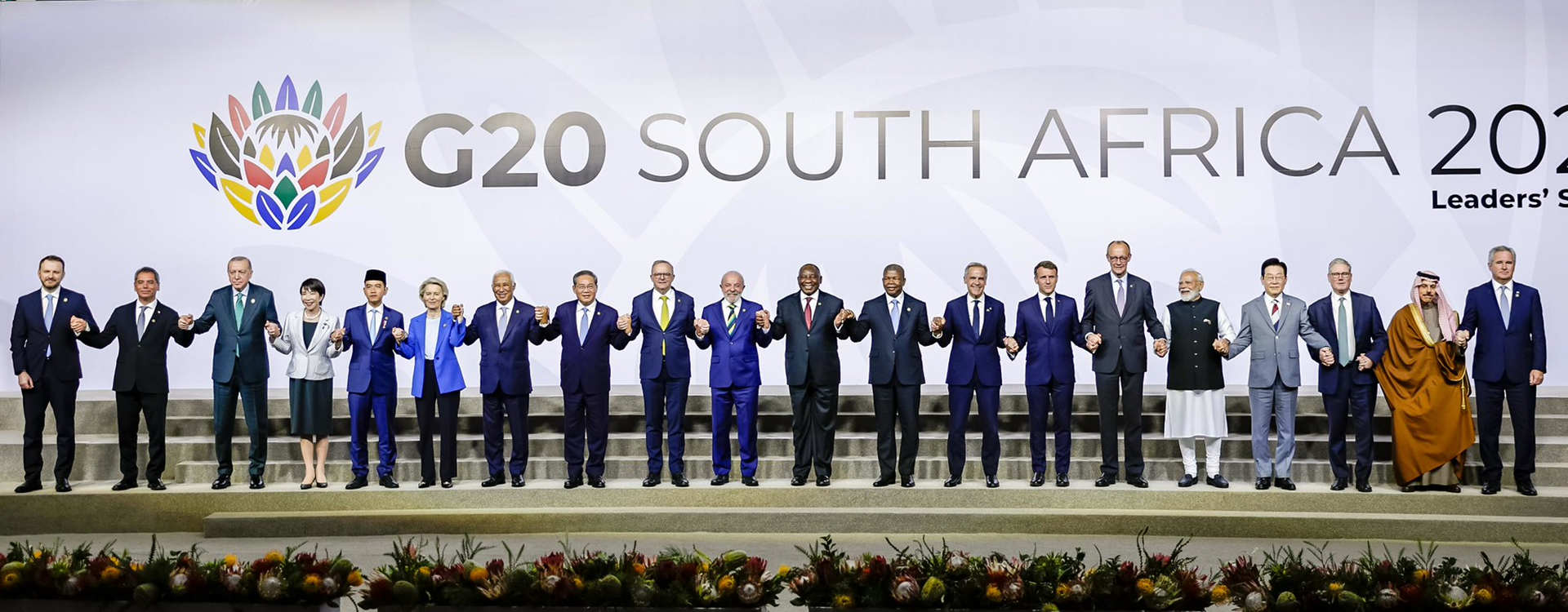
The G20 South Africa Summit has wrapped. Africa has long been clear about what it wants from the global system: a fairer cost of capital, a rebalanced financial architecture and an end to paying a premium simply for being on the wrong side of global perceptions. South Africa’s G20 presidency placed these issues at the centre of this year’s agenda, but a defining question remains. Will the commitments agreed under South Africa’s leadership translate into a real shift in how global finance prices African risk?
The outcomes matter because the current system leaves African countries absorbing costs that are often disproportionate to those of their peers. Countries like Senegal, with a debt-to-GDP ratio of around 110 per cent, have faced double-digit yields on certain international bonds, and Ghana, with a debt-to-GDP ratio of roughly 45 per cent, was paying high interest even before its debt crisis. By contrast, Italy, with a debt-to-GDP ratio above 137.9 per cent, can borrow at much lower rates, currently around 3-4%. A similar imbalance is visible in South Asia: Sri Lanka, with debt levels comparable to Italy, defaulted in 2022 after facing double-digit borrowing costs. These numbers underline a structural imbalance that the G20 acknowledged, yet it did not meaningfully confront the underlying distortions that leave Global South countries, especially Africa, paying a premium simply for being perceived as riskier.

The 2025 Leaders’ Declaration addresses many of Africa’s financing constraints directly. It highlights Africa’s rising debt burden, currently estimated at US$1.8 trillion, noting that many countries now spend more on interest payments than on essential public services. The Declaration recognises that high debt levels are undermining inclusive growth in many developing economies, with low- and middle-income countries facing steep financing costs, heavy external refinancing pressures and persistent capital outflows. It also points out that interest payments on external public debt have more than doubled for low-income countries over the past decade, highlighting how the global cost of capital continues to erode fiscal space.
To address these challenges, the G20 committed to mobilising concessional financing, blended finance structures and broader risk-mitigation instruments to support energy transitions and other development priorities. It also reaffirmed the need for stronger multilateralism, comprehensive global governance reforms and a greater voice for developing economies in institutions such as multilateral development banks (MDB).
These are important points, showing that G20 leaders recognise the challenges facing many African and other developing countries. Still, the Declaration avoids the central issue: the cost of capital. Without fixing the factors that make borrowing expensive, the commitments risk becoming another cycle of well-intentioned language that fails to shift outcomes on the ground.
Without fixing the factors that make borrowing expensive, the commitments risk becoming another cycle of well-intentioned language that fails to shift outcomes on the ground
African economists and debt practitioners have been clear about the underlying problems that shape Africa’s borrowing environment and have repeatedly warned that structural distortions remain. Their arguments align with those of policymakers on the continent who have long made similar claims.
The first distortion is risk perception. African nations are often hit with higher borrowing costs, driven as much by investor sentiment as by economic reality. Credit rating methodologies tend to be narrow, unclear and pro-cyclical. They often fail to account for structural reforms or resilience measures, and they react excessively to global shocks even when domestic policy remains stable. Structural and institutional challenges amplify the impact of these distortions. The proposed Cost of Capital Commission is meant to correct this imbalance, but meaningful change will require enforceable standards and international coordination, not just oversight. As an additional measure, the Africa Credit Rating Agency, set to launch in Mauritius in 2026, aims to provide Africa-centric credit ratings that challenge the continent’s embedded risk premium, deliver assessments that better reflect domestic realities, and reduce reliance on dominant global agencies.
The second distortion is the absence of affordable countercyclical finance. When global markets tighten, countries with limited domestic capital are forced to borrow at the worst possible time, paying higher costs that compound over time. This was evidenced during the COVID-19 pandemic, when many African countries accumulated high debt levels to finance fiscal measures, while simultaneous credit rating downgrades drove up debt-servicing costs.
The third distortion is the widening gap between MDB finance and commercial bond markets. African countries pay up to 500 per cent more when borrowing from global markets compared to MDB rates. Expensive debt limits long-term planning, delays critical infrastructure, weakens climate resilience and diverts resources from essential public services.
These concerns are not theoretical. In November 2020, Zambia defaulted on a US$42.5 million Eurobond payment, triggering spending cuts. To restore fiscal balance, it was instructed to implement austerity measures, such as eliminating fuel and electricity subsidies. While these steps were aimed at stabilising public finances, they imposed heavy social costs: higher transport prices in remote areas disproportionately impacted low-income households, and rising electricity tariffs strained households. Such experiences explain why South Africa’s message during the G20 presidency was so direct.
The challenge is not just economic; it is also geopolitical, as global power dynamics continue to shape African finance. The global financial architecture reflects the distribution of power at the time it was created rather than the world as it is today. Africa’s demographic, urban and economic weight is rising, yet its influence within the institutions that set the rules of global finance remains limited.

The G20’s commitments, such as enhancing MDB capital, expanding Special Drawing Rights (SDR) channels and supporting liability-management operations, are steps forward, but they do not change the structural imbalance. Most commitments are voluntary, with no obligation for the actors who most influence pricing to change their practices. Africa is asked to meet global expectations on climate, development and governance, but to do so within a financial system that disadvantages it from the outset.
If the system remains unchanged, the consequences for African economies will deepen. High borrowing costs shrink fiscal space faster than domestic reforms can rebuild it. Refinancing risks make countries more vulnerable to external shocks. Investments in renewable energy, digital infrastructure and regional integration slow down. Development stalls, even as governance improves. The longer the global system delays a structural fix, the more costly Africa’s development becomes and not because of mismanagement, but because of a financial architecture that has not been updated.
South Africa’s presidency successfully put Africa’s concerns at the centre of the conversation. The task now is to move from acknowledgement to correction. Three actions matter most and must follow the 2025 G20 Summit with immediate action.
South Africa’s presidency successfully put Africa’s concerns at the centre of the conversation; the task now is to move from acknowledgement to correction
First, access to low-cost, long-term finance must be expanded. MDBs should lend more at concessional rates, offer better risk guarantees and utilise pledged (callable) funds actively. SDRs should be used to directly lower borrowing costs instead of sitting idle.
Second, credit rating standards must be reformed. African nations need predictable and transparent methodologies that are less tied to short-term market swings. This would not remove risk premiums but would stop excessive interest rates from rising debt burdens, even for well-managed economies. At the same time, African countries must strengthen the availability and quality of economic data, enabling rating agencies to make fairer, more accurate assessments and limiting the scope for subjective judgements.
Third, a preventive global debt framework must be built.Tools such as structured refinancing, countercyclical lending and stronger debt management would reduce volatility and prevent countries from borrowing at peak market stress.
South Africa’s G20 presidency made the issues clear, but the Leaders’ Declaration did not resolve them. Closing the cost-of-capital gap is not special treatment. It is a correction of systemic distortions that limit growth in the world’s youngest and most dynamic region.
If the global community wants real progress on debt sustainability, climate transitions and inclusive development, Africa cannot remain trapped in a system that treats it as a high-risk borrower regardless of evidence
If the global community wants real progress on debt sustainability, climate transitions and inclusive development, Africa cannot remain trapped in a system that treats it as a high-risk borrower regardless of evidence. The G20 may have ended for the year, but the structural issue it highlighted remains urgent. Fixing it is not only possible, it is important for global stability. A fairer financial system benefits everyone.
Image: Lula Oficial, Ricardo Stuckert/Flickr
Republication of our Africa Tomorrow articles only with permission. Contact us for any enquiries.