Djibouti’s path from debt-financed growth to inclusive transformation
Why governance and economic diversification will determine whether the country realises its Vision 2035 goals.
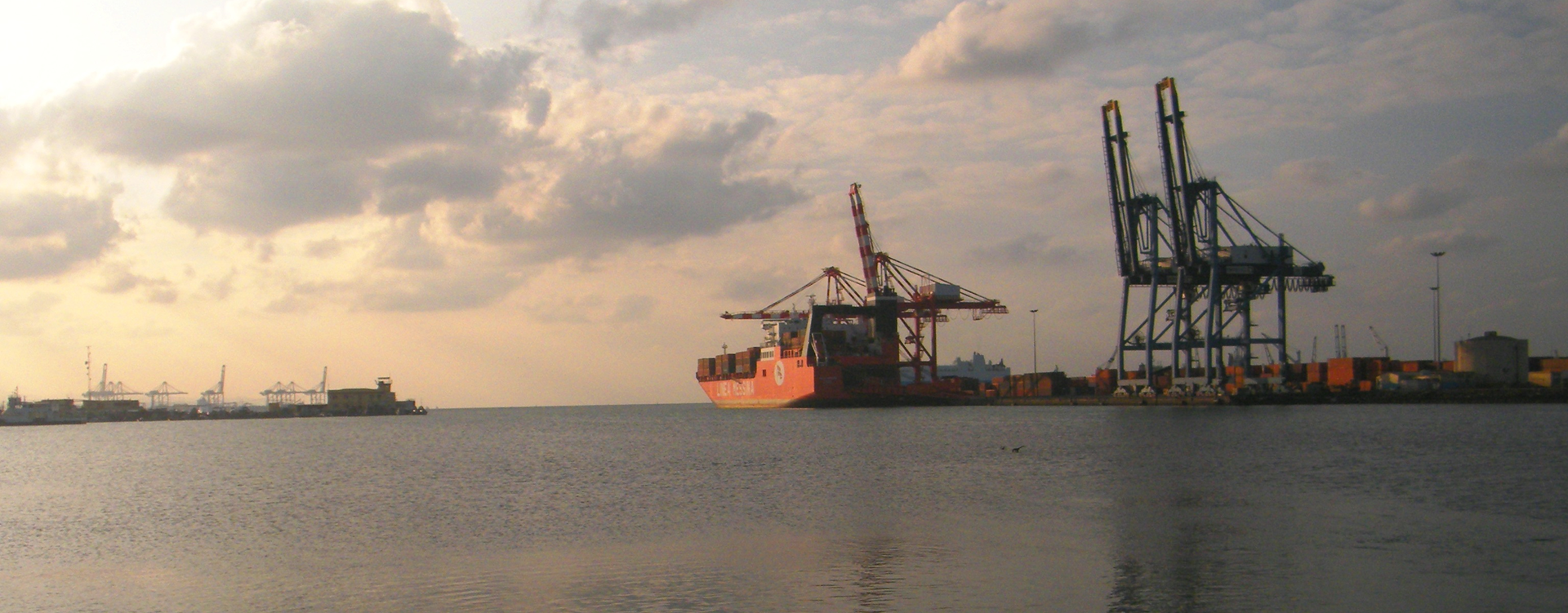
Djibouti’s development story has long been shaped by its geographical location. Positioned at one of the world’s most strategic maritime chokepoints, the country has leveraged its location to build a logistics- and corridor-based economy centred on ports, trade facilitation and connectivity. This model has delivered sustained growth and positioned Djibouti as a critical gateway for regional and global trade.
Yet, as Djibouti looks ahead to 2043, the end of the African Union’s third ten-year implementation plan of Agenda 2063, it faces a defining policy question: Can this growth model deliver inclusive, resilient and sustainable development?
Recent scenario-based analysis by ISS African Futures shows that while Djibouti’s business-as-usual “Current Path” trajectory is positive, it will not be sufficient to achieve the ambitions of Vision Djibouti 2035. The country is entering a new phase of development where the binding constraints are no longer infrastructure gaps, but the efficiency, inclusiveness and sustainability of its economic model.
In the Current Path, Djibouti’s economy will grow steadily, with GDP tripling by 2043, GDP per capita almost doubling and poverty declining significantly. Much of this growth will continue to be driven by services linked to logistics, ports and corridor activity.
However, the structure of this growth remains problematic. It is heavily dependent on external debt-financed infrastructure development and Ethiopia-linked trade activity. As a result, economic expansion has not consistently translated into broad-based job creation or rising household incomes. World Bank estimates place youth unemployment (ages 15–24) at 76.8% in 2025. Although informality is expected to decline gradually over time, a large share of the workforce remains trapped in low-productivity activities with limited income security.
Djibouti’s current growth model is heavily dependent on external debt-financed infrastructure development and Ethiopia-linked trade activity
Djibouti’s public debt has nearly doubled from 34.9% of GDP in 2013 to 68.9% in 2024, largely driven by major infrastructure projects such as the Djibouti–Addis Ababa railway, the Doraleh multipurpose port, the Port of Ghoubet, and the Ethiopia–Djibouti water pipeline. The World Bank's Systematic Country Diagnostic (SCD) and the IMF’s 2025 Article IV reports caution that the country’s debt-driven infrastructure strategy, while instrumental in expanding ports, transport corridors and regional connectivity, has created significant fiscal vulnerabilities and heightened exposure to external shocks, limiting the state’s capacity to finance inclusive development.
Djibouti also remains highly vulnerable to external shocks because of its narrow economic base. Over 80% of port activity is linked to Ethiopia, exposing the economy to significant concentration risk.
Governance challenges add another layer of risk. According to the Ibrahim Index of African Governance (IIAG), Djibouti’s improvements in economic opportunity, human development, participation, rights and inclusion since 2014 have been partly offset by deteriorating performance in security and the rule of law. These governance weaknesses increasingly undermine private sector participation and foreign direct investment (FDI), while also limiting domestic resource mobilisation and the equitable distribution of economic gains.
The IIAG also shows that Djibouti’s overall governance performance remains below both the African average and the Eastern Africa regional average, underscoring the persistence of structural governance weaknesses and the need for sustained institutional reform.
Climate pressures and spatial concentration further compound these vulnerabilities. Djibouti is among the world’s most arid countries, with nearly 90% of its land classified as desert and very limited agricultural production capacity. In 2024, only 38.6% of the country’s roughly 1 010 hectares of land equipped for irrigation were utilised, reinforcing the country’s dependence on food imports and its exposure to climate-related supply disruptions. At the same time, more than 60% of the population is concentrated in Djibouti City, placing mounting pressure on housing, water systems, infrastructure and public services, while intensifying both fiscal and environmental stress.
Addressing these challenges will require a stronger policy focus on governance reform, sustainability, economic inclusion and reducing structural dependency.
Governance reforms are central to crowding in private investment and supporting economic diversification, both of which are critical for easing the government’s fiscal burden, creating jobs and strengthening economic resilience. This is particularly important at a time when rising debt-servicing obligations are constraining public spending capacity and limiting the state’s ability to finance development priorities independently.
A key finding from the ISS African Futures analysis is that governance reforms will deliver the largest gains in income per capita and poverty reductions across all modelled scenarios.
This highlights the pivotal role of state capacity in determining how effectively economic growth translates into development outcomes. Stronger institutions improve policy implementation, public debt management, productivity and domestic resource mobilisation. They also enhance the investment climate and increase the efficiency of public spending, helping ensure that growth reaches households through stronger social and financial safety nets, better service delivery and more inclusive economic opportunities.
In Djibouti’s case, where major infrastructure investments have already been made, the marginal returns to additional investment are beginning to decline. This calls for a shift in policy priorities: from building infrastructure to maximising returns on existing assets; from accumulating capital to improving productivity; and from pursuing growth alone to ensuring that growth is inclusive, resilient and sustainable. Achieving this transition will require stronger institutions, better policy coordination and a more effective public sector.
Djibouti’s next development phase will depend on how effectively it leverages its strategic location, maximises returns on existing infrastructure and improves productivity
The ISS African Futures analysis highlights the importance of complementing infrastructure development with reforms that support productivity and job creation. Even a modest expansion in manufacturing could help diversify the economy and generate employment opportunities. At the same time, improving education and skills development will be critical to aligning the labour force with the demands of a modernising, services-driven economy.
Regional integration presents another important opportunity. Through the African Continental Free Trade Area (AfCFTA), Djibouti can move beyond its role as a re-export hub towards greater participation in regional value chains. However, this will require strengthening domestic productive capacity and improving competitiveness.
As a result, the most transformative outcomes emerge when complementary reforms are implemented simultaneously. In a transformative “Combined” scenario, where governance, education, manufacturing, agriculture, health and demographics, trade, strategic infrastructure and financial reforms reinforce one another, Djibouti’s growth accelerates significantly, and development outcomes improve across the board.
In this scenario, average annual growth will reach 8.9% between 2025 and 2043, meeting the Vision 2035 target range. Per capita income will triple by 2043, albeit later than envisioned in the Vision 2035; poverty (at the US$4.20 poverty line) will decline to low levels; and informality will fall to about one in seven workers by 2043. The overall structure of the economy will begin to shift, with gradual diversification into manufacturing and ICT.
These findings point to a critical lesson for African countries: sustained development is not driven by isolated interventions, but by the interaction between complementary reforms. With coordinated policy action, countries can accelerate their development trajectories and move closer to achieving the ambitions of national development plans and Agenda 2063. Without such reforms, progress is likely to continue, but at a slower pace and with more limited economic gains for the broader population.
Djibouti has already laid many of the foundations for this transformation through strategic investments in infrastructure and connectivity. The challenge now is to ensure that these foundations support a more inclusive, resilient and sustainable development pathway.
Image: Skilla1st/WikimediaCommons
Read the full recently updated country analysis of Djibouti here.
Republication of our Africa Tomorrow articles is only with permission. Contact us for any enquiries.