Cameroon’s agriculture must perform, not just produce
Structural constraints, rather than market access, will determine whether Cameroon benefits from the integration of continental trade.
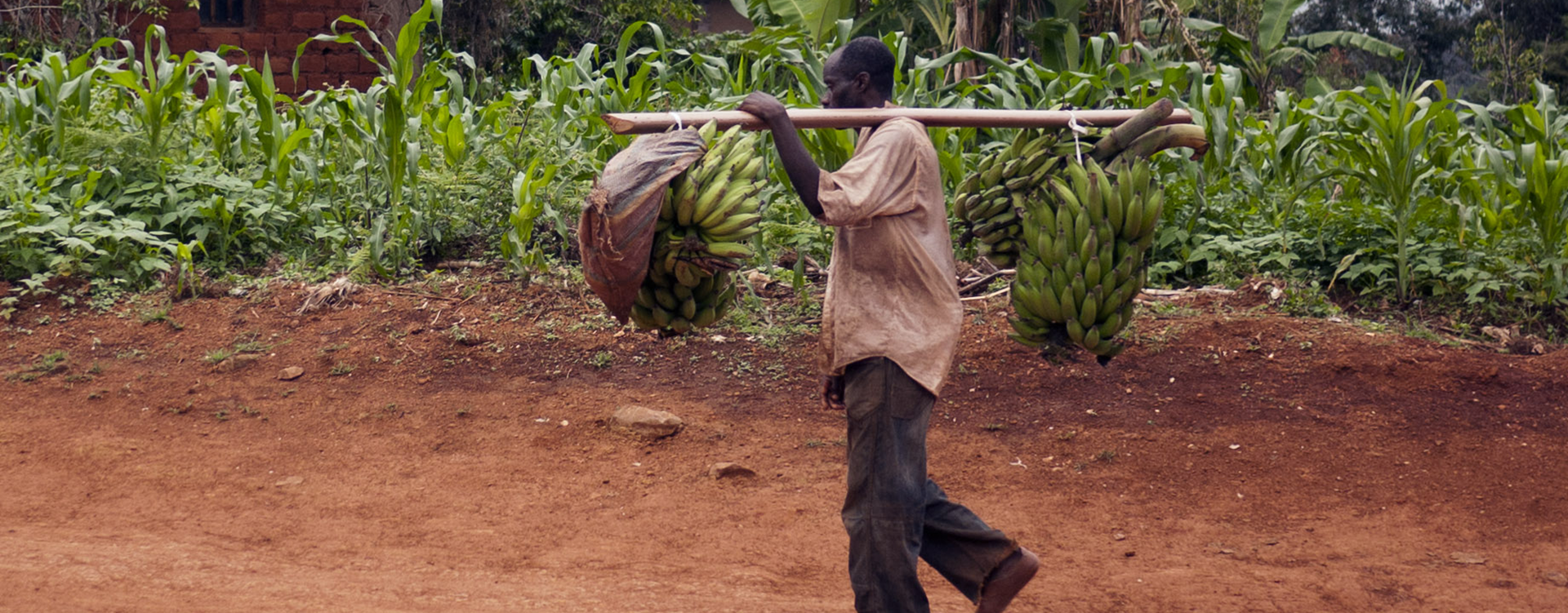
Cameroon is widely regarded as one of the African countries with the most diverse agricultural potential, spanning humid forests in the south, fertile highlands in the west, savannahs in the north and a coastline on the Gulf of Guinea. This agro-ecological diversity provides a strong production base, supporting a broad range of crops and livestock, and making the country one of the continent’s agricultural breadbaskets. Key outputs include cocoa, coffee, cotton, maize, cassava, cooking bananas, oil palm and rice. Cameroon is the second-largest exporter of plantains in Africa, producing over 5.4 million tons annually and exporting 210 686 tons, and it is the eighth-largest exporter of fresh latex, among other flagship products.
These strong agricultural trends are reflected in key economic indicators. The primary sector accounted for 19% of Cameroon’s GDP in 2023, with agriculture alone representing 13% of GDP. The share of agricultural value added in GDP stood at 17.44% in 2024, and it accounts for a large proportion of non-oil exports. Agriculture employs about 45% of the working population, particularly the young (60% are under 30), although a larger share of the population depends on it for livelihoods, particularly in rural areas.
Despite this economic weight, the sector’s contribution has not translated into broader outcomes. Indicators of inclusive growth are low and cause for concern. In 2025, Cameroon’s Human Development Index (HDI) stood at 0.59, ranking 155th out of 193 countries globally. Cameroon is a lower-middle-income economy with a GNI per capita (PPP, constant 2021 US$) of around US$4 880 in 2024. In the same year, the youth unemployment rate (15–35 years) and underemployment combined reached an alarming 74%. Approximately 46.4% (around 13.2 million people) of Cameroonians are living below the US$3.65 per day poverty line (measured at 2017 PPP for lower-middle-income countries) and face significant regional development disparities. This socio-economic situation highlights a central challenge: strong agricultural potential does not automatically translate into sector competitiveness, and growth and social well-being outcomes are not guaranteed.
Despite its economic weight, the agricultural sector’s contribution has not translated into broader outcomes
In this context, the ratification of the African Continental Free Trade Area (AfCFTA) expands potential market access for agricultural output to over 1.2 billion consumers on the continent–particularly for key crops such as bananas, cocoa, timber and cotton. Moreover, the agreement goes beyond a simple expansion of trade areas and tax reductions; it includes specific protocols on intellectual property and investment that promote the modernisation of the agricultural sector.
However, access to a larger market does not in itself guarantee improved outcomes. Cameroon’s agricultural potential remains underutilised and the challenge lies in upgrading agricultural value chains. For example, arable land in Cameroon is estimated at around 6–7 million hectares, with total agricultural land (including pasture) at around 9.2 million hectares. This represents around 13% of the country’s land surface. Further, productivity remains modest and irrigation coverage is very limited, with less than 10%, indicating that this potential is not fully translated into output.
Cameroon’s agricultural potential remains underutilised and the challenge lies in upgrading agricultural value chains
Larger market access also does not automatically guarantee national competitiveness, particularly in the absence of strong domestic production systems and enabling infrastructure. Cameroon continues to face significant structural constraints that are likely to limit such positive externalities.
Firstly, the lack of logistics infrastructure contributes to low capitalisation of the agricultural sector. For example, the port of Douala, which handles nearly 95% of foreign trade, suffers from inadequate land connections. The national road network, particularly the vital Douala-Bangui corridor, is in a state of advanced disrepair, with around 75% deemed to be in poor or fair condition. These hurdles have a significant impact on transport costs and production losses. Nearly 27% of annual production is lost due to poor transport and handling issues.
Secondly, the weakness of the industrial sector continues to hamper the agricultural sector and the potential export competitiveness of agricultural products, particularly flagship commodities such as cocoa and rubber, which are commonly traded in their raw form. Thus, the development of specialised agro-industrial zones would help to increase exports of higher-value goods, create non-agricultural jobs and stabilise producers’ incomes.
Thirdly, the land and tax insecurity faced by Cameroonian farmers exposes them to the risk of land expropriation and, consequently, jeopardises crop regularity and agricultural efficiency. Agricultural credit schemes, crop insurance, public guarantees and support for cooperatives could help to modernise farms. A clearer land policy would boost private investment.
Evidence from the ISS African Futures study suggests that if these structural constraints are addressed through sector-specific and cross-sectoral interventions, Cameroon could significantly strengthen its transformation.
In the Agriculture scenario, crop production will increase to 54.59 million metric tons by 2043, about 6 million metric tons above the Current Path, narrowing the production deficit to approximately 3.1 million metric tons, compared to 10.6 million metric tons under the Current Path.
In the AfCFTA scenario, trade deficit will narrow significantly to 0.73% of GDP by 2043, compared to about 3% under the Current Path. In addition, GDP per capita will rise to US$5 467 (about US$285 above the Current Path), and poverty will fall to 31.9% compared with the current 34.2%.
In the Combined scenario (representing cross-sectoral interventions), agriculture will record the largest increase in its share of GDP at 2.11 percentage points above the Current Path in 2043.
In response to the sector constraints, Cameroon’s government has already initiated several reforms. The Agropastoral Fair in Ebolowa in 2011 launched the ‘second generation of agriculture’ based on mechanisation, training and processing. Since 2021, the ‘Plan for Priority Reforms to Improve the Business Environment in the Agro-Pastoral Sector’ was launched, centred on 17 reforms divided into six areas, with a total budget of approximately 20 billion CFA francs. This plan was followed by the establishment of the Reform Monitoring Committee, which has led to concrete progress, notably the simplification of land tenure procedures, improved seed quality and support for vocational training for young people in agricultural trades. Le Plan intégré d’import‑substitution agro‑pastoral et halieutique (PIISAH) 2024‑2026, with a budget of over €2.2 billion, aims to reduce food dependency and strengthen local value chains.
Additional initiatives, such as the Agricultural Infrastructure and Value Chain Development Project (PDCVA) and the Plan régional de transport et de facilitation du transit (PRFTT), focus on improving infrastructure and connectivity, including regional transport investments alongside efforts to expand access to credit.
These efforts signal important progress in addressing structural constraints in the agricultural sector. Their impact will depend on sustained implementation and scale, as fragmented or short-term initiatives are unlikely to translate agricultural potential into sustained competitiveness.
Cameroon can therefore turn its agricultural potential into a key to success, as there is demand for its products across Africa, and a significant part of that demand remains unsatisfied. The real challenge is not to find more customers, but to become competitive enough to serve them. Success will depend less on the country’s agricultural potential and more on the government’s willingness and ability to further implement coherent, inclusive reforms that boost sector performance. Continental integration certainly offers a genuine strategic opportunity, but one that is time-limited. Countries will act swiftly to capture new market shares, making efforts to strengthen institutions, invest in high-value-added infrastructure, modernise agriculture and develop the industrial sector increasingly urgent.
Image: rbairdpccam/Flickr
Read the recently updated full country analysis of Cameroon here.
Republication of our Africa Tomorrow articles only with permission.Contact us for any enquiries.