The future of South Africa’s cities

As South Africa’s cities face mounting infrastructure, governance and inequality pressures, municipal leadership will shape their path forward.
South Africa’s next municipal elections, expected between November 2026 and January 2027, will determine far more than the political composition of local councils. They will influence whether the country’s cities become engines of growth and opportunity, or places where inequality, unemployment and governance failures intensify.
The stakes extend far beyond potholes, electricity outages or coalition politics. How South Africa’s cities and towns function will significantly influence the country’s broader development trajectory.
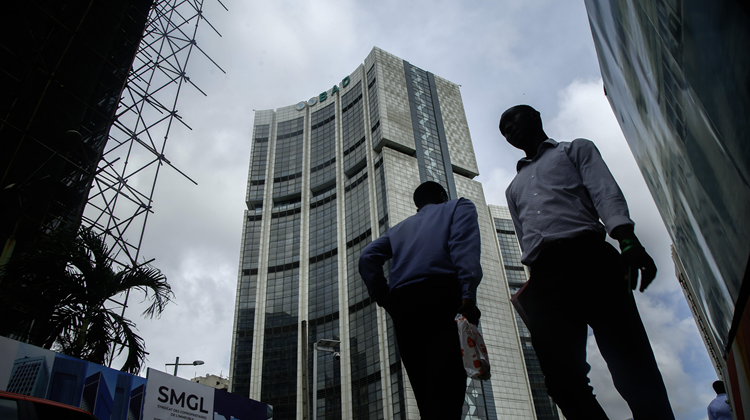
Large urban concentrations sit at the centre of South Africa’s development challenge. More than 45 million people, about 71% of the population, live in urban areas. Metropolitan municipalities account for around 55% of national GDP and more than half of all jobs, highlighting how strongly national economic performance depends on cities. Here, economic opportunity, infrastructure pressures and governance failures intersect in everyday life.
At a recent public seminar hosted by the Institute for Security Studies’ African Futures and Innovation programme, urban scholars and practitioners debated what this means for the country’s future. The discussion reflected a mix of cautious optimism about cities' potential to drive growth and inclusion, alongside deep concern about the structural challenges that will continue to constrain that potential.
As ISS African Futures head Dr Jakkie Cilliers noted in his opening remarks, urbanisation itself is not inherently the problem. The challenge rather lies in the conditions under which it unfolds, particularly when municipal capacity and governance effectiveness are weak.
The challenge lies in the conditions under which urbanisation unfolds, particularly when municipal capacity and governance effectiveness are weak
The nature of South Africa’s urban challenge is often misunderstood. The country is not urbanising at the explosive pace seen in many other African states. It is already highly urbanised, and urban growth is slowing. Yet many municipalities struggle to manage even current levels of urban demand.
Around 2.2 million households still live in informal dwellings, reflecting decades-long housing backlogs that the government has failed to resolve. Infrastructure systems are also under growing strain. The Department of Water and Sanitation’s 2023 Blue, Green and No Drop progress assessment reports found that 73% of Water Services Authorities were rated critical or poor, while municipal non-revenue water has climbed to roughly 47%.In cities such as Johannesburg, recurring water outages and infrastructure failures have become routine reminders of declining municipal capacity.
Discussions during the seminar highlighted three interlocking constraints shaping the future of South Africa’s urban areas: weak institutional capacity, slow economic growth that is often not employment-intensive, and deeply entrenched spatial inequality.
Municipalities are increasingly expected to manage immediate service delivery pressures while confronting structural challenges rooted in apartheid spatial planning and decades of uneven development. If they struggle to manage infrastructure, housing and spatial development even under relatively moderate urban growth, the implications for economic productivity and social stability are serious. Urban governance is therefore central to South Africa’s long-term prosperity.
A common narrative is that South Africa has good plans but poor implementation; however, this explanation may be too convenient. As Associate Professor Geci Karuri-Sebina argued during the seminar, the country has repeatedly demonstrated its ability to implement complex projects when political and economic incentives align, such as the 2010 FIFA World Cup. Limited administrative capability plays a role, but politics appears to be the larger determinant. In some cases, the systems being implemented may not be designed to produce equitable outcomes in the first place. She noted, for example, that urban development patterns such as the rapid expansion of malls in townships can be implemented efficiently while still reinforcing inequality. South Africa’s public sector, she suggested, often avoids confronting the political conflicts necessary to fundamentally reshape these patterns.
Municipal instability illustrates the problem. Since 2016, Johannesburg has cycled through nine mayors in just eight years. Under such conditions, long-term planning becomes extremely difficult, as frequent leadership changes disrupt administrative continuity and encourage short-term decision-making. Further, many of the pressures on urban areas extend beyond municipal governance because they are rooted in national economic and institutional dynamics that cities cannot control. South Africa’s economy has shifted toward services while its industrial base has weakened, limiting the ability to generate large-scale employment. African Centre for Cities founder Professor Edgar Pieterse noted during the seminar that rebuilding a labour-absorbing manufacturing platform is difficult in a service-driven economy. At the same time, the education system continues to struggle to prepare many young people for available jobs, leaving large numbers entering urban labour markets without the skills employers require. Together, these dynamics reinforce unemployment and inequality that municipalities must manage but cannot resolve on their own.
Spatial inequality compounds the problem. Many townships remain physically and economically disconnected from centres of opportunity. Residents often spend hours commuting to work, with transport costs absorbing a significant share of household income. These spatial patterns, shaped by apartheid planning and reinforced by slow reform, continue to limit social and labour mobility.
The consequences extend beyond economics. Concentrated poverty, insecurity and weak state presence erode social trust and weaken the social fabric of communities. In many neighbourhoods, informal systems—from private security to community patrols—fill gaps left by struggling municipalities, creating a fragmented environment in which informal actors increasingly substitute for the state.
Basic infrastructure failures sit at the centre of the problem. Functioning water systems, electricity networks and roads are the foundation of urban economies. When these systems deteriorate, local economic activity suffers and investment declines. Over time, this creates a downward spiral in which failing infrastructure reinforces economic stagnation.
South Africa’s labour market dynamics make this particularly risky. Compared with many developing economies, the country has a relatively small informal sector. While informality is often seen as a problem, it can also buffer periods of economic stress. South Africa’s limited informal absorption means that high unemployment translates directly into deeper social and economic vulnerability, contributing to the country’s high levels of poverty.
Against this backdrop, the coming municipal elections take on heightened significance. Local government is where most citizens encounter the state most directly, through maintenance of water systems, refuse collection and infrastructure investments.
When municipalities function well, they support local growth and quality of life. When they fail, the consequences are immediate and visible: streetlights go out, roads deteriorate and investors withdraw. As the chief executive of a major investment company remarked during the seminar, ‘We are keen to invest, but we need water and critical infrastructure. Without it, we simply cannot continue.’
These everyday experiences shape citizens’ perceptions of government and democracies far more than national policy debates. If local governments cannot reliably deliver basic services, public confidence in democratic institutions risks eroding further.
If local governments cannot reliably deliver basic services, public confidence in democratic institutions risks eroding
As Professor Narnia Bohler-Muller of the Human Sciences Research Council noted during the discussion, South Africa is entering this next local government election at ‘one of the lowest points in our history of democracy.’ There are growing signs that citizens frustrated by failing governance are increasingly drawn to promises of efficiency, even if that means entertaining more authoritarian solutions.
Yet the outlook is not entirely bleak. South Africa still possesses many of the ingredients needed to revitalise its cities: a sophisticated financial sector, a capable private sector, strong research institutions and deep technical expertise in planning and infrastructure management.
African Futures modelling indicates that South Africa’s long-term trajectory is not fixed. Improvements in governance, infrastructure investment and economic policy could significantly accelerate economic growth and raise living standards over the next two decades. In a high-growth scenario, GDP in 2043 could be 53% higher than on the current trajectory, suggesting the country’s future remains highly sensitive to improvements in governance and economic policy.
South Africa, therefore, faces a stark choice. Cities can either become drivers of inclusive growth and opportunity, or spaces where inequality, unemployment and governance failures deepen.
Municipal elections rarely generate the excitement of national contests, but they may be among the most consequential for the daily lives of South Africans. They shape the leadership and stability of the institutions responsible for managing urban infrastructure, spatial development and service delivery.
In the coming municipal elections, voters will be deciding more than just who sits in local councils. They will be deciding whether South Africa’s cities remain places of possibility or become symbols of a promise deferred. The difficulty is that this choice will be made on ballots crowded with more than 500 party options—a reminder that political fragmentation may itself become part of the challenge of governing South Africa’s cities.
Image: geralt/Pixabay
Watch the recording of our recent seminar ‘South Africa’s future cities: facing up to hard choices’ here.
Republication of our Africa Tomorrow articles only with permission. Contact us for any enquiries.