Africa and a New Age of Soldiers for Hire?
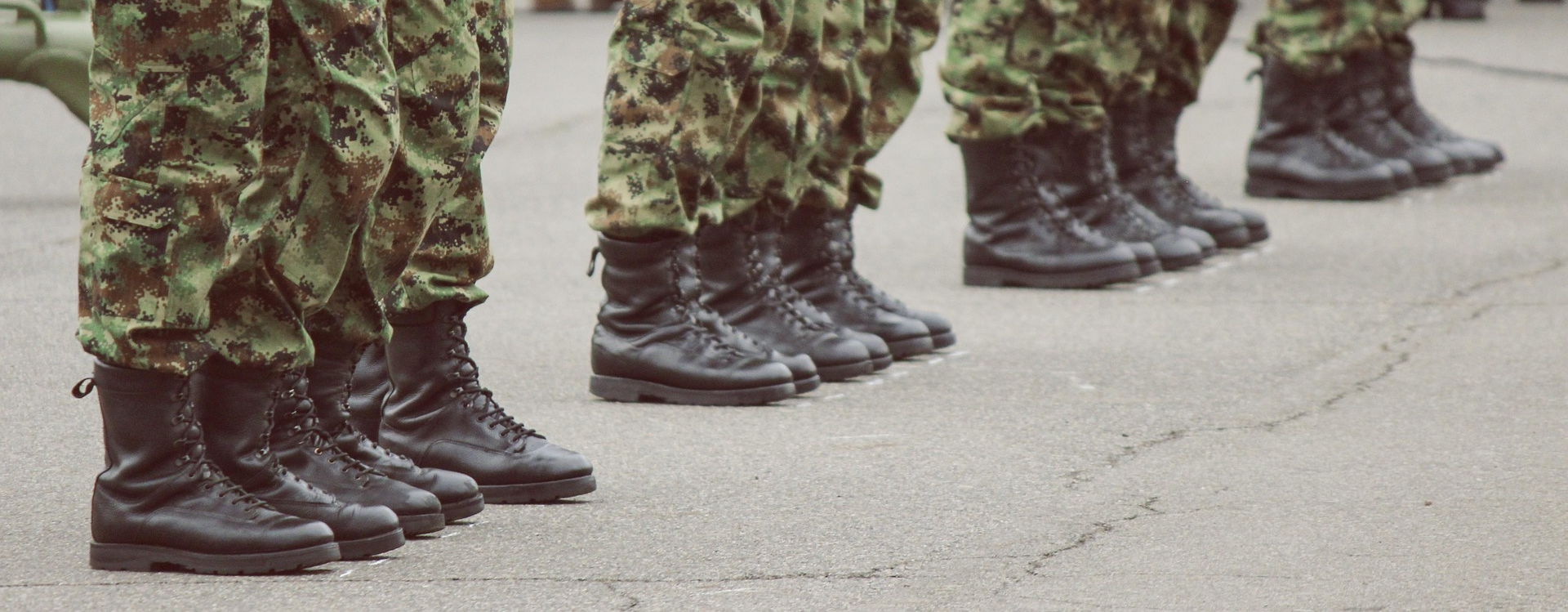
Ageing in Europe and youth growth in Africa may reshape military labour markets and future security partnerships.
In November 2025, Ukraine’s Foreign Minister Andriy Sybiga stated that more than 1 400 African nationals from around 36 countries are fighting on the side of the Russian forces in Ukraine, warning that foreign recruits faced extreme danger. While a few, such as those from South Africa, may be ideologically motivated, the primary motivation for their actions is likely the lack of job opportunities at home and the allure of large payments. Many recruits are deceived into volunteering, and it is unlikely that they realise their chances of survival for longer than a few months.
Viewed through a labour-market lens, military recruitment increasingly reflects the same demand–supply dynamics that shape civilian migration. Although civilian labour mobility differs institutionally and ethically from military enlistment, global demographic asymmetries between ageing states and youthful populations are already prompting new forms of structured security and defence cooperation.
Military recruitment increasingly reflects the same demand–supply dynamics that shape civilian migration
A recent example of such an arrangement can be found in the Pacific, with a precedent set in an additional defence agreement between Australia and Papua New Guinea (PNG). The Papua New Guinea–Australia Mutual Defence Treaty (the Pukpuk Treaty) was signed on 6 October 2025. The Treaty includes a provision to develop a recruitment pathway enabling PNG citizens to join the Australian Defence Force, with mention of a potential pool of up to 10 000 PNG recruits who could be eligible to serve in the ADF under future arrangements. That would be more than 10% of the Australian Defence Force, including both permanent and reserve personnel. Beyond the strategic motivation to bind the island to defend Australia against China, given the mere 150 km strait separating the island from Australia, the agreement reflects the practicalities of labour supply and demand in the region.
PNG has an age profile roughly similar to that of Africa, characterised by a large and growing youth bulge, high unemployment and a significant number of young people seeking employment. Its profile contrasts with the decline in working-age populations in Europe and Australia. PNG needs jobs for its growing working-age youth, which, like many countries in Sub-Saharan Africa, presents a domestic national security challenge linked to this mismatch. Creating 10 000 jobs for PNG is a substantive deal, particularly because military training will include a range of skills, such as leadership, discipline, driving, technical and related abilities.
Writing in support of the arrangement, Serena Sasingian of the Lowy Institute notes that ‘the treaty offers PNG a chance to confront its most pressing internal threat: a youthful population with limited access to opportunity.’ She quotes PNG’s Defence Minister Billy Joseph, who observed that, given the large pool of youth, ‘Australia can have as many as they want.’
Pacific island states, such as Samoa, Tonga and Fiji, have long benefited from structured labour mobility schemes with Australia and New Zealand, which have reduced unemployment and become economic lifelines, sending remittances back home and increasing household incomes. The situation and opportunity in the Pacific mirror those increasingly visible between Sub-Saharan Africa and the European Union, although the push-pull demands in the latter are even stronger.
A similar logic is visible in recent civilian labour agreements. Kenya signed a labour migration agreement in 2024, aiming to facilitate the legal recruitment of several thousand skilled and semi-skilled workers into Germany’s shrinking labour market. In addition to curbing illegal migration, the agreement promotes mobility, apprenticeships and student training for vocational education and employment, including temporary jobs. Kenyans will be eligible for a temporary residence permit for up to two years for study purposes, with the possibility of extension.
Caused by ageing, the EU’s labour force is expected to decline by 24 million over the next 25 years, while that of Sub-Saharan Africa is projected to increase by 541 million. Largely due to its shrinking labour force, the EU's economy is growing slowly, rural areas are depopulating and labour costs are rising rapidly. The situation is particularly acute in the military sphere, given concerns about future aggression from Russia, which needs young men and women for the military, a resource in Europe that is in decline.
The labour supply situation in Russia is even worse. However, President Putin has fewer qualms about instituting unconventional measures to compensate for Russia’s decline in fighting-age youths. An example is Russia’s military agreements with North Korea for the supply of ammunition and the deployment of North Korean troops in support roles, within the broader strategic partnership. The recruitment drive in Africa is a second, having exhausted an estimated pool of up to 180 000 prisoners and convicted criminals deployed for combat duties as of late 2024.
Taken together, these demographic trends and policy precedents raise the question of whether similar labour–security dynamics could emerge in Europe today. What may initially seem counterintuitive becomes more legible when historical and labour market dynamics are considered. During the Thirty Years’ War (1618-1648), one of the bloodiest and most complex conflicts in European history, foreign combatants were integral to virtually all belligerent armies. These were composite units serving under their own leadership in foreign countries, allowing European states to field large forces without mobilising their own citizens, and such dynamics only ended after the Crimean War in the mid-19th century.
What would happen if the Europeans entered into agreements with key African countries, offering to train and equip several brigades for service in their defence, with all the attendant benefits that this would offer the volunteers? The units could rotate in and out for deployment and return to Africa, where they could play a crucial role in enhancing national security, too. Most countries in Sub-Saharan Africa currently underinvest in security, which is one of the reasons the region is now considered the world's most unstable. Without the national governments’ ability to ensure national territorial integrity and internal security, development is not possible. An agreement on the provision of combat troops could offer tangible benefits to African states.
Units could rotate in and out for deployment and return to Africa, where they could play a crucial role in enhancing national security
Such agreements could even be part of a wider, strategic partnership. Africa’s freedom of action and development trajectory will be determined by its ability to negotiate between the two elephants in the room, the US and China, in advocating for a rules-based future. Power asymmetries mean Africans cannot do so alone. Among large-scale partners, the EU offers proximity, market access and an interest in a rules-based order, provided both sides can negotiate equitable terms.
Image: red__koral__ph/Pixabay
Republication of our Africa Tomorrow articles only with permission. Contact us for any enquiries.