Continued conflict could further ruin Sudan’s economy
Modelling shows that continued conflict could cost the economy US$34.5 billion and push an additional 34 million people into extreme poverty by 2043.
The story of Sudan’s war has been told through its most visible devastation: deaths, mass displacement and destruction of infrastructure such as schools and hospitals. Since the war began in April 2023, more than 150 000 people have been killed and nearly 15 million displaced, making it the largest humanitarian crisis in the world. According to the UN OHCHR, almost 25 million people face food insecurity, while 19 million people lack access to safe water and sanitation.
Sudan’s development crisis did not begin in 2023. For decades, the country has reflected a paradox: abundant potential alongside persistent underperformance. Its endowments include considerable natural resources, vast agricultural potential, strategic access to Red Sea shipping routes and a large, youthful population. Yet these opportunities have been constrained by recurrent conflict, political instability, the secession of South Sudan, international sanctions and global shocks, including the COVID-19 pandemic. Moreover, its strategic location along a conflict belt that stretches from the Sahel to Yemen between the Horn of Africa, the Red Sea and the Nile basin also exposes it to regional insecurities, leading to periodic friction with two of its most consequential neighbours, Egypt and Ethiopia.
The 2023 war has further deepened these structural constraints and economic fragility and reversed years of developmental gains. A comprehensive quantitative assessment of the costs of the war, estimated in a study produced by UNDP and the African Futures team at the Institute for Security Studies, depicts an economy now trapped in a cycle of contraction, rising poverty and widening inequality. The analysis confirms that violent conflict is the single most binding constraint to Sudan’s development, directly undermining all dimensions of human development. The war has disrupted the delivery of health and education services, damaged market infrastructure and weakened production systems across agriculture, manufacturing and services.
The analysis confirms that violent conflict is the single most binding constraint to Sudan’s development
The war’s impact has taken an already fragile development trajectory and pushed it towards systemic collapse. The study estimates that Sudan lost US$6.4 billion in 2023 alone due to the conflict, equivalent to a per capita income loss of about US$500, pushing 7 million additional people into extreme poverty. Average income levels in Sudan have fallen to those recorded in 1992, while extreme poverty has worsened beyond its incidence in the 1980s. Indeed, on its current trajectory, Sudan’s GDP per capita in 2043 will contract further to remain below the current 2023 levels and will be worse than the 1960s levels. At this rate, Sudan will only meet Sustainable Development Goal 1, the elimination of extreme poverty, towards the end of the century. These dynamics show a reversal of progress in poverty eradication, resilience and inclusive growth, deepening vulnerabilities and complicating recovery.
All of these projections are based on a development trajectory which assumes that the conflict ends in 2026. In the unfortunate event that the war persists until 2030, Sudan’s economy would incur additional GDP losses of US$34.5 billion relative to the current trajectory by 2043. GDP per capita would decline by an extra US$1 750, and an additional 34 million Sudanese would fall into extreme poverty. Such an outcome would entrench humanitarian crises, erode state capacity and close the window for meaningful recovery. What is evident in all these findings is that an end to conflict and eventually peace is the most critical precondition for restoring livelihoods, rebuilding the economy and reopening credible pathways toward development and inclusive growth.
Sudan’s future will not be decided by a single conference, a single agreement or a single injection of funding, but rather by whether peace holds long enough for governance to be rebuilt and whether governance improves enough for investments to translate into development gains. An illustrative scenario, the Sudan Rising pathway, which models an end to the conflict in 2026 alongside reasonable progress in education, health, demographics, governance, manufacturing, infrastructure and financial flows, suggests that the dividends of peace and reconstruction could be enormous. In this scenario, Sudan’s GDP could expand by an additional US$19.3 billion by 2043, with the economy growing at an average of 5.0% compared to 2.4% projected for its current trajectory. Even more important is that the country could lift 17.3 million more people out of extreme poverty in this scenario, underscoring what peace, combined with investment and reforms, can deliver for Sudan.
Achieving peace requires concerted effort and commitment by all stakeholders. While there are already considerable diplomatic efforts, the main challenge is unlocking the political strategy to tackle the deep ideological divisions and competing mediation efforts that appear to be hindering the resolution of the conflict.
Despite several discussions and peace negotiations, including the Jeddah framework facilitated by the United States and the Kingdom of Saudi Arabia, the war continues unabated. Similarly, more recent diplomatic efforts, including through the QUAD (comprising the US, Saudi Arabia, Egypt and the UAE) and the QUINTET (the AU-led mechanism) together with the Intergovernmental Authority on Development (IGAD), United Nations, European Union and the League of Arab States, are yet to produce the desirable outcome.
The failure of these negotiations and agreements emanates from the deep divisions within and among Sudanese political and civilian groups. It also reflects the fragmented overlapping efforts by different external diplomatic actors, such as the QUAD and QUINTET, with competing interests, all of which appear to be working at cross-purposes.
A successful mediation effort would require a unified architecture linking ceasefire, humanitarian access, civilian dialogue, accountability and a political transition which assigns specific functions to different diplomatic efforts. For instance, the Jeddah framework can focus on ensuring a military cessation of fire, while the QUAD can use its influence to limit external military support, and the QUINTET can lead a process to navigate Sudan’s political transition through an all-inclusive political dialogue among Sudanese stakeholders.
A successful mediation effort would require a unified architecture linking ceasefire, humanitarian access, civilian dialogue, accountability and a political transition
Also, efforts towards lasting peace must prioritise localised agreements to protect critical infrastructure, such as markets, hospitals and water infrastructure in areas susceptible to famine and oil rigs, which are the store of the resources that shall be needed after the conflict ends. Eventually, these localised agreements should serve as the foundation for a national humanitarian ceasefire.
Moreover, from the trajectory of the conflict, the allocation of national resources and accountability will be core to the negotiations and perhaps among the most complex to resolve, as they are linked to the progressive fragmentation of Sudan as a country. As such, transparency about revenue collection and sharing, as well as accountability, will be key in reaching a potent agreement. Beyond these, the international community must act decisively to demolish the enterprise surrounding the war. The cross-border networks supplying arms, facilitating illicit gold trade and financing the conflict, together with external political patronage, continue to undermine efforts towards lasting peace in Sudan.
Ultimately, peace should be tied to economic reconstruction and an accountability framework that strengthens governance, revitalises productive sectors, expands opportunities and builds resilience to future shocks. With peace, coherent reforms and sustained commitment, Sudan can transition from fragility toward recovery and from potential to long-term structural transformation.
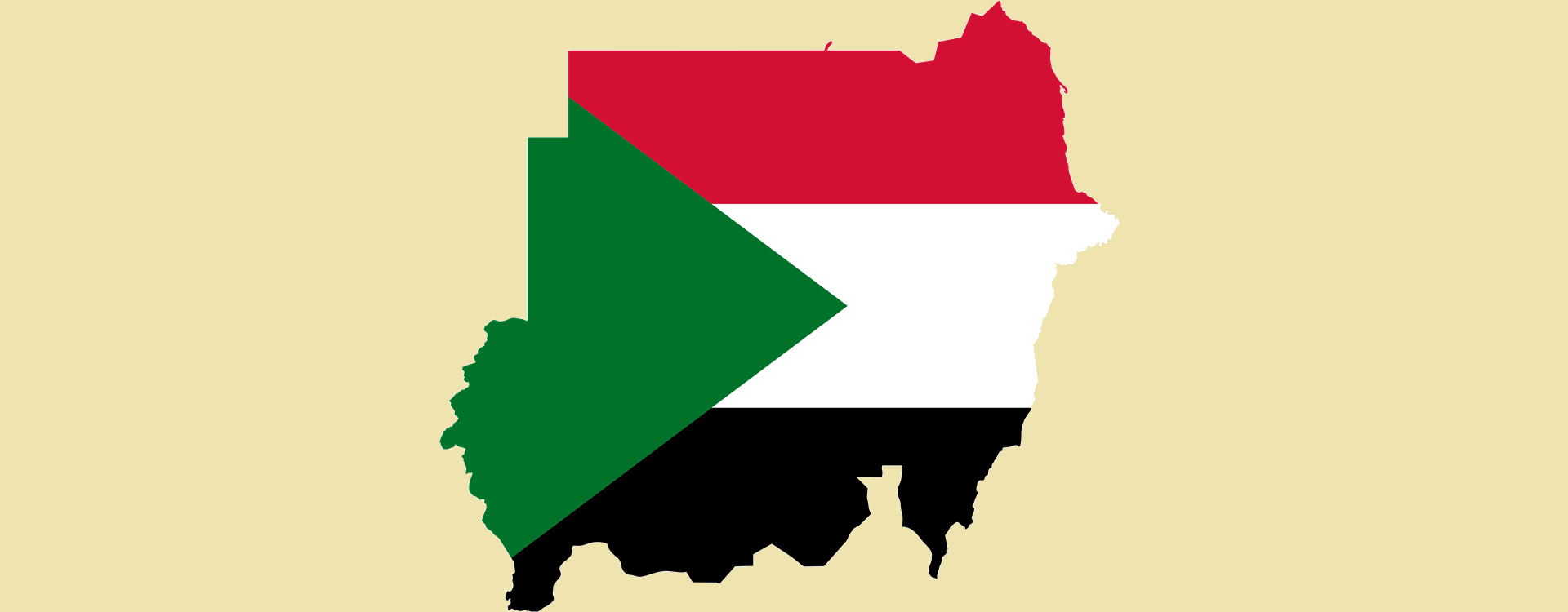
Image: GDJ/Pixabay
Republication of our Africa Tomorrow articles only with permission. Contact us for any enquiries.
Access the full Sudan Special Report 2026 here - Beyond the Conflict: Charting a Path to Sustainable Growth and Development in Sudan