The future of African–European relations: from intent to practice
How can the two regions build on their existing partnership to translate shared ambitions into inclusive, actionable and sustainable cooperation?
-
Date: 12 October 2026
-
Time: 09:00 – 16:00 (GMT+2)
-
Venue: ISS, Brooklyn Court, Block C, 361 Veale Street, Pretoria, South Africa and online via Zoom
Overview
African–European relations are being reshaped by a more fragmented and competitive global order. Geopolitical rivalry, shifting dependencies, migration politics, energy transitions, rising demand for critical minerals and changing financial flows are altering how the two regions engage.
How can they build on their existing partnership to translate shared ambitions into inclusive, actionable and sustainable cooperation that delivers tangible benefits for both sides?
This conference brings together researchers, policymakers, diplomats, development partners, industry representatives and experts from Africa and Europe to examine where interests align, where tensions remain and what practical action is needed. Discussions will focus on critical minerals and energy, migration and mobility, and the trade-offs needed for effective, sustainable delivery.
This event is co-hosted by the Institute for Security Studies (ISS), the Hanns Seidel Foundation (HSF), the Federation of German Industries (BDI) and Megatrends Afrika consortium comprising the German Institute for International and Security Affairs (SWP), the German Institute of Development and Sustainability (IDOS) and the Kiel Institute for the World Economy.
Opening conversation – The future of South–North cooperation: jobs, security and opportunities
Panel 1 – Moving from extraction to partnership: how can Africa and Europe develop a fair critical minerals and energy future?
Panel 2 – Migration and the politics of partnership: how to balance border security with legal mobility
Panel 3 – Towards a pragmatic partnership: strategic interests, trade-offs and delivery
Confirmed speakers are:
- Mr Ronald Lamola. Minister of International Relations and Cooperation, South Africa
- Mr Ashor Sarupen. Deputy Minister of Finance, South Africa
- H.E. Kristian Schmidt. EU Ambassador to South Africa
- Mr Oliver Rentschler. German Ambassador Designate in South Africa
- Dr Michael Masiapato. Commissioner & Chief Executive Officer (CEO) - Border Management Authority (BMA), South Africa
- Ms Mamokete Lijane. Strategist (Global Markets) at Standard Bank, Member of the Presidential Economic Advisory Council and Chair of Economic Research Southern Africa (ERSA)
- Dr Stefan Mair. Director of the German Institute for International and Security Affairs and Executive Chairman of the Stiftung Wissenschaft und Politik (SWP)
- Mr Mzila Mthenjane. Chief Executive, Minerals Council South Africa
- Ms Sabine Dall'Omo. Chief Executive Officer (CEO) of Siemens Sub-Saharan Africa, Deputy Chairwoman, Sub-Saharan Africa Initiative of German Business (SAFRI)
- Dr Linda Lochner. Researcher, Kiel Institute for the World Economy and Megatrends Afrika
- Dr Benedikt Erforth. Senior Researcher and Project Lead, IDOS and Megatrends Afrika
- Mr Menzi Ndhlovu. Senior Analyst (Country Risk and Political Risk), Signal Risk
- Dr Cobus van Staden. Managing Editor, China-Global South Project (CGSP)
- Mr Jonathan Kaupenjohann. Sub-Saharan Africa Expert, Federation of German Industries (BDI)
- Ms Ottilia Maunganidze. Head of Special Projects, Institute for Security Studies (ISS)
- Mr Priyal Singh. Senior Research Consultant, Institute for Security Studies (ISS)
- Dr Jakkie Cilliers. Chairman of the Board and Head of African Futures and Innovation (AFI), Institute for Security Studies (ISS)
- Mr Hanns Bühler. Resident Representative, Hanns Seidel Foundation (HSF) South Africa
The full agenda is available HERE.
Register to attend online Register to attend in-person
This event is part of the Future of African-European Relations project, which explores how Africa and Europe can build stronger partnerships in an era of geopolitical fragmentation, economic competition and shifting global power dynamics.

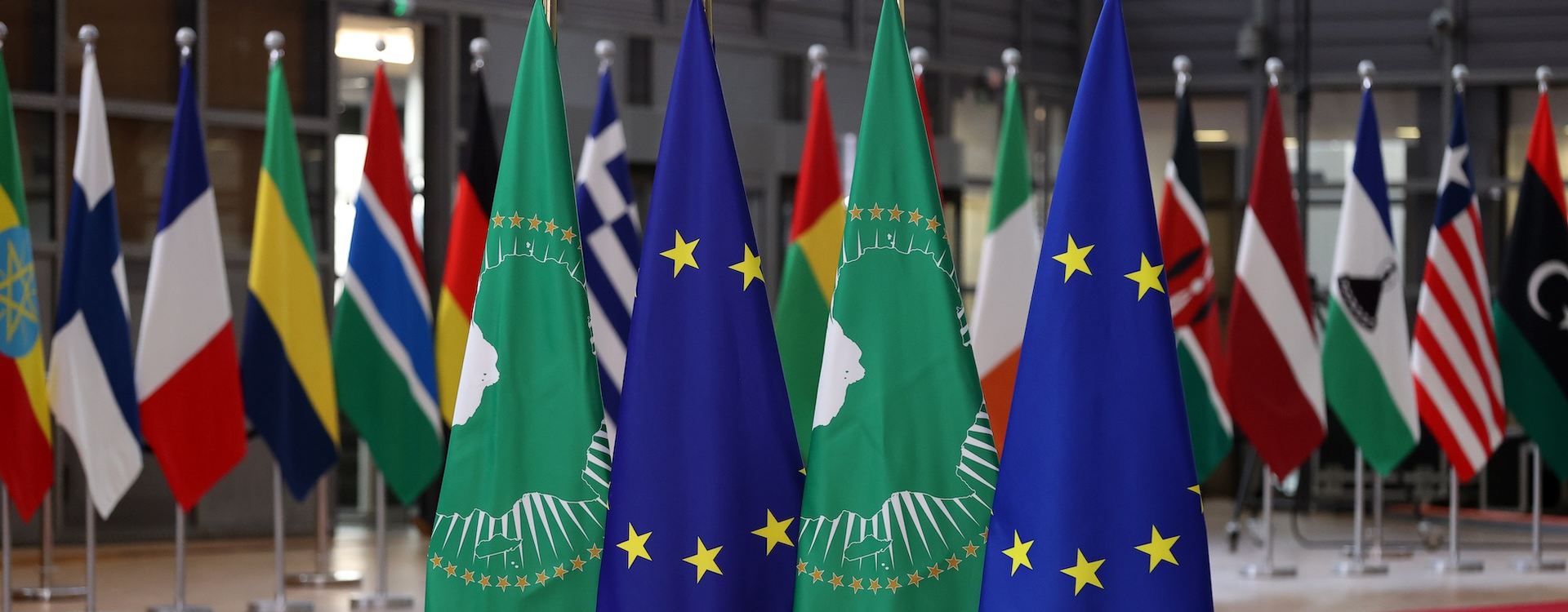
Image: Dursun Aydemir/Anadolu Agency via Getty Images
Development partners
This conference is funded by the Hanns Seidel Foundation. The ISS is also grateful for support from the members of the ISS Partnership Forum: the Hanns Seidel Foundation, the European Union, the Open Society Foundations and the governments of Denmark, Ireland, the Netherlands, Norway and Sweden.
More to explore

05 Feb 2026
South Africa’s future cities: facing up to hard choices
Considering the harsh reality revealed by long-term trajectories, how feasible are the country’s current urban plans?
17 Mar 2026
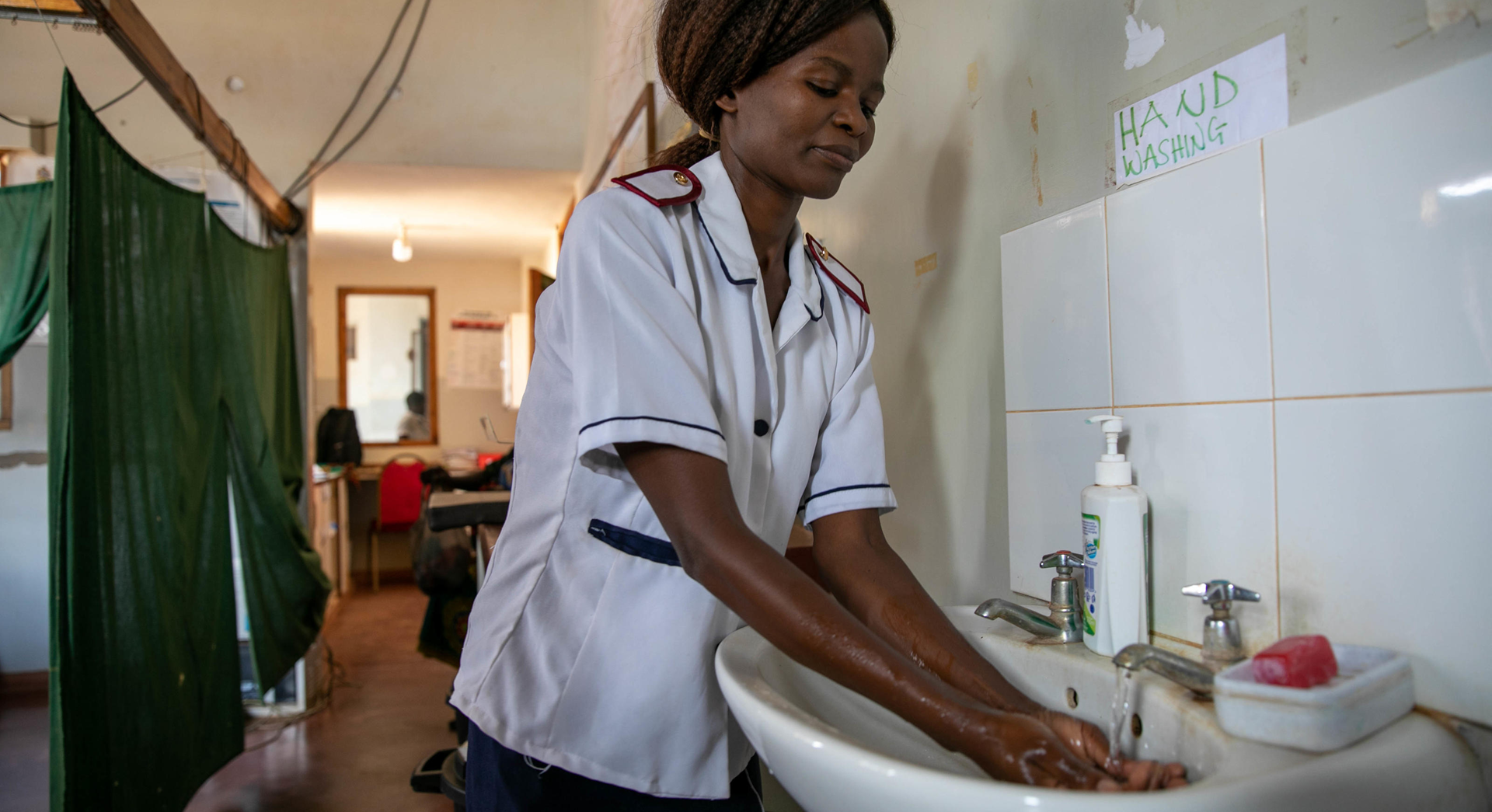
Africa’s health and water future: securing a foundation for prosperity
Health and water security underpin long-term growth, but are threatened by climate pressures, rapid urbanisation and financing constraints.
13 Oct 2026
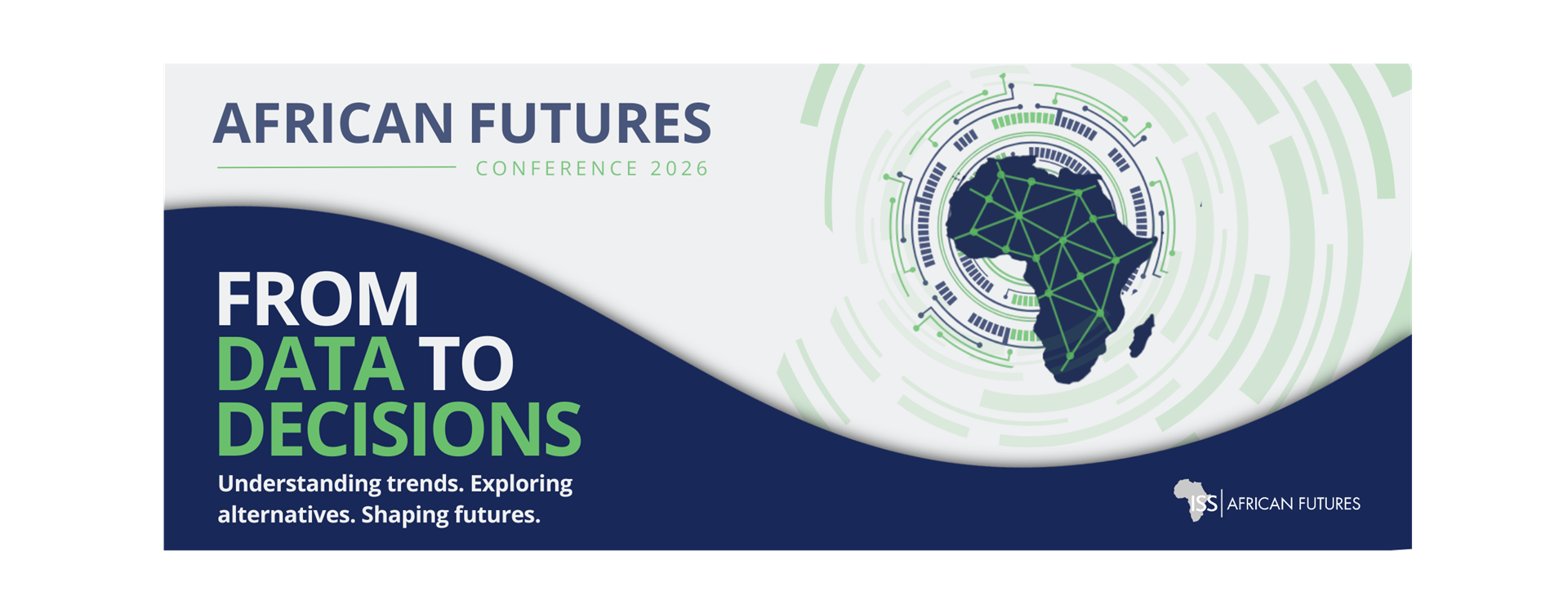
African Futures Conference 2026: Register Now
The African Futures Conference is the continent’s premier platform to explore and amplify African-led foresight.
04 Sep 2026
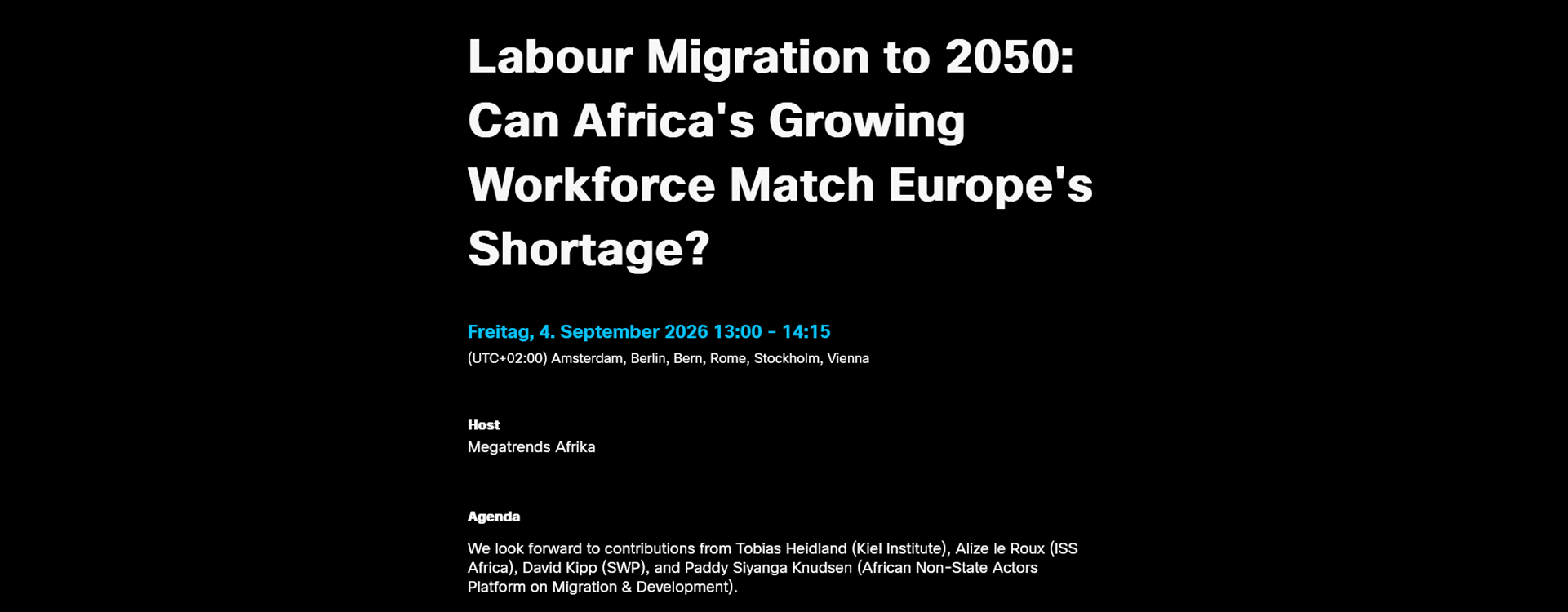
Labour Migration to 2050: Can Africa's growing workforce match Europe's shortage?
By 2050, Africa will account for roughly a quarter of the world's working-age population, with many millions searching for better jobs – just as Europe's workforce shrinks.