Labour Migration to 2050: Can Africa's growing workforce match Europe's shortage?
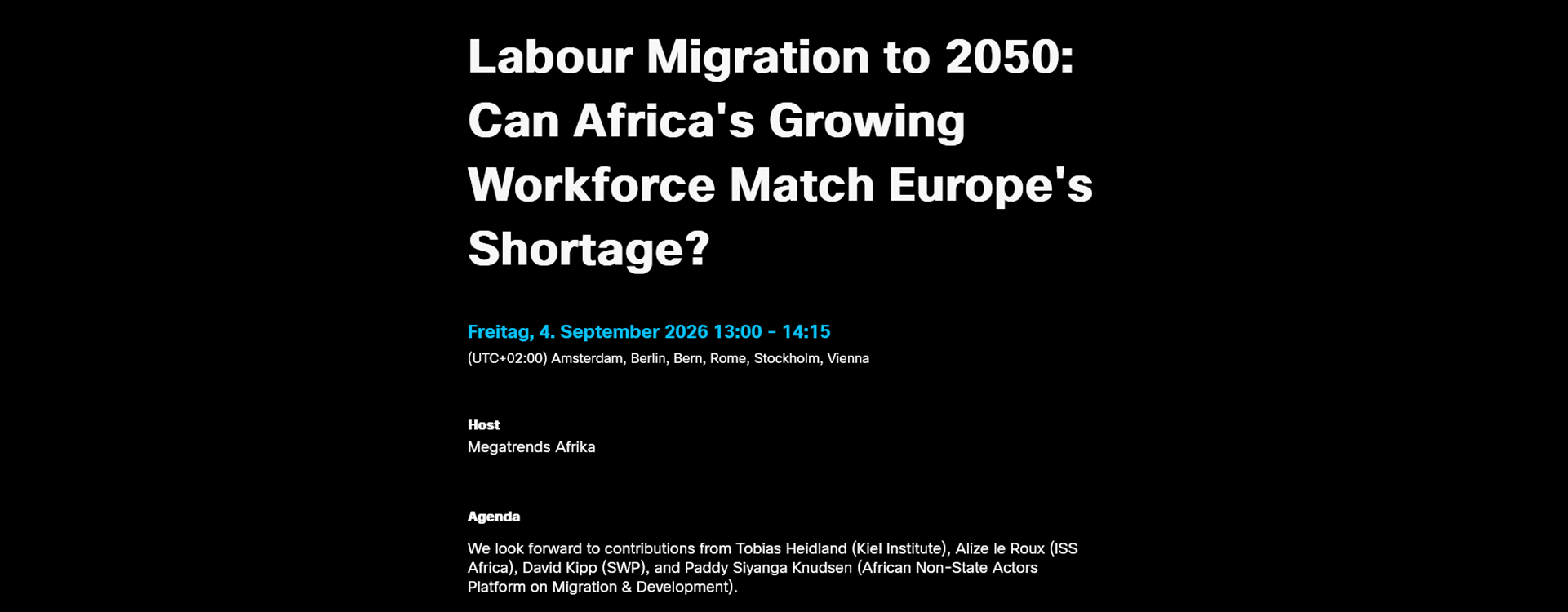
By 2050, Africa will account for roughly a quarter of the world's working-age population, with many millions searching for better jobs – just as Europe's workforce shrinks.
-
Date: 04 September 2026
-
Time: 13:00-14:15 CEST
-
Venue: Online via Webex
Overview
By 2050, Africa will account for roughly a quarter of the world's working-age population, with many millions searching for better jobs – just as Europe's workforce shrinks. Whether that adds up to a match depends less on demography than on how labour corridors are built.
The session previews the forthcoming ISS African Futures report and its projections of African migration – within the continent and beyond – and sets them against the corridors already forming. One example is Germany, where visa applications for employment almost quadrupled between 2019 and 2025, albeit on a relatively low base. Cameroon's apprenticeship corridor to Germany, for instance, grew from 950 to 5 260 people in this period largely going back to the initiative of private recruitment agencies and diaspora networks despite the absence of a bilateral agreement behind it. Whether corridors like this are a template that scales or an exception is what decides how much of the projected potential reaches European labour markets.
We look forward to exciting contributions from:
- Tobias Heidland (Kiel Institute): Africa's jobs gap and Europe's labour gap
- Alize le Roux (ISS Africa): Projections of African migration to 2050, within the continent and beyond. First look at the African Futures report
- David Kipp (SWP): What is already happening: Migration from Kenya, Ghana, Cameroon to Germany
- Paddy Siyanga Knudsen (African Non-State Actors Platform on Migration & Development): What is required for migration skill corridors to be fair and mutually beneficial?
Host: Megatrends Afrika
This event is part of the project, The Future of African-European Relations, which examines how the two regions can build stronger partnerships in an era of geopolitical fragmentation, economic competition and changing global power dynamics. It is a collaboration between the African Futures & Innovation Programme at the Institute for Security Studies (ISS), the Federation of German Industries (BDI), the Hanns Seidel Foundation and the Megatrends Afrika consortium, comprising the German Institute for International and Security Affairs (SWP), the German Institute of Development and Sustainability (IDOS) and the Kiel Institute for the World Economy. Drawing on the expertise, research and analytical frameworks of the participating institutions, the project explores how different global futures could shape trade, investment, development cooperation and shared prosperity between Africa and Europe - and it aims to develop policy recommendations for different stakeholders.

More to explore
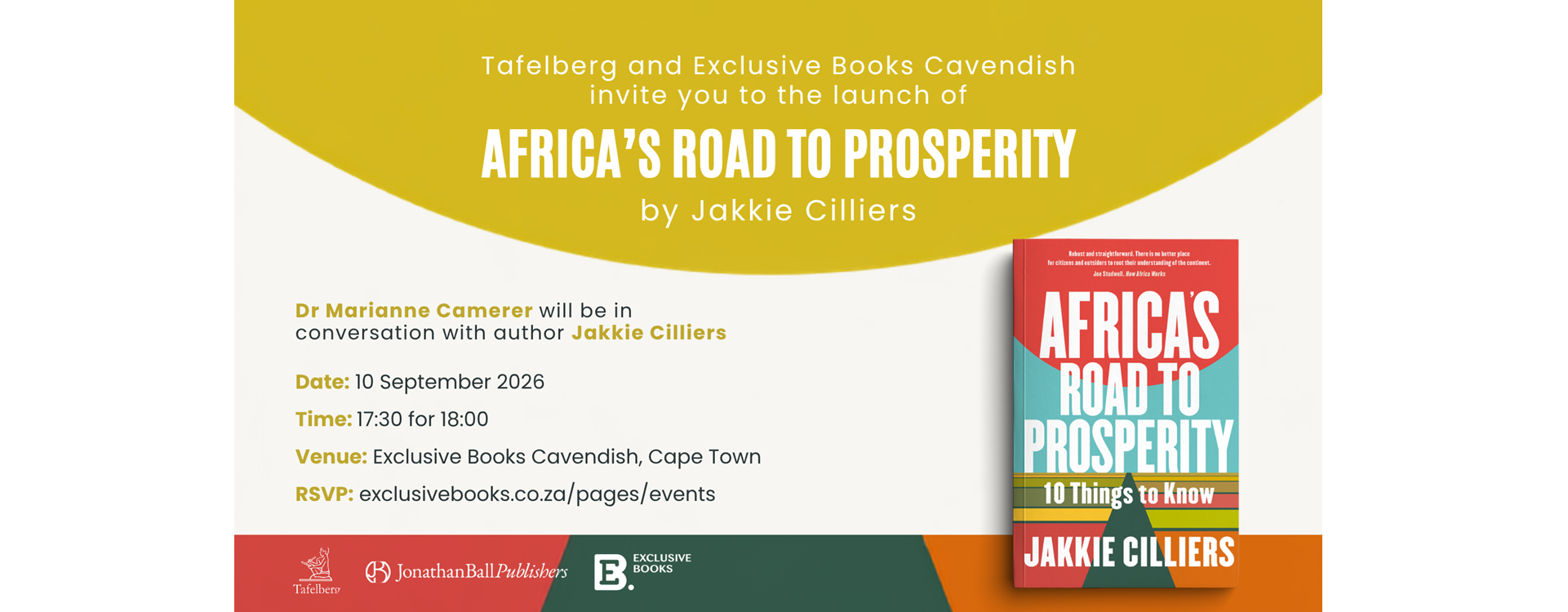
10 Sep 2026
Book Launch 3: Africa's Road to Prosperity
Dr Marianne Camerer will be in conversation with author Jakkie Cilliers
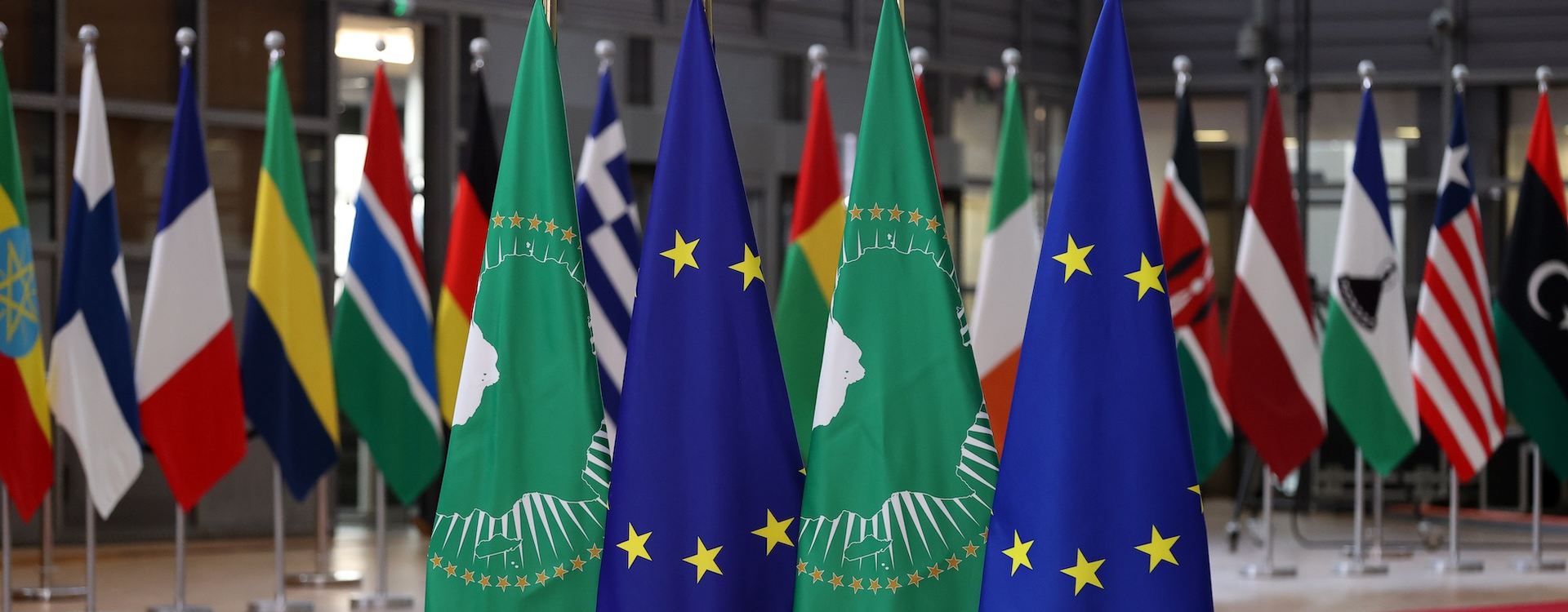
12 Oct 2026
The future of African–European relations: from intent to practice
How can the two regions build on their existing partnership to translate shared ambitions into inclusive, actionable and sustainable cooperation?
22 Sep 2026
How global power shifts reshape Africa’s financial inflows
Africa needs more external finance, but can it convert that finance into development?
17 Mar 2026
Africa’s health and water future: securing a foundation for prosperity
Health and water security underpin long-term growth, but are threatened by climate pressures, rapid urbanisation and financing constraints.