Invest now, retrofit later: Ethiopia’s urban choice
Listen to this article
Addis Ababa's urban growth can become an economic asset if investment gets there first.
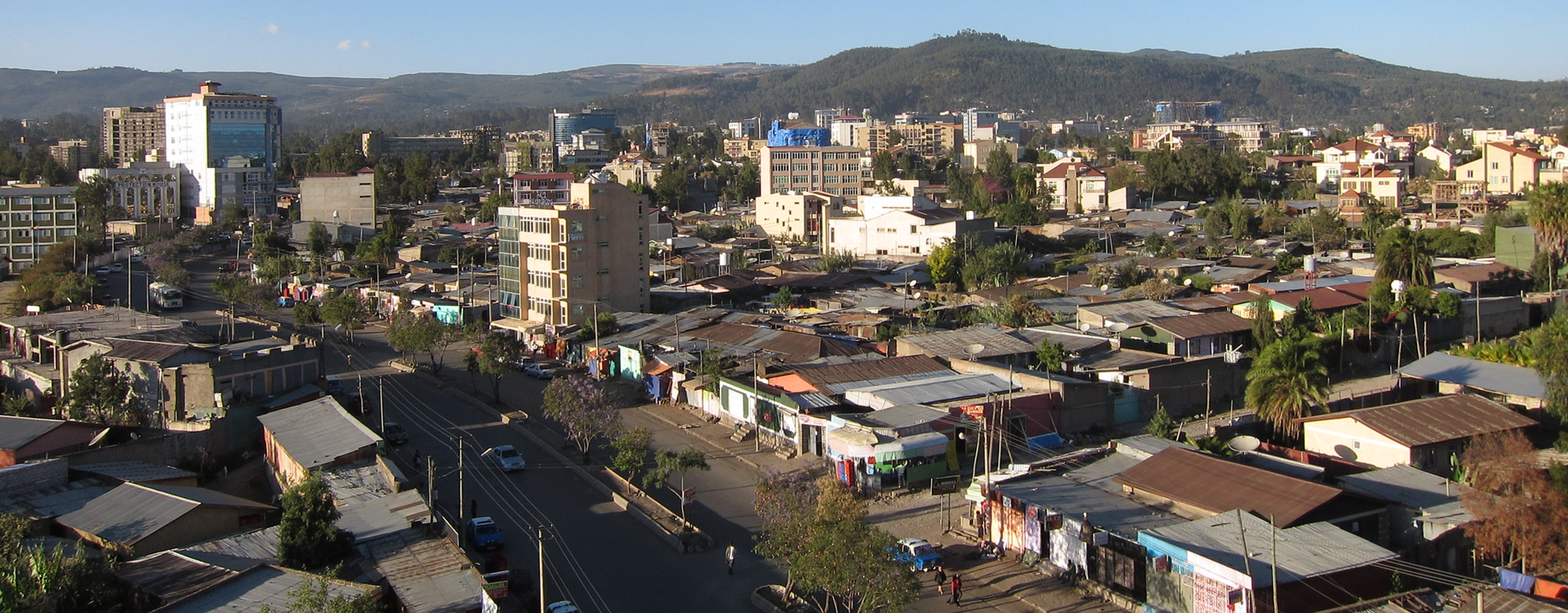
Addis Ababa is heading towards megacity status, but Ethiopia’s urban future will be shaped by a much wider network of cities and towns. Strategic investment in land, infrastructure, institutions and productive sectors could turn this urban transition into a powerful driver of growth, jobs and poverty reduction. The country, however, has a narrow window to shape this big transformation.
Under the harmonised Degree of Urbanisation (DEGURBA), more than 90% of the country’s additional population is projected to live in cities, towns and semi-dense areas by 2050. The population of urban centres alone could rise from 35.1 million in 2025 to 84.1 million, while the number of urban centres could almost double, from 259 to about 501.
At the core of this transformation is Addis Ababa. Its population is projected to increase from about 6.7 million in 2025 to 10.8 million by 2050, crossing the megacity threshold. Its built-up surface could almost double, from 126.5 km² to 246.7 km².
The critical policy question is therefore not whether Addis Ababa will grow, but how that growth will be managed. The controversy surrounding earlier plans to expand the capital into Oromia, Ethiopia’s largest and most populous regional state, demonstrates that poorly managed urban expansion can become a source of wider political and social tension, particularly where land acquisition, displacement, compensation and consultation are contested. The question is whether investment and planning can get ahead of growth, securing land, infrastructure and services while protecting affected communities or whether infrastructure will again be forced to follow development after inefficient spatial patterns have become established.
Addis Ababa's future cannot be managed within its existing municipal boundaries alone. Between 2025 and 2050, the capital is projected to add about 4.1 million residents, while its harmonised urban-centre area expands from roughly 489 km² to 759 km². Increasingly, the relevant economic and spatial unit is the wider metropolitan system spanning Addis Ababa and its interfaces with Sheger and Oromia.
That changes the investment challenge. Transport cannot be planned separately from housing. Housing cannot be separated from employment locations. Drainage, water and sanitation networks cannot stop at administrative boundaries when urban development does not. And decisions about where the city expands must consider not only access to jobs and services, but also the need to protect productive agricultural land and the food systems on which Addis Ababa depends.
The priority should therefore be metropolitan coordination before peripheral growth becomes locked in. Cross-boundary planning should reserve transport and infrastructure corridors, identify areas for serviced and affordable housing, coordinate employment locations and protect drainage systems and strategically important public land.
This is not an argument for containing Addis Ababa. Outward growth is inevitable and comes with serious challenges. The objective is to ensure that expansion occurs along accessible and serviceable pre-planned corridors rather than through fragmented development that becomes expensive to retrofit.
The experience of other rapidly urbanising cities is that the most effective time to shape urban form is before development becomes difficult and expensive to reorganise. In India, Ahmedabad's land-pooling and readjustment approach, for example, demonstrates how land can be reorganised before development while reserving space for roads, infrastructure and public facilities. In Brazil, Curitiba illustrates how transport investment can help organise urban form when higher-density housing, jobs and services are coordinated around transport corridors. The value for Ethiopia lies in adapting these principles to its own land institutions and governance arrangements, not copying another city's model.
The paradox is that even as Addis Ababa becomes a megacity, Ethiopia's urban system is becoming less concentrated on its national capital, given the rapid urban growth expected elsewhere in the country.
Addis Ababa's share of the country's city population is projected to fall from about 19% in 2025 to 13% by 2050. Even as the capital grows into a megacity, an increasing share of urban growth will occur elsewhere, across regional capitals, industrial and logistics centres, peri-urban areas and hundreds of emerging towns.
Addis, therefore, cannot be Ethiopia’s urban investment strategy. It must be the metropolitan anchor of a differentiated national strategy.
The Addis–Adama corridor needs integrated investment in industrial development, transport, housing and labour mobility. Regional cities such as Bahir Dar, Gondar, Dessie, Kombolcha, Dire Dawa and Harar need infrastructure to be sequenced ahead of increasingly land-intensive expansion. Emerging towns need basic mapping, road and drainage reservations, land administration and municipal capacity before rapid development overwhelms weak local institutions.
The national strategy should therefore follow a simple principle: investment should respond to how and where each city is growing, rather than applying the same urban package everywhere.
Getting the spatial strategy right is only half the challenge. Ethiopia must also ensure that urban investment translates into higher productivity, employment and household incomes.
To test what this could mean for national development, the African Futures and Innovation (AFI) programme models an ambitious Urbanisation Investment scenario using the International Futures (IFs) forecasting platform. The scenario combines stronger municipal institutions and public financing with transport, electricity, water and sanitation, digital connectivity, productive investment, skills development and targeted social protection.
The Urbanisation Investment scenario asks: what happens if the country increases the economic and social returns from its rapid urbanisation that seems to continue apace for subsequent decades?
The distinction matters. Infrastructure alone does not create productive cities. Reliable services must connect firms to markets and workers to jobs; productive investment must create employment; skills must enable workers to take those opportunities; and municipalities need the institutional and fiscal capacity to sustain the system. Social protection is also needed to prevent rising land values and service costs from excluding poorer households. Urban investment therefore works best as an integrated package rather than as a collection of isolated sectoral interventions
The modelling illustrates why this matters beyond urban policy. Under the Urbanisation Investment scenario, Ethiopia's GDP at market exchange rate reaches approximately US$1.16 trillion by 2050, around US$248 billion higher than under the Current Path. GDP per capita at purchasing-power parity is approximately US$1 366 higher per person.
Stronger growth, combined with effective measures to accelerate poverty reduction, is necessary. At the US$3-a-day threshold, the extreme-poverty rate falls to 1.5% by 2050, compared with 2.5% under the Current Path, leaving approximately 2.2 million fewer people in extreme poverty.
The economic structure also changes. Manufacturing's share of GDP reaches 16.8%, compared with 13% under the Current Path, while manufacturing labour demand is approximately 1.6 million higher by 2050.
These findings point to a crucial policy lesson that urban investment should not be treated simply as the cost of accommodating more people in cities. Done strategically, it can become an instrument of national economic transformation.
Urban investment is not a cost of growth; it is an investment in economic transformation
For Ethiopia, that means connecting the spatial and economic agendas: governing Addis Ababa as a functional metropolis, securing infrastructure corridors and serviced land before development occurs, strengthening secondary-city institutions, and connecting urban infrastructure to productive investment and employment.
Ethiopia needs to manage its rapid urbanisation deliberately. If investment anticipates and shapes growth, cities can become platforms for productivity, industrialisation, jobs and poverty reduction. If it arrives after settlement patterns have hardened, Ethiopia risks spending decades, and considerably more money, trying to retrofit them. For Addis Ababa, getting ahead of growth also means managing outward expansion carefully, so that the city’s development does not unnecessarily come at the expense of productive agricultural land and the food systems on which the metropolis depends.
Image: neiljs/Flickr
Republication of our Africa Tomorrow articles only with permission. Contact us for any enquiries.