Africa in 2026: governing through noise

As crises compete for attention this year, Africa’s prospects will hinge on policy choices that preserve long-term options.
2026 is set to be a digitally noisy year, with headlines crowded by overlapping political, economic, security and climate-related crises. In this environment of rapid information flow, attention fragments quickly, crises compete for priority and the space for deliberate, long-term decision-making narrows substantially. Rapid crisis responses, however necessary, carry the risk of locking in policy choices that undermine future options if not balanced with strategic foresight.
In an environment of rapid information flow, attention fragments quickly and the space for deliberate, long-term decision-making narrows substantially
This dynamic is already visible in the opening weeks of the year. Within days of New Year celebrations, African political attention was being pulled in multiple directions: reactions to US military actions in Venezuela, contested electoral processes in Uganda, mounting political pressures in Ethiopia, protracted conflicts in Sudan and across the Sahel, continued instability in eastern DR Congo and early warnings of a challenging climate year for the continent likely to be marked by devastating flooding and droughts (as already observed in South Africa). These pressures are occurring amid growing uncertainty in global trade, tightening fiscal space and a broader reassessment of external partner priorities, including reductions and reconfigurations in official development assistance and energy-sector financing.
The risk for policy failure rises when reactive crisis management becomes crisis-driven decision-making that narrows future options. Rushed responses to overlapping shocks can jeopardise long-term strategic planning if they are not anchored in resilience-building and forward-looking frameworks. Recent experiences illustrate this clearly: in the aftermath of the COVID-19 pandemic, several African governments relied on short-term borrowing and emergency fiscal measures to stabilise economies, only to now face constrained budgets, rising debt-service costs and reduced fiscal space. Similar patterns are evident in conflict-affected regions where security-first responses have crowded out longer-term investments in governance, livelihoods and institutional capacity.
As African leaders are now pulled toward stabilising economies, managing political pressures and responding to unfolding shocks, how they respond effectively to the crises of 2026 will shape the range of possibilities available tomorrow. In a year likely to be defined by noise and urgency, unlocking Africa’s full potential will depend on strategic clarity and on choices that preserve future options rather than unconsciously closing them down.
In 2026, a year likely to be defined by noise and urgency, unlocking Africa’s full potential will depend on strategic clarity
Global outlooks for 2026 converge on a world characterised by slower growth, weaker coordination and increasingly transactional politics. The World Economic Forum’s Global Risks Report 2026 identifies uncertainty as the defining condition, with economic confrontation, state-based conflict and extreme weather among the most severe risks as multilateral cooperation continues to erode. These shifts influence how trade, finance, security and technology flow, and therefore the external environment African states must navigate. Independent assessments reach similar conclusions, highlighting geopolitics, geoeconomics, energy transitions and governance pressures as central forces shaping African agency in 2026, and Brookings’ Foresight Africa emphasises reforming development finance, strengthening institutional legitimacy and navigating a fragmented global order.
Taking an African perspective, five structural forces are likely to dominate headlines in 2026 and shape the continent’s strategic space well beyond this year.
1. Elections as a stress test of legitimacy
Several African countries, including Benin, Ethiopia, the Republic of the Congo, The Gambia and Zambia, are set to head to the polls in 2026. Uganda’s general election, held on 15 January, has already seen results contested by the opposition, reinforcing concerns about shrinking civic space and the management of political competition.
What matters most is not simply that high-stakes elections are taking place, but the conditions under which they are unfolding. Many occur amid fiscal stress, high youth unemployment, weak service delivery and declining trust in institutions. Political legitimacy will be shaped as much by how electoral disputes are managed (through courts, electoral commissions, security responses and negotiated settlements) as by who ultimately wins.
From an African futures perspective, elections in 2026 function less as democratic endpoints than as stress tests of governance systems. AFI’s Governance theme shows that long-term development outcomes depend on the interaction among stability, state capacity and inclusion, not on elections alone. Hybrid regimes (a mix of autocratic and democratic governance) are significantly more prone to conflict and volatility than consolidated democracies; the majority of Africans live under such regimes. Under AFI’s Governance scenario, which assumes gradual improvements in institutional capacity, political inclusion and stability, Africa’s economy could be nearly US$1 trillion larger by 2043, extreme poverty would be reduced by 46 million people, and GDP per capita would be nearly 8% higher than under the current trajectory.
If this year's elections reinforce legitimacy and institutional credibility, they will expand future options.
2. Fragmented regional orders versus the necessity of scale
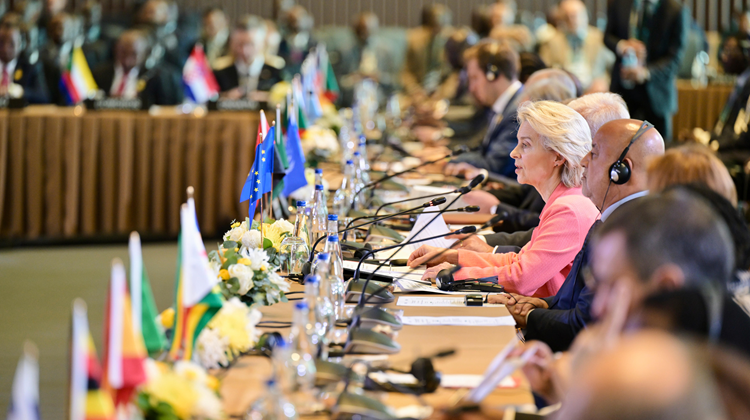
Africa’s regional and continental architecture remains under strain in 2026, and integration will be tested through implementation. Political fragmentation and uneven compliance weaken collective bargaining power at a time when scale matters most.
Actions matter. In early 2026, the AfCFTA Business Forum in Marrakech signalled a shift from agreement to execution, with a renewed focus on removing intra-African trade barriers, modernising customs and advancing digital trade systems. Ongoing work on AfCFTA protocols, including digital trade and competition policy, will determine whether regulatory alignment translates into real trade flows.
The AFI AfCFTA theme shows what is at stake. Full implementation could make Africa’s economy nearly US$650 billion larger by 2043 and lift 32 million people out of extreme poverty. Continued fragmentation increases Africa's exposure to external shocks and exacerbates uneven growth. In a transactional global economy, integration is not an ideology but rather a long-term risk-management strategy.
3. Energy expansion without resolution
Energy will again dominate investment announcements in 2026. The global energy context is more fragmented following renewed US disengagement from multilateral climate leadership. African governments now face a more selective and politicised climate finance environment, placing greater weight on domestic policy choices.
Mission 300 (the World Bank–AfDB initiative to connect 300 million people to electricity by 2030) is expected to move from pledge to delivery, testing whether electrification aligns with grid reliability, affordability and productive use. However, decisions on how to sequence gas, renewables and power-sector reforms with transmission investment, pricing reform and regional power pools will determine future outcomes.
AFI’s Energy theme shows that the difference between expansion and transformation lies in systems, not projects alone. Poor sequencing risks locking countries into carbon exposure and fiscal stress without development gains.
The question in 2026 is not whether Africa invests in energy, but whether investment expands long-term options or narrows them through misaligned sequencing.
4. Minerals, manufacturing and the art of deal-making
Competition over critical minerals will intensify further this year as global supply chains continue to realign around energy transitions and geopolitical hedging. Africa sits at the centre of this contest, and the structure of these energy deals will define future developments.
2026 will be a year of contract negotiations and renegotiations: mining licences, processing agreements, infrastructure-for-resources deals and strategic partnerships. China remains deeply embedded across African mineral and infrastructure sectors, while the US and EU are increasingly framing engagement through “secure supply” strategies. The result is a more competitive but also more fragmented deal environment.
The AFI Manufacturing theme shows why these matter. Under a manufacturing-led pathway, Africa could add more than a US$168 billion in output, create an additional 35 million jobs and lift 19.1 million people out of poverty by 2043. Yet, this outcome depends on beneficiation, skills transfer and regional value chains, not raw commodity export growth.
The critical decisions in 2026 are therefore about how contracts allocate risk, value and future policy space. Deals that prioritise speed over strategy risk locking countries into low-value trajectories that will be difficult to reverse.
5. Climate shocks as risk multipliers
An increase in the frequency and severity of climate-related impacts is expected in 2026, but the decisive moments will not be meteorological. Floods, droughts and heat stress are already interacting with food systems, urban infrastructure and fiscal capacity.
Key decisions will be budgetary and institutional: how post-disaster reconstruction is financed, whether adaptation funding builds resilience, and how insurance and risk-pooling mechanisms are deployed. AFI’s Climate Futures work shows that reliance on repeated humanitarian response entrenches vulnerability, while investment in water management, early warning systems and resilient infrastructure protects development gains.
Across these five structural forces, the message for 2026 is consistent: Africa’s future will not be determined by any single crisis, but by the cumulative effect of choices made under pressure. The greatest risk is not inaction, but short-term responses that inadvertently lock in long-term constraints.
Africa’s future will not be determined by any single crisis, but by the cumulative effect of choices made under pressure
AFI’s modelling work clearly illustrates this. Countries that strengthen governance, deepen integration, align energy systems with productivity, capture more value from minerals and invest in climate adaptation follow markedly different development pathways from those that rely on crisis response and fragmented policymaking.
For policymakers, the hardest choices in 2026 will not be the visible ones debated in noisy digital headlines, but the quieter decisions that shape institutional credibility over the course of decades.
For policymakers, 2026 must be a year of decisions made with the long-term future of their country firmly in mind, even as the pressures of short-term crises clamour for attention.
Image: geralt/Pixabay
Republication of our Africa Tomorrow articles only with permission. Contact us for any enquiries.