Aid cuts are a wake-up call for smarter domestic resource mobilisation in Africa
Reforms in government effectiveness and economic formalisation could generate enough revenue to more than offset projected aid losses by 2034.
Official development assistance (ODA) is shrinking at its fastest pace on record. In 2025, ODA from Development Assistance Committee (DAC) members and associates fell to about US$174.3 billion, equivalent to 0.25% of their combined gross national income (GNI). This represents a 23.3% real decline from 2024, the largest annual contraction in the recorded history of ODA. OECD projections indicate a further 6.9% decline in 2026, raising concerns about financing for sustainable development, humanitarian assistance and support for the world's poorest countries.
The decline was widespread but heavily concentrated among the largest donors. Although 26 of the 34 DAC members and associates reduced aid spending, France, Germany, Japan, the United Kingdom and the United States (US) accounted for almost 96% of the total decline. The US alone was responsible for roughly three-quarters of the reduction.
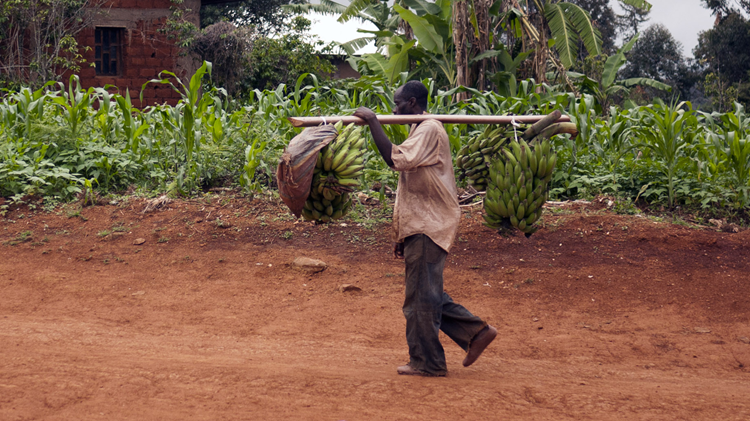
For sub-Saharan Africa, the implications are significant. The region remains the world's most aid-dependent, with aid accounting for about 3% of GDP in 2024. Among low-income countries, the average exceeded 6% of GDP. More than half of aid flows support health, education and humanitarian assistance, making recent cuts a direct threat to fiscal space, public service delivery and development outcomes.
Bilateral aid from DAC providers to sub-Saharan Africa is estimated to have declined by 26% in 2025, with further reductions likely in the near term. In nominal terms, the countries most affected in fiscal year 2024/25 include the Democratic Republic of the Congo (DR Congo), Ethiopia, Uganda, South Africa, Kenya, Tanzania, Nigeria, Mozambique, Egypt and Mali.
The Centre for Global Development (CGD) study indicates that Ethiopia could lose nearly US$1.1 billion in aid in 2026 compared with its 2023 receipts, followed by the DR Congo with losses of approximately US$814 million.
Africa Futures forecasts that, if current trends persist, net aid flows to Africa could be around US$25 billion lower by 2030 than under the baseline (Current Path) forecast (Chart 1). The consequences would extend beyond public finances. Lower aid inflows would weaken economic growth, reduce GDP per capita and increase poverty. By 2030, an additional 1.58 million people could be living in extreme poverty, measured at the US$3.00-per-day threshold, relative to the baseline forecast.
The scale of the shock leaves African governments with a difficult challenge on how to protect essential services while reducing reliance on increasingly uncertain aid flows.
ODI Global analysis shows that several countries have sought to shield priority sectors, such as health, by reallocating spending within existing budgets. This approach places additional pressure on already constrained public budgets and risks delaying long-term development investments. CGD findings similarly indicate that much of the adjustment has occurred through reduced service delivery or slower program implementation.
Tax revenue remains the primary source of government financing across Africa. However, at an average of 16% of GDP, tax collection in the continent lags significantly behind other regions, including Asia and the Pacific (roughly 19%), Latin America and the Caribbean (approximately 21%) and the OECD (about 34%).
Raising tax rates may appear to be an obvious solution. However, African Futures scenario modelling suggests otherwise. Simply increasing tax rates is unlikely to generate additional revenue or meaningfully mitigate the rise in poverty associated with declining aid flows. In fact, government revenues could fall below baseline levels (Chart 2).
Increasing tax rates is unlikely to generate additional revenue or meaningfully mitigate the rise in poverty associated with declining aid flows
This outcome reflects the behavioural responses among taxpayers. When tax rates exceed a certain threshold, governments risk shrinking the tax base through reduced investment, capital flight, lower work incentives and increased tax avoidance or evasion, a dynamic commonly associated with the Laffer Curve. In such contexts, higher tax rates can become self-defeating.
World Bank public finance specialist Kylee McVicker argues that improving a state's ability to collect revenue and broadening the tax base by encouraging greater participation in the formal economy offer higher returns than relying on increased tax rates alone. African Futures modelling reinforces this view.
Charts 1 and 3 reveal the scale of the opportunity. While aid cuts will impose significant fiscal pressures in the short- to medium-term, revenue gains from improved government effectiveness and economic formalisation could fully offset Africa's projected aid losses by 2034: approximately US$37.7 billion in additional revenue compared with aid losses of about US$27.5 billion. By the end of the third ten-year implementation period of the African Union’s Agenda 2063 in 2043, these gains could be worth nearly seven times the continent's projected aid shortfall.
These findings underscore that, as aid declines, domestic resource mobilisation efforts should focus on strengthening tax administration, improving public financial management, reducing leakages, curbing illicit financial flows, enhancing the business regulatory environment to encourage participation in the formal sector and building public trust in the tax system.
Stronger institutions and greater economic formalisation could generate revenue gains worth nearly seven times Africa's projected aid losses by 2043
Vietnam offers a useful example of how economic formalisation can strengthen domestic resource mobilisation. Following the Doi Moi reforms of 1986, which transformed the country from a centrally planned to a market-oriented economy, and the Enterprise Law of 2000, which reduced business registration costs and encouraged private-sector development, the formal economy expanded rapidly. This broadened the tax base, increased domestic revenues and reduced the country's reliance on external financing.
Similarly, the sweeping post-Rose Revolution tax administration and institutional reforms in 2004 transformed Georgia from a struggling, corruption-ridden state into a highly efficient, pro-business economy. The number of tax types was reduced from twenty-one to seven, tax administration was modernised and business regulations were streamlined, making it easier for firms to operate formally. As a result, tax revenues more than doubled in just five years, from 10.9% of GDP in 2003 to 24.2% in 2008, despite having fewer taxes and lower tax rates in some areas.
In Africa, Rwanda has steadily reduced its dependence on aid over the past three decades by improving tax collection through the digitisation of revenue administration and expanding the formal tax base. Tax revenue increased from less than 10% of GDP in the early 1990s to 15.1% in 2020, with a target of 19% by 2029. This improvement has enabled the country to finance a growing share of public expenditure using domestic resources.
Similarly, Mauritius has effectively combined public administration with a business-friendly regulatory environment, supporting high levels of formal economic activity and relatively strong domestic revenue performance.
While the current aid shock is undoubtedly a challenge for Africa, the experiences presented show that it is also an opportunity. Countries that use this moment to strengthen institutions, improve revenue collection and expand participation in the formal economy will be better positioned to finance their own development. In the long run, the most sustainable response to declining aid is not higher tax rates, but stronger states.
Image: AFI
Republication of our Africa Tomorrow articles only with permission. Contact us for any enquiries.