How the US-Israeli war on Iran could derail Somalia’s recovery
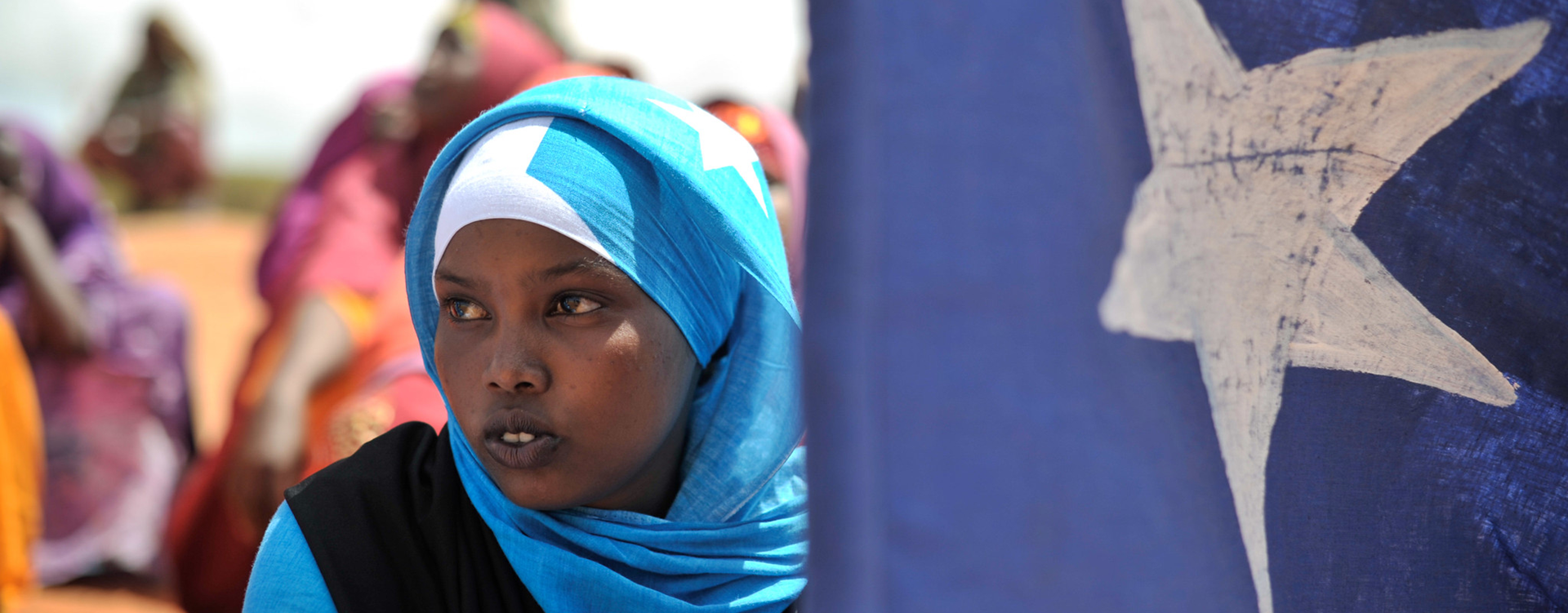
Somalia faces more than regional war spillovers: these shocks are pushing the country’s long-term recovery further out of reach.
As the US-Israeli war with Iran intensifies in the Middle East, global attention is fixed on disrupted shipping routes, rising oil prices and a widening regional crisis. In Somalia, those pressures are not only landing close to home, but also hitting fragile ground. An escalating war is colliding with a country that is economically unstable, politically uncertain, aid-dependent and still struggling to extend state control over its own security.
The current crisis is both a direct threat to Somalia’s recovery and a warning of the risks facing its longer-term development
Israel’s recognition of Somaliland in December 2025 sharpened tensions and underlined how easily Somalia’s internal territorial fractures can be drawn into wider regional rivalries. With Somalia’s ties to the UAE already strained by disputes over sovereignty and external involvement in Somaliland, the country is entering a more volatile environment with limited political cohesion and little room for diplomatic missteps.
Somalia’s position across the Gulf of Aden and along a major maritime corridor leaves it directly exposed to escalation across the Red Sea and beyond. Its export markets are highly concentrated, with Saudi Arabia accounting for nearly 70% of total exports, reinforcing Somalia’s reliance on Gulf markets.
At the same time, Somalia remains heavily dependent on imports of essential goods, leaving it with little room to absorb disruption. According to the UN, rising costs are not only pushing up food and water prices but also doubling aid transport costs and delaying critical shipments of nutrition supplies, medicines and sanitation materials.
In Somalia, where poverty is already widespread, these disruptions hit harder, inhibiting the country’s initiatives to reduce poverty levels. In 2023, around 73% of Somalis (equivalent to 13.4 million people) were living in extreme poverty (on less than US$3 a day). A recent study by the African Futures and Innovation programme at the Institute for Security Studies (ISS-AFI) shows that, while this percentage is expected to fall to 41% by 2043, Somalia’s rapid population growth means the total number of people living in poverty will actually rise, reaching an estimated 13.7 million.
Worse still, the structural conditions shaping poverty remain profoundly unstable. Recurrent droughts and floods erode assets and undermine pastoral and agricultural livelihoods. At the same time, conflict disrupts trade and investments, strains already destabilised institutions and exacerbates informality, leaving most households with little income security.
Somalia is also living through one of the world’s largest displacement crises. By the end of 2024, conflict and violence had uprooted around 3.1 million people, while drought and flooding forced many more from their homes. Cities such as Mogadishu, Bosaso, Baidoa and Hargeisa are absorbing a disproportionate share of the displaced population, and much of this growth has taken the form of informal settlements.
With social protection systems still too limited to absorb repeated shocks, many households remain trapped in a cycle of vulnerability. Recovery, in other words, remains fragile, and another external shock could quickly push more households deeper into crisis.
Somalia’s GDP per capita tells a story of repeated disruption and only gradual recovery. In 2023, it stood at US$1 466, the fourth-lowest in Africa. By 2043, it is projected to rise to US$2 644, lifting Somalia slightly to 46th out of 54 African countries. Even then, income levels would remain far below the projected average for low-income African countries. In other words, despite some progress, Somalia is likely to remain significantly poorer than many of its peers for at least the next two decades.
Somalia’s heavy reliance on aid makes it more prone to external shocks and geopolitical shifts. External assistance has been essential for years, and without it, the humanitarian situation would be even worse. However, too much of that support still goes into responding to repeated humanitarian emergencies rather than donor-funded development projects. That leaves the country exposed in two ways: to the initial shock and to the fragility of the aid system surrounding it.
The current crisis is both a direct threat and an important warning for Somalia's road to recovery and sustainable development. The hard question is: what would make Somalia less vulnerable when the next shock comes? Building the country’s capacity to absorb future disruptions will require more than emergency relief. Three policy choices are central to this shift: Somalia needs sustainable economic buffers, a stronger governance framework and a development model that is less exposed from the outset.
Somalia needs sustainable economic buffers, a stronger governance framework and a development model that is less exposed from the outset
First, Somalia needs to reduce its dependence on imported essentials and diversify beyond a narrow set of export markets. Regional integration across the EAC and through the AfCFTA could support this shift, but only if it is backed by stronger domestic productive capacity, trade logistics and competitiveness. This requires greater investment in agriculture and key commodity chains, particularly livestock, which remains central to exports, as well as agro-processing, energy and trade infrastructure. Somalia’s blue economy is another major untapped opportunity. With the longest coastline in mainland Africa, the country has significant potential to expand its fisheries and broader maritime economy. Yet despite this natural advantage, the fisheries sector still contributes only around 2% of GDP.
Second, Somalia needs stronger state capacity and political coordination. This remains difficult while the federal government lacks full territorial control, al-Shabaab continues to limit the state’s reach, and the transition to a unified national security system remains unfinished. Political tensions have also intensified around the electoral process and constitutional changes, raising the risk of a delayed or disputed transition. A country cannot manage repeated shocks effectively if public authority remains fragmented, implementation is weak and political disputes continue to divert attention from stabilisation and service delivery.
Third, Somalia needs to move beyond managing one emergency after another and strengthen the foundations of sustainability. Humanitarian aid will remain essential, but the bigger task is to effectively mobilise domestic resources, create conducive conditions for investment in productive sectors and promote infrastructure development. Skills development is also critical to maximise productivity.
Most importantly, Somalia will not become less vulnerable through piecemeal reform. The biggest gains come when action is taken across sectors. In ISS-AFI’s Combined scenario, coordinated interventions in agriculture, health and demographics, education, manufacturing, trade, infrastructure and governance deliver significantly larger development gains than the Current Path, lifting around 6 million people out of extreme poverty by 2043.
These necessary policy choices ultimately point to a broader reality: Somalia’s development trajectory remains strongly shaped by external dynamics. The Middle East conflict matters for Somalia not only because of proximity, but because it exposes how deeply the country’s economy, security environment and development prospects remain tied to shocks it does not control.
Image: AMISOM/Flickr
Read the full country report here: Somalia
Republication of our Africa Tomorrow articles only with permission. Contact us for any enquiries.