How regional trade integration can strengthen Africa’s food security
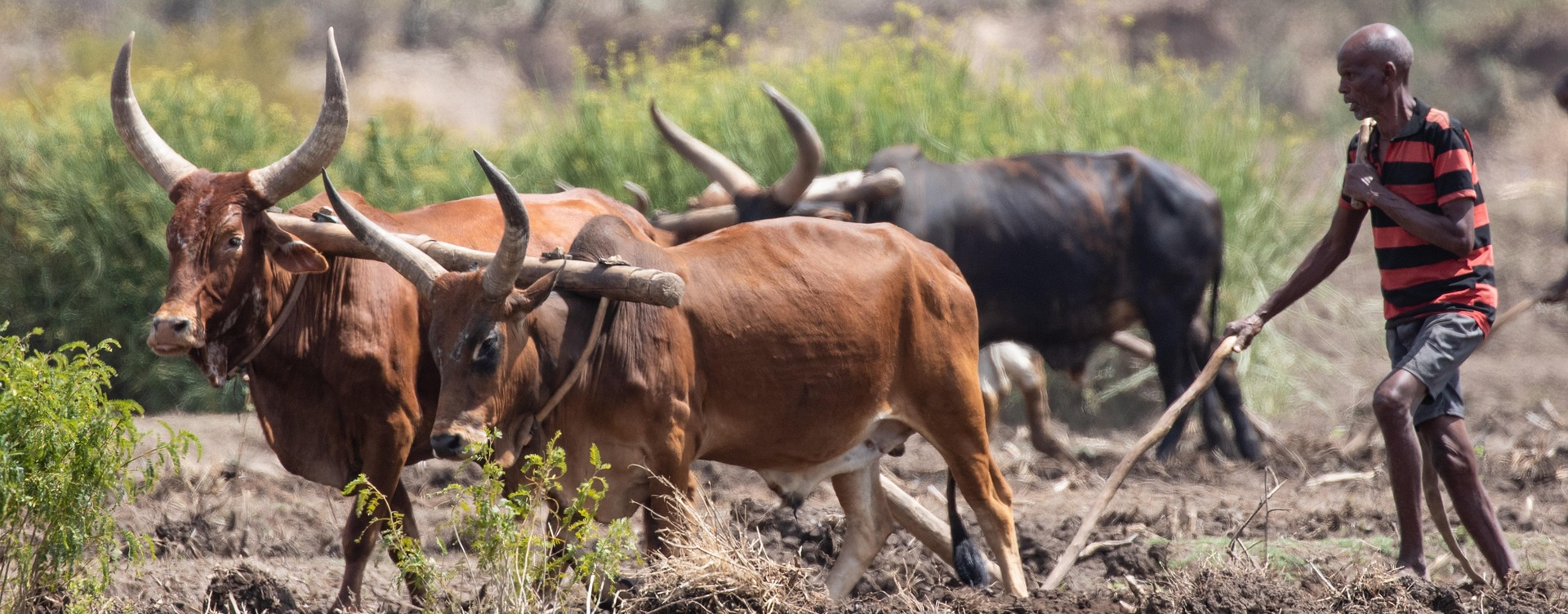


Better-connected agricultural markets can cushion shocks, stabilise supply and reduce exposure to global disruptions.
At the upcoming 14th Ministerial Conference (MC14) of the World Trade Organization (WTO), scheduled for 26–29 March in Yaoundé, Cameroon, members will consider a draft ministerial decision to promote food security within the multilateral trading system. The proposal includes a roadmap for post-MC14 negotiations on policy instruments, the development dimension of domestic support to the agricultural sector, potential impacts on agricultural trade, and improved transparency and monitoring of agricultural markets.
These discussions at the WTO’s highest decision-making body come at a critical moment—five years into negotiations to establish the African Continental Free Trade Area (AfCFTA). They also take place amid rising geopolitical tensions and renewed fragility in global supply chains, which continue to affect food and agricultural input markets, including rising oil prices.
Intra-African agricultural trade nearly tripled between 2003 and 2023, rising from approximately US$6 billion to nearly US$20 billion. This growth has been driven largely by integration efforts within Africa’s regional economic communities (RECs), which have facilitated the expansion of trade flows in staple and cash crops, as well as horticultural products, across the continent.
However, progress has been uneven across regions, with growth ranging from +22.2% in the Tripartite Free Trade Area (TFTA), covering Eastern and Southern Africa, to -38.7% in the Economic and Monetary Community of Central Africa (CEMAC). Africa remains heavily dependent on imports from global markets, with the continent’s agricultural import bill reaching US$122.9 billion in 2022.
The latest edition of the Africa Agriculture Trade Monitor examines the trade–food security nexus and outlines pathways to further expand intra-African trade, highlighting its potential as a powerful resilience-building strategy to help African countries withstand future global crises and supply chain disruptions. In this context, intra-African trade is both a growth opportunity and a mechanism to rebalance risk within Africa’s agri-business and food systems.
Intra-African trade is both a growth opportunity and a mechanism to rebalance risk within Africa’s agri-business and food systems
Against this backdrop, five agricultural trade policy priorities stand out as particularly important for strengthening food security across the continent.
First, regional markets and lower trade barriers offer one of the most immediate pathways to reduce food insecurity. Food insecurity has risen sharply by 32% over the past decade in Africa. One key driver is the continent’s reliance on imports for staple foods, compounded by shocks, such as the Russia-Ukraine war.
Increasing intra-African trade could reduce the continent’s exposure to volatile global supply chains; however, high tariffs and fragmented standards limit the scale and reliability of regional trade. By harmonising sanitary and phytosanitary standards and lowering trade barriers, such as import bans and misaligned tax regimes, African countries could reduce imports and trade deficits during shocks, while ensuring long-term food security.
Second, regional food systems depend on coordinated investment in productivity, logistics and supply chains. Efforts to raise agricultural productivity will require parallel investments in supply chain infrastructure capable of meeting the growing food demand of Africa’s rapidly expanding population. Weak transport networks, inadequate storage and high trade costs continue to fragment markets across the continent, even where tariffs are relatively low.
Agricultural policies should therefore prioritise both expanding regional food production through improved technologies and practices and strengthening logistics, storage and market connectivity to ensure that food moves efficiently from surplus to deficit areas.
Third, productivity gains in key staples, particularly rice, will be essential to reduce import dependence. Rice has become a key staple across Africa, with demand rising rapidly due to population growth, urbanisation and changing diets. Yet average yields remain at just 2.1 tons per hectare, less than half the global average, leaving the continent dependent on imports for about 40% of its rice consumption. At current trends, Africa could become the world’s largest rice-importing region by 2035.
Targeted investments can reverse this trajectory. Improving water-use efficiency, expanding irrigation and adopting drought-resistant varieties would boost production, while stronger aggregation systems and expanded milling capacity could reduce postharvest losses and improve quality.
Fourth, an expanded and better-coordinated fertiliser trade is critical to closing productivity gaps. Fertiliser plays a central role in enhancing agricultural productivity and contributing to food availability. Yet Africa applies just 23 kg/ha of fertiliser on average—far below the global average of 186 kg/ha and the 50 kg/ha target set in the Abuja Declaration. Despite a 165% increase in production since 2000, more than 60% of fertiliser used on the continent is still imported, while intra-African trade remains constrained by high transport costs, fragmented regulations and overlapping institutional mandates.
These vulnerabilities are likely to intensify amid renewed geopolitical tensions affecting global energy and fertiliser supply chains. Disruptions to key maritime routes such as the Strait of Hormuz—through which a significant share of global fertiliser inputs and energy flows—could increase input costs and constrain availability for African producers. This reinforces the urgency of developing regional fertiliser production, distribution and trade systems.
Expanding fertiliser use from current low levels could help close agricultural yield gaps and strengthen resilience to global agro-input disruptions. Africa should also leverage its position as a net fertiliser exporter by facilitating intra-African flows and strengthening distribution systems.
Finally, restrictive non-tariff measures continue to constrain Africa’s export potential and require targeted reform. Beyond tariffs, African exporters face some of the world’s most restrictive sanitary and phytosanitary measures and technical barriers, particularly in major markets such as the United States, China, India and Brazil. Within the continent, inconsistent standards, duplicative inspections and weak regulatory capacity further fragment regional markets, raising costs and slowing intra-African trade.
Strengthening regulatory capacity, upgrading testing infrastructure and improving mutual recognition of standards, particularly under the AfCFTA, would reduce compliance costs while maintaining food safety, significantly boosting intra-African trade.
The future of Africa’s food security will depend on increasing productivity and on making markets work better across borders
As WTO members convene in Yaoundé this week to shape the future of global trade, the future of Africa’s food security will depend not only on increasing productivity but on making domestic markets work better across borders to cushion shocks, stabilise supplies and reduce dependence on volatile global markets. Strengthening intra-African trade is not a substitute for global engagement, but a necessary complement.
By turning regional integration into a practical instrument for food system resilience, African countries can move decisively from commitments to outcomes. The extent to which AfCFTA implementation delivers real improvements will determine whether the continent can establish a more balanced and productive food system that improves food availability, affordability and stability.
Image: dMz/Pixabay
Republication of our Africa Tomorrow articles is only with permission. Contact us for any enquiries.