Can Niger harness its population boom?
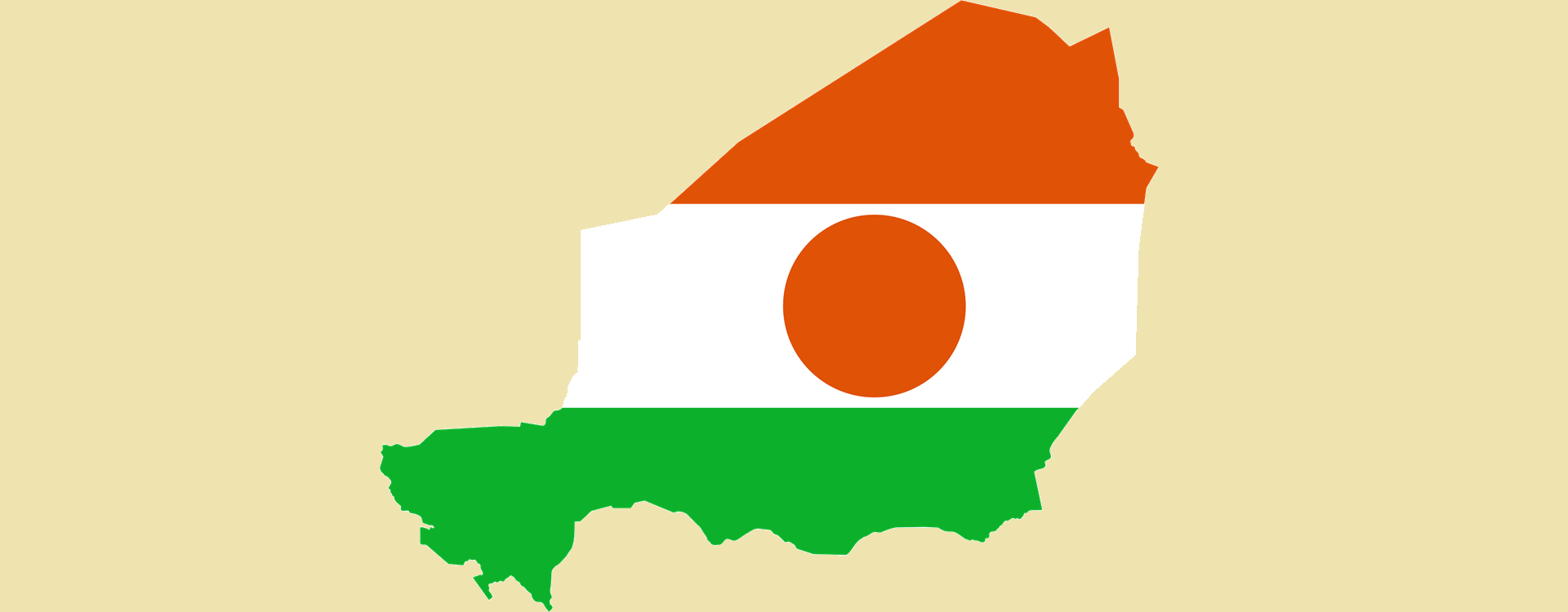
A young and fast-growing population offers potential, but policy choices will determine whether Niger realises a demographic dividend.
Niger stands at the forefront of Africa’s demographic transformation, having experienced one of the fastest population growth rates over the past three decades. Driven in part by a high prevalence of child marriage and early pregnancy, fertility remains among the highest in the world at nearly 6.1 children per woman, corresponding to an annual population growth rate of about 3.8%. The country’s population has expanded from around 8 million in 1990 to more than 26 million in 2023. It is projected to almost double again by 2043, with nearly 47% of citizens in the working-age group (15–64). With a median age of just 15 to 16 years, Niger has the youngest population in Africa. This demographic trajectory offers significant potential for economic growth. Yet Niger continues to face major constraints, particularly in the functioning of its labour market.
Niger faces major constraints, particularly in the functioning of its labour market
Many employees depend on precarious jobs in subsistence agriculture or small informal businesses. Even those employed often remain underemployed in low-productivity and low-paying activities. The agricultural sector employs about 70.6% of the workforce, industry about 7% and services 20–22%. In addition, women’s participation in the labour market remains constrained. Approximately one-third of women are absent from the labour force, a significantly higher share than among men, largely due to early marriage, high fertility and the heavy burden of unpaid domestic work, which limits their time for income-generating activities.
Furthermore, Niger's demographic reality unfolds within a complex political and economic environment. Since July 2023, Niger has been undergoing a period of political transition under military control, initiated by a coup d'état that overthrew the elected president and ended a decade of relative constitutional stability. The transition has resulted in a political reform charter and a transition period of at least five years, with no immediate return to a traditional civilian regime, and has been accompanied by the dissolution of most political parties and the restructuring of the institutional landscape. As a result, Niger is experiencing institutional uncertainty, sanctions, declining external financing and changes in regional alliances. These dynamics influence economic governance, the functioning of public institutions and the implementation of reforms.
Niger’s GDP increased from US$3.9 billion in 1990 to US$15.1 billion in 2023, and the economy remains heavily dependent on the primary sector, with agriculture, livestock, fishing and forestry accounting for nearly half of GDP (47.8%). The industrial sector, including uranium, gold, and, more recently, oil and energy, contributes around 20% of GDP while services, including trade, transport and public administration, account for nearly 27% of GDP. The agricultural and extractive industries certainly boost Niger's economic growth potential; however, growth remains highly vulnerable to climate shocks (droughts) and fluctuations in international commodity prices. Meanwhile, Niger’s immense solar potential is still largely underexploited, yet it could represent a long-term opportunity for both energy access and green industrialisation. In 2024, Niger recorded a reduction in extreme poverty (measured at the international poverty line of US$2.15/day) to 45.3%, down from 47.8% in 2023. Despite this progress, the country still has the fifth-lowest GDP per capita in the world, at US$1 240 in 2023.
This gap between demographic dynamics and inclusive development outcomes highlights the need for reforms across areas, such as the quality of human capital, economic productivity, job opportunities for women and youth, economic diversification and governance.
Against this backdrop, Niger’s policy response has increasingly focused on managing demographic change itself. Niger has implemented policies to improve health and demographic outcomes, with the Plan de Développement Économique et Social (PDES) 2022–2026 identifying population growth as a cross-cutting development challenge. The plan prioritises girls’ education, maternal and child health, and youth employment as key levers shaping long-term demographic trends. In practice, however, implementation has been uneven. While primary school enrolment has expanded, completion rates for girls in rural areas remain low, particularly beyond lower secondary school. Early marriage, still widespread in many regions, continues to truncate educational trajectories and sustain high adolescent fertility.
Niger has invested in expanding basic health infrastructure, notably through the network of Centres de Santé Intégrés (CSI) and the policy of free healthcare for children under five and pregnant women. These measures have contributed to improvements in child survival. Furthermore, the country has made significant progress in health policies aimed at harnessing its demographic dividend, focusing on integrating a gender-sensitive approach into the budget process (BSDD) and improving reproductive, maternal, neonatal and child health services. Life expectancy, currently around 65 years, could reach 74 years by 2043 if maternal and infant mortality continue to decline. The national plan to strengthen universal health coverage and promote family planning, although still limited (the rate of modern contraceptive use reached only 12.7% in 2023), is expected to reduce fertility to 4.1 children per woman by 2043. This gradual fertility decline will reshape the dependency ratio (0.99 in 2023 and below the sustained income growth threshold), delaying the demographic dividend.
This trajectory shows that population policy should be more closely linked to a desire for structural transformation of the Nigerien economy. Thus, economic diversification, particularly through high-value-added agriculture, renewable energy and labour-intensive services, would increase employment opportunities for the rapidly growing young population. Without such a change, most new labour market entrants will remain confined to informal work, thereby reducing the potential benefits of population growth.
Beyond demographic and health reforms, the central challenge lies in translating population change into productive capacity. Strengthening human capital remains essential to this transition, particularly by extending girls’ education and delaying early marriage. In 2023, the gross primary school enrolment rate reached 82.8%, but gender disparities remain significant: 66% of girls aged 15 to 19 are married, limiting their access to secondary education. Policies that keep girls in school, supported by community and religious leaders, remain vital for social outcomes and for strengthening future workforce skills. At the current pace of reform (in terms of universal access to primary school, reduction of dropouts, professionalisation of teaching and teacher training), Niger’s young population aged 15 to 24 could achieve an average of 8.5 years of schooling in 2043, compared to 6.9 years today. Accelerating reforms that remove the requirement for parental or spousal consent for married teenage girls to access family planning services would enable married and pregnant teenage girls to return to school. Though modest, this gain would be decisive in strengthening national skills and improving labour market suitability.
Economic diversification remains essential to creating sufficient employment opportunities in Niger’s economy. Building human capital alone is not sufficient. Diversification must also be developed by encouraging creativity among trained young people. Many analyses have so far focused on the idea that developing economies must create jobs to absorb the young people entering the labour market. However, Niger's productive fabric does not yet allow for this, which often leads to an expansion of informal work and its consequences (low wages, precarious working conditions, low productivity). The case of Niger underscores the need to increase investment in the quality of education and in governance policy. For instance, the government must strengthen governance and tax systems to mobilise resources and attract foreign investment, while prioritising public spending in sectors that create real value, such as infrastructure and technology. Transparent institutions, investor-friendly regulations and targeted incentives will transform Niger's population boom into an engine for sustainable development.
Niger’s challenge is therefore not demographic growth itself, but how demographic pressure can be transformed into economic opportunity. A recent study conducted by the African Futures and Innovation programme at the Institute for Security Studies (AFI-ISS) shows that the successful implementation of health and demographic reform could enable Niger to strengthen its demographic dividend and thus achieve development that is more inclusive by carrying out targeted cross-sectoral interventions. In the Demographics and Health scenario, the ratio of working-age persons will steadily improve, reaching 1.1 to one by 2030 and 1.4 to one by 2043. Niger will reach the ratio of 1.7 to one by 2058.
Niger’s challenge is not demographic growth itself, but how demographic pressure can be transformed into economic opportunity
Niger's demographic window remains wide open, but it is time-limited. Sustained reforms remain essential. Coordinated action across health, education, gender equality and economic policy, implemented effectively and equitably, could gradually change the demographic dynamics and strengthen the foundations for a future demographic dividend. Demographics do not create dividends on their own; they create opportunities. These opportunities must be seized through bold, coordinated and inclusive policies. Africa can transform its demographic growth into an engine of shared development, and Niger could be one of the most compelling examples.
Image: GDJ/Pixabay
Read the recently updated full country analysis of Niger here.
Republication of our Africa Tomorrow articles only with permission. Contact us for any enquiries.