Governance, not oil, will shape South Sudan’s future
Fragility will persist unless public institutions can translate national wealth into tangible gains for citizens.
South Sudan’s future will depend less on oil extraction and more on its ability to strengthen governance.
Fifteen years after independence, South Sudan remains one of the world’s most fragile states, ranking among the top three most fragile nations globally in the 2024 Fragile States Index. The country’s key challenges include persistent insecurity, economic volatility, weak institutions, widespread human rights violations and extreme poverty.
Governance hurdles lie at the centre of these problems, constraining development and undermining prospects for long-term stability. According to the 2023 Ibrahim Index of African Governance (IIAG) report, South Sudan scored 19 out of 100 in overall governance, ranking last out of all 54 African countries. It also ranked 180 out of 180 countries in Transparency International’s 2023 Corruption Perceptions Index, underscoring the depth of the governance crisis.
Weak governance structures have affected service delivery, leaving basic services such as healthcare, education and infrastructure limited across much of the country. At the same time, persistent insecurity and economic instability have eroded public confidence in state institutions. Although a revitalised peace agreement was signed in 2018 and the Transitional Government of National Unity (TGoNU) was formed in 2020, implementation has been slow and uneven.
Political power remains heavily personalised, with decision-making often shaped by elite individuals rather than formal institutions. Transitional political arrangements have been repeatedly extended, while delays in implementing reforms and holding elections have deepened uncertainty about the country’s democratic trajectory.
These governance failures are not only political; they have also had significant economic consequences. In 2014, the country’s income status was downgraded from a lower-middle-income to a low-income after its gross national income (GNI) per capita fell below the World Bank’s year threshold of US$1 045. This downgrade reflected the country’s sharp economic contraction following the 2013 civil war. Over the same period, GDP per capita (PPP) declined significantly, from US$2 697 in 2011 to US$1 557 in 2014, highlighting the scale of the economic downturn.
Governance failures are not only political; they have had significant economic consequences for South Sudan
South Sudan is also in a severe humanitarian crisis. In 2025/26, roughly 7.5 to 7.7 million South Sudanese face high levels of acute food insecurity, with some areas experiencing catastrophic conditions. This is despite the country having substantial agricultural potential: around 50% of its arable land is classified as prime agricultural land, nearly five times the per capita rate of Kenya, Uganda or Ethiopia.
This fragility is compounded by the structure of South Sudan’s economy. Oil provides over 90% of government revenue and nearly all export earnings, leaving the country extremely vulnerable to external shocks. In 2024, for example, conflict in neighbouring Sudan shut a pipeline carrying approximately 70% of South Sudan’s oil exports, causing a fiscal crisis. In essence, oil revenues initially helped unite warring factions in pursuit of independence, but later created perverse incentives that deepened dependence and undermined governance reforms.
Although the extraction of oil and other natural resources could generate significant revenues and improve living standards for South Sudanese, evidence from other resource-rich African countries shows that this does not automatically translate into broad-based development. Whether South Sudan benefits from its resource wealth will depend on whether revenues are effectively managed and channelled into investments in key development sectors (such as agriculture, agro-processing, renewable energy, infrastructure, education and services). Effective governance, sound fiscal management and deliberate investment in human capital and productive sectors will be critical to ensuring that resource wealth delivers sustainable and inclusive outcomes.
An increasing body of literature has shown that weak governance and corruption severely hamper economic performance and development. Governance is, thus, a main pillar of the country’s National Development Plan (2026-2036). South Sudan’s sustainable progress will depend on strengthening accountability, building capable public institutions and consolidating peace. Without a stronger governance framework, South Sudan’s natural wealth is unlikely to translate into economic development and stability.
Governance is therefore not only a political imperative but a development one for South Sudan. Looking ahead, a recent study by the ISS African Futures suggests that addressing insecurity, fragility and institutional weaknesses that continue to constrain development could reduce poverty by 3.2% and increase economic growth by 7.7% in 2043 relative to the respective Current Path forecasts for 2043.
Improved security and stronger, more accountable institutions would bolster investor confidence and macroeconomic stability, supporting faster and more resilient growth and pushing GDP per capita 5.2% higher than under the Current Path projections. While reforms are needed across many areas, prioritising state capacity, the rule of law and public financial management will be key to rebuilding trust, improving service delivery and unlocking South Sudan’s long-term economic potential.
Improved security and more accountable institutions would bolster macroeconomic stability, supporting faster growth and pushing GDP per capita 5.2% higher than under the Current Path
While governance and security reforms alone would yield important gains, the study further finds that implementing integrated sectoral reforms across eight sectors (agriculture, education, governance, infrastructure, health and demographics, financial flows, manufacturing and trade) could significantly accelerate South Sudan’s economic performance. Under this Combined scenario, the average economic growth rate could nearly double to about 7.5% per year between 2027 and 2043, compared with 4.1% under the Current Path.
Faster growth would raise GDP per capita by an additional US$907 and substantially reduce extreme poverty. By 2043, the share of the population living below the US$2.15 poverty line could fall to 49.2%, compared with 73.2% under the Current Path. In practical terms, around 4.5 million more South Sudanese could escape extreme poverty by 2043. These findings highlight the transformative potential of coordinated, cross-sector reforms to accelerate sustainable and inclusive growth.
Ultimately, South Sudan’s future will be shaped less by the resources it possesses than by the institutions it builds to govern them. Oil can provide revenue, but without stronger governance, accountability and state capacity, it is unlikely to deliver broad-based development. The country’s long-term stability and prosperity will depend on whether political leaders can turn resource wealth into a foundation for reform rather than a source of continued fragility.
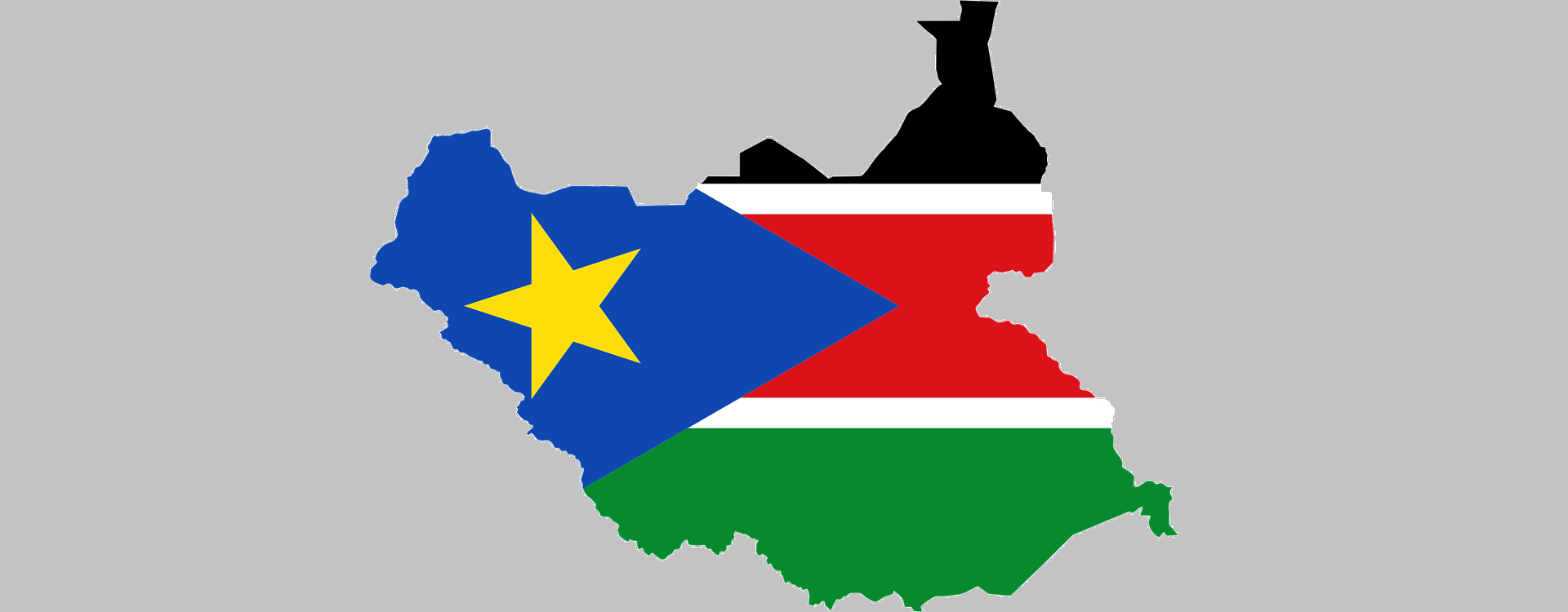
Image: GDJ/Pixabay
Read the full recently updated country analysis of South Sudan here.
Republication of our Africa Tomorrow articles is only with permission. Contact us for any enquiries.