Critical minerals and energy resources in Africa: myth or opportunity?
The continent’s energy future is shaped less by scarcity than by geopolitical concentration, investment timing and strategic dependence.
For several years, concerns about a potential shortage of critical minerals used in advanced engineering and China’s dominant role in this regard have been prominent in Western circles. However, a report by the International Energy Agency (IEA) concludes that the world is not running out of critical minerals. Rather, under aggressive energy transition scenarios, there is a risk of shortages of a few specific minerals in the 2030-2040 timeframe, given the rapid increase in demand for data centres and the energy they consume. Artificial intelligence requires more electricity and critical minerals each year.
For Africa, the shifting geopolitics around energy and critical minerals create both vulnerabilities and opportunities. The continent remains heavily dependent on imported refined fuels and external capital, yet also holds many of the minerals central to future energy systems.
The focus of the IEA's report is on the minerals critical to energy futures, namely copper, lithium, nickel, cobalt, graphite and rare earth elements. Rather than focusing on shortages, the report shows that the biggest challenges are timing, investment and geopolitical concentration, not scarcity.
At present, China processes the majority of the world’s critical minerals, with its control over value chains ranging from 50% to 90% of the refining capacity, depending on the material, and most of these are subject to some form of export control. It is not that critical minerals are not abundant. In fact, they are found in many countries. For example, portions of the Smackover Formation in south Arkansas and east Texas alone exceed the IEA's projected global car battery demand for 2030 by more than 9 times.
China processes the majority of the world’s critical minerals, with its control over value chains ranging from 50% to 90% of the refining capacity, depending on the material
Rather, developed economies have often maintained strict domestic environmental standards and outsourced the dirty, energy-intensive processing stages over the course of decades. In time, technology could change all of this. New processes could unlock global extraction and beneficiation, ending the current challenge of shortages. However, it takes almost two decades to develop new mines, and investment in critical mineral exploration and processing has slowed after a 2022-23 surge due to price volatility and uncertainty.
The problem with critical minerals, the IEA notes, is that the geographical concentration of refining and processing has increased across nearly all of them, particularly for nickel and cobalt. Western concerns were sharpened when, in December 2024, China restricted the export of gallium, germanium and antimony, key minerals for semiconductor production, to the US, followed by further announcements in 2025. The fact that these export controls followed the first Trump administration's unilateral tariff increases on China in 2018 is an important context for these decisions.
Recently, the blockage of the Straits of Hormuz, which followed the IEA report, has reinforced the importance of diversification as a watchword for energy security. Many countries dependent on imported oil and gas from the Middle East now find that supplies are scarce, intermittent and expensive.
Africa has sufficient, and in many cases abundant, oil and gas reserves to meet its internal energy demands, but it cannot currently do so due to a lack of infrastructure, limited refining capacity and low levels of energy investment. As a result, most African countries depend on fossil fuel imports for their energy, and many oil and gas exporters subsequently import the refined petrol and diesel at much higher cost.
Efforts to enhance energy security are likely to increase the cost-effectiveness of domestic energy sources, thereby reducing external dependencies and benefiting the national balance of payments. Africa’s energy futures are explored through various long-term scenarios on the African Futures website, including the extent of the continent’s dependence on imported fossil fuels, given current low levels of renewable energy.
The required response is self-evident: national diversification to wind and solar, recycling, supply-chain diversification of fossil imports, investment in mining and refining projects, greater use of biomass and new technologies that reduce dependence on scarce minerals. Where possible, countries should explore and invest in stable baseload energy projects, such as hydro, nuclear and geothermal.
The required response is self-evident: national diversification, investment and new technologies that reduce dependence on scarce minerals
Energy diversification is not limited to any particular fuel type or technology. For example, hydropower is generally considered one of the most stable and reliable baseload energy sources. Yet changed weather patterns have started to undermine its historical predictability. Recently, changes in average rainfall in Zimbabwe and Zambia made their reliance on hydropower from the Kariba dam an unexpected risk when low water levels followed an El Niño drought in 2024-25, resulting in large electricity shortages. The trend is global and includes Brazil, Ecuador, China, the United States, Ghana and Ethiopia.
Events in these and other countries underline the importance of a diversified energy supply, including national sources and renewables such as wind, solar, biomass and even nuclear and geothermal, to complement imported energy.
The best example of how rapidly technology can disrupt path-dependency is the extent to which the shale revolution in the US from the mid-2000s onwards unlocked large oil and gas reserves. As a result, US output surged, reducing and eventually replacing imports to the extent that, by around 2019, the US became a net energy exporter, reversing decades of dependence on foreign oil from the Middle East and other sources. Today, the US is the world's largest producer of oil and gas, and it recently began exporting oil in addition to its large natural gas exports. It also consumes most of both, since its economy is more energy-intensive than those of other high-income countries and still larger than China in absolute terms.
If it plays its cards well, Africa is set to benefit from all of this. It is resource-rich but investment-poor. To the extent that data is available (Africa is the least explored of all continents, meaning the potential for additional oil and gas finds is big), it holds large shares of cobalt, platinum, manganese, bauxite, graphite, lithium and other minerals. Yet it attracts a relatively small share of global exploration and mining investment. The main constraints are a lack of capital, the associated risk given political and social turbulence, and limited infrastructure, meaning that mining companies have to build the railways and provide the energy to enable extraction.
Africa is resource-rich but investment-poor: the main constraints are a lack of capital, the associated risk given political and social turbulence, and limited infrastructure
All these constraints can be overcome, as substantial global capital is available for exploration and even beneficiation, provided the projects are bankable. Policy predictability, the rule of law and long-term stability considerations are therefore critical in a continent where concerns and instability in one country are often generalised to apply regionally. Improving investor confidence will also depend on security, institutional reforms, access to infrastructure and long-term political stability. The financial flows theme on the African Futures website explores the reasons for Africa’s capital shortage and models future prospects under various scenarios.
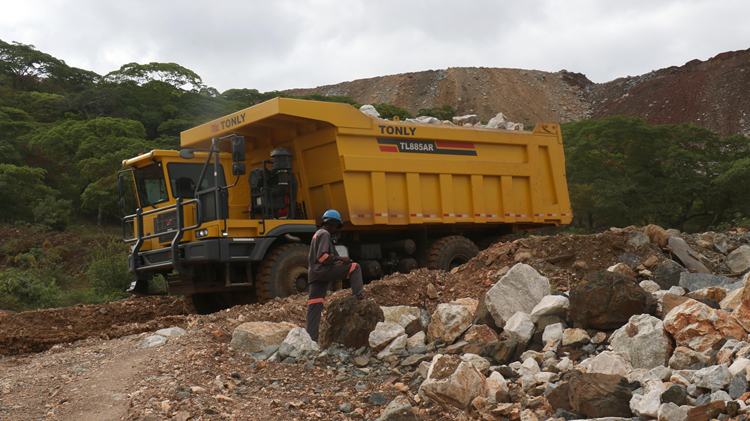
Instead, low levels of domestic capital mean that China is the dominant investor in mining and processing, especially in countries such as the DR Congo, Zimbabwe, Angola and Zambia. Africans are working hard to develop local refining and manufacturing, such as in battery value chains, but progress is uneven and slow.
Perhaps the largest structural risk is that technological innovation could render the current concerns about key minerals a thing of the past. In the meantime, pending a revolution that completely upends current energy production and storage technologies, competition over critical mineral supply chains and processing capacity is likely to intensify. Africa, therefore, has significant potential to help the world meet its growing energy demand and critical minerals needs, while the associated investments could unlock investments in dual-use infrastructure, catalyse structural transformation and enhance social development.
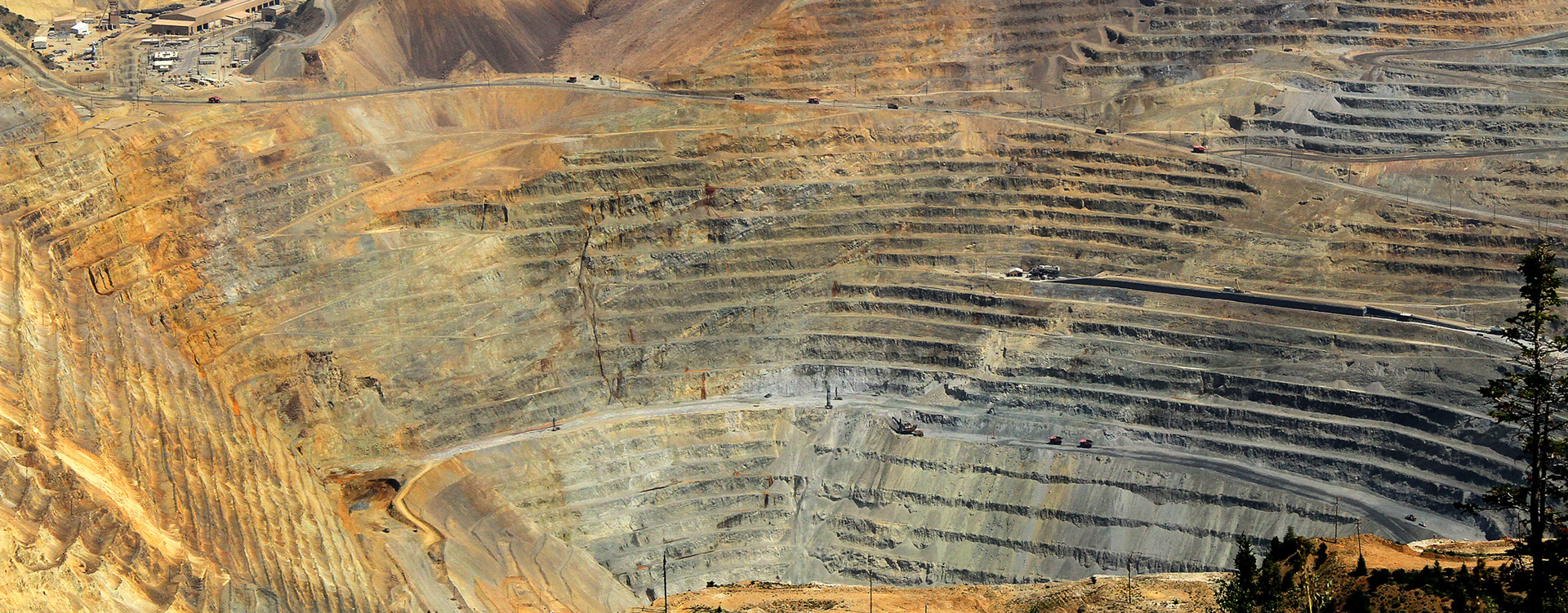
Image: arbyreed/Flickr
Republication of our Africa Tomorrow articles is only with permission. Contact us for any enquiries.