Africa’s security future beyond UN peacekeeping
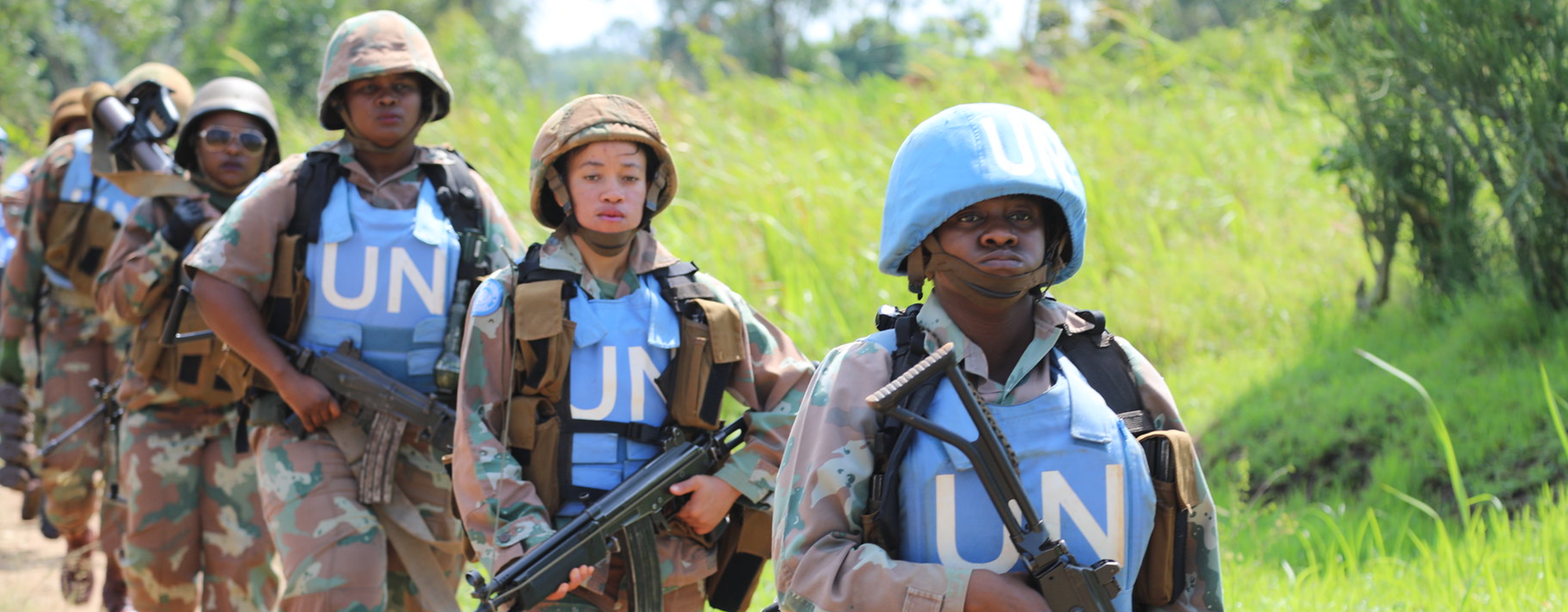
Shrinking UN peacekeeping funds are likely to push Africa toward more fragmented, bilateral and private security arrangements.
Given slow economic growth, a large youth bulge and destabilising external engagement such as from Russia and the UAE, Africa is set to become more unstable in the next few years. Wishing it were not so does not change the steady increase in violence that followed the COVID-19 pandemic in 2020. Both large data providers that track violence, ACLED and UCDP, indicate that global instability and organised violence have increased significantly since then, spreading geographically. The number of active armed conflicts has reached historic highs, for example.
Africa is particularly affected, given that much of the international support for conflict prevention and management that previously came to the continent has nosedived.
There is no shortage of troops available for deployment. Already, Africa provides more than half of all UN peacekeepers. Rather, it is UN funding that is under severe pressure, though, at US$5.6 billion, the UN’s peacekeeping budget accounts for less than 0.2% of the world’s military spending. Collectively, Africa’s 54 states contribute only 1-2% of the UN peacekeeping budget, while the assessed contribution of the five permanent members of the UN Security Council (the P5) accounts for 62%, given their large economies and role in approving missions.
Some 57 member states do not pay up, but the largest outstanding chunk is from the United States (US). Effective US payments to the UN have declined sharply in recent years, including arrears of US$1.8 billion to the peacekeeping budget. US arrears follow the US Congress's decision some years ago to cap contributions at 25% of the total UN peacekeeping budget, rather than their 26.9% obligation as set by the UN General Assembly. Ahead of the 2027 financial year, which starts in October, it remains unclear what the US will ultimately contribute to next year’s budget. In April 2026, the relevant Congressional subcommittee proposed a 60% reduction in US peacekeeping funds, contingent on various UN reform demands.
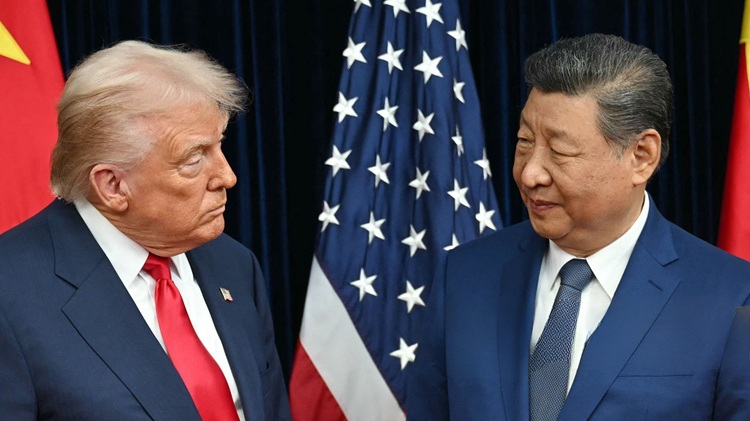
While the US's contribution (and influence) to UN peacekeeping is declining and uncertain, China’s role has grown. It is the only P5 member to contribute troops to UN missions in meaningful numbers, and its assessed share of the UN peacekeeping budget has steadily increased, now accounting for 23.8% for 2026, up from 18.7% in 2024.
Given the UN’s reluctance to deploy missions in high-risk areas such as Somalia, the African Union (AU) has long sought a mechanism through which the UN could contribute to regional missions. This eventually culminated in UN Security Council Resolution 2719, which allows up to 75% of AU-led peace support operations to be funded through UN-assessed contributions, but it has yet to be implemented.
Unlike UN peacekeeping, there are no automatic funding mechanisms for AU missions, which rely on ad hoc donor pledges. This results in ongoing budget shortfalls, delayed payments and limited ability to plan beyond a few months. The AU’s US$400 million Peace Fund, built up slowly over several years, has disbursed only a few million dollars for early response and mediation support, given that the total fund would barely cover a single major AU mission for one year.
Unlike UN peacekeeping, there are no automatic funding mechanisms for AU missions, which rely on ad hoc donor pledges
So what would happen if the US were to follow through and substantially reduce its financial support for UN peacekeeping? In the current constrained-growth context, it is unlikely that others, including China, would be able or willing to fill the gap entirely.
The most prominent non-UN or non-AU emerging practice is for the US and others, such as the EU, to bilaterally fund the deployment of national security forces in another country, as seen with Kenyan police and military deployment in Haiti and troops from Rwanda in northern Mozambique. The former was paid by the US, while the latter is partly funded by the EU, with France playing a strong role, to secure TotalEnergies’ huge LNG investments in Mozambique’s gas fields.
Amongst many external partners, Turkey appears to have gone furthest in Somalia in integrating commercial interests with the provision of security by its armed forces, private contractors and state-backed firms. Its recent offshore oil drilling activities off the coast of Somalia are an example of the benefits of such support, including infrastructure projects, construction contracts and trade agreements.
These examples point to a more commercially anchored model of security provision in the future, where external support is tied directly to the protection of strategic assets and mineral supply chains.
There are also other models. Wagner/the Russian Afrika Corps props up the military regime in Mali, amongst others, and US forces from Africom that have been operating in support of the Nigerian and Somali armed forces. UAE-backed Colombian mercenaries have reportedly provided support to Sudan’s paramilitary Rapid Support Forces, while reports regularly surface of foreign contractors of various nationalities being active in the eastern DR Congo (hired by the government in Kinshasa). Many have been contracted to provide and operate drones, which have become ubiquitous in the war in Ukraine.
Private military companies may generally be cheaper than UN forces, but the fear is that they adopt heavy-handed tactics with little regard for due process or the protection of civilian lives, as occurred with Wagner/the Afrika Corps.
Africa’s security responsibility rests first with national governments. It is hardly feasible to expect other African countries or non-African countries to bear primary responsibility (or have the will or capacity) to stabilise DR Congo, South Sudan, Sudan, Nigeria, Libya, Mali or any other conflict-affected African country. Although structural drivers of conflict matter, such as demographic pressure, poor governance is the central source of violence and instability in Africa. More effective and developmental governance is therefore essential for a long-term solution to insecurity. It is time that Africans take greater ownership of their security future, but even then, the challenge is to first stabilise violence-torn countries before better governance can take root.
In that process, Africans need to tailor their security structures and spending to their actual security challenges, such as ensuring the rule of law, protecting rural areas and securing borders. This also means stepping away from inherited European models that remain poorly suited to many African contexts; for example, defining the purpose of the military to defend against external, conventional attack is often ill-suited to African realities, where many of the most pressing threats are domestic. The result is that training and the purchase of high-end military equipment, such as fighter jets, are often a waste of resources compared to the need to acquire helicopters and train for support to the police, rural safety and counter-insurgency.
Africans need to tailor their security structures and spending to their actual security challenges, such as ensuring the rule of law, protecting rural areas and securing borders
Africans also need to stop interfering in their neighbours' affairs. The AU Non-Aggression and Common Defence Pact, adopted in 2005 and entered into force in 2009, commits AU member states to refrain from aggression or the threat of force against one another, respect sovereignty and territorial integrity, and avoid supporting armed groups or subversive activities against other African states. It requires cooperation on collective security and defence matters, as well as on joint responses to threats to peace and stability in Africa, yet there are many instances of leaders from one country militarily intervening in another's affairs.
UN peacekeeping is unlikely to disappear anytime soon. Yet rising costs, funding pressures and global fracturing point to a more complex and messy landscape for the provision of security futures. For African governments and regional institutions, the challenge will be to avoid replacing one dependency with another while building more accountable, fit-for-purpose security systems.
Image: MONUSCO/Flickr
Republication of our Africa Tomorrow articles only with permission. Contact us for any enquiries.