Africa’s evolving Red Sea security dynamics and implications for Europe
Listen to this article
Gulf rivalries are drawing African Red Sea states into a new security order, testing continental agency and Europe’s regional role.

Ongoing conflict across the Middle East has laid bare shifting regional geopolitical fault lines that are pulling African states into an emergent macro-conflict system anchored along the Red Sea littoral. The emergence of this system stems from the interaction of several overlapping crises arising from US and Israeli military offensives against Iran and renewed Houthi attacks on shipping lanes, Saudi-Emirati competition across the Horn of Africa, and other disputes amongst African states over sovereignty and regional influence. Should these crises deepen and become self-reinforcing, the implications for African states across much of the Red Sea littoral could be dire.
These developments also matter directly to Europe, whose trade and maritime security depend heavily on the Red Sea corridor. They place African states at the centre of an evolving security order in which European and Gulf actors offer markedly different forms of partnership.
Recent developments place African states at the centre of an evolving security order in which European and Gulf actors offer markedly different forms of partnership
Gulf rivalries reshape the Red Sea
The most recent US and Israeli offensive against Iran has added further momentum to these overlapping dynamics. Iran’s retaliatory offensives against Gulf actors have called into question longstanding presumptions over the reliability of the US and its security blanket for its traditional Gulf allies. In turn, these concerns have precipitated more overt hedging strategies among regional powers, most notably the United Arab Emirates (UAE) and Saudi Arabia, whose prior security coordination to counter Iranian influence has buckled under the weight of opposing conceptions of regional order and claims to regional leadership.
Abu Dhabi is increasingly testing Riyadh’s leadership credentials by projecting its power through a networked approach that leverages its expansive investments in ports and strategic infrastructure, alongside its deepening ties to non-state actors and secessionist movements (which actively challenge central state authorities). This has been particularly evident in Yemen, Sudan, Libya and Somalia (through the Emirates’ support to the breakaway regional administration in Somaliland and the autonomous regional administration in Puntland). Importantly, Abu Dhabi has also deepened engagement with Israel following its normalisation of relations with Jerusalem under the Abraham Accords.
Riyadh, by contrast, has attempted to undercut Abu Dhabi’s efforts by supporting recognised central state authorities and building countervailing partnerships with like-minded regional actors. In Yemen, for example, this has included pragmatic cooperation with Islah, an Islamist movement associated with the Muslim Brotherhood (while the UAE has maintained a zero-tolerance approach to political Islamist groups). This latter consideration also helps explain Riyadh’s willingness to deepen ties with Qatar and Turkey, while compartmentalising earlier disagreements over the threat of political Islam. At the same time, Riyadh’s closer coordination with Egypt, Pakistan, and Turkey can also be read as an attempt to reinforce state-centric regional partnerships, constrain the UAE, and hedge against Abu Dhabi’s close strategic relationship with Israel.
This fluid security environment is particularly consequential for African states along the Red Sea, which can offer access to ports, airfields, intelligence and security partnerships.
African states navigate competing partnerships
As the world’s most populous landlocked state, Ethiopia has a structural interest in diversifying access to the sea beyond its heavy dependence on Djibouti. The port of Berbera in Somaliland accordingly remains attractive because the state-owned Emirati logistics company DP World has already developed the port, economic zone, and an Ethiopia-facing transport corridor. But the diplomatic context has changed since the controversial 2024 Ethiopia-Somaliland memorandum. Under the December 2024 Ankara Declaration, Ethiopia and Somalia recommitted to each other’s territorial integrity and agreed to negotiate Ethiopian commercial sea access under Somalia’s sovereign authority, with technical talks having begun in February 2025.
This has not, however, removed Ethiopia from Gulf competition. Rather, it has increased the number of actors with an interest in shaping how Ethiopian sea access is secured. Against this backdrop, Turkey has become an important mediator between Ethiopia and Somalia, while the UAE retains deep commercial and political ties with Ethiopia and Somaliland. At the same time, reports in 2026 of training and logistical networks supporting Sudan’s Rapid Support Forces (RSF) from Ethiopian territory (reports which Ethiopia and the UAE have flatly denied) have added a further layer of tension with Sudan. Ethiopia’s strategic value therefore derives from its market, military weight, corridor ambitions and position between the Red Sea coast and conflicts further inland.
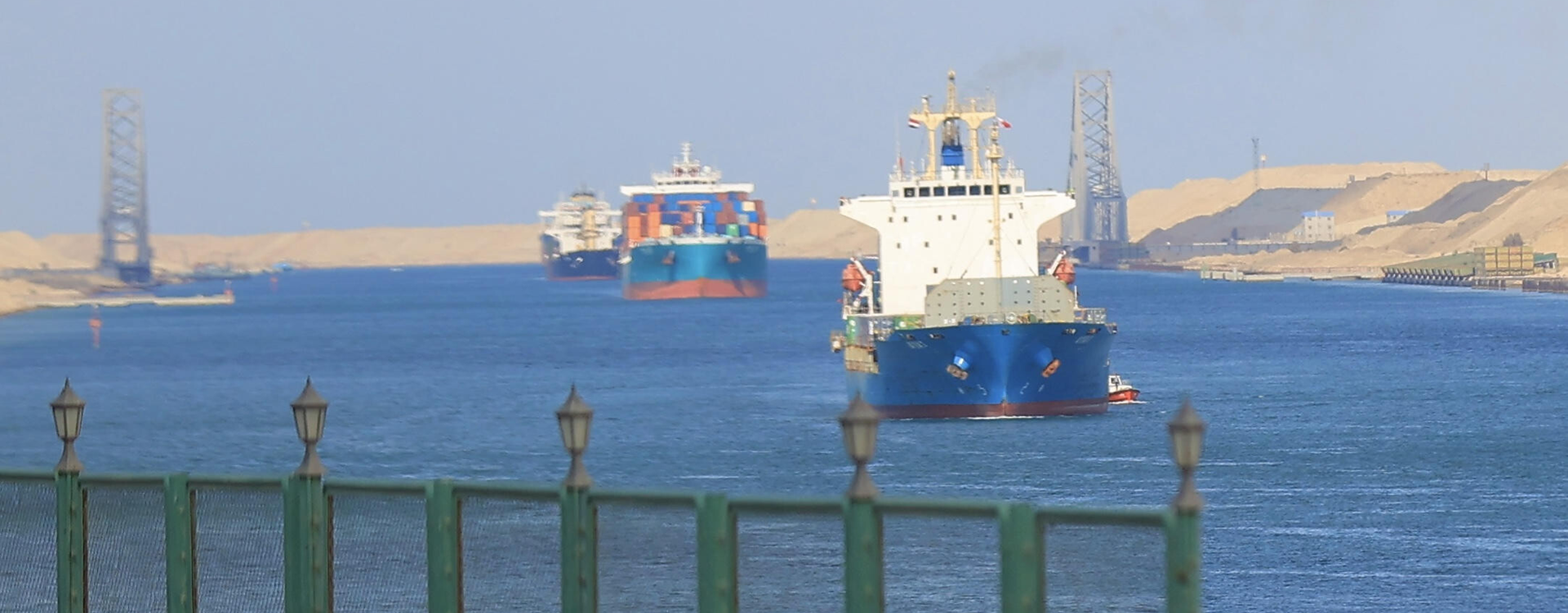
Egypt, by contrast, controls the Suez Canal, possesses substantial military and naval capabilities, and is strategically positioned at the northern end of the Red Sea system. Disruption around Bab al-Mandeb directly affects Suez traffic and Egyptian revenues, while its proximity to instability stemming from Sudan and Somalia is also tied to regional security interests.
Egypt’s rivalry with Ethiopia also remains important. Building on tensions over the formal inauguration of the Grand Ethiopian Renaissance Dam in September 2025, Ethiopia has revived plans for three additional Blue Nile dams (namely, Karadobi, Mandaya and Beko Abo), prompting renewed Egyptian objections and structurally locking it into a contested relationship with Ethiopia. This has led Cairo to increasingly pursue actions that seemingly undercut Addis Ababa’s room for manoeuvre, such as opposing Ethiopian sea-access claims and unilateral control over Blue Nile waters, and bolstering ties with Eritrea. All of which has pushed Cairo into a much sharper regional geopolitical alignment with Riyadh.
Sudan’s value to Gulf actors and integration into a potential broader conflict system stems from both its conflict and its geography. Port Sudan remains a crucial external gateway for the Sudanese Armed Forces. Foreign weapons, logistics and personnel continue to sustain the war. The UAE faces persistent allegations of supporting the RSF, which it denies, while Egypt and Saudi Arabia have generally maintained closer ties with the Sudanese Armed Forces.
Somalia, on the other hand, is particularly notable against this backdrop given its considerable coastline and proximity to the Bab al-Mandeb. The federal government’s decision in January 2026 to cut ties with the UAE was rejected by breakaway Somaliland and autonomous Puntland (as well as Jubaland), all of which have their own Emirati relationships. Turkey, Qatar and Saudi Arabia, however, have deepened engagement with the federal government, as these actors all pursue their maritime and security interests through rival state authorities.
Europe’s role and Africa’s strategic choices
Europe is not absent from this security landscape. The EU maintains a substantial maritime presence through Operation ASPIDES, which protects commercial shipping in the Red Sea and Gulf of Aden, and Operation ATALANTA, which covers the western Indian Ocean and parts of the Red Sea. In July 2026, the EU and Djibouti signed a Status of Forces Agreement for ASPIDES, underlining how dependent European naval activity is on African partners for access, logistics and support ashore.
The EU also remains engaged in Somalia through its civilian capacity-building mission (EUCAP Somalia) and military training mission (EUTM Somalia), alongside the regional EUNAVFOR Operation ATALANTA. All three mandates currently run until 28 February 2027. EUCAP works on maritime law enforcement and coast-guard capacity in Mogadishu, Somaliland and Puntland, while the wider EU approach emphasises accountable security institutions and maritime governance. This is, of course, a very different model of influence from that used by Gulf powers, where Europe continues to provide public maritime security, training and institutional support, without attaching this to greater access to ports, political patronage and access to strategic infrastructure.
However, the sustainability and long-term attractiveness and viability of this approach should be questioned as African states along the Red Sea are seemingly being pulled into a much sharper geopolitical orbit with rival Gulf powers, on account of the roles they may play within competing regional hedging strategies. The associated strategic premium afforded to these African states will likely continue to reinforce existing Gulf investments in ports, logistics, energy and other strategic infrastructure, while also spurring greater defence and security coordination. Accordingly, commercial engagements may become increasingly intertwined with quid pro quo defence, security, and intelligence-related commitments, as a far more compelling alternative to what’s on offer from Europe. However, this will also likely entrench African states within rival security architectures and geopolitical alignments that narrow their room for manoeuvre.
Consequently, African states may have to confront a particularly tricky dilemma sooner rather than later: they can either engage Middle Eastern powers through a more coordinated approach that channels external competition toward advancing a common developmental agenda or prioritise more fragmented bilateral engagements that could provide immediate investment, diplomatic backing and support for pressing security-related concerns.
The latter approach could lead to short-term individual gains; however, this would naturally come at the expense of robust, longer-term, shared developmental gains (linked to regional integration, industrialisation, and the development of continental governance and finance policy institutions).
A more purposeful continental response could accordingly assign North and East African states a leading role in structuring the continent’s engagement with Middle Eastern powers, as their proximity, coupled with the growing strategic premium, provides them with disproportionate access and influence that could be exercised on the continent’s behalf.
The central question is whether Africa will harness this new value to advance shared development, or allow it to deepen the continent’s fragmentation.
Image: picture alliance / Anadolu | Fareed Kotb
Picture Information: Suez Canal sees heavy traffic as officials discuss large-scale transits. 560481773. 25.11.2025. ISMAILIA, EGYPT - NOVEMBER 25: A Celestyal cruise ship sails through the Suez Canal as commercial vessel traffic continues along the key global maritime route in Ismailia, Egypt, on November 25, 2025. The canal, one of the main arteries of global maritime trade, remains busy with vessels of various tonnage passing through the waterway.
Republication only with permission. Contact us for any enquiries.
This article is part of the Spotlight series in the project, The Future of African-European Relations.
The Future of African-European Relations project examines how the two regions can build stronger partnerships in an era of geopolitical fragmentation, economic competition and changing global power dynamics. It is a collaboration between the African Futures & Innovation Programme at the Institute for Security Studies (ISS), the Federation of German Industries (BDI), the Hanns Seidel Foundation and the Megatrends Afrika consortium, comprising the German Institute for International and Security Affairs (SWP), the German Institute of Development and Sustainability (IDOS) and the Kiel Institute for the World Economy. Drawing on the expertise, research and analytical frameworks of the participating institutions, the project explores how different global futures could shape trade, investment, development cooperation and shared prosperity between Africa and Europe - and it aims to develop policy recommendations for different stakeholders.
Disclaimer: Opinions expressed reflect the views of authors, not necessarily those of the organisations partnering in the project, The Future of African-European Relations.