Africa’s economic circulation crisis

Economic leaks and stagnation constrain the continent’s growth: fixing the circulation of capital, talent and trade is key to building deeper markets.
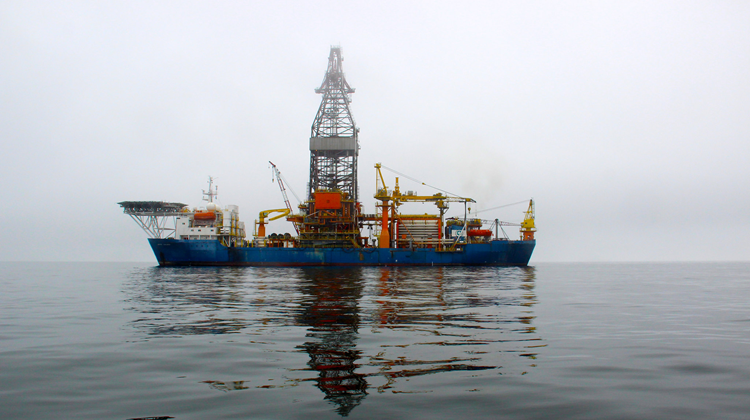
The recent surge in global oil prices following escalating tensions with Iran highlights how quickly disruptions in global energy markets can reverberate across economies worldwide. Brent crude briefly climbed above US$100 per barrel as instability threatened shipping routes through the Strait of Hormuz, exposing the fragility of global supply chains. For many African countries, even ones with relatively sophisticated economies like Botswana, for example, which has admitted to only 13.9 days of strategic fuel reserves on hand, and South Africa, which only had 25 days oil supply in reserve, such shocks reveal a deeper structural issue: despite exporting crude oil, much of the continent still imports refined fuel at far higher prices. This paradox reflects a broader circulatory weakness in African economies.
Africa’s biggest problems and potential opportunities can all be described as “circulatory”. A strong circulatory system is essential for healthy economic development, and growing Africa’s economy will require fixing the elements limiting the continent's economic circulation. The lack of circulation traps value, talent and capital, rather than allowing them to move productively through societies and markets.
Circulation here means a continuous cyclical movement rather than a linear flow of goods, services, talent and capital. At present, the African economy leaks value to the rest of the world and fails to adequately recapture reciprocal flows. The result is an economy that operates like a dam with outflows but no upstream inflows to refill what is lost. Over time, this poor circulation of value means Africa, and thus African citizens, become relatively poorer.
At present, the African economy leaks value to the rest of the world, and fails to adequately recapture reciprocal flows
To arrest the flow of relative losses, an adequate diagnosis is needed of where leaks are occurring, where pools of stagnation are building up and where balanced circulatory systems could be developed and adequately incentivised to sustain growth.
The initial priority is to plug the leaks. In the case of the African economy, this means urgently identifying where value is being irretrievably lost and taking prompt action to stop the outflows.
Here, Africa’s real resource wealth—from natural resources and fertile lands to even human capital—is well known to be exported prematurely, leaving much of its value potential to be captured elsewhere. In contrast, local markets are often left without the wealth and funds to afford re-importing the final goods and services produced in them.
This story is clearly understood in terms of natural resources. Africa loses a potential US$15 billion annually on the export of unrefined crude oil, and another US$120 billion-odd a year on re-importing the same fuel in its refined and ready-to-use form. And that is fuel alone. Over 80% of Africa’s total exports, vegetables and minerals, to the rest of the world leave the continent in raw, unrefined form, resulting in hundreds of billions of dollars in value being captured elsewhere—creating wealth leaks from what should be wealth inflows. This pattern is well known. Yet periods of global price volatility, such as the current oil price surge triggered by tensions in the Middle East, make this structural vulnerability even more visible.
Less explicitly spoken about is how the same one-way value extraction is occurring with African human capital, in two key forms. Firstly, through skilled migrant emigration, which is estimated to cost the continent over US$2 billion per year, as approximately 70 000 skilled professionals leave Africa to work (and pay tax) in foreign lands. Of course, the “brain drain” is compensated by personal remittance flows, which now account for a staggering US$96.4 billion in inflows into African economies, which may at first appear to negate the point about talent loss. However, on closer examination, the significance of inbound remittance flows should rather raise the question about why and how all that wealth was not created within the continent in the first place—and how much more value Africa’s rich diaspora is further adding to those foreign economies where they now work and live. Imagine a reality where those billions could be created, and circulated, through deep local markets (and, yes, even taxes) without leaving the continent.
The second human capital loss, where value is captured elsewhere, relates to African startups and businesses. Many of the best ideas invented in Africa, failing to find funding at home, list on international exchanges or turn to international investors. And the latter end up capturing the biggest share of the value created. As of 2026, 80% of venture capital for African businesses comes from foreign investors.
In every case, Africa is compensated at the point of extraction, but the greater share of the value is captured further along the value chain. To reverse this one-way flow, investing in value-addition infrastructure—from technical, such as refining capacity, to financial, such as digital payment systems—to support local industry and talent is essential.
Stopping value-eroding outflows, however urgent, will not be enough, and Africa must overcome stagnation. The bigger challenge will be for the African continent to invest in the long-term health of its own circulatory system. This will require investment and coordination, along with a concentrated effort to correct places where value is pooling rather than flowing, to build deep, sustainable markets.
Healthy economies cannot grow where value is hoarded, but instead grow when capital is encouraged to move repeatedly and widely throughout the economy, funded by and funding local markets and communities, and allowing wealth to compound through value-adding trade along the way.
From a diplomatic perspective, there is no alignment in trade policy among the 55 African Union stakeholders. Instead of negotiating better deals with the rest of the world together, countries compete individually, undermining negotiating power and ultimately eroding generational wealth by selling the continent’s non-renewable resources at far below real value. Circulation requires coordination and coherence. Without greater policy coherence between African economies, efforts to strengthen internal markets and value chains will remain fragmented.
Without greater policy coherence between African economies, efforts to strengthen internal markets and value chains will remain fragmented
From a physical perspective, the circulation of goods, services and, again, labour is just as broken. Africa’s rail and road infrastructure debt is enormous, requiring a collective investment of US$65 to 105 billion annually from now until 2050 just to become globally competitive. Of course, much of this funding is again planned to come from foreign debt and investment, again threatening to hand legacy value to external players. So, while investing in infrastructure to ensure the smooth circulation of goods is essential, strategic foresight regarding who will own and benefit from Africa’s future is also required.
Likewise, Africa’s service and labour market is equally sclerotic. Egregious visa laws, related bureaucracy and petty nationalist policies cost Africa US$50-80 billion per year due to lost business efficiency, limits on internal tourism and economic opportunities. An easily rectified own-goal, only requiring diplomacy and foresighted decision-making to fix.
In all these cases, it is clear: fixing circulatory systems to grow and share lasting wealth will require coordination and cooperation between Africa’s 55 fragmented jurisdictions. The alternative is a continuation of the current pattern: valuable resources leaving the continent while the deeper economic circulation needed for sustained growth remains underdeveloped.
Image: geralt/Pixabay
Republication of our Africa Tomorrow articles is only with permission. Contact us for any enquiries.