Invisible cartographies: why diasporas rewrite the world

Diasporas create social, emotional and political maps beyond borders, reshaping identity, governance and belonging across multiple places.
In the realm of physical, administrative or demographic maps, society is trained to recognise sharp borders, trace measurable routes and move from point A to point B. Last August, the member states of the African Union issued a warning: maps lie, and Africa is far larger than it appears. For centuries, the widely used Mercator projection has distorted the continent’s size, shrinking it and diminishing its presence in the global collective imagination. This is the context in which the #CorrectTheMap campaign emerged, urging media and institutions to adopt fairer projections that restore Africa’s true scale, while addressing the socioeconomic and political implications that stem from this distortion.
Yet, changing the maps is not enough. Between one space and another, between one route and the next, thousands of lives are constantly on the move—people and families whose daily routines are increasingly transnational. Between West Africa and Europe, for example, many children celebrate Eid al-Fitr via video call with relatives who live far away. Mothers or fathers send food, boubous or baobab and hibiscus-based teas to their children in Europe while managing work locally or in a nearby city. Some teenagers, and many adults, help maintain land or agricultural activities from a distance, sending savings and financial support. Young people prepare traditional dishes such as Ndolé or Thieboudienne, blending African and European flavours together with friends.

Within the gaps of physical structures, today more than ever, in a globalised world, official maps often appear insufficient and incomplete. This is because a more subtle cartography exists: a map made of geo-biographies, often invisible to statistical systems and traditional tools. It is the geography of diasporic relationships, of transnational family economies, of the movement of ideas and knowledge, and of memories that travel with people. These spaces take shape through practices of inhabiting the world “here and there,” in a simultaneity of experiences that makes lives profoundly interconnected.
For a long time, the concept of diaspora was tied primarily to narratives of exile and historical trauma, centred on a sense of loss. Nowadays, this perspective is gradually being surpassed. The very definition of diaspora is opening up to new interpretations and manifests in multiple forms of action. The African Union is an emblematic example of this shift, explicitly recognising diasporic networks as the continent’s Sixth Region and integrating them into the sociopolitical project for Africa’s future outlined in Agenda 2063. The inclusion of diasporas seeks to valorise economic remittances, human capital and the diplomatic influence that these individuals, acting as transnational subjects, exercise across borders, simultaneously shaping diverse social, economic and political contexts while weaving together multiple trajectories.
This process is rarely linear, as it involves navigating complex dynamics of presence and absence within one’s communities of belonging. Sayad’s notion of “double absence” captures this ambivalence; however, more recent perspectives show how diasporic individuals can act across multiple domains at once. It is precisely within this tension between absence and presence that an ‘emotional and political cartography’ emerges: a map of connections, responsibilities and influences that crosses borders and redefines identities, governance and communities through an increasingly transnational lens.
Between absence and presence emerges a map of connections, responsibilities and influences that crosses borders and redefines identities, governance and communities
Diasporic mobility fundamentally generates plural identities. Mobility corridors vary significantly. Some routes are structured around seasonal mobility and dense social networks; others reflect the legacies of colonial administration and formal labour agreements. Additional pathways are driven by professional migration, religious networks, commercial exchange, economic interdependence or humanitarian displacement. These differences affect citizenship regimes, the influence of religious or ethnic associations, digital financial systems and migrants’ socioeconomic status. Belonging is not only physical but also emotional, digital and temporal, challenging fixed notions of national or ethnic identity and offering flexible models of belonging. First and newer generations act as bridges across countries and times, weaving ever-changing networks. Within this fluidity, self-discovery occurs both “here” and “there”, yet hybrid identities can create tensions within families and communities, generating new maps of belonging and innovative forms of responsibility and political action.
Next is the question of governance: within diasporas, it extends beyond the formal politics of states to include self-organisation—both formal and informal—civic engagement and economic influence. Diaspora communities frequently support the economies of their families and countries of origin through remittances (often exceeding official development aid), investments, professional networks and advocacy efforts. Available data allow a clearer assessment of diasporas’ impact: KNOMAD-World Bank bilateral remittance matrices provide long-term data on major corridors. Afrobarometer surveys shed light on migration aspirations, perceptions of citizenship and trust in institutions; and IOM regional assessments, along with the Migration Data Portal, document remittance practices, mobility patterns, and digital transfer infrastructures while accounting for data collection challenges.
Politically, studies highlight diasporas’ capacity to shape public debate, facilitate negotiations and mobilise transnational solidarity, positioning them as agents of change. Several African states have developed diaspora-targeted initiatives: Ghana’s “Year of Return” (2019), which engaged global Ghanaian and Afro-descendant communities; the establishment of an official day for Senegalese diaspora by the current government; and the growth of diaspora-led health clinics, rotating savings groups and community schools across West Africa and the Sahel.
Yet, these programs also reveal structural challenges, including elite capture of diaspora resources, uneven representation in diaspora councils and limited accountability in state-diaspora collaborations. An excessive reliance on diaspora remittances can inadvertently reduce the pressure on the state to provide essential public services and implement structural reforms, creating channels of pseudo-security and dual responsibilities for individuals abroad. Governments benefiting from substantial remittance inflows may adopt a rentier-like approach, avoiding necessary but unpopular measures such as tax reform, anti-corruption initiatives and economic formalisation.
Diasporas function as hubs for discussion and political facilitation, bridging digital spaces, pan-African initiatives, political debate and family guidance. In host countries, they often undertake forms of representation and mediation that transcend conventional institutional frameworks, creating networks of welfare and mutual support. Recent mobilisations by Malian, Burkinabé and Nigerien diasporas in Europe and beyond—especially related to the Association of Sahel States and figures like Ibrahima Traoré—demonstrate this influence. These diverse forms of engagement, however, demand new coordination and leadership approaches. Traditional institutions—whether state or community-based—must now engage with transnational actors who operate across multiple spaces, often challenging cultural, historical and social boundaries.
Governance within diasporas reflects a hybrid model, where authority and legitimacy derive not only from organisational expertise but also from the capacity to maintain symbolic and material ties across countries, adapting to the evolving dynamics of contemporary societies. Yet, political representation, as well as civic and professional participation, face additional hurdles, in both origin and host countries, including legal restrictions, bureaucratic obstacles, misrepresentation, discrimination or stereotyping. Consequently, diaspora communities frequently act as cultural mediators between different worlds, thereby generating informal diplomacy. Associations, mosques, cultural centres and activist networks operate as non-institutional bridges connecting families, states, civil-society organisations, international bodies and often fellow nationals or private networks.
Diasporas rework both space and time by creating a continuum between the past, present and distant places, challenging physical geography. This leads to a reconsideration of traditional cartographies as political constructions derived from colonial and imperial logics of territorial control. Such logics have marginalised non-fixed spatial concepts. Conversely, many West African societies (e.g., Wolof, Hausa) have systems of circular mobility where movement is essential for identity and social prestige, questioning the Western equation between belonging and territorial fixity. Yet, in this living, reinventing and partially reshaping of spaces, the potential of diasporas does not erase real challenges: transnational families often lack recognition in public policies, tools for long-distance parenting and protection for minors, creating regulatory gaps. Socially, diaspora children face a suspended sense of identity affecting educational and psychological well-being, while statistical and narrative invisibility hinders effective policymaking. Transnational life brings emotional fatigue, misunderstandings and family tensions, while discrimination, racialisation and insecure legal status in host countries shape migrants’ trajectories. Internal hierarchies within diaspora communities can exclude newcomers or those without strong ties to religion, ethnicity or profession. Without a shift from the concept of “migration” to “mobility”, much of the potential of diasporas remains untapped.
Without a shift from the concept of “migration” to “mobility”, much of the potential of diasporas remains untapped
These invisible cartographies signal both opportunities and risks for African policymaking, recognition frameworks, diaspora engagement and transnational governance. They open the way for policies that mirror real mobility corridors, harness distributed expertise and deepen cross-border welfare, but they also expose governance gaps, uneven representation and the danger of offloading state responsibilities onto transnational families. In objective terms, they demonstrate that contemporary Africa is built in the folds of movement, where ties and decisions extend beyond official maps. Recognising this shifts the policy axis from territory to relation, from borders to connections. The diaspora emerges as a dispersed political architecture that can recalibrate priorities and representation; yet, it also requires new safeguards, coordination and accountability. In this hybrid space, states and communities must renegotiate power, belonging and solidarity because this is where Africa’s 21st-century governance takes shape.
Acknowledging these invisible cartographies is essential for designing policies that reflect how people truly live today across borders, through networks and within transnational systems that redefine belonging and governance.
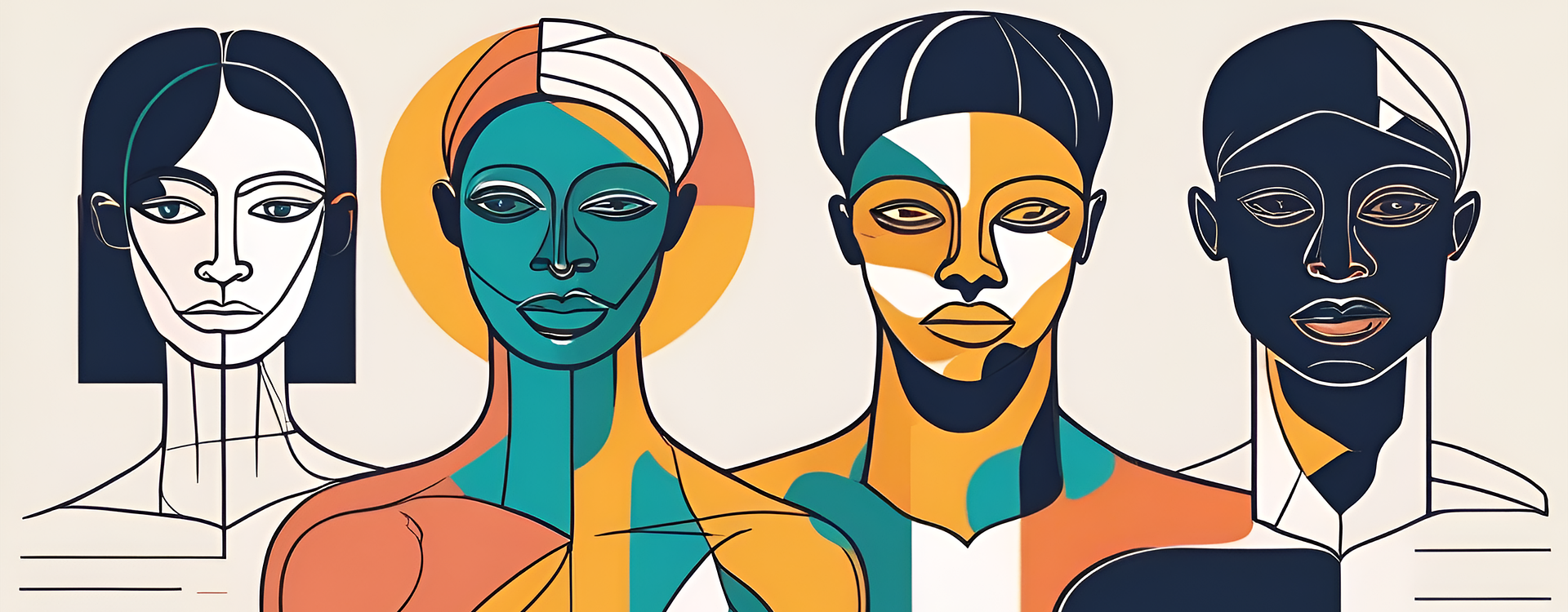
Image: geralt/Pixabay
Republication of our Africa Tomorrow articles only with permission. Contact us for any enquiries.