Africa pivoting to China for security help

Beijing could deliver capabilities that better fit the continent’s needs — with latent risks involved.
For decades, African countries have sought Chinese investment while leaning mostly on the West for security assistance. That is now changing.
The US has several foreign military bases across the continent and retains key allies, such as Morocco. A diplomatic thaw between Washington and military governments in the Sahel is occurring alongside mediation activities in the Horn of Africa and a minerals-for-security deal with the Democratic Republic of Congo. The European Union too has active missions in Africa under its Common Defence and Security Policy.
However, the continent is tumbling down the list of priorities for Western capitals overall. Meanwhile, domestic and regional threats have evolved. Military and policing partnerships must keep pace — and Beijing is listening.
Still, it confirms how Africa remains trapped in a dilemma of dependence on foreign security aid. Trading Western interventions for Chinese collaboration may deliver progress. Yet it will invite new risks as well. African nations must step up their efforts to boost military transparency and preserve strategic autonomy to avoid new forms of subordination.
Chinese fighter jets were deployed to the continent for the first time in August, arriving in Egypt to participate in joint aerial combat exercises. Chinese defence firm NORINCO and its unmanned systems, including weaponised robotic wolves, were a huge draw at the Africa Aerospace and Defence Expo in Pretoria, South Africa, weeks later and the inaugural Africa International Defence Exhibition in Lagos, Nigeria, in October. The state-owned arms producer already works closely with numerous African countries, selling them advanced military hardware and licensing local manufacturing sites.
More than 40 African nations also participated in the fourth China-Africa Peace and Security Forum in Beijing in mid-September. Over two days, a flurry of fresh bilateral agreements emerged to bolster Africa-China military cooperation.
‘Looking ahead, the next chapter of China-Africa security cooperation should be defined by greater ambition, deeper trust and more tangible impact,’ said the African Union’s ambassador to China during the event. He highlighted military officer education, counter-terrorism and maritime security as key areas to strengthen ties. Plus, border management systems, logistics and technology transfers and training.
Trading Western interventions for Chinese collaboration may deliver progress, yet it will invite new risks as well
China opened its sole African military base in Djibouti in 2017. However, Chinese private security companies have long operated across the continent, hiring retired People’s Liberation Army (PLA) veterans to guard facilities and sites connected to the Belt and Road Initiative (BRI). Almost all of Africa has signed up to the vast Chinese-centric global trade and infrastructure scheme since it launched in 2013. Tens of billions of dollars in Chinese investment have poured in as a result.
China’s military engagement with Africa has quietly grown more sophisticated in parallel, according to the Africa Center for Strategic Studies, a Pentagon think tank. What began as symbolic displays of cooperation in the 2000s and anti-piracy operations in the early 2010s has expanded into high-tempo land and maritime exercises and amphibious assault drills in various locations. In 2023, a report from AidData, a US-based research lab, identified several possible sites of future PLA naval bases in Africa. Financing of seaport projects by Chinese state-owned entities points to Cameroon, Equatorial Guinea, Mauritania, Mozambique and Tanzania as likely hosts, the report found — possibly by the end of the decade.
‘China’s military presence in Africa can be summarized as achieving three major strategic objectives,’ writes political scientist Nadia Helmy from Egypt’s Beni Suef University. Safeguarding BRI investments is one, she says. Helping modernise African militaries — while benefiting Chinese industry — is another. But most crucial is enabling the PLA to gain field experience. ‘The diverse and complex African security environment represents an important real-world testing ground for the Chinese military, which lacks modern field combat experience outside its borders,’ says Helmy.
China’s window of opportunity for military engagement with Africa has widened amid America’s steady withdrawal over the past decade. America’s policy toward Africa is ‘increasingly shaped by short-term transactions rather than long-term strategy,’ argues Oge Onubogu, director of the Africa Program at the Center for Strategic and International Studies. ‘The result is a growing mismatch between what Washington says it wants in Africa and what it is institutionally prepared to deliver.’ Europe is likewise gradually succumbing to a fortress mentality due to the rise of far-right political parties, driven by populist anxieties over immigration.
Yet, US and European interventions in Africa have also been problematic. They have at times reopened colonial wounds, enlisted local actors to wage proxy wars or devolved into hollow virtue signalling. Or they have militarised complex political, social and environmental issues at the root of conflicts. Western governments that profess to champion liberal democratic values and human rights also continue to enable autocratic allies to strengthen their regressive grip on society in places like Cameroon, Chad, Egypt, Equatorial Guinea, Uganda and elsewhere.
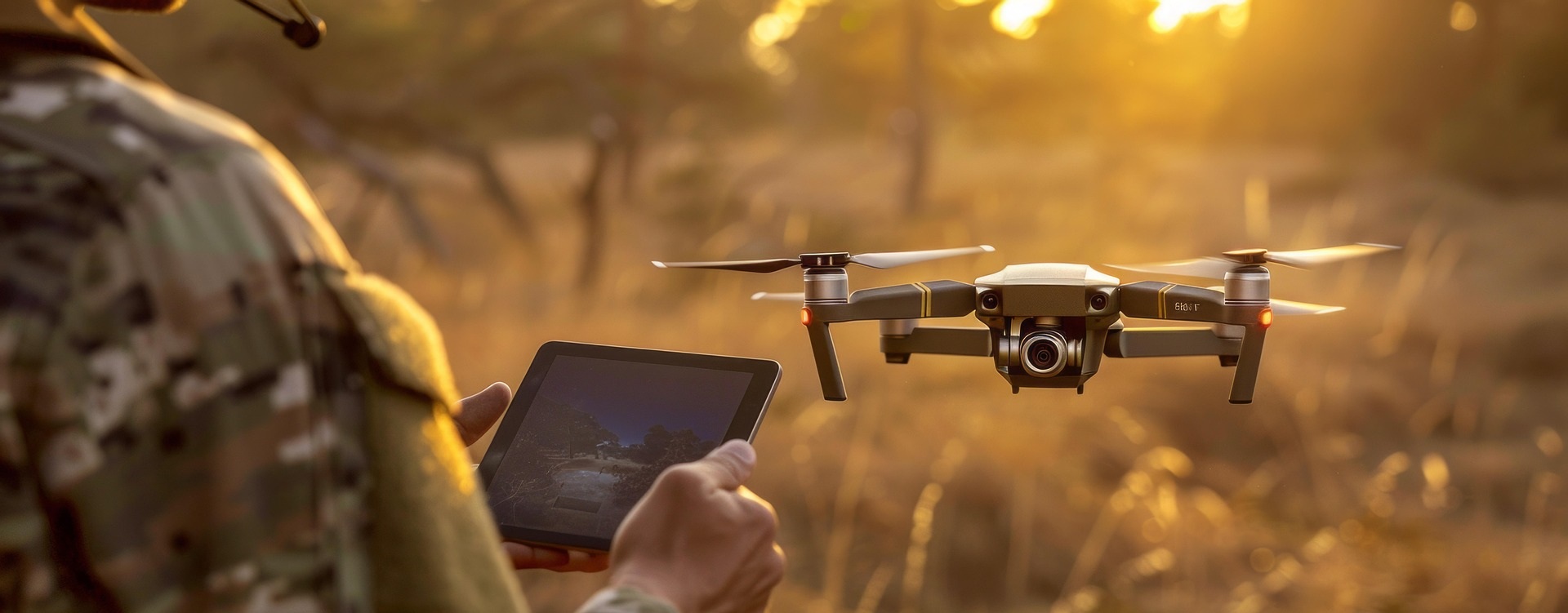
Deepening security partnerships with China might thus generate better outcomes for African countries. For one, the main sources of regional instability today are the havoc caused by stubborn insurgencies and marauding terrorist groups. Troubled nations do not necessarily need more robust military forces but more capable gendarmerie and border agencies. Here, China brings enormous — if controversial — public safety expertise and domestic security resources, especially around unmanned systems and digital surveillance technology. And many African countries are already plugged into the Chinese tech stack via Beijing’s Digital Silk Road initiative. This now includes Chinese open-source artificial intelligence models freely customisable for local security applications.
On the downside, self-serving ruling parties will be tempted to co-opt and abuse such tools for their own agendas. China’s strategy of asserting export dominance could also undercut the cultivation of domestic African supply chains for key sovereign defence capabilities — something many African nations are making serious strides towards. This dynamic is already playing out around electric vehicle manufacturing.
Murky financing offers might proliferate too, as part of new Chinese-led defence and security initiatives. One legacy of China’s BRI push into Africa has been to enable this on a massive scale, partly through predatory resource-backed lending. From 2020 to 2024, for example, the continent swung from a net inflow of US$34 billion in Chinese loans over the five years prior to a net outflow of US$22 billion due to severe debt repayment obligations. Policies that increase transparency in national security budgets should thus accompany any new Chinese partnerships.
The PLA’s sprint toward automating warfare might also clash with African priorities around AI-powered weapons systems. China has long held a strategically ambiguous position on the issue. Beijing has even expressed on-and-off support for some type of international ban. But that rhetorical hedging has not prevented the PLA from racing to automate nearly all facets of hard power.
This contrasts with the expressed desires of most African nations. Since 2023, the continent has consistently voted in near-unanimity at the UN General Assembly in favour of multiple resolutions urging the international community to create safeguards around autonomous weapons systems. Meanwhile, China — now Africa’s top arms supplier — has consistently abstained.
However, Beijing offers attractive long-term, low-interest military financing options that most African states can’t find elsewhere, researchers George Gor and Kofi Yeboah wrote earlier this year in a policy brief for the Centre for International Governance Innovation. The resulting dependency, they argue, limits what any individual buyer can demand regarding the transparency of the systems they acquire.
‘The normative commitments African states have made at UNGA, through the African Union and in regional forums carry little weight in bilateral procurement negotiations on AI-enabled weapons where the seller sets the terms and the buyer lacks the technical capacity to challenge them,’ say Gor and Yeboah. One possible remedy, they state, would be for the AU to define acceptable import conditions and use cases for autonomous platforms. The intergovernmental body should then also develop the capacity to test, inspect and audit such systems to support enforcement of standards.
The end goal should be to harness Chinese support to enhance African security capabilities — not swap dependency from one great power to another
African governments must also remain willing to call out how China’s customer-agnostic commercial approach imperils regional security. For example, cargo seized by authorities in Yemen has shown that Chinese commercial goods are fueling weapons development by Houthi rebels, a group engaged in technology sharing and knowledge transfer with al-Shabaab and the Islamic State in Somalia. Indeed, Chinese drones and parts are helping non-state actors wage war against governments all across the continent.
Amid surging global volatility, African capitals are wise to look beyond their traditional security sponsors for help. Other external actors – Gulf States, India, Türkiye and Russia – are also vying to play a larger role in regional security. Deepening Africa-Chinese security cooperation is thus not simply displacing the continent's traditional Western partners. Instead, it speaks to myriad other aspiring powers all jostling for influence in Africa.
That does not diminish the need for caution when entering partnerships with Beijing that might aggravate runaway debt burdens or seed leverage for future political and economic coercion. The same goes for being asked to compromise stated principles around powerful new security tools and weapons technologies. The end goal should be to harness Chinese support to enhance African security capabilities — not swap dependency from one great power to another.
Image: TungArt7/Pixabay
Republication of our Africa Tomorrow articles only with permission. Contact us for any enquiries.