Erudite Series on the future of Africa: AfCFTA

The African Continental Free Trade Area presents a unique opportunity to create an integrated, continent-wide market, a vital step towards building the ‘Africa we want’.
-
Date: 07 July 2023
-
Time: 11h30 – 12h30 CAT (UTC+2)
-
Venue: Online via Zoom
Overview
The event will highlight AfCFTA’s potential to bring about significant economic and social benefits in the form of faster economic growth, higher incomes and reduced levels of poverty. The AfCFTA provides opportunities for African countries to diversify and industrialise their economies, through tariff reductions and other measures, including an enabling policy environment to reduce their reliance on the export of primary goods. In this seminar, we will explore the impact of higher levels of trade integration on Africa’s overall progress towards sustainable economic transformation in line with Agenda 2063.
This seminar is co-hosted by AUDA-NEPAD and the Institute for Security Studies (ISS).
Read the full AfCFTA report here.
Moderator: Nyiko Khoza, Head of Private Sector Engagement at the African Union Development Agency
Presenter: Dr Blessing Chipanda, Researcher, African Futures & Innovation (AFI) programme at the Institute for Security Studies (ISS)
Discussants:
Mr George Boateng, Senior Policy Analyst, African Center for Economic Transformation
Mr Mustafa Sakr, Trade and Markets Division lead at AUDA-NEPAD
Development partners



The ISS is grateful for support from the members of the ISS Partnership Forum: the Hanns Seidel Foundation, the European Union, the Open Society Foundations and the governments of Denmark, Ireland, the Netherlands, Norway and Sweden.
More to explore
17 Mar 2026
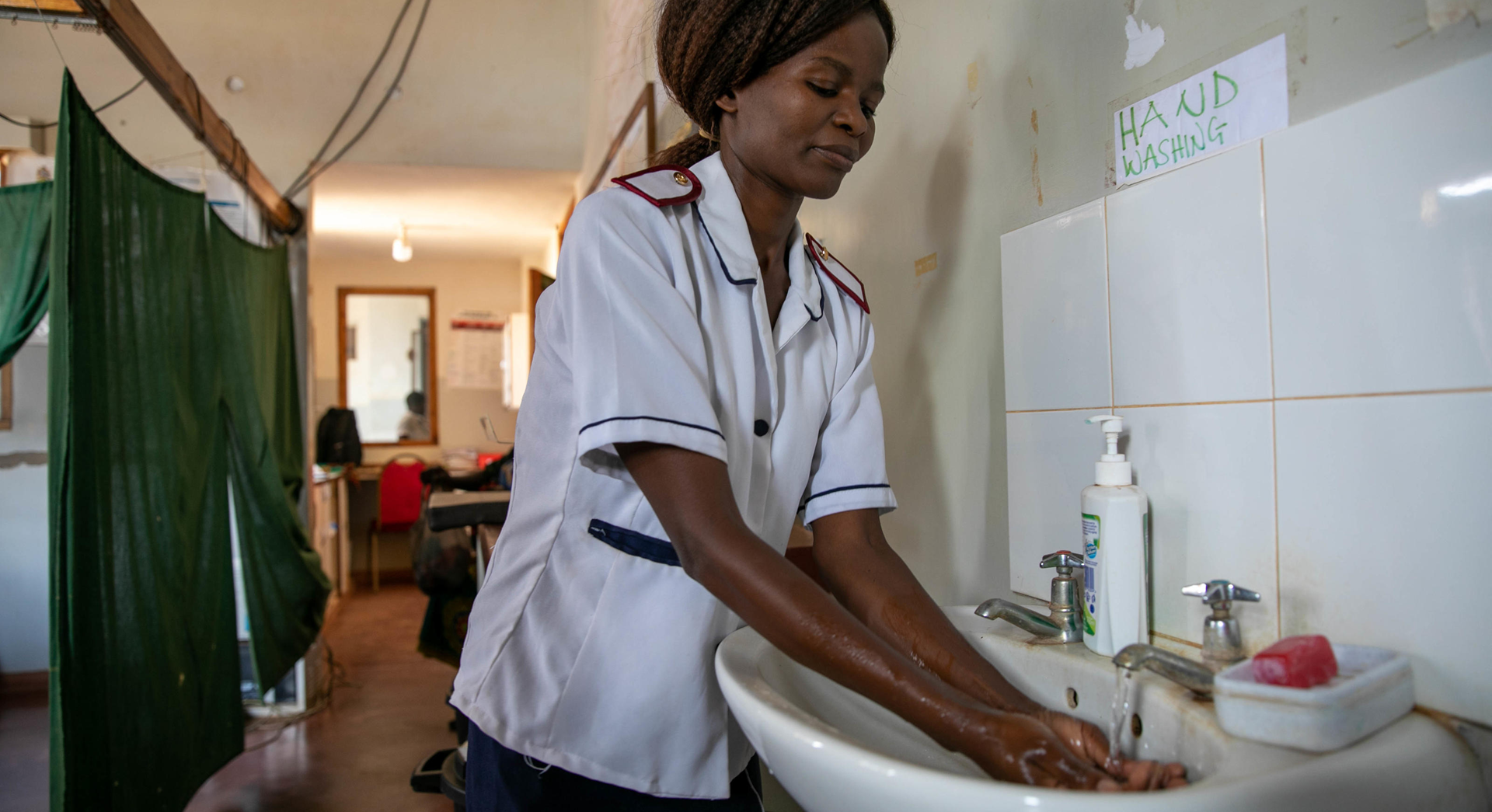
Africa’s health and water future: securing a foundation for prosperity
Health and water security underpin long-term growth, but are threatened by climate pressures, rapid urbanisation and financing constraints.

27 Aug 2026
Book Launch 1: Africa's Road to Prosperity
Ottilia Anna Maunganidze will be in conversation with Prof Gilbert Khadiagala and Jakkie Cilliers
05 Jan 2026
Year-end 2025
AFI will reopen on Monday, 5 January 2026
04 Sep 2026
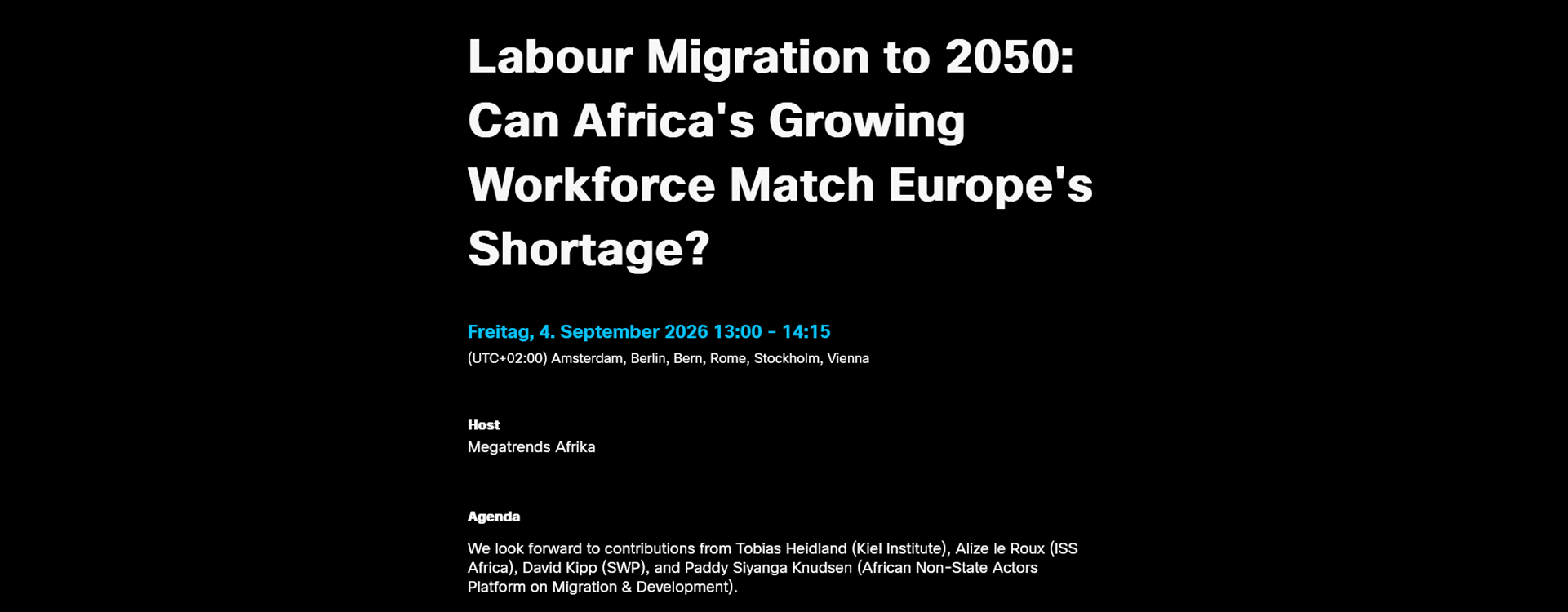
Labour Migration to 2050: Can Africa's growing workforce match Europe's shortage?
By 2050, Africa will account for roughly a quarter of the world's working-age population, with many millions searching for better jobs – just as Europe's workforce shrinks.