Hormuz exposes Africa’s fertiliser structural risk
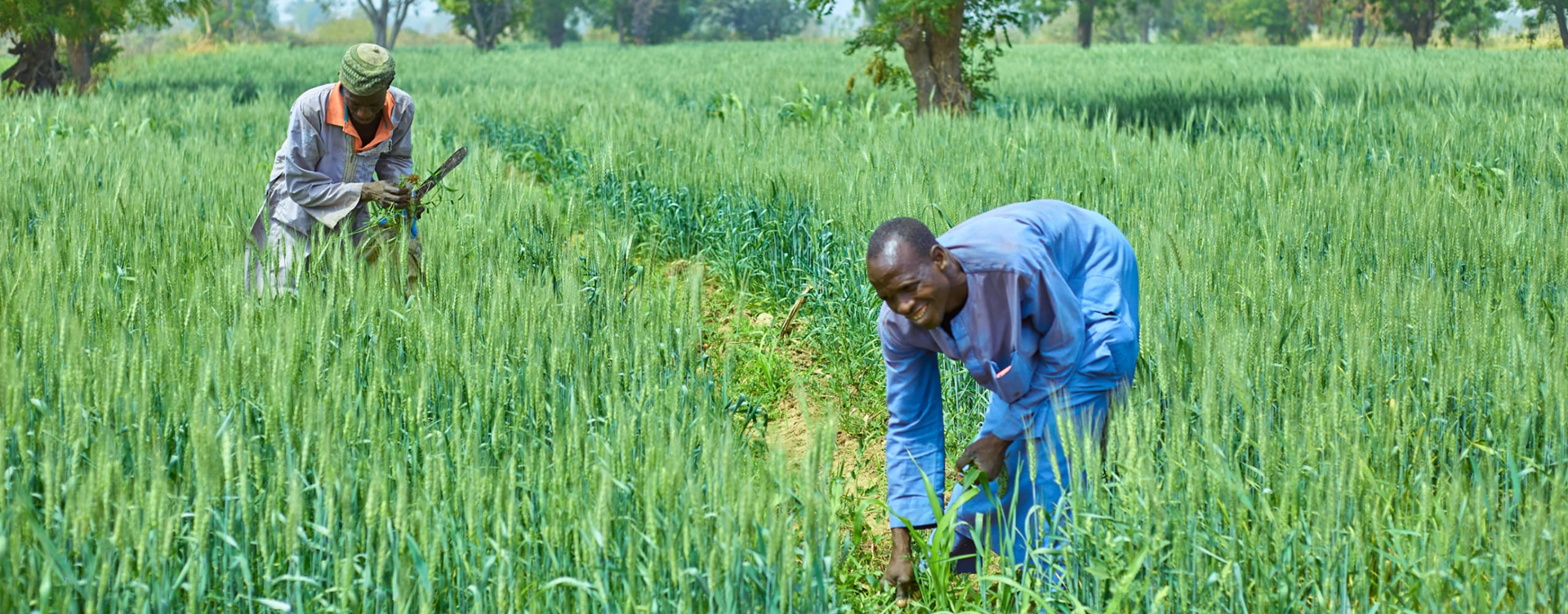
Fertiliser supply disruptions reveal deeper structural gaps in the continent’s production and distribution systems, with implications for food security.
International attention has focused on oil flows through the Strait of Hormuz and related shortages or price spikes in energy and fuel. Less visible is another vulnerability moving through the same corridor: the fertilisers that underpin global food production.
For Africa, the recent tensions in the Middle East are exposing an already known, deeper dependency. The continent’s agricultural systems largely rely on fertiliser supply chains shaped by external production hubs, energy markets and geopolitical risk. In addition to rising costs of direct agricultural input, disruptions in fertiliser supply chains can quickly affect food prices and availability, as many African countries have high import volumes and bills for foodstuffs.
Domestic fertiliser production in Africa remains uneven and insufficient to meet the growing demand, with many countries depending heavily on imports to sustain agricultural output. Production capacity exists in parts of North and West Africa, driven by massive phosphate deposits and natural gas reserves. Morocco leads in phosphates, accounting for over 50% of Africa's supply, and ranks among the top five global phosphate fertiliser exporters, while Nigeria, Egypt and Algeria dominate in nitrogenous (urea) fertiliser production.
Globally, on the production side, a significant share of fertiliser output is tied to energy-rich regions, particularly in the Gulf. The Middle East has emerged as a major hub for nitrogen-based fertilisers. This reflects the local availability of natural gas, which underpins ammonia and urea production. Around a quarter to a third of globally traded ammonia and urea originates from or passes through this region.
The Strait of Hormuz is thus central to this system. On the trade side, it connects these production hubs to global markets through a single, highly exposed shipping route. Almost 50% of the globally traded sulphur used in phosphate fertilisers moves through the Strait, making it one of the most critical corridors for global agricultural inputs.
As tensions in the Middle East persist, signs of substantive disruption are already emerging. In parts of the Gulf, fertiliser plants have reduced output or paused operations, reflecting mounting shipping constraints and broader uncertainty.
Even major producers such as Morocco’s OCP Group are affected. Fertiliser production relies on critical inputs like sulphur, much of which is sourced from the Persian Gulf, particularly from the United Arab Emirates and Saudi Arabia, regions now entangled in the same disrupted trade routes. As sulphur supply tightens, production cannot be scaled up, even where phosphate reserves are abundant, and domestic logistics remain intact.
Constrained production will also erode export revenues for Africa’s major fertiliser exporters. Morocco and Egypt, together accounting for roughly 70% of the continent’s fertiliser exports, stand to be disproportionately affected. At the same time, net importers such as Ethiopia, Côte d’Ivoire, Zambia, Kenya, and the Democratic Republic of Congo face heightened risks of food inflation and declining crop yields.
The combined effect is a dual shock: export earnings weaken for producers, while import-dependent economies absorb rising costs and agricultural stress, amplifying macroeconomic and food security pressures across the continent.
The combined effect is a dual shock: export earnings weaken for fertiliser producers, while import-dependent economies absorb rising costs and agricultural stress
Fertiliser markets have responded quickly. Urea prices have surged from just under US$500 per ton before the conflict to above US$700 per ton in recent weeks. In South Africa, for example, where roughly 80% of crop production inputs are imported, and fertiliser constitutes a major share, grain farmers are already facing input cost increases of up to 35%. As Africa’s largest supplier of packaged foods, these pressures are likely to transmit through the food system, amplifying inflationary risks on the continent.
The Iran conflict reveals a deeper structural vulnerability in Africa’s fertiliser systems. The continent’s supply chains are highly concentrated and externally dependent, allowing localised geopolitical disruptions to cascade rapidly into system-wide constraints. Africa faces not only a fertiliser supply deficit, but a fertiliser system deficit.
These disruptions place disproportionate pressure on Africa’s low-industrialised farming systems. Fertiliser use remains far below global levels, averaging just 17–23 kg/ha compared with a global average of 135 kg/ha, reflecting persistent constraints on affordability and access. Reduced access to fertiliser is likely to lower application rates, with direct knock-on effects on crop yields and overall production across the growing season.
In more acute scenarios, sustained shortages could drive yield losses of up to 50%, underscoring the extent to which agricultural output, and by extension food security, remains tightly bound to fertiliser availability.
The stakes are particularly high given the central role of agriculture in African economies. The sector employs between 60% and 70% of the workforce, with rates exceeding 80% in countries like Burundi, Malawi, and Madagascar. However, it is dominated by smallholder farmers with limited capacity to absorb rising input costs or supply disruptions, making them acutely vulnerable to fertiliser shocks. In this context, Africa’s next food crisis may not begin on the farm, but in a distant shipping lane.
The lesson is not only about exposure tied to the risks of price volatility. It is also one of the structural vulnerabilities and untapped capacities. Africa holds many of the inputs required to reduce this dependency: natural gas reserves in Nigeria, Mozambique, Tanzania and Senegal; significant phosphate resources in Morocco and Tunisia; and rapidly growing demand driven by the need to boost agricultural productivity and contain food crises.
The real question, therefore, is whether the continent can convert this resource base into production and supply capacity. Can Africa move from exposure to global fertiliser markets to shaping them?
Can Africa move from exposure to global fertiliser markets to shaping them?
Three policy priorities stand out for addressing this shift.
First, production must be scaled strategically. Not every country needs to produce fertiliser, but a core group with comparative advantages can anchor regional supply.
Second, markets must be integrated. Without efficient cross-border trade, lower transport costs and reliable distribution, increased production will not translate into access. The AfCFTA provides a ready framework, but it must be operationalised.
Third, fertiliser policy must extend beyond production. Supply depends on functioning ecosystems: storage, blending, transport, finance and last-mile delivery. Without these, fertiliser will not reach farmers at scale. These segments create space for local entrepreneurship. The growth of agri-tech platforms such as Hello Tractor and Apollo Agriculture shows what is possible, but these remain the exception, not the norm.
Self-sufficiency is neither feasible nor necessary. However, the current disruption exposes the cost of leaving a strategic input to external markets. Greater regional capacity would not eliminate global exposure, but it would reduce the extent to which distant crises dictate African food systems.
The Hormuz shock is a warning about the fragility of supply chains. It exposes a persistent blind spot in agricultural policy debates. While financing gaps and farm-level productivity dominate the agenda, far less attention is given to the upstream supply chains that shape access to critical inputs such as fertiliser. It is a reminder that agricultural stability and food security depend on more than seeds, rainfall and land. They depend on whether Africa can build the industrial foundations that address the fertiliser system deficit and make food production less vulnerable to external dependencies.
Image: Fulani215/Wikimedia Commons
Republication of our Africa Tomorrow articles is only with permission. Contact us for any enquiries.