 Cameroon
Feedback welcome
Our aim is to use the best data to inform our analysis. See our Technical page for information on the IFs forecasting platform. We appreciate your help and references for improvements via our feedback form.
This analysis assesses Cameroon's current and future development, examining various sectoral scenarios and their potential impacts on the country's growth. It explores eight individual sectoral scenarios that include outcomes in education, governance, health and demographics, trade, and infrastructure. It combines the impact of these eight scenarios for Cameroon up to 2043, the end of the third ten-year implementation plan for the African Union Agenda 2063. The analysis offers insights into policy actions that could enhance Cameroon's developmental trajectory.
For more information about the International Futures modelling platform we use to develop the various scenarios, please see the Technical page.
Executive Summary
We begin this page with an introductory assessment of the country’s context, focusing on current population distribution, social structure, climate and topography.
- Cameroon is strategically located in Central Africa, bordering Nigeria, Chad, the Central African Republic, the Republic of the Congo, Gabon and Equatorial Guinea. The country's coastline along the Gulf of Guinea positions it as a potential trade and transit hub for the subregion. Covering approximately 475 442 km² of land surface, it is often described as “Africa in miniature” due to its exceptional geographic, climatic and cultural diversity. Administratively divided into ten regions, the country’s political capital is Yaoundé, while Douala serves as its principal economic and maritime gateway. With a population density of about 63 inhabitants per km² and a climate that ranges from equatorial in the south to semi-arid in the north, Cameroon faces diverse development challenges, including regional disparities in agricultural potential, infrastructure needs and climate vulnerability, which require differentiated and spatially targeted policy responses.
This section is followed by an analysis of Cameroon's Current Path, which informs the country’s likely development trajectory to 2043. It is based on current geopolitical trends and assumes that no major shocks would occur in a ‘business-as-usual’ future.
- In 2023, Cameroon’s population stood at approximately 28.4 million, with a very young median age of 18.8 years and an urbanisation rate of almost 60%, primarily concentrated in the southern regions. In the Current Path, the population will reach 46.3 million by 2043, significantly increasing pressure on employment creation, infrastructure and service delivery. Fertility will remain high at 4.4 births per woman but will decline to 3.4 by 2043, while life expectancy will improve from 64.6 to 71.1 years over the same period. Infant mortality, at 44.1 deaths per 1 000 live births in 2023, will remain elevated despite a gradual improvement to 27.6 deaths per 1 000 live births by 2043.
- Cameroon’s GDP at market exchange rates (MER) increased from US$16 billion in 1990 to US$43.3 billion in 2023, reflecting sustained but moderate long-term expansion. In the Current Path, GDP will reach US$113 billion by 2043, growing at an average annual rate of 4.7%. While this trajectory indicates macroeconomic stability, it remains insufficient to drive rapid structural transformation or significantly narrow income gaps without stronger productivity growth, diversification and employment-intensive sector expansion.
- Measured in purchasing power parity (PPP), Cameroon’s GDP per capita has risen gradually over the past three decades, reaching US$3 702 in 2023, albeit below the lower-middle-income African average of US$5 881. In the Current Path, it will increase to US$5 182 by 2043. Although this reflects steady income growth, the persistent gap with peer economies highlights the need for faster productivity gains, structural diversification and inclusive employment creation to improve living standards meaningfully.
- In 2023, 46.4% of Cameroonians, about 13.2 million people, lived below the US$3.65 per day poverty line. In the Current Path, the poverty rate will decline to 34.2% by 2043. However, due to rapid population growth, the absolute number of people living in poverty will increase to approximately 15.8 million. This dynamic underscores that moderate growth alone will not be sufficient to reduce poverty in absolute terms substantially; more inclusive, employment-intensive and regionally targeted policies will be required to accelerate welfare gains.
- To guide its medium- and long-term development, Cameroon adopted the National Development Strategy 2020–2030 (NDS30), aligned with the Sustainable Development Goals (SDGs) and anchored in the broader Vision 2035 framework. Vision 2035 aspires to build an emerging, united and democratic country grounded in social cohesion, equity, good governance and respect for human rights. NDS30 operationalises this ambition by prioritising structural transformation, inclusive and sustainable growth and improved service delivery, to raise living standards and meet the essential needs of all citizens.
The next section compares progress on the Current Path with eight sectoral scenarios. These are Demographics and Health; Agriculture; Education; Manufacturing; the African Continental Free Trade Area (AfCFTA); Large Infrastructure and Leapfrogging; Financial Flows; and Governance. Each scenario is benchmarked to set an ambitious yet reasonable aspiration for that sector.
- In the Demographics and Health scenario, Cameroon’s infant mortality rate will decline to 19.1 by 2043, resulting in almost 9 fewer deaths per 1 000 than in the Current Path. Life expectancy will rise to nearly 74 years. The demographic dividend ratio will also improve to 1.6, slightly above the Current Path. These gains highlight the macroeconomic importance of sustained investment in primary healthcare, maternal and child health services, family planning and water and sanitation infrastructure to accelerate human capital formation and strengthen long-term growth prospects.
- In the Agriculture scenario, yields will increase from 4.7 metric tons per hectare in 2023 to 7.7 metric tons per hectare by 2043, about 0.9 metric tons higher than the Current Path. Crop production will rise to 54.3 million metric tons by 2043, compared to 48.59 million metric tons under the Current Path. As a result, the crop import dependency will decline to 4.7% of demand, compared with nearly 19% under the Current Path. These outcomes underscore the importance of investing in irrigation, improved inputs, mechanisation and climate-resilient farming systems to strengthen food security, reduce external vulnerability and stimulate agro-industrial development.
- In the Education scenario, the average years of schooling for the 15–24 age cohort will increase from 8.5 years in 2023 to 10.1 years by 2043, 0.6 years higher than in the Current Path. Improvements are also observed in the quality of both primary and secondary education. These gains highlight the long-term growth dividends of sustained investment in learning outcomes, teacher quality, vocational training and gender parity, strengthening Cameroon’s human capital base and labour productivity.
- In the Manufacturing scenario, the sector’s share of GDP will rise from about 13% (US$5.63 billion) in 2023 to 17.8% (US$21.07 billion) by 2043, approximately 1.1 percentage points and US$2.2 billion above the Current Path. This expansion reflects the potential of targeted industrial policy, improved infrastructure, a reliable energy supply and access to finance to deepen value addition, strengthen domestic supply chains and generate higher-productivity employment.
- In the AfCFTA scenario, Cameroon’s trade openness (total trade as a share of GDP) will increase from 36.1% in 2023 to 50.2% by 2043, compared to 44.4% under the Current Path. The trade deficit narrows significantly from about 6% of GDP in 2023 to 0.7% of GDP by 2043, compared with 3% under the Current Path. These results highlight the potential of deeper regional integration, export diversification and improved trade facilitation to strengthen external balances, expand market access and position Cameroon more competitively within regional value chains.
- In the Large Infrastructure and Leapfrogging scenario, the share of households using modern fuel cookstoves will rise from 28.3% in 2023 to 64.7% by 2043, slightly above the 61.1% projected under the Current Path. Access to both mobile and fixed broadband will also expand. These improvements underscore the role of energy transition and digital infrastructure in enhancing health outcomes, productivity and environmental sustainability.
- In the Financial Flows scenario, government revenue will increase from US$6.21 billion in 2023 to US$20.16 billion by 2043, about US$760 million above the Current Path. Strengthened domestic revenue mobilisation and improved external financial inflows would expand fiscal space for investment in infrastructure, social services and structural transformation.
- In the Governance scenario, Cameroon’s security index will improve to 0.87 by 2043, surpassing the projected LMIC African average of 0.76. Governance capacity will rise to 0.38, 22.6% above the Current Path. The inclusion index will improve by 15.4% relative to the Current Path. Government effectiveness will increase to 2.4, compared to 2.0 in the Current Path. These results demonstrate the cross-cutting impact of institutional reform: stronger security, administrative capacity and social inclusion enhance policy implementation, investor confidence and equitable service delivery, thereby reinforcing long-term economic and social outcomes.
In the fourth section, we compare the impact of each of these eight sectoral scenarios with one another and subsequently with a Combined scenario (the integrated effect of all eight scenarios). In our forecasts, we measure progress on various dimensions such as economic size (in market exchange rates), gross domestic product per capita (in purchasing power parity), extreme poverty, carbon emissions, the changes in the structure of the economy, and selected sectoral dimensions such as progress with mean years of education, life expectancy, the Gini coefficient or reductions in mortality rates.
- All sectoral scenarios improve Cameroon’s GDP per capita by 2043, though the magnitude varies. The largest gains occur in the Governance scenario, followed by AfCFTA and Manufacturing. In the Governance scenario, GDP per capita (PPP) will reach US$5 588, approximately US$406 above the Current Path. Under AfCFTA, it will rise to US$5 467, about US$285 higher than the Current Path, while the Manufacturing scenario will lift GDP per capita to US$5 361, an increase of roughly US$179. These results underline the central role of institutional quality, trade integration and industrial expansion in accelerating income growth and narrowing the development gap.
- All sectoral scenarios reduce poverty (measured at US$3.65 per day) by 2043, though the scale of impact differs. The largest reduction occurs under the Governance scenario, where the poverty rate will fall to 30.8%, 3.4 percentage points below the Current Path. In the Education scenario, poverty will decline to 32.7%, 1.4 percentage points lower than the Current Path, while the Manufacturing scenario will reduce poverty to 32.9%, compared to 34.2% in the Current Path. These outcomes reinforce that institutional reform, human capital investment and structural transformation are central to accelerating inclusive growth and translating macroeconomic gains into tangible welfare improvements.
- In the Combined scenario, Cameroon’s GDP will reach US$158.5 billion by 2043, approximately US$45 billion above the Current Path, with an average annual growth of 6.7%, compared to 4.9% in the Current Path. GDP per capita will rise to US$6 644, US$1 462 higher than the baseline forecast. These results demonstrate that coordinated reforms across governance, trade, infrastructure, education and industrial policy can substantially accelerate growth, raise incomes and shift the economy onto a more transformative development trajectory.
- By 2043, the informal sector will decline to 17% of GDP in the Combined scenario, compared to 21.3% in the Current Path. Informal labour will also fall to 24.7% of total employment, significantly lower than the 36% projected in the baseline. This shift reflects stronger formal job creation, improved business regulation and enhanced institutional capacity, highlighting the importance of structural transformation and governance reform in reducing informality and expanding productive, protected employment.
- In the Combined scenario, approximately 4.51 million additional Cameroonians will be lifted out of poverty by 2043 compared to the Current Path, where about 15.8 million people would otherwise remain below the poverty line. This demonstrates that coordinated, multisector reforms significantly accelerate poverty reduction and translate higher growth into broader welfare gains.
- In the Combined scenario, energy production will rise to 143.4 million barrels of oil equivalent (BOE) by 2043, compared to 112.9 million BOE in the Current Path, largely driven by expanded hydro and solar generation. Despite higher economic activity and energy demand, fossil fuel carbon emissions are projected to be approximately 560 000 tons lower than in the Current Path. This indicates that accelerated growth can be aligned with a gradual energy transition, provided investments prioritise renewables and energy efficiency.
We end this page with a summarising conclusion offering key recommendations for decision-making.
While Cameroon’s macroeconomic indicators show steady improvement, growth under the Current Path remains moderate and structurally constrained. The economy continues to rely heavily on extractive industries, leaving it exposed to external price shocks and limiting job-intensive diversification. Persistent infrastructure deficits, high energy costs, limited access to finance, governance weaknesses and climate vulnerability further slow structural transformation. The sectoral and Combined scenarios demonstrate that accelerated, coordinated reforms, particularly in governance, industrialisation, regional integration and agricultural productivity, could significantly expand economic output, reduce poverty and improve living standards. Cameroon’s resource endowment, youthful population and strategic geographic position offer strong foundations for transformation. The central policy imperative is therefore clear: deepen diversification, strengthen institutional capacity, invest in resilient infrastructure and human capital, and build a competitive, inclusive private sector capable of reducing dependence on extractive revenues and sustaining long-term, inclusive growth.
All charts for Cameroon Development Futures
-
Chart 1: Political map of CAMEROON
Chart 1: Political map of CAMEROON
- Chart 2: Population structure in the Current Path, 1990–2043
- Chart 3: Population distribution map, 2023
- Chart 4: Urban and rural population in the Current Path, 1990-2043
- Chart 5: GDP (MER) and growth rate in the Current Path, 1990–2043
- Chart 6: Size of the informal economy in the Current Path, 2020-2043
- Chart 7: GDP per capita in Current Path, 1990–2043
- Chart 8: Extreme poverty in the Current Path, 2020–2043
- Chart 9: National Development Plan of Cameroon
- Chart 10: Relationship between Current Path and scenarios
- Chart 11: Mortality distribution in the Current Path, 2023 and 2043
- Chart 12: Infant mortality rate in Current Path and Demographics and Health scenario, 2020–2043
- Chart 13: Demographic dividend in the Current Path and the Demographics and Health scenario, 2020–2043
- Chart 14: Crop production and demand in the Current Path, 1990-2043
- Chart 15: Import dependence in the Current Path and Agriculture scenario, 2020–2043
- Chart 16: Progress through the education funnel in the Current Path, 2023 and 2043
- Chart 17: Mean years of education in the Current Path and Education scenario, 2020–2043
- Chart 18: Value-add by sector as % of GDP in the Current Path, 2020 and 2043
- Chart 19: Value-add by the manufacturing sector in the Current Path and Manufacturing scenario, 2020–2043
- Chart 20: Exports and imports as % of GDP in the Current Path, 2000-2043
- Chart 21: Trade balance in the Current Path and AfCFTA scenario, 2020–2043
- Chart 22: Electricity access: urban, rural and total in the Current Path, 2000-2043
- Chart 23: Cookstove usage in the Current Path and Large Infra/Leapfrogging scenario, 2020–2043
- Chart 24: Access to mobile and fixed broadband in the Current Path and the Large Infra/Leapfrogging scenario, 2020–2043
- Chart 25: FDI, foreign aid and remittances as % of GDP in the Current Path and in the Financial Flows scenario, 1990-2043
- Chart 26: Government revenue in the Current Path and Financial Flows scenario, 2020–2043
- Chart 27: Government effectiveness score in the Current Path, 2002-2043
- Chart 28: Composite governance index in the Current Path and Governance scenario, 2023 and 2043
- Chart 29: GDP per capita in the Current Path and scenarios, 2020–2043
- Chart 30: Poverty in the Current Path and scenarios, 2020–2043
- Chart 31: GDP (MER) in the Current Path and Combined scenario, 2020–2043
- Chart 32: GDP per capita in the Current Path and Combined scenario, 2023-2043
- Chart 33: Value-add by sector in the Current Path and Combined scenario, 2023 and 2043
- Chart 34: Informal sector in the Current Path and Combined scenario, 2020–2043
- Chart 35: Poverty in the Current Path and Combined scenario, 2023 and 2043
- Chart 36: Life expectancy in the Current Path and Combined scenario, 2020–2043
- Chart 37: Carbon emissions in the Current Path and Combined scenario, 2020–2043
- Chart 38: Energy demand and production by type in the Current Path and Combined scenario, 2020-2043
- Chart 39: Policy recommendations
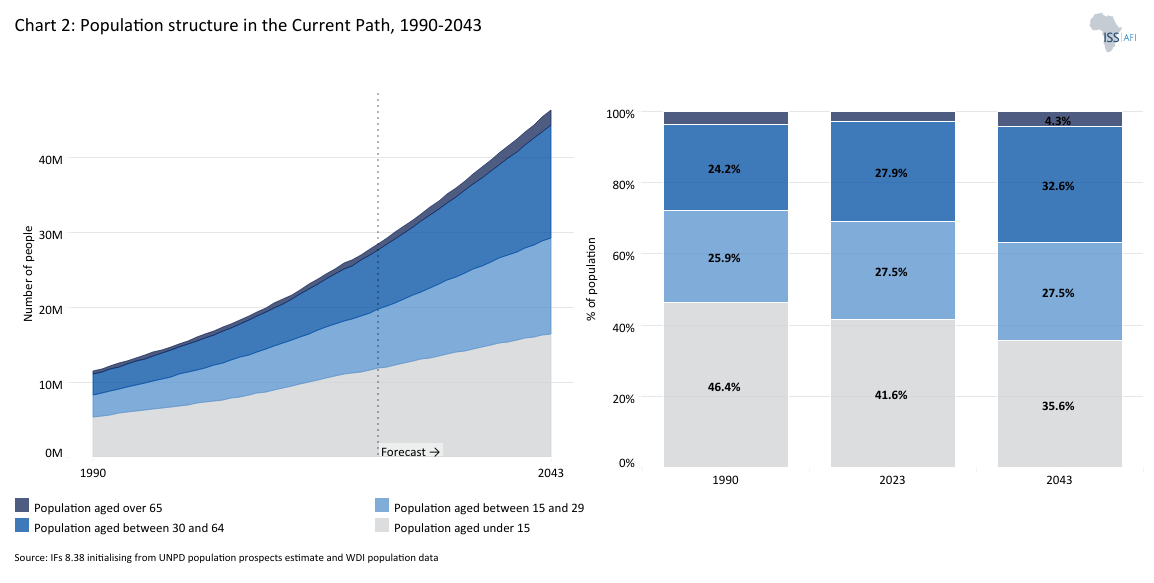
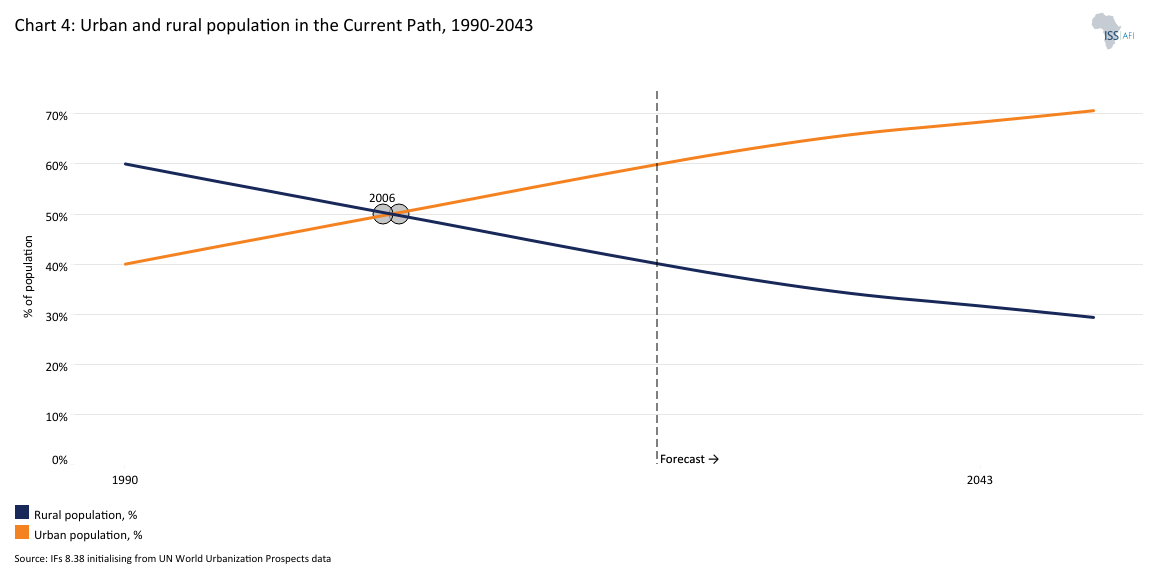
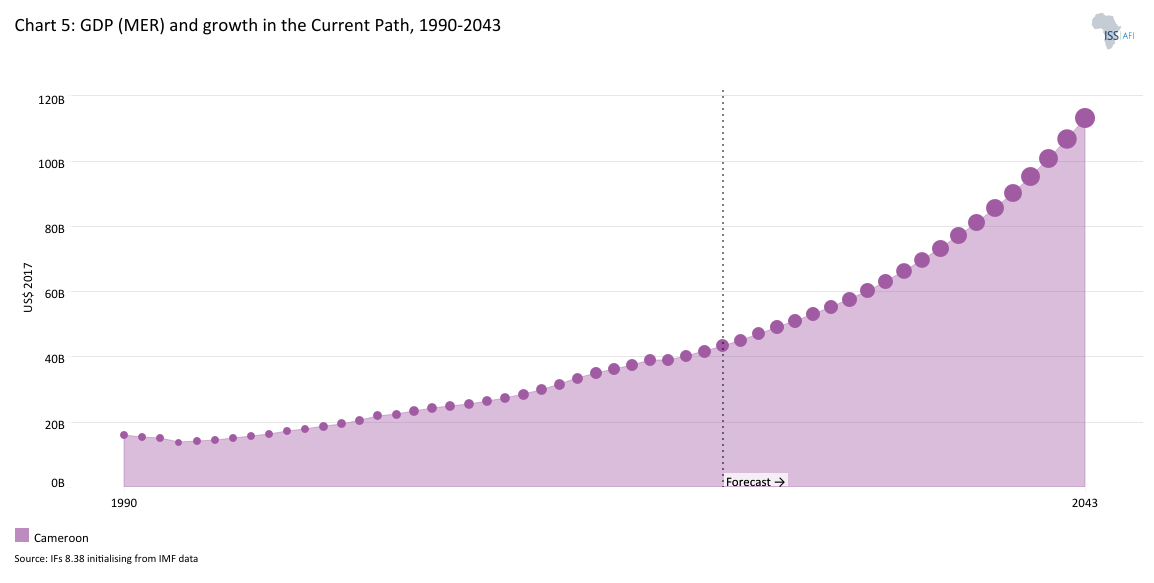
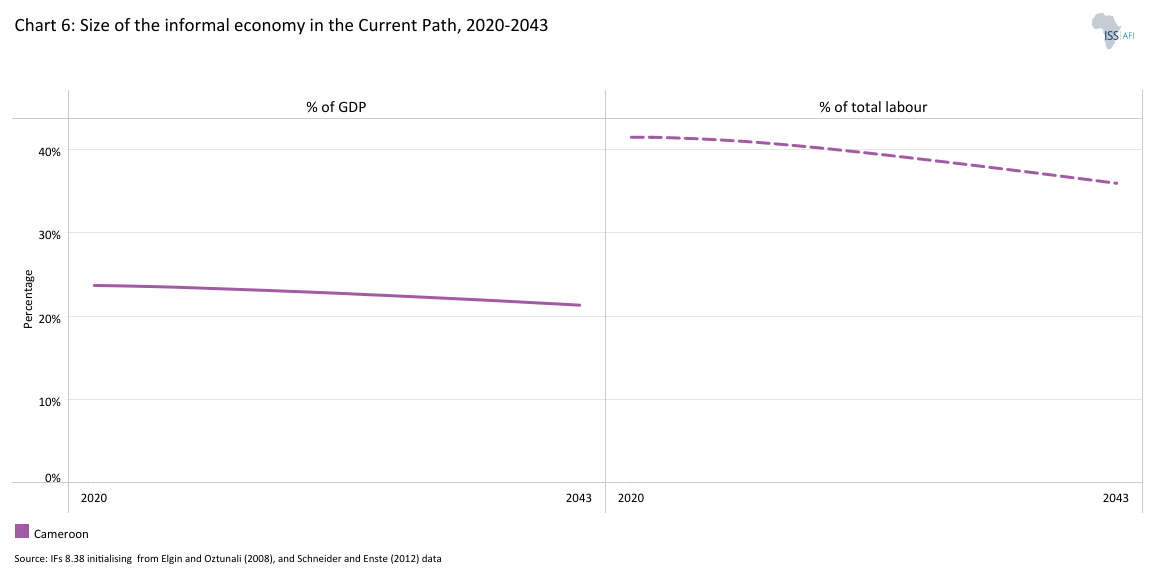
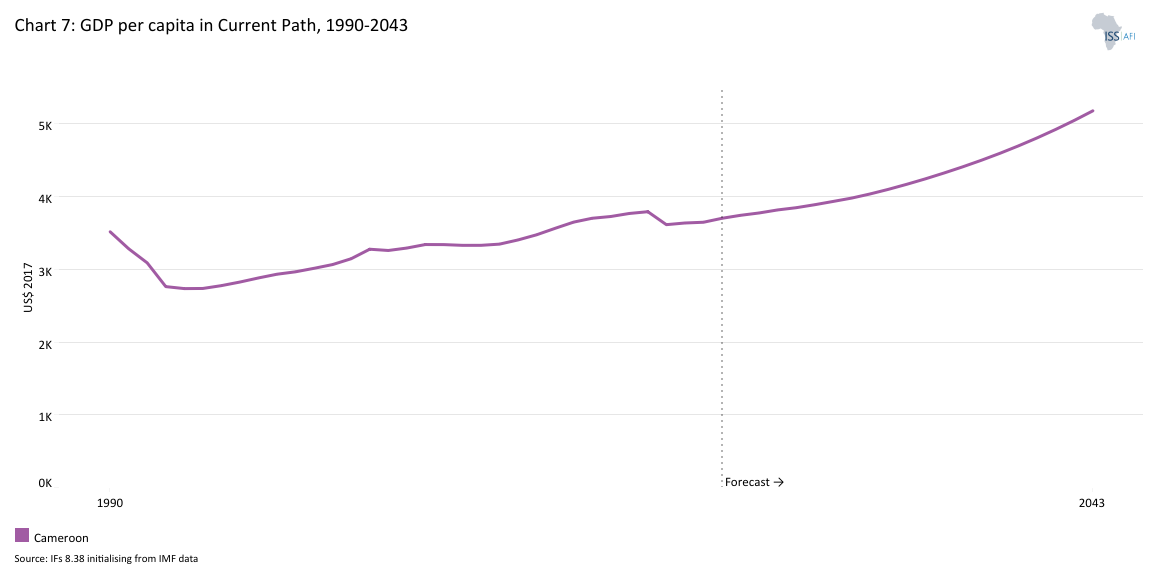
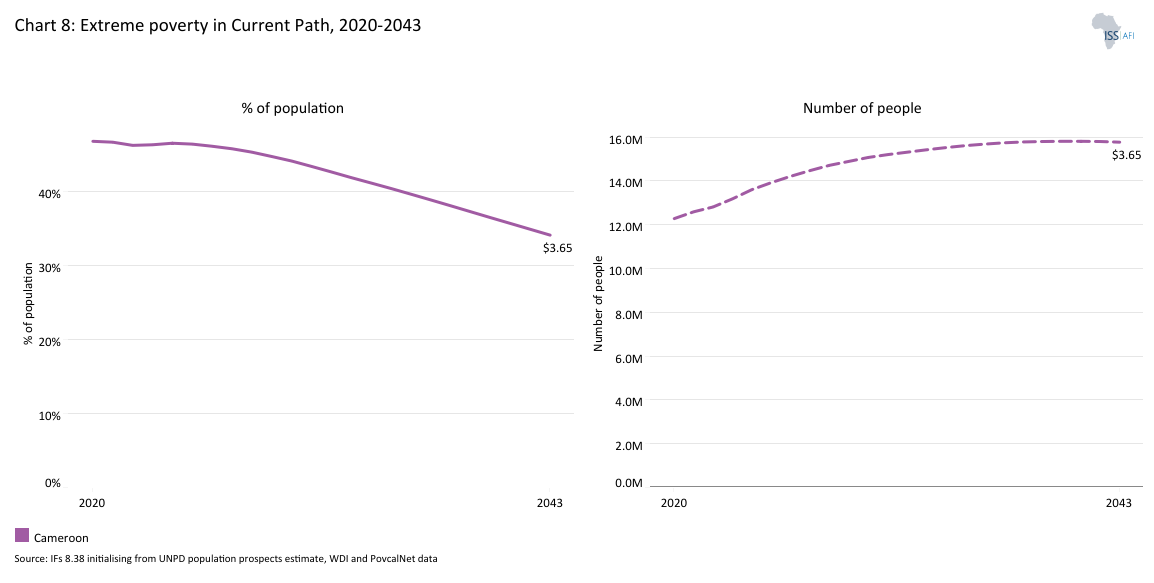
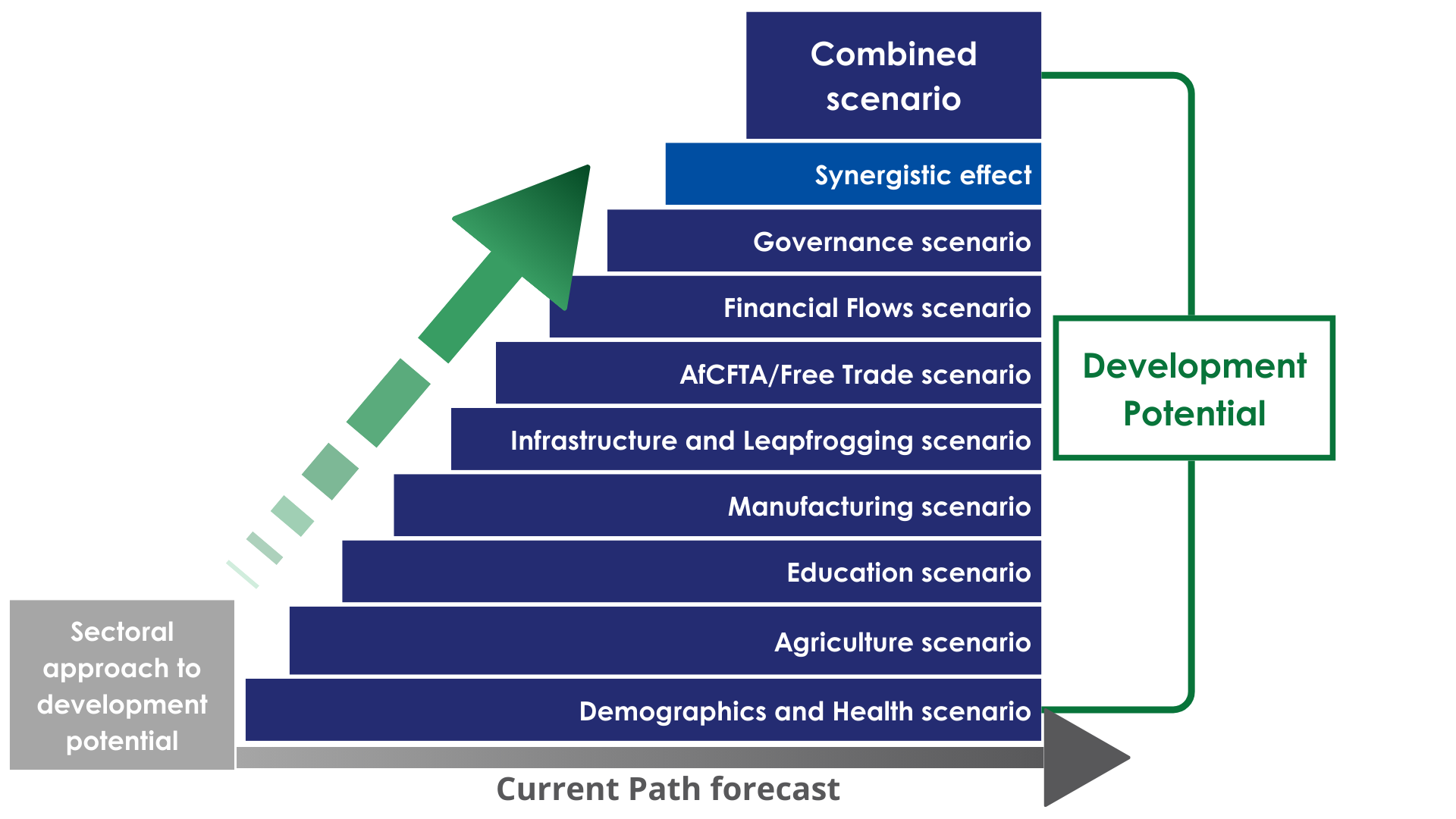
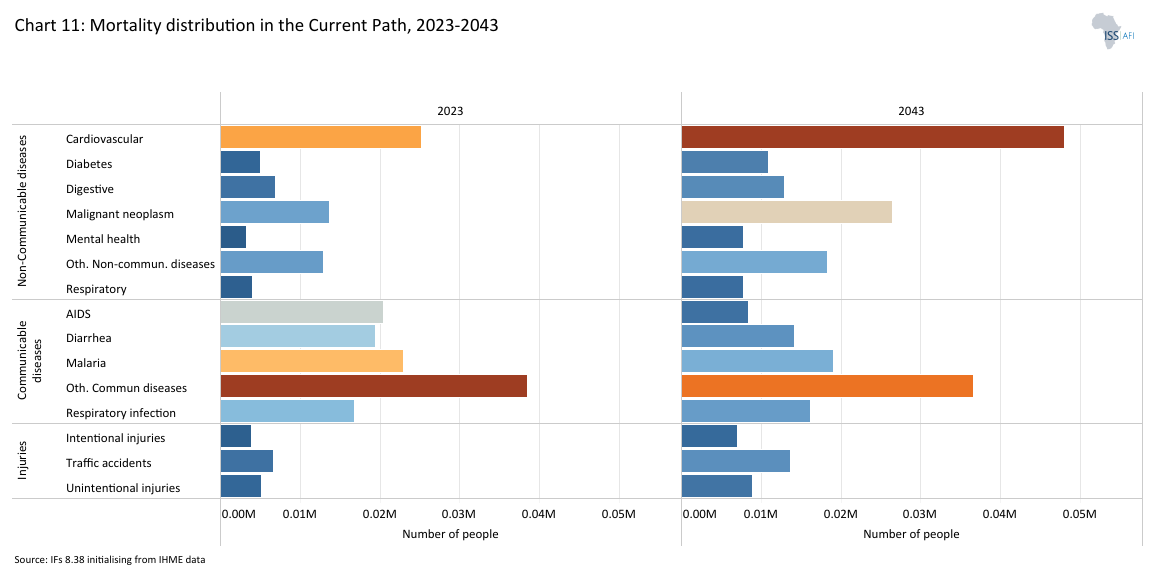
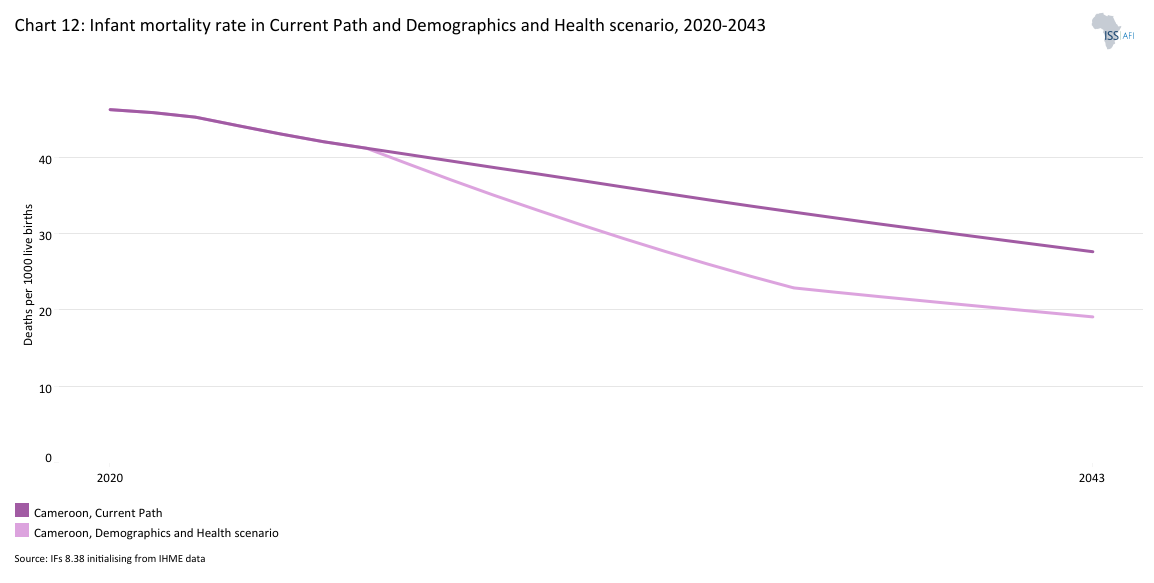
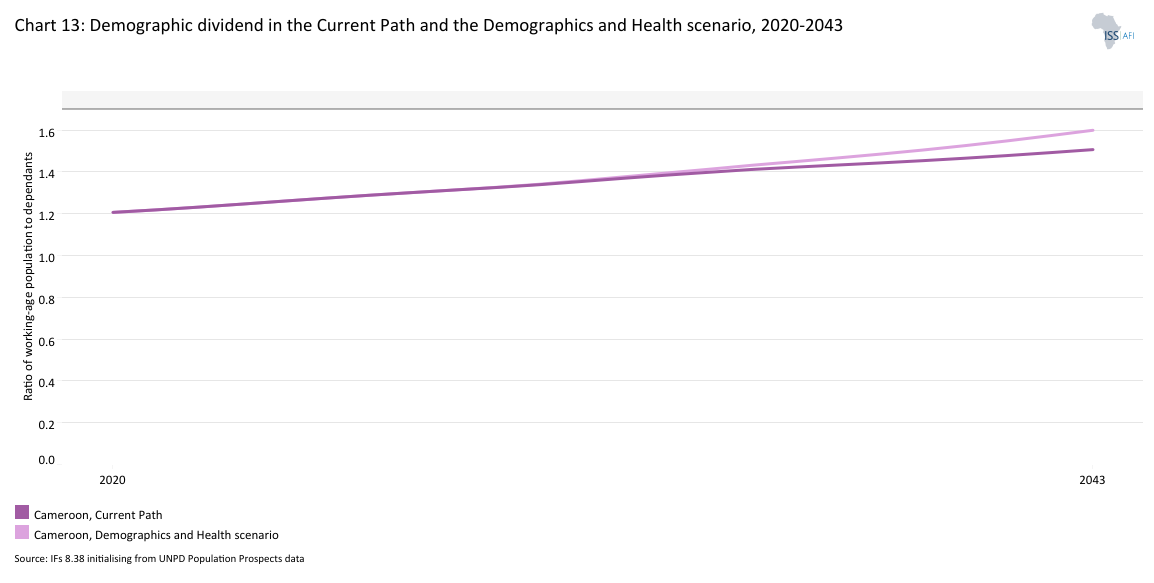
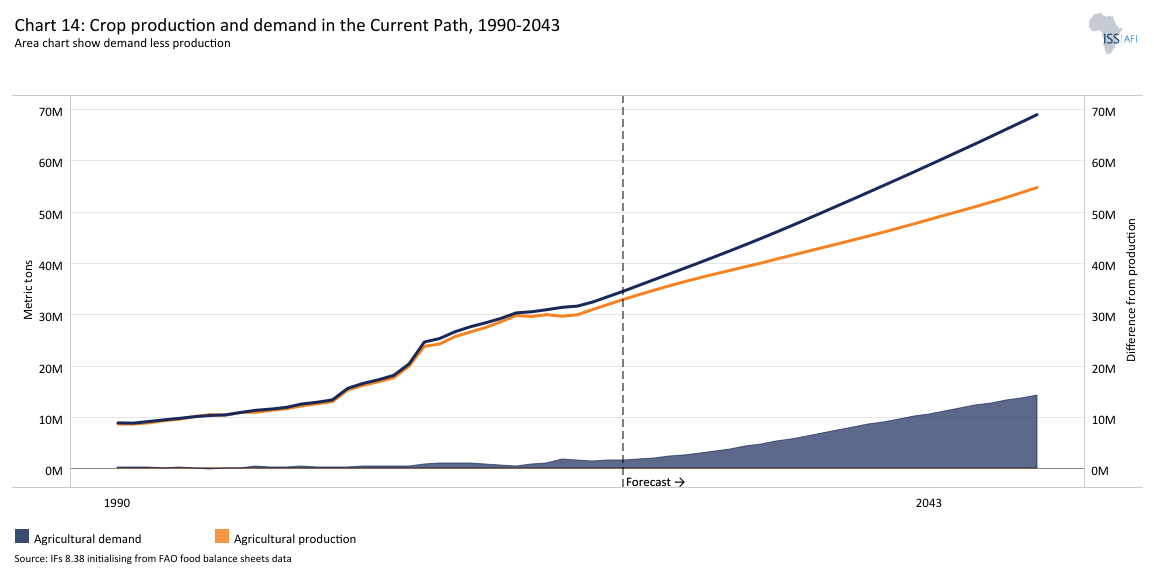
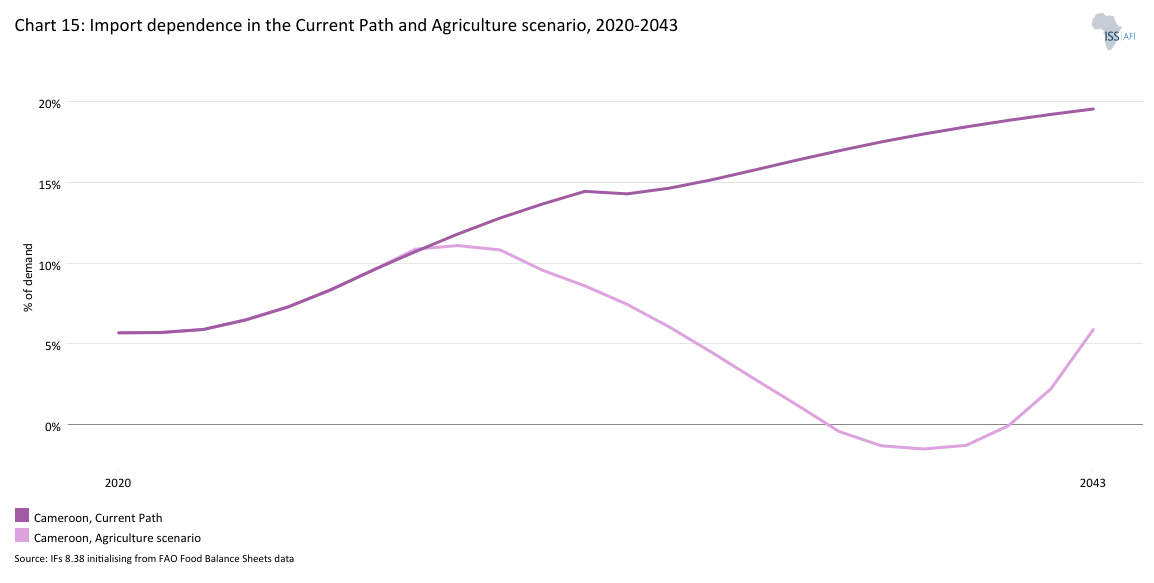
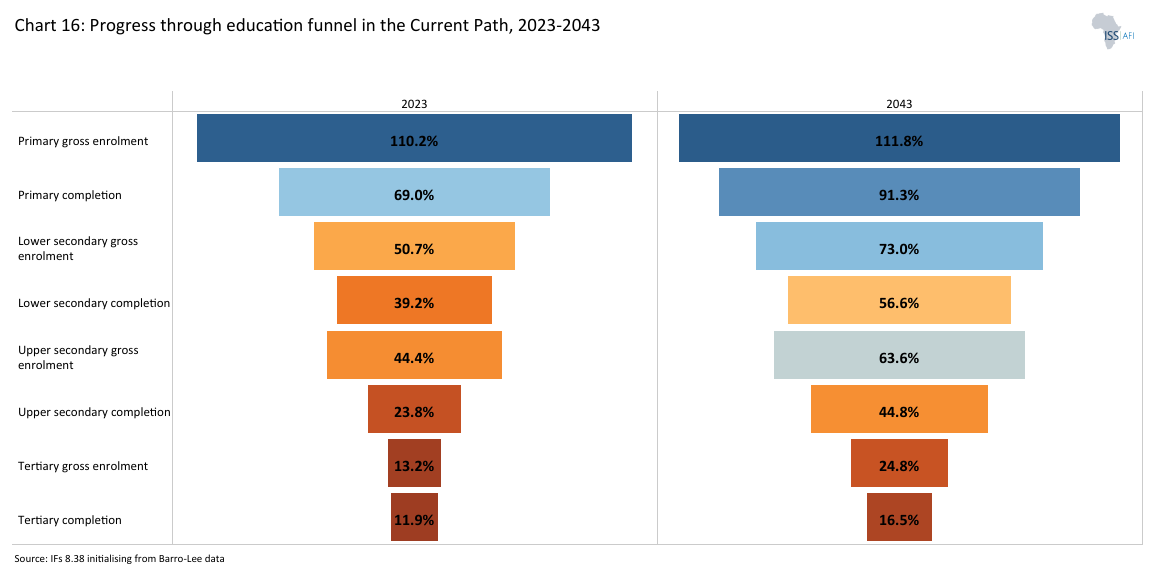
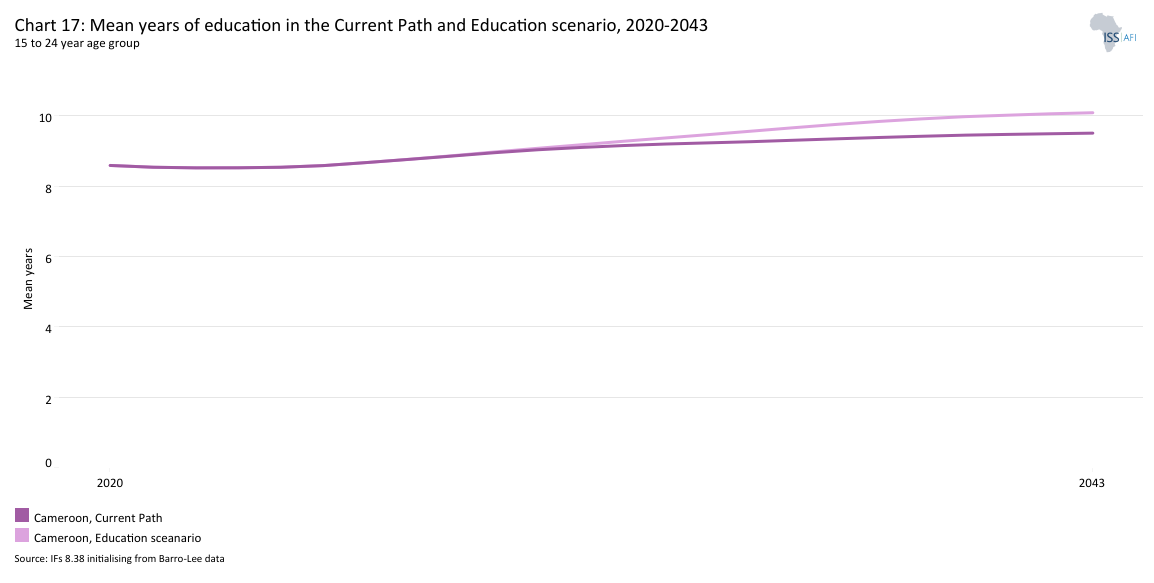
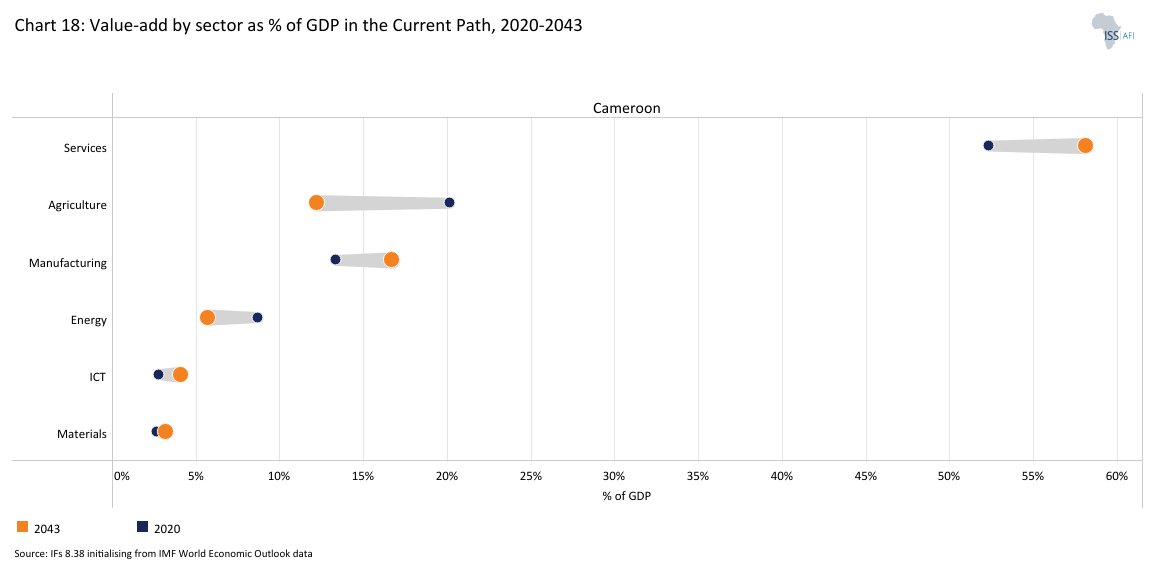
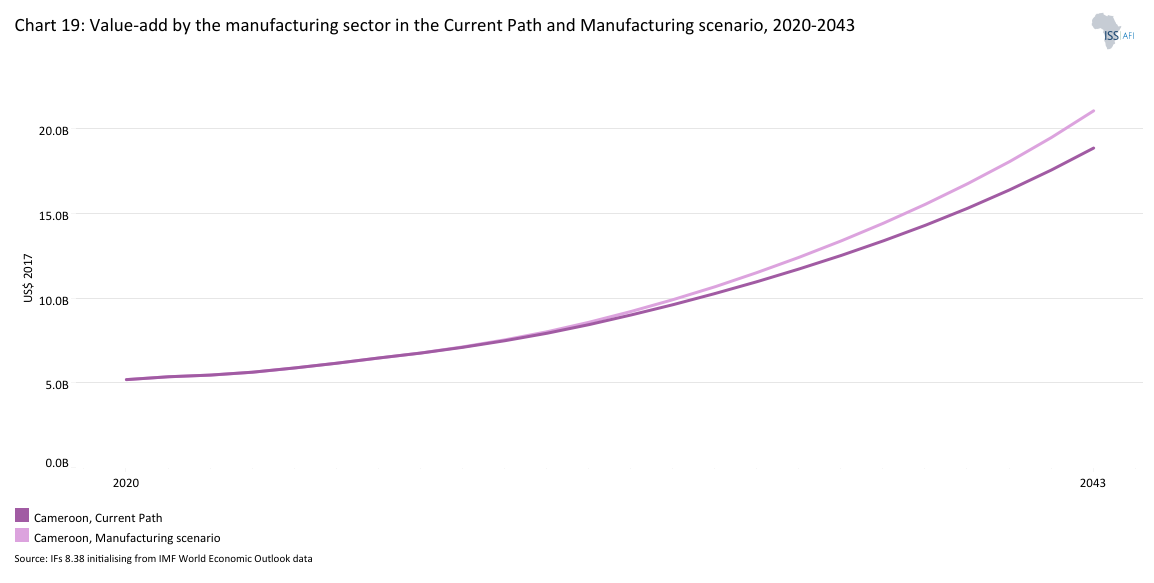
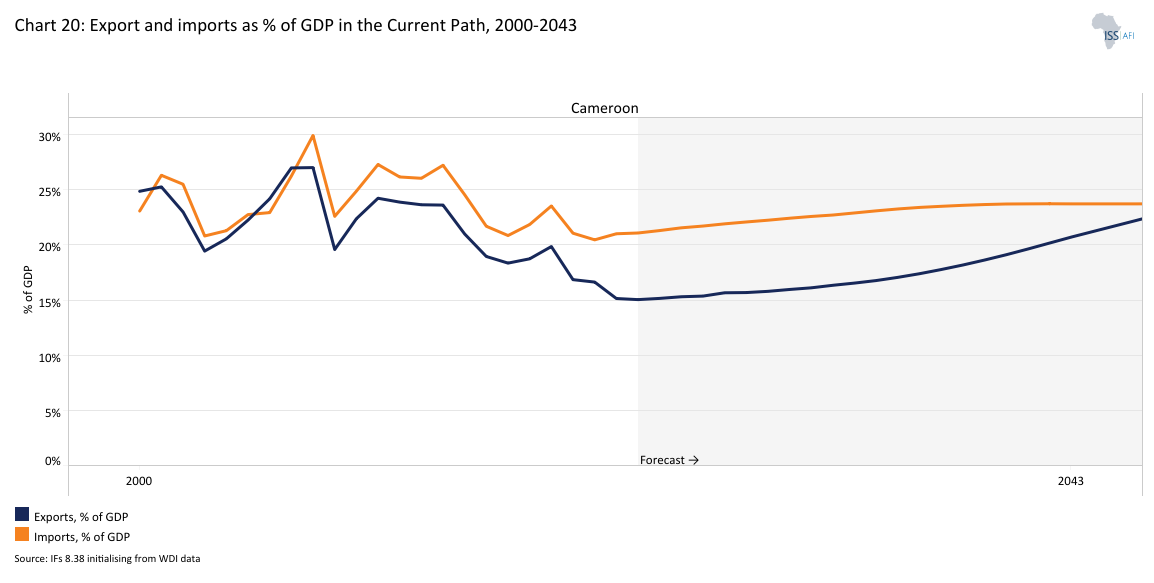
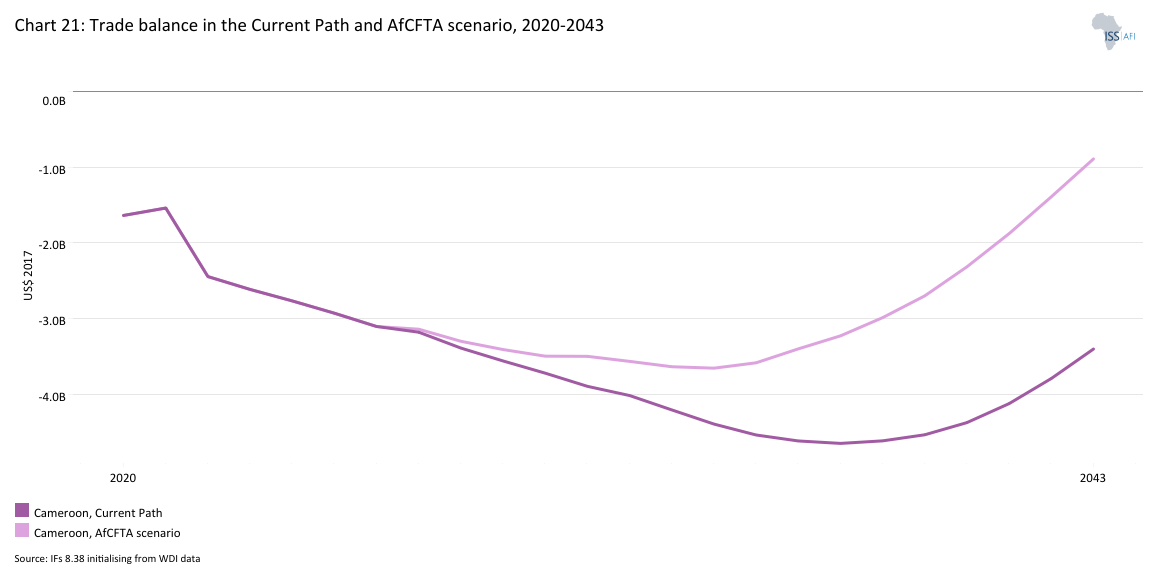
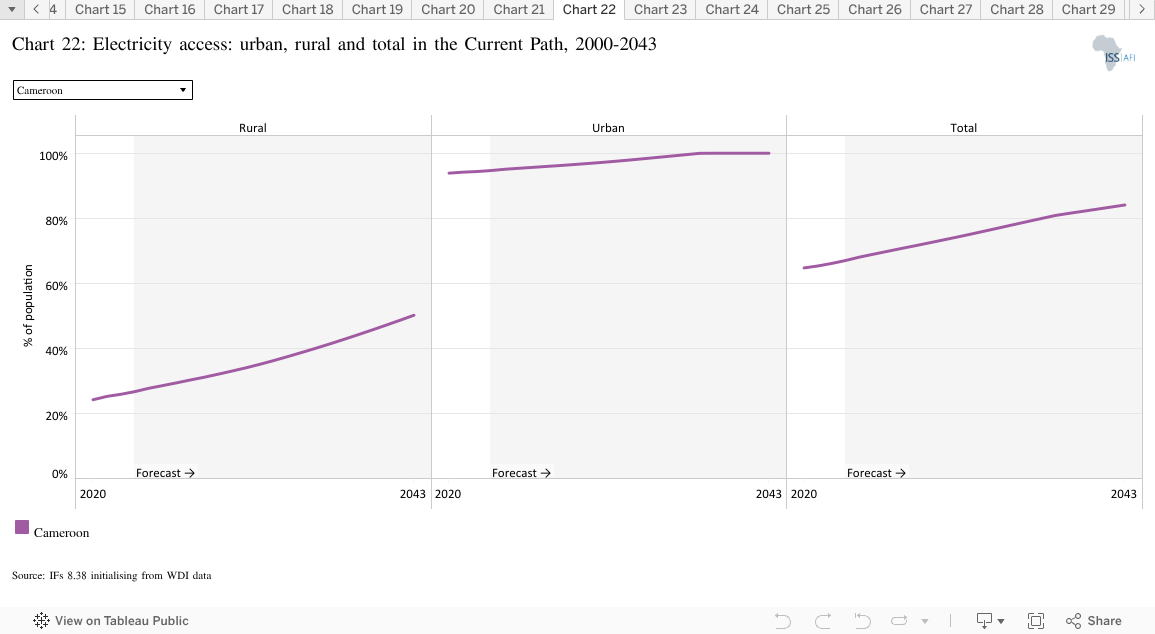
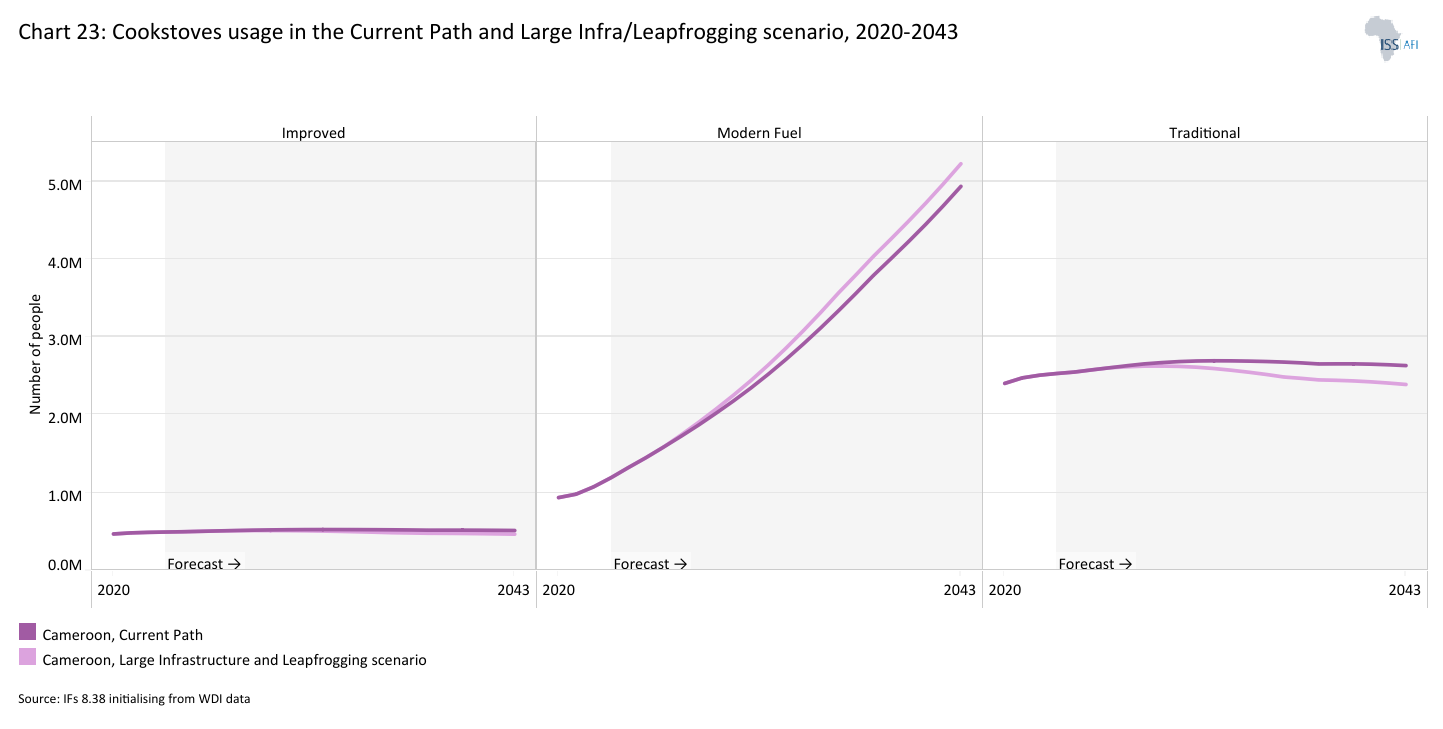
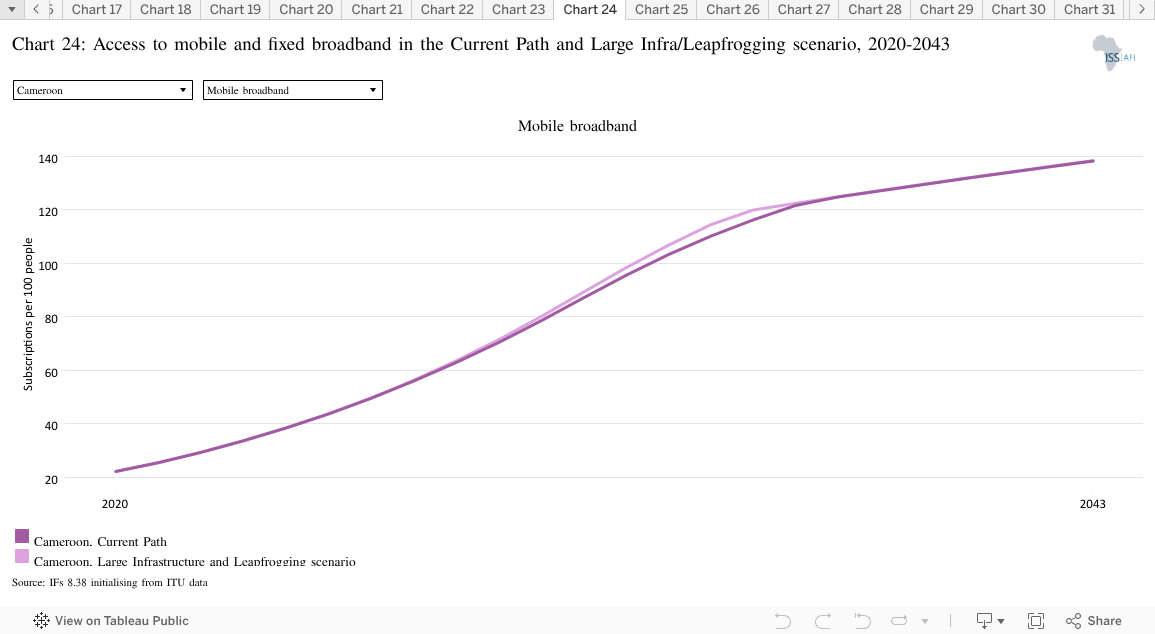
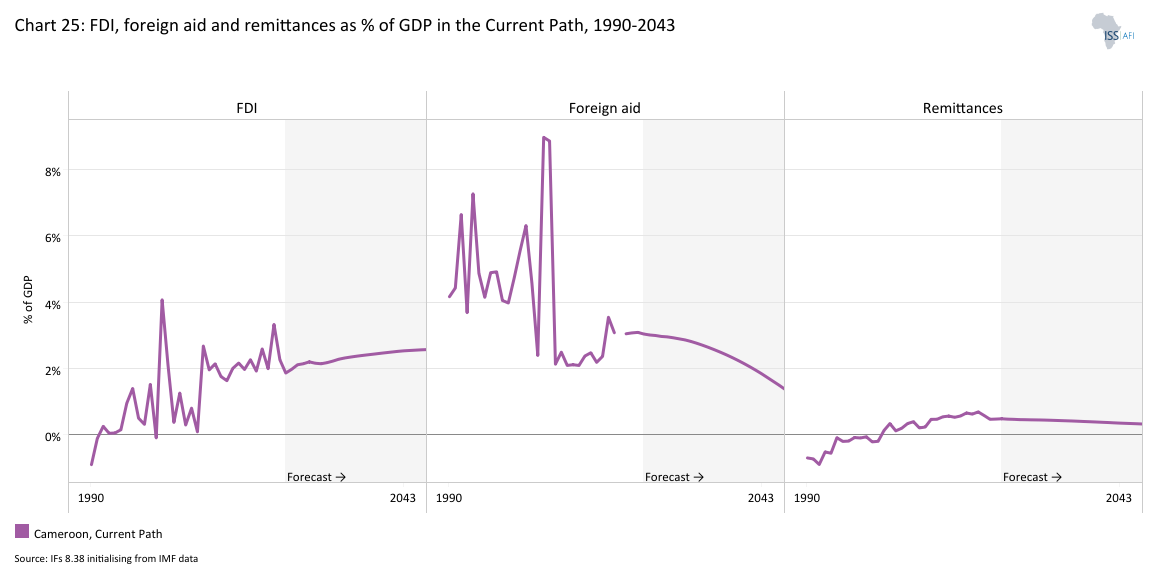
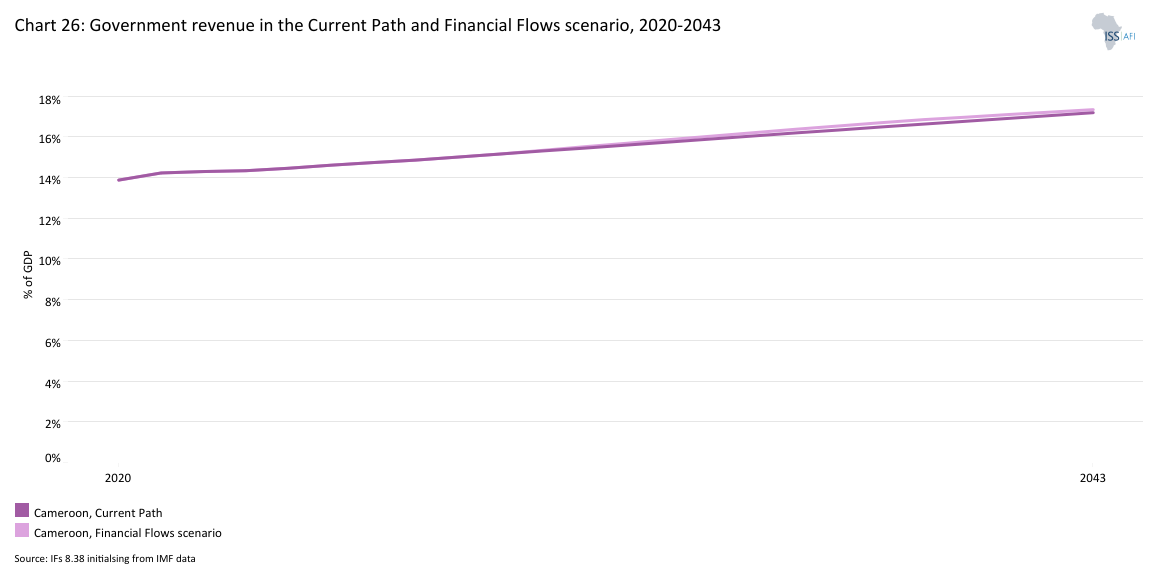
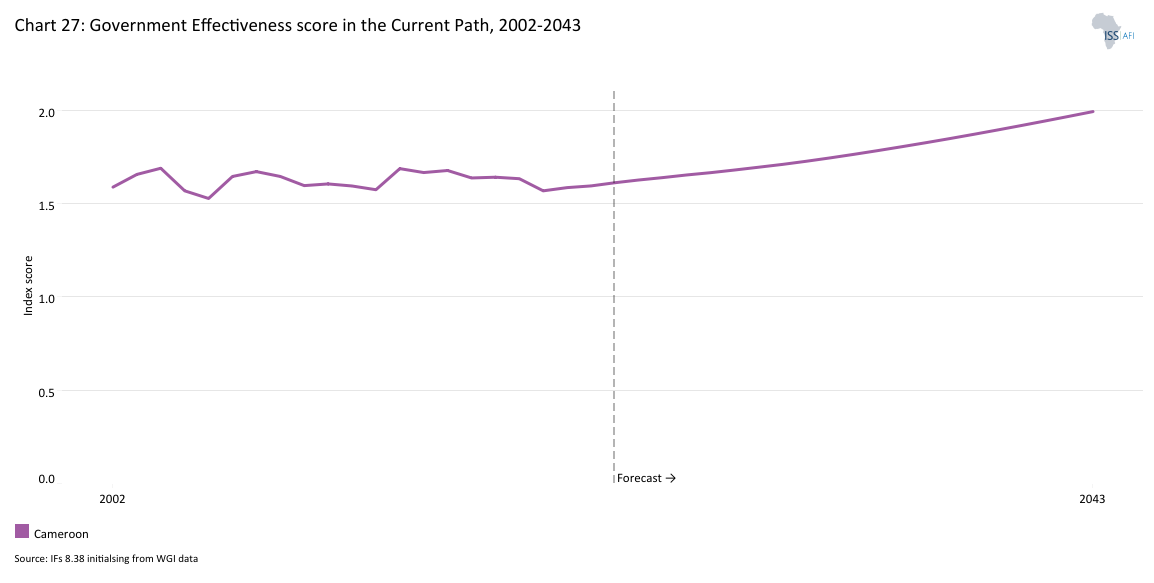
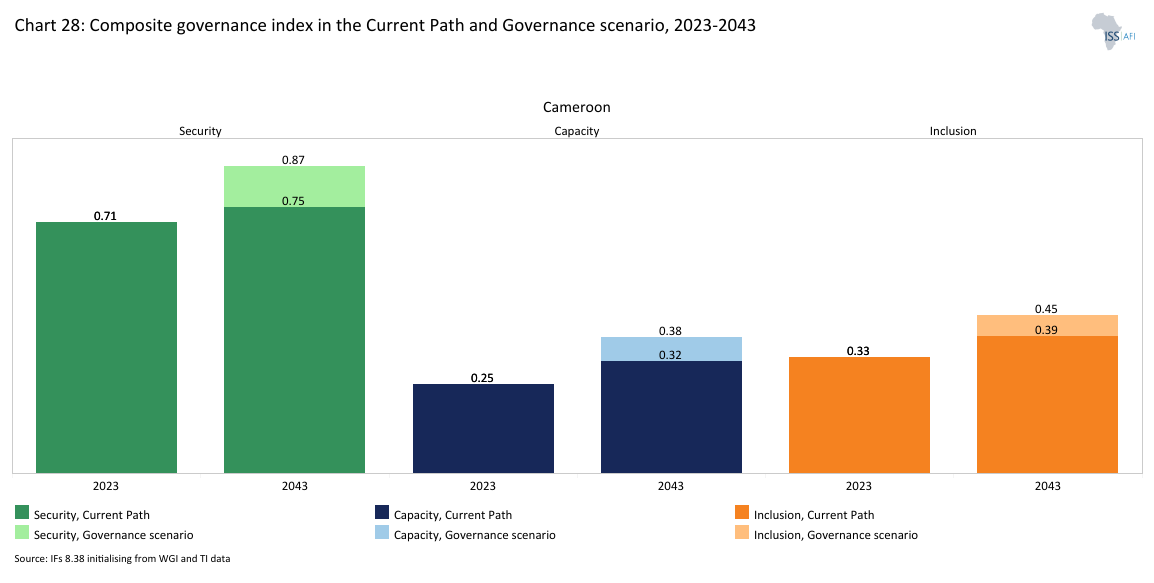
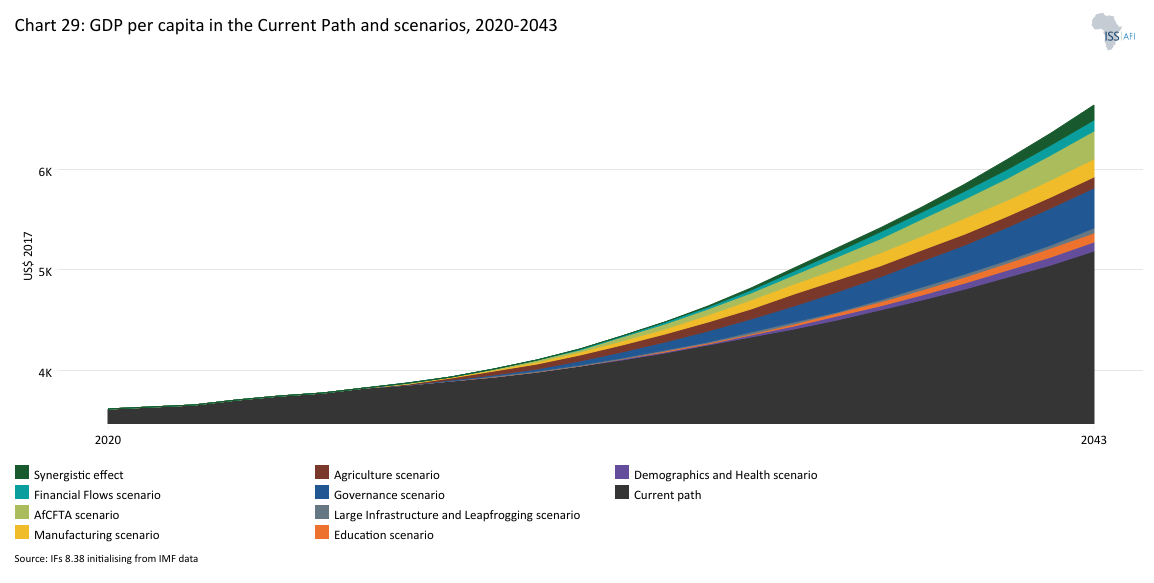
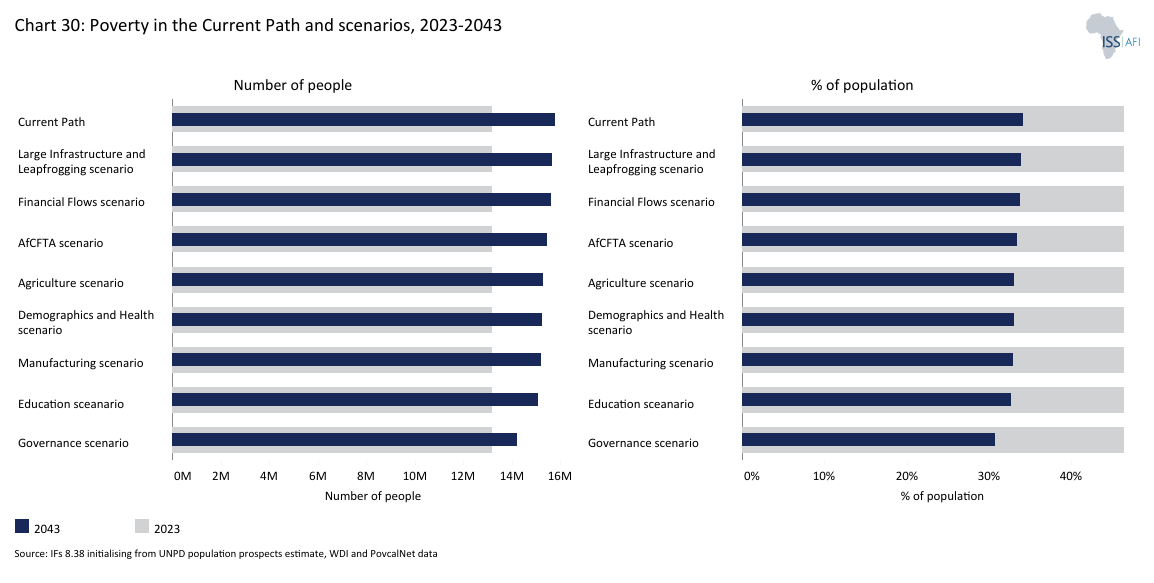
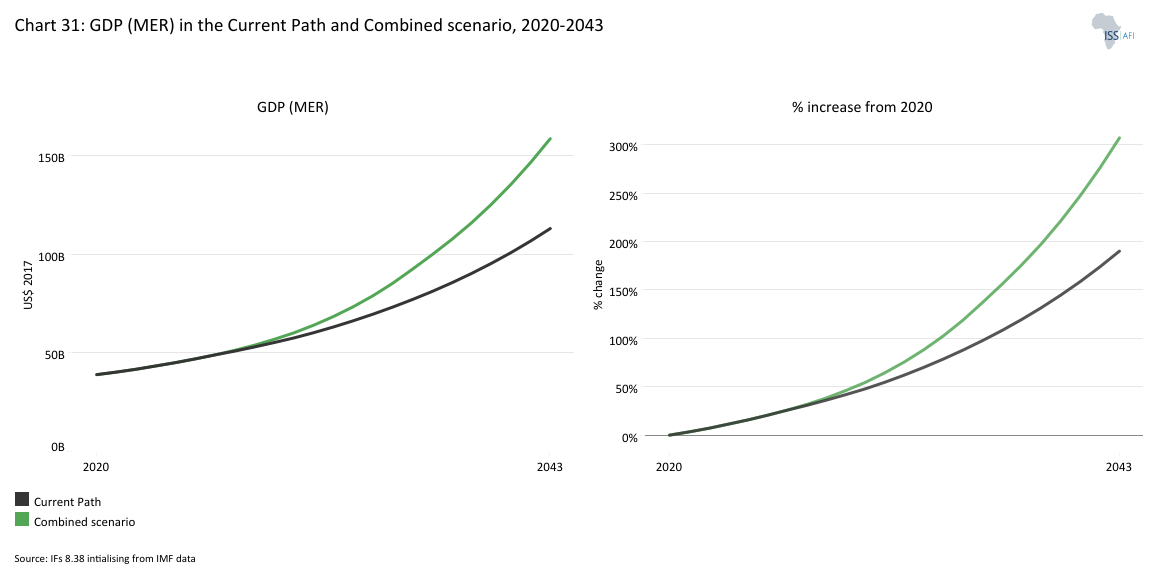
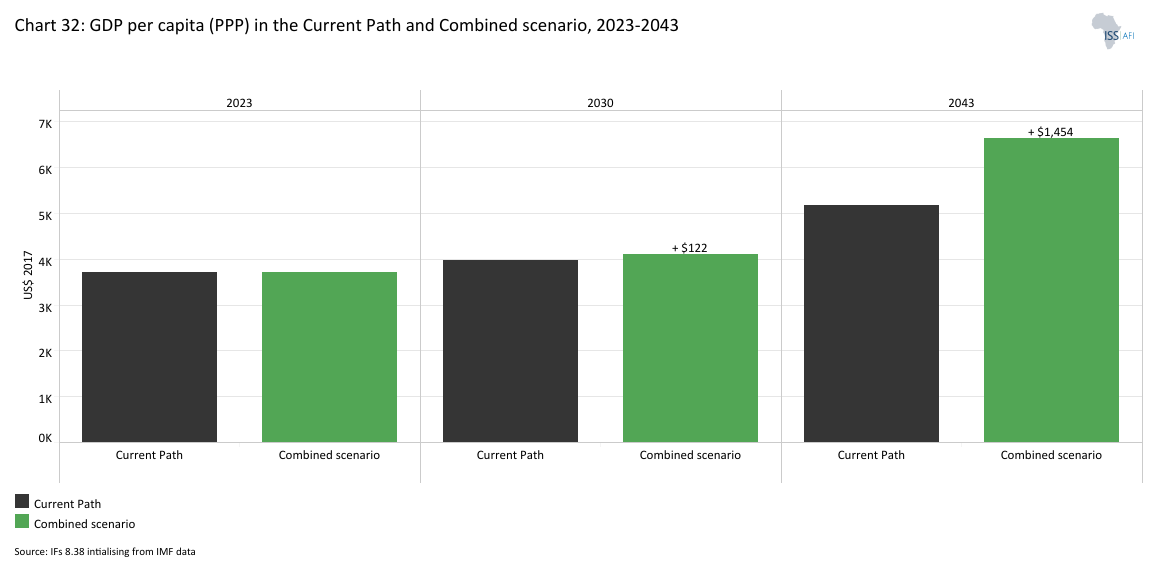
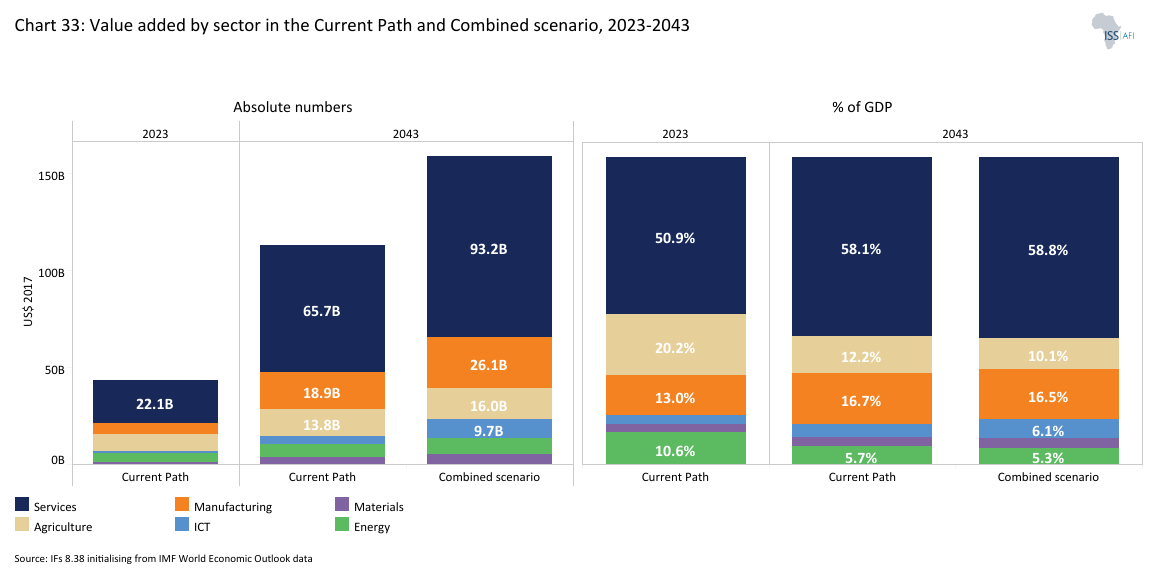
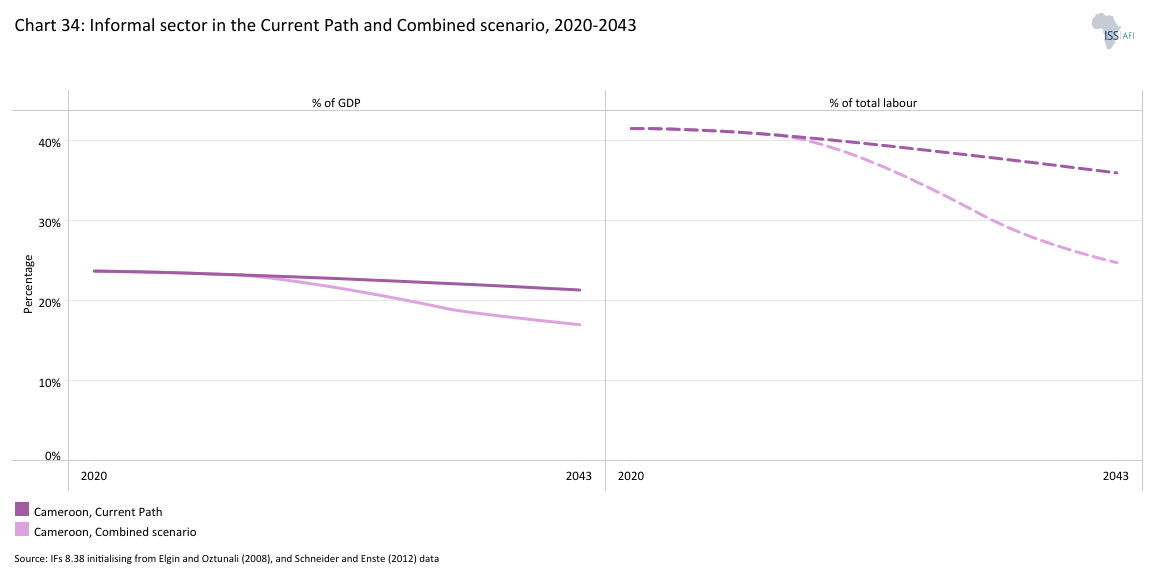
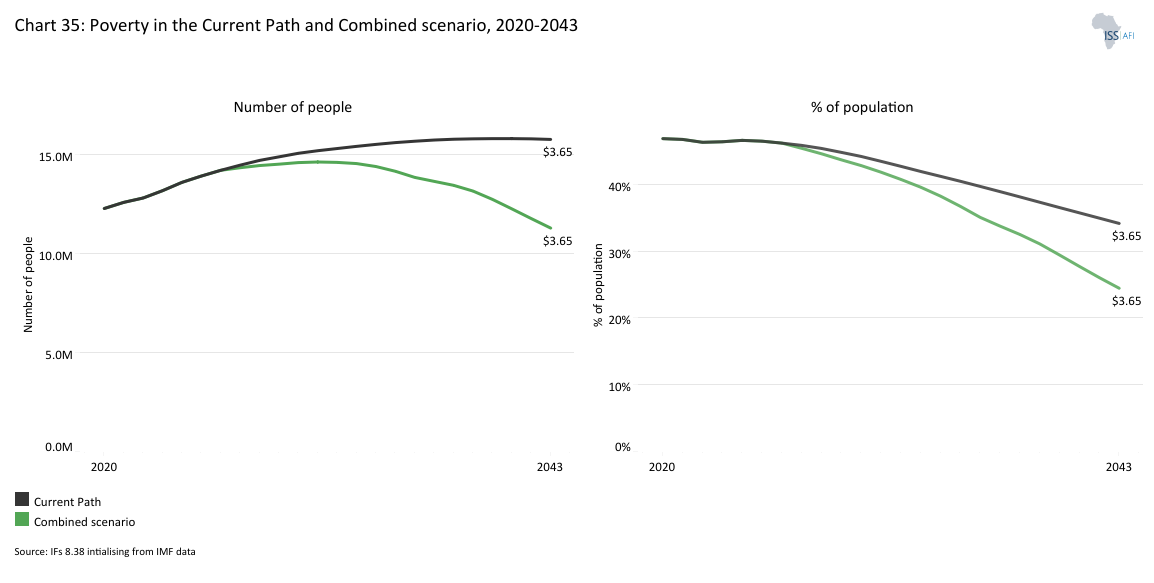
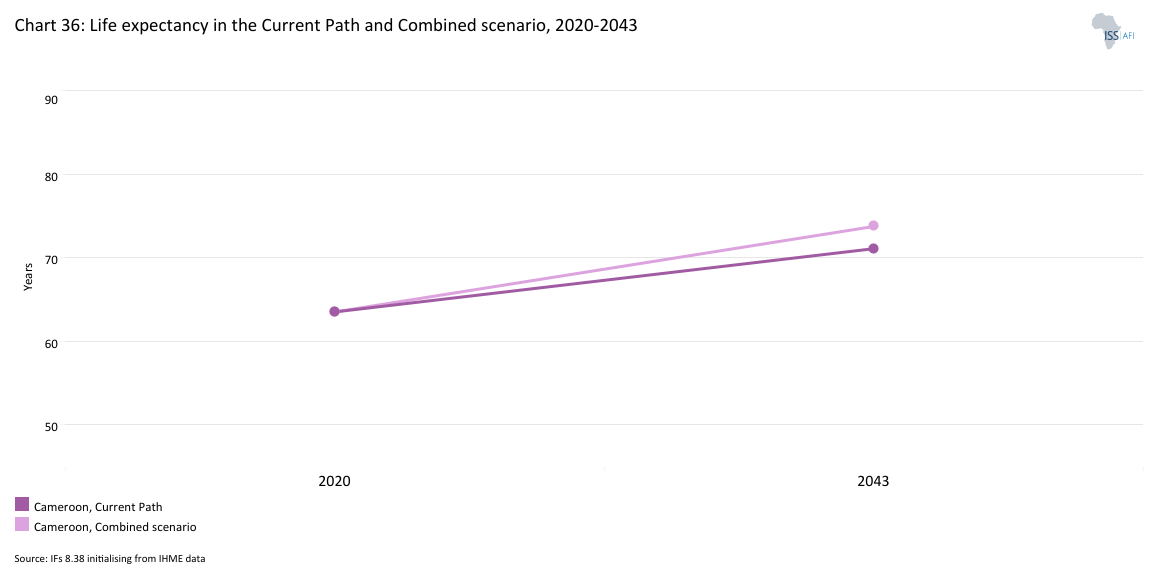
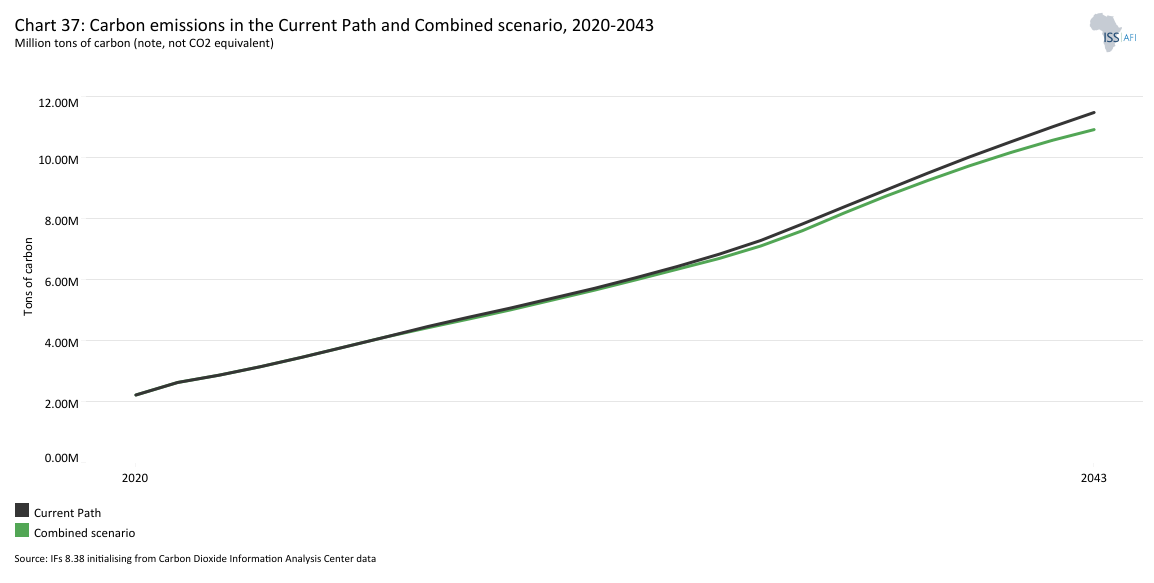
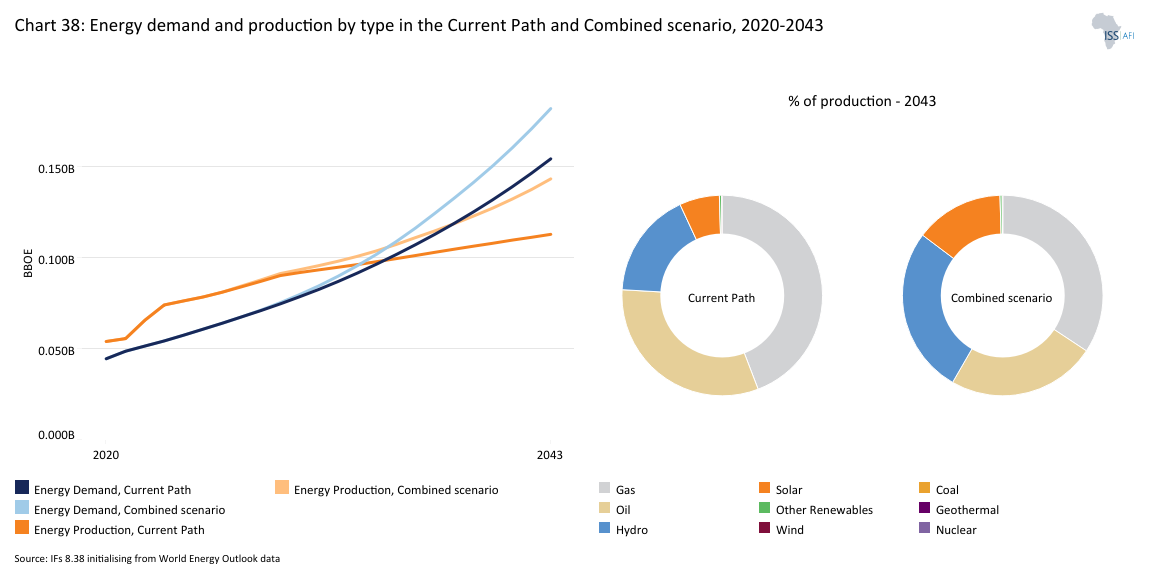

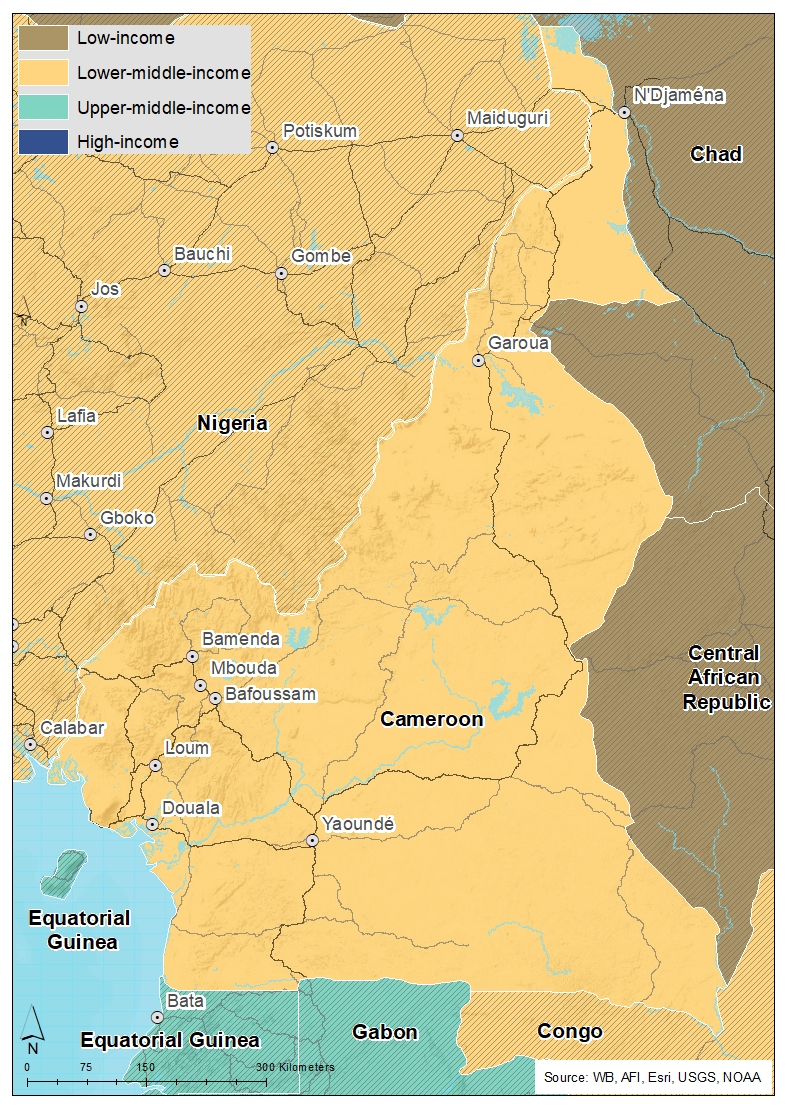
Chart 1 is a political map of Cameroon.
Cameroon is located in Central Africa and shares borders with Nigeria to the west, Chad to the northeast, the Central African Republic to the east, and the Republic of the Congo, Gabon and Equatorial Guinea to the south. Its coastline along the Gulf of Guinea (Atlantic Ocean) lies to the southwest. With a land area of approximately 475 442 km2, Cameroon is often described as “Africa in miniature” due to its geographic, climatic and cultural diversity.
According to the World Bank classification, Cameroon is a lower-middle-income country, ranking 155th out of 193 countries in the 2025 Human Development Index. The capital city is Yaoundé, in the Centre Region, while Douala, on the coast, serves as the country’s economic hub. Other major cities include Garoua, Maroua, Bamenda, Buea and Bafoussam. The country is administratively divided into 10 regions.
Cameroon’s topography ranges from coastal plains to mountains in the west (notably Mount Cameroon, the highest peak in West Africa at 4 040 meters). It extends to savannas and semi-arid zones in the north. Cameroon has a diverse climate, generally divided into a humid, equatorial south and a drier, tropical north. The southern region has heavy rainfall and high temperatures, with two rainy and two dry seasons in the central and southern highlands. The northern tropical zone is drier, with a distinct dry season from October to April and a single rainy season from May to September. Annual rainfall varies widely: from over 10 000 mm in the coastal town of Debundscha, among the wettest places on Earth, to less than 500 mm in the arid northern Sahelian zone. This climatic gradient contributes to regional disparities in agriculture, water access and economic activities.
The population was estimated at 28 million in 2023, with a national density of around 60 inhabitants per km2. Cameroon is highly urbanised, with more than 56% of the population living in urban areas, particularly in Douala and Yaoundé.
Cameroon is home to over 250 ethnic groups and languages, making it one of the most culturally diverse countries in Africa. The country's population includes the Bantu in the south, the Sudanic-speaking peoples in the north, and various indigenous groups. The two official languages are French and English, a legacy of its colonial history under French and British rule. However, over 200 local languages are spoken across the country. After gaining independence from France in 1960 and the British-administered Southern Cameroon in 1961, Cameroon adopted a federal system, later replaced by a unitary state in 1972 and has only had two presidents since its independence in 1960: Ahmadou Ahidjo (1960-1982) and Paul Biya (1982-present), one of the world’s longest-serving leaders.
The political system is a unitary presidential republic with a bicameral parliament composed of the National Assembly (180 members) and the Senate (100 members). Administratively, it is divided into ten semi-autonomous regions, each under the administration of an elected regional council. A presidentially appointed governor heads each region. The regions are subdivided into 58 divisions (French: départements) headed by presidentially appointed divisional officers (préfets). The divisions are further split into subdivisions (arrondissements), headed by assistant divisional officers (sous-préfets). The districts, administered by district heads (chefs de district), are the smallest administrative units.
Following protests and several violent clashes, a 1990 constitutional amendment introduced multiparty elections and governance in the country. Consequently, the country adopted multiparty elections and universal suffrage in 1992. The incumbent president, Paul Biya, who has been in office since 1982, and his party (Cameroon People's Democratic Movement), have won every election since 1992 amidst protests and allegations of electoral fraud and intimidation by the opposition. A controversial bill passed in 2008 removed term limits and allowed the president to run for an unlimited number of terms. The last senatorial and presidential elections in 2018 further entrenched Paul Biya's reign for an additional 7 years. More than 18 complaints filed by opposition parties to the Constitutional Court were rejected. In 2025, despite waves of protests and uprisings, Paul Biya was re-elected for an eighth term in presidential elections.
Cameroon is a founding member of the Economic and Monetary Community of Central Africa (CEMAC) and also belongs to the Economic Community of Central African States (ECCAS), the African Union (AU), the Commonwealth, the Organisation internationale de la Francophonie (OIF) and the World Trade Organisation (WTO) (since 1995). Cameroon's economy is diversified, relying on agriculture, oil, forestry, and mining, though it faces persistent structural challenges. In 2023, GDP per capita stood at US$3 809. Despite rich natural resources, the country continues to grapple with regional disparities, governance issues and socio-political tensions in the Northwest and Southwest regions.
Chart 2 presents the Current Path of the population structure, from 1990 to 2043.
Cameroon’s population has expanded steadily over the past three decades, increasing from 11.3 million in 1990 to approximately 28.4 million in 2023, an increase of roughly 151%. Under the Current Path, the population will reach 46.2 million by 2043. This sustained demographic expansion will significantly shape labour markets, infrastructure demand and public service delivery over the next two decades.
The share of the working-age population (15–64 years) has risen from 50.5% in 1990 to 55.5% in 2023 and will increase further to 60.1% by 2043. At the same time, the proportion of children under 15 has declined from 46.8% in 1990 to 41.6% in 2023 and will fall to 35.6% by 2043. Although the elderly population (65+) declined from 3.6% to 2.9% over the same period, it is projected to increase modestly to 4.3% by 2043.
With a median age of 18.8 years in 2023, projected to rise to 22.4 years by 2043, Cameroon remains a predominantly youthful society. This demographic structure presents a potential demographic dividend, but only if accompanied by sustained investment in education, skills development and employment-intensive sectors. Otherwise, rapid labour force expansion could intensify unemployment and social pressures.
The decline in the share of children reflects a gradual fertility transition. Cameroon’s total fertility rate fell from 6.4 births per woman in 1990 to 4.4 in 2023, though it remains above the lower-middle-income African average (3.9) and the continental average (4.1). Structural factors, including socio-cultural norms, economic insecurity and uneven access to reproductive health services, continue to sustain relatively high fertility. Under the Current Path, fertility will decline further to 3.4 births per woman by 2043.
As a result, the total dependency ratio will fall from 0.80:1 in 2023 to 0.66:1 by 2043, signalling a gradual easing of demographic pressures. However, realising the benefits of this transition will depend on the country’s ability to accelerate structural transformation, expand formal employment and enhance human capital to absorb a rapidly growing workforce.
Chart 3 presents a population distribution map for 2023.
In 2023, Cameroon’s average population density stood at 0.60 persons per hectare, below the lower-middle-income African average of 0.80. Despite sustained demographic growth, overall density remains moderate by regional standards. However, national averages mask significant spatial disparities that have important policy implications.
Population distribution is highly uneven. The central and littoral regions, particularly Yaoundé and Douala, host a large share of the population, driven by internal migration linked to employment opportunities, access to education, and infrastructure availability. Parts of the West, North-West and South-West are also relatively dense due to fertile soils and active agricultural and commercial economies.
By contrast, the East, Adamawa and Far North, though geographically extensive, remain sparsely populated, reflecting geographic remoteness, lower levels of urbanisation and, in some areas, persistent security challenges. These imbalances contribute to unequal access to services, infrastructure gaps and divergent development outcomes.
Under the Current Path, population density will rise to 0.98 persons per hectare by 2043, still below the projected LMIC African average of 1.21 persons per hectare. This trajectory suggests continued rural-to-urban migration and spatial concentration of economic activity, reinforcing the need for targeted regional development strategies, improved connectivity and balanced territorial planning to reduce disparities and manage urban expansion effectively.
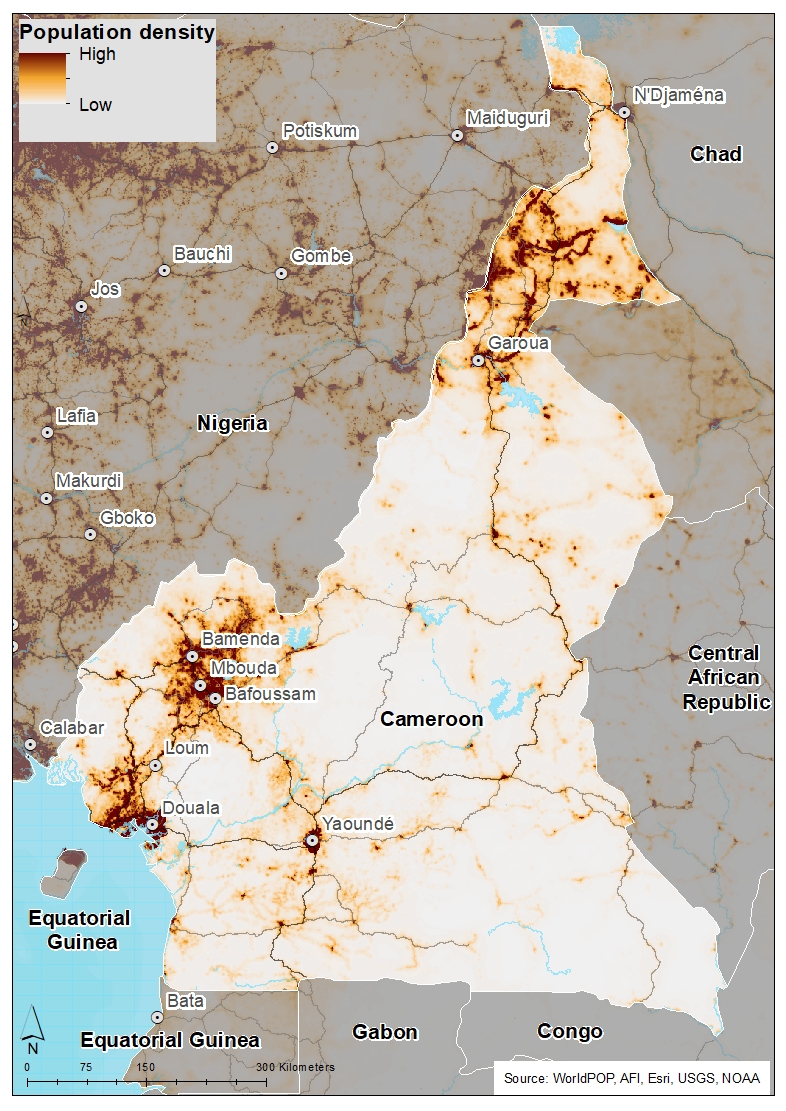
Chart 4 presents the urban and rural population in the Current Path, from 1990 to 2043.
Since 1990, Cameroon has undergone rapid urbanisation, with the share of the urban population rising from 40% to nearly 60% in 2023, an increase of 20 percentage points over three decades. This places the country well above the 2023 lower-middle-income African average of 49.2%. Urban–rural parity was reached as early as 2007, ahead of many regional peers.
Under the Current Path, urbanisation is projected to intensify, with 68.4% of the population, about 31.6 million people, living in urban areas by 2043, compared to 31.6% (14.6 million people) in rural areas. This far exceeds the projected LMIC African average of roughly 58% for the same year.
Urban growth has been driven by natural population increase and sustained rural–urban migration toward major centres such as Douala and Yaoundé, where economic activity and public services are concentrated. While urbanisation can enhance productivity through agglomeration economies and industrial clustering, it also creates mounting pressure on housing, transport systems, sanitation, energy supply and basic service provision, particularly in informal and peri-urban settlements.
Although the rural population’s share is declining, its absolute size will still increase from 11.3 million in 2023 to 14.6 million by 2043. This dual dynamic, rapid urban expansion alongside continued rural population growth, calls for integrated urban planning, strengthened municipal governance and targeted rural development strategies. Managing urbanisation effectively will be central to transforming demographic change into sustained economic growth and inclusive structural transformation.
Chart 5 presents GDP in market exchange rates (MER) and growth rate in the Current Path, from 1990 to 2043.
Despite substantial natural resource endowments, including oil, gas, timber and minerals, Cameroon remains a lower-middle-income economy characterised by persistent poverty and limited structural transformation. While the economy has gradually diversified, it still relies heavily on primary commodities. GDP at market exchange rates (MER) increased from approximately US$16.0 billion in 1990 to US$43.3 billion in 2023, reflecting sustained but moderate expansion over three decades.
Several structural weaknesses, including inadequate infrastructure, limited industrial development, inefficient institutions and vulnerability to external commodity price fluctuations, have hindered economic growth. The economy's reliance on exports such as crude oil, timber and cocoa makes it susceptible to global market volatility. Additionally, climate variability, especially droughts in the northern region and irregular rainfall, has negatively impacted agricultural output, which is vital for employment and livelihoods.
A shallow financial system, with limited long-term credit and constrained capital markets, has also restricted private-sector development and productivity growth. Although efforts toward diversification, such as agro-industrial development and digital innovation, are underway, they require stronger coordination, scaling and sustained investment.
Through the National Development Strategy 2020–2030 (SND30), Cameroon aims to accelerate industrialisation, digital transformation, human capital development and regional equity within a strengthened governance framework. In the Current Path, GDP will reach approximately US$113 billion by 2043, growing at an average annual rate of 4.7%, supported by infrastructure expansion (including hydropower projects such as Lom Pangar and Nachtigal), regional trade integration and business climate reforms.
However, key constraints remain, including uneven electricity access, particularly in rural areas, high youth unemployment, fragility in conflict-affected regions and limited access to international capital markets. Achieving faster, more resilient growth will require deeper structural reforms, strengthened institutional capacity, expanded access to finance and energy, and closer regional cooperation within CEMAC to enhance competitiveness and reduce external vulnerability.
Chart 6 presents the size of the informal economy as per cent of GDP and per cent of total labour (non-agriculture), from 2020 to 2043. The data used in our modelling are largely estimates and may therefore differ from other sources.
The informal economy comprises activities that have market value and would add to tax revenue and GDP if they were recorded. According to the International Labour Organization (ILO), informal employment is often associated with income insecurity, unsafe work conditions and limited access to the rights and benefits accorded to the formal sector. Countries with high informality face a host of development challenges, including higher poverty, lower per capita incomes, greater inequality, and weaker productivity investment, among others.
In line with trends across much of sub-Saharan Africa, the informal sector represents a substantial share of Cameroon’s economy, particularly in urban areas. In 2023, the informal sector in Cameroon accounted for 23.5% of GDP, compared with the average of 30.6% for LMICs in Africa. While this apparent under-representation might reflect modelling assumptions, it also highlights the under-recorded nature of informal production activities and the dominance of agriculture, which is excluded from these estimates in many rural regions.
The primary non-agricultural informal activities in Cameroon occur in retail trade, repair services, informal transportation, tailoring, small-scale manufacturing and domestic work. A considerable proportion of these businesses operate without licenses, lack access to financial services and depend on manual labour and outdated technologies, factors that undermine productivity and income stability. According to Cameroon's Informal Sector Survey, over 60% of informal operators have no formal education or have only completed primary schooling, a barrier to upscaling their operations.
Recognising the scale and significance of the informal sector, the Cameroonian government has launched various initiatives to facilitate progressive formalisation. These include the Plan de Formalisation de l’Economie Informelle (PFEI) and support for micro, small and medium-sized enterprises (MSMEs) through financing mechanisms like the National Credit Fund and digital business registration platforms. In addition, tax administration reforms, including the deployment of mobile tax payment systems, aim to widen the tax base while reducing compliance burdens.
In the Current Path, Cameroon’s informal sector will decline gradually to 21.3% of GDP by 2043, remaining far below the 27.0% average for LMICs in Africa. While this reduction may reflect increasing formalisation, it also indicates significant uncertainty in estimation methods, particularly in capturing informal value-added in rapidly evolving urban economies.
Regarding the labour force, about 41.3% was informal in 2023, compared to the average of 57.6% across LMICs in Africa. Informal labour continues to dominate in urban and peri-urban areas, especially among youth, women and those with limited formal education. In the Current Path, the size of the informal labour force will decline to 36.0% of total labour in 2043, forecast to remain below the average of 54.2% for LMICs in Africa in that same year.
Men accounted for 33.7% of informal labour, and women for 49.6%. Female participation in the informal economy is particularly high in Cameroon, especially in petty trade and market vending, which serve as survivalist strategies in the absence of wage employment. The lack of decent work in the formal sector continues to push large segments of the population into informal activities, with significant implications for income inequality and social protection coverage.
Persistent challenges constrain the productivity and sustainability of informal enterprises, including limited access to finance, low capital investment, insecure tenure for business premises and poor integration into formal value chains. Addressing these issues will require a coordinated approach involving financial inclusion strategies, skills development and inclusive urban planning that recognises the economic value of informal labour while offering pathways to formalisation.
Chart 7 presents GDP per capita in the Current Path, from 1990 to 2043, compared with the average for the Africa income group.
Cameroon’s GDP per capita has recorded a slow yet steady rise over the past three decades, rising from US$3 520 in 1990 to roughly US$3 700 in 2023. This level remained below the average of African lower-middle-income countries, which during the same period rose from US$3 850 to US$7 800.
Looking ahead, projections in the Current Path suggest that Cameroon’s GDP per capita will reach US$5 180 by 2043, an improvement of 35.9% over the next two decades. Yet, the country will continue to trail the regional benchmark, with LMICs in Africa expected to reach an average of US$7 800 by the same year. This persistent gap highlights the limitations of Cameroon’s growth model in generating broad-based and sustained improvements in living conditions.
Moreover, GDP per capita figures often obscure deep-seated development challenges. In Cameroon’s case, these include limited investment in human capital, persistent regional and income inequality, vulnerability to climate shocks and a constrained business climate. The country also faces challenges in domestic revenue mobilisation, the effectiveness of social policy and the high prevalence of informal employment, which together restrict the scope for equitable and sustainable development. Addressing these structural weaknesses is essential to translating economic growth into real, inclusive gains in citizens’ welfare.
Chart 8 presents the rate and number of poor people in the Current Path from 2020 to 2043.
In 2022, the World Bank updated the poverty lines to 2017 constant dollar values as follows:
- The previous US$1.90 extreme poverty line is now set at US$2.15, also for use with low-income countries.
- US$3.20 for lower-middle-income countries, now US$3.65 in 2017 values.
- US$5.50 for upper-middle-income countries, now US$6.85 in 2017 values.
- US$22.70 for high-income countries. The Bank has not yet announced the new poverty line in 2017 US$ prices for high-income countries.
Monetary poverty only tells part of the story, however. In addition, the global Multidimensional Poverty Index (MPI) measures acute multidimensional poverty by measuring each person’s overlapping deprivations across 10 indicators in three equally weighted dimensions: health, education and standard of living. The MPI complements the international US$ 2.15-a-day poverty rate by identifying who is multidimensionally poor and by showing the composition of multidimensional poverty. The headcount or incidence of multidimensional poverty is often several percentage points higher than that of monetary poverty. This implies that individuals living above the monetary poverty line may still suffer deprivations in health, education and/or standard of living.
In principle, poverty exists when part of the population is unable, by society's standards, to attain a level of well-being considered to be a minimum requirement. The minimum level of well-being can be defined by estimating one or more poverty lines. The definition of a poverty line is generally a function of consumption patterns and the cost of living in the country's main regions or cities. In Cameroon, 43.6% of the population is multidimensionally poor, according to 2022 estimates. The multidimensional poverty index (MPI) value for the country is 0.23, reflecting the depth of deprivations in health, education and living standards, with an average deprivation intensity of 53.2% among the poor.
By utilising the lower-middle-income poverty line of US$3.65 a day (in 2017 PPP), in 2023, 13.2 million people (representing 46.5% of the population) lived in poverty, slightly below the average of 49.1% for other LMICs. In the Current Path, the poverty rate in Cameroon will decline to 34.2%, remaining below the average of 34.8% for lower-middle-income African countries in 2043.
Using the US$2.15 poverty line, also referred to as the extreme poverty rate, 6.6 million people (representing 23.3% of the population) lived in poverty in 2023, also slightly below the average of 23.4% for other LMICs. In the Current Path, the extreme poverty rate in Cameroon will decline to 14.7%, roughly 1 percentage point above the average for LMICs in Africa.
Poverty remains widespread, particularly in rural and conflict-affected areas. National statistics reveal that eight out of ten poor people live in rural areas where infrastructure, public services and livelihoods remain limited. Furthermore, the spatial distribution of poverty reveals significant regional disparities, with the Extreme North, North, and East regions recording the highest poverty rates in the country.
To address these challenges, Cameroon has implemented multiple social protection interventions, most notably the Social Safety Nets Project (Projet de Filets Sociaux), supported by the World Bank. This program offers conditional and unconditional cash transfers to poor households and promotes human capital development through education and health-related incentives. Over 400 000 households have benefited since its inception, contributing to improved consumption, school attendance and resilience to shocks.
In 2023, Cameroon's Human Development Index (HDI) was 0.59, ranking 155th out of 191 countries in the Human Development Report data. This value shows a slight increase from the previous year and is below the global average of 0.74. In addition, Cameroon's overall vulnerability was high and growing due to multiple overlapping crises, including the North-West and South-West (NWSW) conflict, the Lake Chad basin conflict, and the Central African Republic (CAR) refugee crisis. This resulted in a humanitarian crisis where 4.7 million people required assistance.
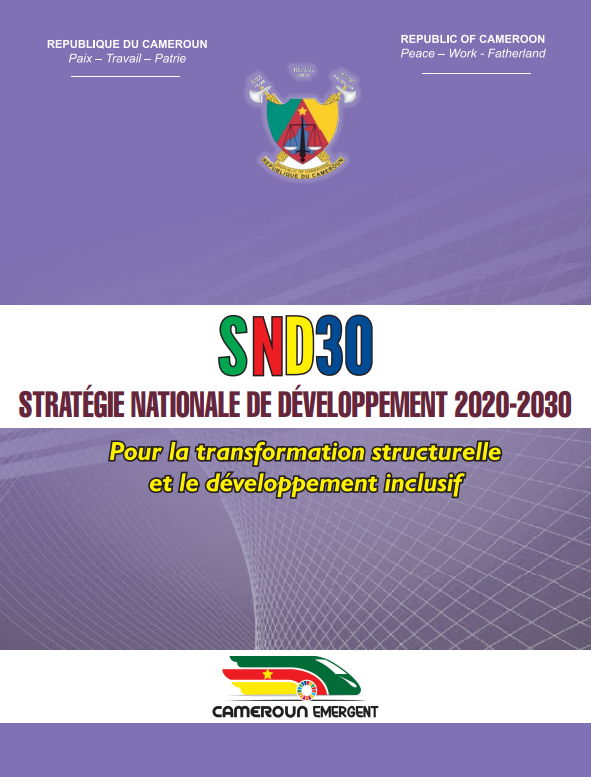
Chart 9 depicts the National Development Plan.
To promote its medium- and long-term development efforts, Cameroon adopted the National Development Strategy 2020-2030 (SND30) in November 2020. The SND30 succeeds the Growth and Employment Strategy Paper (GESP 2010-2020). It constitutes the second phase of the country’s long-term Vision 2035, which aims to make Cameroon “an emerging, democratic and united country in its diversity”. This strategy aligns with key international and regional commitments, including the Sustainable Development Goals (SDGs), the African Union Agenda 2063 and the CEMAC Regional Economic Programme.
The SND30 aims to structurally transform the Cameroonian economy through various measures to achieve the country's emergence by 2035. The strategy focuses on industrialisation, modernisation of agriculture and improving infrastructure. In other words, the SND30 is rooted in a national vision titled “Cameroon We Want in 2035”, and promotes values such as social cohesion, inclusive development, good governance, peace, bilingualism and environmental sustainability. It aims to foster strong, inclusive and sustainable economic growth, reduce poverty and inequality, and improve citizens’ well-being across the national territory. The strategy is built around four strategic levers, each addressing critical development challenges:
- Strategic lever 1 aims to achieve strong, inclusive and sustainable growth through the structural transformation of the economy. It emphasises industrialisation, economic diversification, and the development of key sectors, such as agro-industry, mining and metallurgy, energy, forestry, and the digital economy. The objective is to raise manufacturing’s share of GDP to 25% by 2030 and significantly increase the volume of non-oil exports.
- Strategic lever 2 focuses on human capital development, aiming to improve the quality and accessibility of education, healthcare, and basic social services, while promoting youth empowerment, gender equality and the resilience of vulnerable groups. The government also prioritises technical and vocational training as a driver of labour market integration.
- Strategic lever 3 addresses employment promotion and economic inclusion. It supports job creation through entrepreneurship, supports small and medium-sized enterprises (SMEs) and modernises agriculture. The aim is to create decent work opportunities and absorb the growing urban and rural labour force, particularly youth and women.
- Strategic lever 4 aims to reinforce governance and institutional performance. This includes strengthening the rule of law, transparency and decentralisation, as well as improving economic planning, public finance management and accountability. The implementation of the decentralisation process, with regional councils now operational, is a key achievement in this regard.
Cameroon's National Development Strategy (NDS30) aligns with international goals, such as the SDGs and Agenda 2063, as well as regional commitments, through performance-based budgets and investments. Early results show progress in infrastructure expansion, access to basic services, digital transformation and macroeconomic stability, despite global challenges. The strategy integrates diverse stakeholders and operates through multi-annual budgets, public investment projects and ongoing evaluations to achieve Vision 2035.
The eight sectoral scenarios as well as their relationship to the Current Path and the Combined scenario are explained in the Technical page. Chart 10 summarises the approach.
Chart 11 presents the mortality distribution in the Current Path for 2023 and 2043.
The Demographics and Health scenario envisions ambitious improvements in child and maternal mortality rates, enhanced access to modern contraception, and decreased mortality from communicable diseases (e.g., AIDS, diarrhoea, malaria, respiratory infections) and non-communicable diseases (e.g., diabetes), alongside advancements in safe water access and sanitation. This scenario assumes a swift demographic transition supported by heightened investments in health and water, sanitation and hygiene (WaSH) infrastructure.
Visit the themes on Demographics and Health/WaSH for more details on the scenario structure and interventions.
Cameroon’s healthcare system is organised in a hierarchical, three-tier structure encompassing central, regional and district levels, and integrates both public and private health facilities. At the central level, the Ministry of Public Health, through its central directorates and national reference hospitals, is responsible for policy direction, strategic planning and coordination of national health programs. The regional level includes regional hospitals and health delegations, which oversee the implementation of public health policies in their respective areas. The district level, which forms the operational base of the health system, comprises district hospitals, integrated health centres, and health posts that deliver frontline care to communities.
Specifically, the health service is provided through a decentralised health system including 10 regional delegations of health, 181 health districts, 2 260 public health facilities, 4 general hospitals, 3 central hospitals, 14 regional hospitals, 164 district hospitals, 155 sub-divisional medical centres and 1 920 integrated health centres. While healthcare is largely state-funded, patients frequently bear the cost of medicines and medical supplies. This situation contributes to inequities in access to care, particularly in rural areas, which leaves a health landscape with a wide variety of diseases.
There is not a single “main” disease in Cameroon, but rather a double burden of health issues: the infectious (communicable) diseases (like malaria, HIV/AIDS and tuberculosis) and the non-communicable diseases (NCDs) such as cardiovascular disease, cancers, chronic respiratory disease and diabetes are major contributors to sickness and death.
Communicable diseases will remain the leading cause of mortality in Cameroon until around 2036, after which cardiovascular diseases will become the dominant cause. In the Current Path, deaths from other communicable diseases will decline modestly from 38 490 in 2023 to 36 570 by 2043. In contrast, cardiovascular-related deaths will almost double from 25 120 to 47 960 over the same period. Similarly, deaths from malignant neoplasms will increase from 13 700 to 26 490, while other non-communicable diseases will rise from 12 930 to 18 320.
This epidemiological transition reflects the growing burden of non-communicable diseases alongside a still significant communicable-disease load. It underscores the need to strengthen preventive healthcare, promote early screening and lifestyle interventions, and reorient the health system toward managing chronic conditions while maintaining progress in infectious disease control.
Given its geographical location in the tropical zone, Cameroon continues to suffer from malaria. In this regard, the Ministry of Public Health and the World Health Organisation have been implementing an anti-malaria policy since 1980 based on prevention, rapid diagnosis, free treatment and community mobilisation, under the coordination of the Plan Strategique National De Lutte Contre Le Paludisme Au Cameroun. The policy aims to reduce malaria-related mortality and morbidity with a view to progressively eliminating the disease by 2030. The Current Path projects a decrease of malaria-related deaths from 22 980 in 2023 to 19 020 by 2043.
Cameroon has made significant progress in the fight against HIV/AIDS through free testing, widespread treatment and mother-to-child prevention (see Plan Strategique National De Lutte Contre LE VIH, LE SIDA ET LES IST 2024-2030). However, the disease remains endemic, with high prevalence among women and young people. Between 2020 and 2023, the national prevalence among adults aged 15 to 49 remained stable at around 2.6%, but the data reveal significant disparities by gender and age group. In 2022, the prevalence among women in this age group reached approximately 3.6%, compared to 1.7% among men, confirming the persistent feminisation of the epidemic. Among young people aged 15 to 24, the infection rate was estimated at 1.1% among young women and only 0.5% among young men. In 2023, the number of AIDS deaths in Cameroon reached 20 440 people. In the Current Path, the number of AIDS deaths will decline to 8 410 people by 2043.
Despite some improvements in Cameroon’s health system, disparities in healthcare access between urban centres such as Yaoundé and Douala and rural and conflict-affected regions remain a major challenge. Shortages of skilled health personnel, limited infrastructure and insufficient financial protection mechanisms exacerbate health inequities. The persistence of communicable diseases, coupled with rising urban health risks, underscores the need for sustained investments in both preventive and curative care, particularly in underserved areas.
Chart 12 presents the infant mortality rate in the Current Path and in the Demographics and Health scenario, from 2020 to 2043.
The infant mortality rate is the probability of a child born in a specific year dying before reaching the age of one. It measures the child-born survival rate and reflects the social, economic and environmental conditions in which children live, including their health care. It is measured as the number of infant deaths per 1 000 live births and is an important marker of a country's overall health system quality.
Over the past three decades, Cameroon has made notable progress in maternal and child health, with infant mortality declining from 79.7 deaths per 1 000 live births in 1990 to 44.1 in 2023. This improvement reflects expanded immunisation coverage, increased skilled birth attendance and strengthened neonatal care services. In the Current Path, infant mortality will fall further to 27.6 deaths per 1 000 live births by 2043. The Demographics and Health scenario accelerates this progress, reducing infant mortality to 19.1 deaths per 1 000 live births by 2043, almost nine fewer deaths per 1 000 than in the Current Path.
In the Demographics and Health scenario, life expectancy will rise to 73.6 years, compared to 71.1 years in the Current Path. These results indicate that sustained investment in primary healthcare, maternal and child services, nutrition and preventive care would not only improve survival outcomes but also strengthen long-term human capital and support inclusive development aligned with SDG targets.
Chart 13 presents the demographic dividend in the Current Path and in the Demographics and Health scenario, from 2020 to 2043.
The demographic dividend refers to the potential economic gains that arise when the share of the working-age population increases relative to dependants. It typically materialises when the ratio of working-age individuals to dependants reaches at least 1.7:1, creating fiscal space and household savings that can be channelled into investment in physical and human capital.
In 2023, Cameroon’s working-age-to-dependant ratio stood at 1.3, slightly below the lower-middle-income African average of 1.4. In the Current Path, this ratio will increase to about 1.5 by 2043, indicating a gradual demographic transition but still below the threshold associated with a full dividend.
In the Demographics and Health scenario, the ratio will rise to 1.6, which is 0.1 above the Current Path, bringing the country closer to the dividend threshold. However, demographic change alone is insufficient; realising the dividend will depend on expanding productive employment, strengthening education and skills development, and deepening structural transformation to absorb a growing labour force effectively.
Chart 14 presents crop production and demand in the Current Path from 1990 to 2043.
The Agriculture scenario envisions an agricultural revolution that ensures food security through ambitious yet feasible increases in yields per hectare, driven by improved management, seed and fertiliser technologies, and expanded irrigation. Efforts to reduce food loss and waste are emphasised, with increased calorie consumption as an indicator of self-sufficiency and prioritising it over food exports. Additionally, enhanced forest protection demonstrates a commitment to sustainable land-use practices.
Visit the theme on Agriculture for our conceptualisation and details on the scenario structure and interventions.
Agriculture plays a key role in Cameroon's economy, as a driver of growth, a social pillar and a lever for food security. It contributes approximately 17-20% of the national GDP and generates nearly 30% of export revenues, particularly through crops such as cocoa, coffee, cotton, bananas and palm oil. These main crops account for almost 85% of total export revenues. In addition, around 70% of the working population depends directly on this sector for their income and livelihood, making it an essential pillar in the fight against poverty.
Cameroon’s crop production and demand have both expanded significantly over the past three decades, but demand has consistently outpaced supply. Production increased from 8.73 million metric tons in 1990 to 48.59 million metric tons in 2023, while demand rose from 8.95 million to 59.24 million metric tons over the same period. As a result, the production deficit widened from roughly 215 000 metric tons in 1990 to approximately 1.59 million metric tons in 2023, signalling declining self-sufficiency and growing food security pressures.
In the Current Path, the deficit will widen further to 10.64 million metric tons by 2043. This gap reflects structural constraints, including low irrigation coverage, limited mechanisation, significant post-harvest losses, weak value-chain coordination and exposure to climate variability. Crop yields will remain modest at 4.7 metric tons per hectare in 2023, below the lower-middle-income African average of 5.2 metric tons per hectare. They will increase to 6.7 metric tons per hectare by 2043.
Addressing these structural bottlenecks through irrigation expansion, improved inputs, mechanisation, climate-smart agriculture and stronger farmer organisations will be critical to narrowing the production gap, reducing import dependence and strengthening rural incomes.
The country is pursuing targeted interventions through initiatives such as the Agricultural Infrastructure and Value Chain Development Project (PDCVA), supported by the African Development Bank and the Agricultural Value Chain Development Project (AVC_DP), co-financed by IFAD and the Government of Cameroon. In addition, Cameroon has adopted the Stratégie de développement du secteur rural (SDSR) / Plan national d’investissement agricole (PNIA) 2020-2030, as well as the Programme de Renforcement de la Production Agricole au Cameroun (PARPAC). These programs and initiatives aim to transform traditional agriculture into a more modern, competitive and sustainable form of agriculture, playing a major role in pushing future yields and production.
Chart 15 presents the import dependence in the Current Path and the Agriculture scenario, from 2020 to 2043.
In 2023, Cameroon’s crop import dependency stood at 6.1% of total demand, lower than the lower-middle-income African average of 10.2%. However, under the Current Path, this dependency will rise sharply to 18.4% by 2043, increasing exposure to external price volatility and geopolitical disruptions.
In the Agriculture scenario, import dependency will decline to 4.7% of demand by 2043. Crop production will increase to 54.59 million metric tons, about 6 million metric tons above the Current Path, driven by higher yields of 7.7 metric tons per hectare. At the same time, crop demand will be 1.13 million metric tons lower than the Current Path forecast. Consequently, the production deficit will narrow to 3.12 million metric tons, compared to 10.64 million metric tons in the baseline.
These outcomes demonstrate that sustained investment in productivity-enhancing reforms, such as irrigation expansion, improved seed and fertiliser use, mechanisation and climate-resilient farming, can significantly strengthen food security, reduce import vulnerability and enhance agricultural competitiveness.
Chart 16 depicts the progress through the educational system in the Current Path, for 2023 and 2043.
The Education scenario represents reasonable but ambitious improvements in intake, transition, and graduation rates from primary to tertiary levels and better quality of education at primary and secondary levels. It also models substantive progress towards gender parity at all levels, additional vocational training at the secondary school level, and increases in the share of science and engineering graduates.
Visit the theme on Education for our conceptualisation and details on the scenario structure and interventions.
Investing in education is pivotal for tackling poverty, addressing gender and social inequalities and fostering economic transformation. The African Union, in its economic blueprint Agenda 2063, is betting on young people to drive its vision through modern skills that can be acquired only through education.
The Cameroonian education system is characterised by its linguistic duality (Francophone and Anglophone), inherited from colonialism, and is structured into three main levels: primary education, secondary education and higher education; managed by the Ministry of Primary Education (MINEDUB), the Ministry of Secondary Education (MINESEC) and the Ministry of Higher Education (MINESUP), respectively.
Primary education comprises pre-school (2 to 3 years old) and primary school (6 years old), which leads to the Certificate of Primary Education (CEP) or the First School Leaving Certificate (FSLC). Secondary education, lasting 5 to 7 years, leads to the BEPC or GCE Ordinary Level, then to the Baccalaureate or GCE Advanced Level, depending on the subsystem. It is divided into general, technical and vocational courses. Higher education is organised according to the LMD (Bachelor's–Master's–Doctorate) system and comprises eleven (11) public universities and many private institutes.
Since 2020, the Cameroonian government, through the Education Sector Strategy 2023–2030, has launched numerous projects to improve the quality of education, strengthen technical and vocational training, and promote inclusive and bilingual education tailored to national development needs. In 2023, Cameroon’s gross primary enrolment rate stood at 110.2%, up from 98.9% in 1990 and slightly above the average of 101.0% for LMICs in Africa. The net primary enrolment rate was 69.1%, reflecting persistent challenges in age-appropriate enrolment and grade repetition. On the Current Path, gross primary enrolment is expected to stand at 111.8% by 2043, with the net rate rising moderately to 83.2%. However, primary completion rates remain a concern: in 2023, roughly 68% of children completed primary school, still well below the regional LMIC average of 85.2%.
Among those who complete primary education, some are expected to move directly into lower-secondary schooling, others may enter after a period out of school, and some may never make the transition. This pattern of progression influences the potential for advancement through lower-secondary, upper-secondary and eventually tertiary education levels.
In 2023, gross enrolment for lower- and upper-secondary levels in the country stood at 50.7% and 44.4%, respectively. By 2043, gross enrolment at the lower-secondary level will rise to 73%, while that at the upper-secondary level will rise only to 63.6%, indicating substantial dropout between levels. In 2023, completion rates dropped from 23.8% in the lower-secondary level to just 39.2% in the upper-secondary level. In the Current Path, lower- and upper-primary completion rates will modestly rise. By 2043, 44.8% of students are expected to complete their lower-secondary education compared to 56.7% in the upper-secondary level.
Tertiary education faces even greater challenges. In 2023, gross enrolment at the tertiary level was just 13.2%, projected to rise to 24.7% by 2043 in the Current Path. Worryingly, only 11.8% of the relevant age group in Cameroon graduated from a tertiary institution with at least a first degree in 2023. This will steadily rise to 16.5% by 2043.
Enrolment in vocational training and science and engineering education, which are essential for the future of work, is fairly low. Vocational training is a key element in meeting labour market needs, improving workers' skills and promoting the employability of young people. In 2023, 23.6% of upper-secondary students were enrolled in vocational training programs in Cameroon, and this figure is expected to remain steady until 2043. This is far below the average rate of 13.4% for lower-middle-income countries in Africa. At the tertiary level, by 2023, 18.1% of Cameroon's tertiary graduates will be enrolled in science and engineering programs, which is lower than the 15.2% rate for lower-middle-income countries in Africa. In the Current Path, Cameroon's progression rate will reach 18.1% in 2043.
For a long time, Cameroon's education policy has consistently promoted general education, considering theoretical subjects (law, literature, economics) more prestigious than technical courses, thereby discouraging young people from pursuing manual or industrial skills. Furthermore, underfunding of the sector is another major obstacle: technical training requires substantial investment (machinery, workshops, laboratory equipment), which is often not aligned with budgets allocated to public higher education. However, the National Development Strategy 2020–2030 (SND30), combined with the Education Sector Strategy 2023–2030, is expected to address these problems by 2030 by strengthening the professionalisation of universities and public-private partnerships and, above all, by promoting more inclusive education in Cameroon.
Gender gaps are also visible. In 2023, 90.3 females were enrolled in primary school for every 100 males in Cameroon, compared to the 97.0 females per 100 males average for lower-middle-income countries in Africa. At the secondary level, 86.5 females were enrolled for every 100 males in Cameroon, compared with the average of 96.1 females per 100 males across African lower-middle-income countries. At the tertiary level, there were 82.7 female students for every 100 male students, compared to Cameroon's peers in the continent's income group, with an average of 90.4 female students for every 100 male students.
Using average test scores as a proxy for educational quality, Cameroon’s performance varies compared to that of its income peers in Africa. In 2023, the average test score for primary education stood at 33.4 out of 100, compared to 28.4 out of 100 for the African lower-middle-income countries. At the secondary level, the average test score was 38.5 out of 100, above the 37.4 average for African lower-middle-income countries. On the Current Path, Cameroon will see gradual gains in enrolment and completion rates across all levels by 2043, but without targeted interventions in quality, gender equity and post-secondary skills development, the country risks falling short of the human capital targets outlined in Vision 2035 and the Education Sector Strategy 2020–2030.
Chart 17 presents the mean years of education in the Current Path and in the Education scenario, from 2020 to 2043, for the 15 to 24-age group.
The average years of education in the adult population aged 15 to 24 is a good first indicator of how the stock of knowledge in society is changing.
The average years of schooling for the 15–24 age cohort provides an important proxy for the evolving stock of human capital. In 2023, young Cameroonians in this group had completed an average of 8.5 years of schooling, above the lower-middle-income African average of 7.8 years. Under the Current Path, this will increase to 9.5 years by 2043. In the Education scenario, average attainment will rise further to 10.1 years, 0.6 years above the Current Path in 2043.
Learning outcomes also improve, with average primary test scores reaching 39.4% (compared to 36.6% in the Current Path) and secondary scores rising to 44.7% (versus 41.8%). These gains suggest that improving both access and quality of education can significantly strengthen human capital, enhance labour productivity and support long-term economic competitiveness.
Chart 18 presents value added by sector as a share of GDP under the Current Path for 2023 and 2043.
In the Manufacturing scenario, reasonable but ambitious growth in manufacturing is envisaged through increased investment in the sector, research and development (R&D) and improved government regulation of businesses. This aims to enhance total labour
Visit the Manufacturing theme for our conceptualisation and details on the scenario structure and interventions.
The manufacturing sector is vital for Cameroon’s economic transformation, fostering sustained growth, employment generation and overall prosperity. It maintains strong backward and forward linkages with agriculture and mining, creating a multiplier effect across the economy. The sector accounted for around 13.9% of GDP in 2024, representing an estimated added value of US$7.14 billion. The Current Path suggests an increase to 16.7% by 2043, equivalent to US$18.87 billion.
Cameroon’s manufacturing sector relies mainly on agri-food processing, wood, textiles and lightweight chemicals, benefiting from access to significant local natural resources. However, its growth remains hampered by capital constraints, high production costs, infrastructure bottlenecks (energy, transport, logistics), skills shortage, lack of innovation capacity and weak regional competitiveness. In addition, dependence on equipment imports and low productivity limit local processing and job creation.
To address these, Cameroon has initiated reforms such as the National Industrial Development Strategy (NIDS) and the establishment of investment facilitation agencies aimed at improving the business climate and supporting agro-industrial clusters. Public-private partnerships and regional integration efforts, notably through the Central African Economic and Monetary Community (CEMAC), seek to enhance competitiveness and market access. Additionally, Cameroon’s commitment to renewable energy targets aims to reduce energy costs and support green industrialisation.
As in many African economies, Cameroon’s services sector is the largest contributor to GDP, though it is largely composed of low-value-added activities. In 2023, services accounted for 50.9% of GDP (approximately US$22.1 billion). In the Current Path, this share will increase to 58.1% (about US$65.7 billion) by 2043, reflecting continued structural shifts toward services-led growth.
Agriculture contributed US$8.75 billion in 2023, representing 20.2% of GDP. Although the sector is projected to expand to US$13.79 billion by 2043, its share of GDP will decline to 12.2%, indicating relative contraction despite absolute growth. A similar pattern applies to the energy sector. In contrast, the materials and ICT sectors are projected to grow both in absolute size and relative contribution.
This evolving sectoral structure highlights the importance of upgrading service quality, strengthening agro-industrial linkages and promoting higher-value activities within ICT and materials to ensure that structural transformation translates into productivity gains and employment creation.
Chart 19 presents the contribution of the manufacturing sector to GDP in the Current Path and in the Manufacturing scenario, from 2020 to 2043. The data is in US$ and % of GDP.
The Manufacturing scenario will raise manufacturing’s share of GDP by 1.05 percentage points above the Current Path in 2043, signalling accelerated industrialisation. The ICT and energy sectors will also record modest gains of 0.02 and 0.01 percentage points, respectively. By contrast, the relative shares of services, energy and agriculture will decline by 0.31, 0.23 and 0.54 percentage points compared to their Current Path forecast, reflecting a structural rebalancing toward higher industrial activity.
In absolute terms, however, all sectors will expand due to positive spillover effects from industrial growth. The services sector will record the largest absolute gain of US$2.95 billion above the Current Path, followed by manufacturing (US$2.21 billion), ICT (US$0.25 billion), materials (US$0.2 billion), agriculture (US$0.06 billion) and energy (US$0.05 billion). These results underscore the catalytic role of manufacturing in driving cross-sector productivity gains and reinforcing broader economic expansion.
Chart 20 depicts exports and imports as a percentage of GDP, from 2000 to 2043, in the Current Path.
The AfCFTA scenario represents the impact of fully implementing the African Continental Free Trade Agreement by 2034. The scenario increases exports in manufacturing, agriculture, services, ICT, materials and energy exports. It also includes improved multifactor productivity growth from trade and reduced tariffs for all sectors.
Visit the AfCFTA theme for our conceptualisation and details on the scenario structure and interventions.
Cameroon is a member of the Economic and Monetary Community of Central Africa (CEMAC) and the Economic Community of Central African States (ECCAS), which promotes the free movement of goods, capital and people within the subregion. Cameroon has been a member of the WTO since 13 December 1995. It was previously a member of the GATT (General Agreement on Tariffs and Trade) since 3 May 1963. It has also signed the African Continental Free Trade Area (AfCFTA) in 2019, giving it access to a market of over a billion consumers and gradually reducing intra-African tariff barriers. In addition, Cameroon has an Economic Partnership Agreement (EPA) with the European Union (EU) that was ratified in 2014 and entered into force in August 2014. This agreement allows Cameroon to access the European market without customs duties or quotas on all its products. In return, Cameroon must gradually eliminate customs duties on 80% of its imports from the EU, a process that should be completed in 2029.
Cameroon's major exports include crude oil, cocoa beans, timber and coffee. Other significant exports are petroleum, gas, bananas and aluminium. These products, which are a mix of agricultural and mineral resources, form the backbone of the country's export economy. However, they expose the country to global shocks.
In 2024, Cameroon’s top exports included crude petroleum (valued at US$2.7 billion), cocoa beans (US$1.28 billion), petroleum gas (US$727 million), sawn wood (US$424 million) and cocoa butter (US$329 million). The primary destinations for these exports were the Netherlands (US$1.4 billion), China (US$1.07 billion), Malaysia (US$747 million), France (US$532 million) and Germany (US$497 million).
During the same year, Cameroon's major imports consisted of rice (US$487 million), refined petroleum (US$424 million), raw sugar (US$271 million), wheat (US$256 million) and packaged medicaments (US$217 million). The leading countries of origin for these imports were China (US$3.64 billion), France (US$584 million), India (US$533 million), Belgium (US$414 million) and Brazil (US$278 million).
Cameroon's major African export destinations are limited, with the CEMAC countries, especially Chad, being the most significant partners.
The historical trend of Cameroon’s trade has been unpredictable, influenced by fluctuations in global commodity prices. Since the early 2000s, the trade structure has been heavily dominated by imports. Specifically, imports rose from US$4.1 billion in 2000 to US$9.13 billion in 2023, while exports increased from US$4.42 billion to only US$6.25 billion during the same period. According to the Current Path, exports are expected to continue lagging behind imports over the next two decades, growing to US$23.4 billion by 2043 compared to a forecast of US$26.8 billion for imports.
Trade openness in Cameroon has decreased from 47.9% in 2000 to 36.1% in 2023. However, the Current Path suggests a potential recovery to 44.4% by 2043. It is concerning that this trade openness is primarily skewed towards imports, indicating significant capital flight. Moreover, a large portion of Cameroon’s imports consists of manufactured goods, which has led to the displacement of domestic products and industries.
Chart 21 presents the trade balance in the Current Path and in the AfCFTA scenario, from 2020 to 2043 as a percentage of GDP.
Cameroon is a net importer, resulting in a persistent trade deficit largely driven by imports of finished and processed goods. In 2023, the trade deficit amounted to approximately 6% of GDP. In the AfCFTA scenario, this deficit will narrow significantly to 0.73% of GDP by 2043, compared to about 3% under the Current Path. In absolute terms, the deficit will decline to approximately US$0.89 billion by 2043, compared to US$2.56 billion in the Current Path. This improvement is primarily driven by stronger intra-African trade and deeper integration into regional value chains. It highlights the potential of trade facilitation reforms, export diversification and regional market access to strengthen external balances and enhance economic resilience.
Chart 22 presents the Current Path of access to electricity for urban, rural and the total population from 2000 to 2043.
The Large Infrastructure and Leapfrogging scenario involves ambitious investments in road and renewable energy infrastructure, improved electricity access and accelerated broadband connectivity. It emphasises adopting modern technologies to enhance government efficiency. It incorporates significant investments in major infrastructure projects like rail, ports and airports (other infra) while highlighting the positive impacts of renewables and ICT.
Visit the themes on Large Infrastructure and Leapfrogging for our conceptualisation and details on the scenario structure and interventions.
Cameroon ranks 28th out of 54 African countries in the Africa Infrastructure Development Index (AIDI), indicating that its overall infrastructure quality is just average compared to other African nations. In the transport category of the AIDI, the country ranks 46th, which reflects the poorest transport infrastructure. For electricity, Cameroon ranks 27th, which is considered average. In the information and communications technology (ICT) category, it ranks 23rd, while in water and sanitation services, it also ranks 28th.
Transport infrastructure, such as roads and railways, is a critical driver of economic growth and an important component of development. It facilitates the movement of people and goods, promotes intra-country trade and enables social service provision, such as education and health.
In 2023, the total length of roads in Cameroon was estimated at 156 144 km, of which 99.3% was paved. This figure is above the average of 38.7% for LMICs in Africa. However, while almost all roads in Cameroon are paved, the AIDI shows that the quality is very poor, implying that the government should focus on quality as it endeavours to maintain all roads in the country. In the Current Path, Cameroon's total road network will reach 194 466 km by 2043, with paved roads accounting for 100%, far above the average 61.9% for LMICs in Africa.
In terms of electricity, Cameroon's main source of energy is hydroelectricity, which is the backbone of the national energy system. Approximately 75% of the electricity produced in the country comes from hydro. The country has an immense hydropower potential of about 115 000 GWh/year, ranking third in sub-Saharan Africa after the Grand Inga Dam in the Democratic Republic of Congo. However, less than 5% has been developed so far. The main dams in operation are Song Loulou, Edéa, Lom Pangar, Memve’ele and Nachtigal, the latter being one of the most recent and intended to increase national capacity by 30% by 2025.
Cameroon also uses thermal energy sources (diesel and natural gas), which account for around 25% of production, mainly to secure supply in non-interconnected areas, particularly the North and Far North. Renewable energies (solar, biomass, wind) remain marginal but are developing, supported by public programs and private partnerships.
In 2023, an average of 67% of Cameroonians had access to electricity, below the average of 68.9% for LMICs in Africa, with urban access of almost 95% but rural access limited to roughly 27%. Cameroon will reach universal electricity access in urban areas by 2039 under the Current Path, while only half (50.2%) of the rural population will have access to electricity by 2043.
Faced with such an electricity deficit in rural areas, the Cameroonian government has implemented several major projects to increase density and expand access to electricity, as part of the National Development Strategy 2020–2030 (SND30). The main program is the Cameroon Electricity Access Project (PERACE), financed by the World Bank to the tune of US$225 million, which aims to connect over 400 000 additional households by 2026 in the Central, Littoral, West and North regions. The Rural Electrification and Densification Program (ERD), supported by the Agence Française de Développement (AFD) and the European Investment Bank (EIB), is strengthening low- and medium-voltage networks to connect rural communities close to existing lines. These initiatives are complemented by the South-North Interconnection Project (PISN) and the Electricity Network Extension and Reinforcement Project (PERRÉ), which improve distribution through the National Electricity Transmission Company (SONATREL).
The digital economy in Cameroon is expanding as ICT adoption increases. The government’s Digital Cameroon 2020-2025 strategy aims to modernise administration, improve public service delivery and foster economic growth through digital technologies.
In 2023, Cameroon had a mobile broadband subscription rate of 33.6 per 100 people, which is almost half the average of 61.5 for African lower-middle-income countries. In the Current Path, mobile broadband subscriptions will rise to 138.2 per 100 people by 2043, remaining below the average of 148.9 for its income-group peers. In the same period, the country's fixed broadband subscriptions will increase from about 2.9 per 100 people to 30.5 per 100 people.
Chart 23 presents the number of people using cookstoves in the Current Path and in the Large Infrastructure and Leapfrogging scenario, from 2020 to 2043.
In 2023, 60% of Cameroonian households (2.53 million people) relied on traditional biomass stoves using firewood or charcoal, while 11.7% (0.49 million) used improved cookstoves and 28.3% (1.19 million) used modern stoves. The continued dominance of traditional fuels contributes to indoor air pollution, deforestation and adverse health outcomes, particularly for women and children.
In the Large Infrastructure and Leapfrogging scenario, 64.7% of households (approximately 5.22 million people) are projected to use modern fuels for cooking by 2043, compared to 61.1% on the Current Path. The share of traditional and improved cookstoves will correspondingly decline. Expanding access to modern cooking energy would reduce environmental degradation, improve public health and support a cleaner energy transition aligned with sustainable development objectives.
Chart 24 presents the percentage of the population and number of people with access to mobile and fixed broadband in the Current Path and in the Large Infrastructure and Leapfrogging scenario, from 2020 to 2043. The user can toggle between mobile and fixed broadband.
In the Large Infrastructure and Leapfrogging scenario, fixed broadband subscriptions will increase to 31.9 per 100 people by 2043, slightly above 30.5 under the Current Path. Mobile broadband subscriptions will rise to 138.4 per 100 people, compared to 138.2 in the Current Path. Although the quantitative gains appear modest relative to the Current Path, enhanced digital connectivity can generate significant productivity spillovers by improving access to markets, financial services, public administration and innovation ecosystems. Digital infrastructure, therefore, remains a critical enabler of structural transformation and inclusive growth.
Chart 25 presents the trends in FDI, aid and remittances in the Current Path and in the Financial Flows scenario as a percentage of GDP, from 1990 to 2043.
The Financial Flows scenario represents a reasonable but ambitious increase in inward flows of worker remittances, aid to poor countries and an increase in the stock of foreign direct investment (FDI) and additional portfolio investment inflows. We reduce outward financial flows to emulate a reduction in illicit financial outflows.
Visit the theme on Financial Flows for our conceptualisation and details on the scenario structure and interventions.
The composition of Cameroon’s external finances consists of foreign aid, foreign direct investment (FDI) and remittances. Aid has constantly dominated this structure, though it has decreased from 4.2% of GDP in 1990 to approximately 3% in 2023. It will decline further to 1.8% by 2043 under the Current Path. FDI follows and has slightly increased from -0.9% of GDP to approximately 1.9% in the same period. The Current Path shows that this positive trajectory will continue, reaching 2.5% by 2043 and surpassing aid by 2037. Remittances have also increased from -0.7% to 0.5%, albeit will drop to 0.3% by 2043 on the Current Path.
Most of the FDI to Cameroon comes from the European Union, particularly France and Germany, and targets the mining industry, including oil extraction. China has become one of the main investors in the country, also pursuing mineral resources.
Cameroon's main strategy for attracting FDI is centred on its National Development Strategy 2020-2030 (NDS30) and the adoption of the 2013 Investment Code and the Investment Promotion Agency (IPA), which emphasise a multi-pronged approach comprising structural transformation of the economy, the provision of investment incentives and the improvement of the business climate. The Financial Flows scenarios show that initiatives to attract FDI can expand its contribution to GDP to 3.9%, which is 1.4 percentage points above the Current Path forecast. Remittances from migrants are an important aspect of the country's migration and economic development. Migrant transfers in Cameroon take two main forms: remittances sent by migrants abroad to their home country, which help reduce poverty and stimulate the local economy through investment, and material transfers, often linked to the trade in second-hand goods (flea markets), which have become a significant economic activity. Key sources of remittances to Cameroon are Europe and North America, with Europe being the largest single source due to large Cameroonian diasporas in countries such as France, Belgium and Germany. Remittances also come from other regions, but intra-African flows remain marginal. The most common methods for sending money are through digital channels like mobile money services, which are often faster and cheaper, as well as through traditional money transfer operators, banks and post offices.
Aid has played a significant role in both humanitarian and donor-funded projects, helping improve living standards, especially for the rural population. With aid cuts across several African countries by the Global North, the gap will be difficult to fill. However, it is also a starting point for Africa to shift away from aid dependency.
Chart 26 presents government revenue in the Current Path and in the Financial Flows scenario, from 2020 to 2043. The data is in US$ 2017 and % of GDP.
Wagner's law, or the law of increasing state activity, states that public expenditure increases as national income rises. In the Financial Flows scenario, it is reasonable to expect that government revenues will increase as a percentage of GDP compared to the Current Path.
The structural transformation challenges facing Cameroon's government require increased funding. Theoretically, Wagner's Law holds that public spending increases with national income. Intuitively, public revenue as a percentage of GDP will increase in the Financial Flows scenario, compared to the current trajectory.
In 2023, total government revenues in Cameroon stood at US$6.2 billion, or 14.3% of GDP, which was lower than the average of 16.2% of GDP for LMICs in Africa. In the Current Path, total government revenues in Cameroon will be US$19.4 billion, or 17.2% of GDP, in 2043. In the Financial Flows scenario, government revenue will rise to US$20.2 billion in 2043, representing 17.3% of GDP, above the average of 20.3% for LMICs in Africa in the same year. Compared to the Current Path, the Financial Flows scenario will improve Cameroon's government revenues by an extra US$760 million in 2043. Thus, if the country pursues its policy of efficient management of its public finances, notably by strengthening its institutional capacity to provide quality, manage public expenditure and guarantee greater budget transparency, the Financial Flows scenario will enable it to meet its debt challenges and the dual challenge of investment.
Chart 27 presents the Current Path of government effectiveness comparing the country to the average for the African income group, from 2002 to 2043.
The World Bank’s index on government effectiveness captures perceptions of the quality of public services, the quality of the civil service and the degree of its independence from political pressures, the quality of policy formulation and implementation and the credibility of the government's commitment to such policies.
Good governance is crucial for economic advancement. Enhanced national security and stability foster a favourable environment for both domestic and foreign investment, enabling governments to implement sustainable development strategies more successfully. In 2023, Cameroon scored 42.9 out of 100 in the Ibrahim Index of African Governance (IIAG), ranking 39th out of 54 African countries. This score is higher than the regional average for Central Africa at 39.9, but lower than the overall African average at 49.3.
The Corruption Perceptions Index is the leading global indicator of public sector corruption. In 2023, Cameroon received a score of 26 out of 100, a drop from 27 in the previous year, and was ranked 140th out of 180 countries. This ranking reflects a perception of increased public sector corruption. The economic freedom score is an average of four indexes: rule of law, government size, regulatory efficiency and open markets. Cameroon's economic freedom score is a complex and evolving figure, but the most recent data shows an overall score of 54.2 out of 100 for 2024. This is a slight decrease from the 2023 score of 51.9, which made it the 135th most accessible country in the index.
In 2023, Cameroon scored a rank of 1.6 out of 5 for government effectiveness. This score is considered low, indicating a weak level of government effectiveness. In the Current Path, the governance effectiveness score will slightly increase to 2.0 out of 5 by 2043, below the average of 2.3 for LMICs in Africa in the same year.
While Cameroon's path shows a modest improvement in governance by 2043, the country still faces systemic issues (corruption, exclusion, embezzlement, economic dependence). The experience of Seychelles, for example, where institutional integrity has enabled a leap in economic freedom (score of 66.4 in 2025) suggests that the answer is in thoroughgoing institutional reform, supported by international cooperation (IMF, World Bank) and a firm dedication to inclusion.
Chart 28 presents the security, capacity and inclusion index for the Current Path versus the Governance scenario, for 2023 and 2043.
This scenario assumes better governance: stability, capacity and inclusion. It measures a state’s progress by averaging these three indices. To this end, it includes an index (0 to 1) for each dimension, with higher scores indicating better outcomes. participation rates, particularly among females, where appropriate.
Note that the scenario includes increased welfare transfers to unskilled workers, funded by taxes on skilled workers. Note: the two should roughly balance one another in US$ terms. In the context of high poverty levels and inequality, social transfers have proven the most effective short- and medium-term measures of alleviating both.
Visit the theme on Governance for a full conceptualisation and details on the scenario structure and interventions.
As in many African countries, the quality of governance remains a real challenge in Cameroon. In 2023, its score on the composite governance index was 0.43 out of 1, below the estimated average of 0.50 for LMICs in Africa. However, the decomposition of this indicator into its three dimensions of security, capacity and inclusion shows that the country has managed to improve its governance in terms of security (0.71), despite inclusion (0.33) and capacity (0.25) remaining a real challenge.
In the Governance scenario, Cameroon's score on the governance security index will improve to 0.87 by 2043, above the average of 0.76 for LMICs in Africa in the same year. Capacity will also improve in the Governance scenario, with its score increasing to 0.38 by 2043, representing a 22.6% improvement above the Current Path in 2043. The inclusion index will improve in the Governance scenario by 15.4% compared to 0.39 in the Current Path in 2043. In the Governance scenario, Cameroon aims to improve its governance practices and the governance effectiveness is projected to rise to 2.4 by 2043, compared to the 2.0 under the Current Path.
Chart 29 presents GDP per capita in purchasing power parity (PPP) in the Current Path and each of the eight sectoral scenarios. The data is from 2020 with a forecast to 2043.
All sectoral scenarios generate improvements in Cameroon’s GDP per capita by 2043. The largest gains occur in the Governance scenario, followed by AfCFTA and Manufacturing.
In the Governance scenario, GDP per capita (PPP) will reache US$5 588, approximately US$406 above the Current Path. Stronger rule of law, reduced corruption, improved regulatory quality and greater policy credibility enhance investor confidence, increase capital inflows and improve the efficiency of public spending, thereby accelerating growth.
Under the AfCFTA scenario, GDP per capita will rise to US$5 467, about US$285 above the Current Path. Deeper regional integration expands market access, stimulates export diversification and facilitates technology transfer, positioning Cameroon more competitively within ECCAS and CEMAC value chains.
In the Manufacturing scenario, GDP per capita will increase to US$5 361, approximately US$179 above the Current Path. This confirms the catalytic role of industrial expansion in raising productivity, strengthening domestic value addition and generating higher-quality employment.
Together, these results highlight that institutional reform, trade integration and industrial deepening are central drivers of sustained income growth.
Chart 30 presents poverty in the Current Path and for each scenario, from 2020 to 2043. The user can select the number of extremely poor people or the percentage of the population.
Poverty reduction remains one of Cameroon’s central development challenges. All sectoral scenarios will lower poverty rates by 2043 (measured at US$3.65 per day), with the strongest effects in the Governance scenario, followed by Education and Manufacturing.
The Governance scenario delivers the largest impact: 14.2 million people (30.8% of the population) will remain below the poverty line in 2043, which is 3.4 percentage points lower than the Current Path and about 1.6 million fewer poor people. This reflects the broad-based effects of improved public spending efficiency, stronger institutions and more inclusive growth, which enhance service delivery and income opportunities for vulnerable households.
In the Education scenario, 15.1 million people (32.7% of the population) will remain below the poverty line, which is 1.4 percentage points below the Current Path, equivalent to roughly 660 230 fewer poor people. Strengthening human capital improves productivity, earnings potential and labour market outcomes, reinforcing poverty reduction over time.
In the Manufacturing scenario, poverty will decline to 15.2 million people (32.9% of the population), compared to 34.2% on the Current Path. Industrial expansion raises productivity, absorbs labour from lower-productivity sectors and generates spillovers to services and small enterprises. These results highlight that poverty reduction is closely linked to structural transformation and the creation of productive employment, not only to social policy interventions.
Chart 31 presents GDP in the Current Path and in the Combined scenario from 2020 to 2043. The data is in US$ 2017 and at market exchange rates (MER).
The Combined scenario combines all eight sectoral scenarios: Governance, Demographics and Health, Education, Large Infrastructure and Leapfrogging, Agriculture, Manufacturing, AfCFTA and Financial Flows.
In the Combined scenario, Cameroon’s GDP will reache US$158.5 billion by 2043, about US$45.5 billion above the Current Path, corresponding to an average annual growth rate of 6.7%, compared to 4.9% under the Current Path. These results demonstrate that coordinated reforms across governance, trade, infrastructure, education and industrial policy generate significantly stronger growth outcomes than isolated interventions. An integrated, multisector development strategy therefore offers the most credible pathway to sustained and inclusive economic transformation.
Chart 32 presents GDP per capita in purchasing power parity (PPP) in the Current Path and the Combined scenario. The data is from 2023 with a forecast to 2043.
In the Combined scenario, Cameroon’s GDP per capita will rise to US$6 630 by 2043, approximately US$1 450 higher than the US$5 180 projected under the Current Path. This substantial income gain indicates meaningful improvements in average living standards. The results underscore the importance of a coordinated, multisector reform agenda to accelerate income growth and ensure that structural transformation translates into broader welfare gains.
Chart 33 presents the value-add by sector in the Current Path and in the Combined scenario, for 2023 and 2043. The data is in US$ 2017 and as a percentage of GDP.
Our modelling provides forecasts for six economic sectors, namely agriculture, energy, materials (including mining), manufactures, services and ICTech.
In the Combined scenario, agriculture will record the largest increase in its share of GDP, 2.11 percentage points above the Current Path in 2043, followed by energy (0.46 percentage points) and manufacturing (0.23 percentage points). Other sectors will experience relative declines in their GDP shares, reflecting structural rebalancing toward more productive sectors.
In absolute terms, however, all sectors will expand due to strong cross-sector spillovers. The services sector will record the largest gain, US$27.51 billion above the Current Path, followed by manufacturing (US$7.24 billion), ICT (US$5.13 billion), agriculture (US$2.22 billion), energy (US$1.88 billion) and materials (US$1.57 billion).
These results demonstrate that strengthening agriculture, energy and manufacturing can catalyse economy-wide expansion, reinforcing productivity growth and accelerating structural transformation.
Chart 34 presents the size of the informal sector in the Current Path and in the Combined scenario, from 2020 to 2043.
By 2043, the informal sector will decline to 17% of GDP in the Combined scenario, compared to 21.3% in the Current Path. Informal employment will similarly fall to 24.8% of total labour, significantly below the 36.0% projected under the baseline. This shift reflects stronger formal job creation, particularly in manufacturing and modernised agriculture, supported by improved governance, regulatory reform and economic liberalisation. Expanding formal employment would enhance productivity, broaden the tax base and improve income security, contributing to more inclusive and sustainable growth.
Chart 35 presents poverty in the Current Path and the Combined scenario, for 2023 and 2043.
In the Combined scenario, approximately 11.28 million people (25.1% of the population) are projected to live below the US$3.65 per day poverty line by 2043, compared to 15.79 million people (34.2%) under the Current Path. This implies that about 4.51 million additional Cameroonians could be lifted out of poverty through coordinated, multisector reforms. The reduction in poverty, alongside improvements in income distribution, highlights the inclusive potential of an integrated development strategy that simultaneously advances governance, industrialisation, human capital and structural transformation.
Chart 36 compares life expectancy in the Current Path with the Combined scenario from 2020 to 2043.
In the Combined scenario, life expectancy will increase to 74 years by 2043, 2.9 years higher than under the Current Path. In both scenarios, women are projected to live approximately 2.6 years longer than men. These gains underscore the importance of sustained investment in healthcare systems, preventive services, nutrition, sanitation and basic infrastructure. Strengthening health system resilience and expanding equitable access to quality care will be essential to consolidate improvements in longevity and overall human development.
Chart 37 compares carbon emissions in the Current Path with the Combined scenario from 2020 to 2043. Note that the data is in million tons of carbon, not CO2 equivalent.
In 2023, Cameroon ranked 79th out of 184 countries in terms of CO2 emissions. The main sources of pollution in Cameroon are household fuel combustion (biomass for cooking), industrial activities (mining, oil and gas, manufacturing) and waste mismanagement (especially plastic waste). Vehicle emissions also contribute significantly to air pollution, particularly in urban areas like Douala and Yaoundé.
In the Current Path, carbon emissions from fossil fuels will increase from 3.14 million tons to 11.46 million tons by 2043, reflecting rising energy demand associated with economic and population growth. This trajectory underscores the urgency of strengthening environmental governance and integrating climate considerations into development planning.
In the Combined scenario, emissions will reach 10.9 million tons, approximately 560 000 tons lower than the Current Path, demonstrating that stronger growth can be partially decoupled from carbon intensity.
To sustain this balance, the government should prioritise renewable energy expansion, energy efficiency measures and sustainable land-use management. Such investments would help mitigate environmental pressures, enhance climate resilience and align economic transformation with Cameroon’s long-term sustainability and global climate commitments.
Chart 38 compares energy demand and production in the Current Path with the Combined scenario from 2020 to 2043. Production is done in nine types, namely oil, gas, coal, hydro, nuclear, solar, wind, geothermal and other renewables. The data is converted into billion barrels of oil equivalent (BBOE) to allow for comparisons. Note that energy production could be for domestic use or for export.
The energy sector is central to Cameroon’s structural transformation, with gas, oil and hydropower forming the backbone of supply. In 2023, total energy production amounted to approximately 74 million barrels of oil equivalent (BOE), exceeding total demand of 54.2 million BOE, resulting in a surplus of 19.8 million BOE.
In the Current Path, however, demand will outpace production around 2034/35, leading to an energy deficit of approximately 41.5 million BOE by 2043. Rising demand reflects expanding economic activity and population growth, highlighting the growing pressure on domestic supply capacity.
In the Combined scenario, the deficit will narrow to 38.7 million BOE, 2.8 million BOE below the Current Path. Energy production will increase substantially to 143.4 million BOE by 2043 (compared to 112.9 million BOE under the baseline), largely driven by expanded hydro and solar generation. At the same time, demand will rise to 182.1 million BOE, compared to 154.4 million in the Current Path.
These projections underscore the need for accelerated investment in renewable energy, grid expansion and energy efficiency to sustain growth, reduce supply vulnerabilities and support long-term energy security.
Chart 39 summarises the policy recommendations.
A forward-looking analysis of Cameroon's development trajectory through 2043 reveals a country with strong potential, but whose current momentum remains insufficient to ensure rapid and inclusive structural transformation. On the Current Path, Cameroon is making gradual progress in terms of economic growth, poverty reduction and improvement in social indicators. However, this progress remains limited by a persistent dependence on primary and extractive sectors, a high level of informality, infrastructure deficits and institutional and governance weaknesses.
Sectoral scenarios clearly show that targeted policies—particularly in governance, trade integration (AfCFTA), manufacturing and education—can generate significant gains in terms of per capita income and poverty reduction. The Combined scenario convincingly illustrates that an integrated and coherent approach to reforms would accelerate economic growth, significantly reduce poverty and informality, while maintaining a growth trajectory compatible with relatively low carbon emissions.
Cameroon can seize several specific opportunities to make the most of its economic potential:
- Agricultural transformation: If the country improves agricultural efficiency, it can free up capital for domestic investment and ensure economic stability for its economy and population.
- A youthful population: Cameroon’s population is predominantly young, with around 60% aged under 35 and a high dependency rate. This offers significant potential for economic growth and social development. Indeed, the young are a driving force for innovation, creativity and labour-market contribution when supported.
- Trade potential: Cameroon’s geographic position on the Gulf of Guinea and its shared borders with six countries make it a potential trade corridor and gateway for the Central African subregion, given greater integration with its neighbours.
- Resource endowment: Cameroon’s substantial natural resources, notably oil, gas, minerals, forests and hydropower, could provide growth potential if increasingly harnessed responsibly and transparently.
- Renewables capacity: Cameroon has considerable hydroelectric and solar capacity that could position it as a future regional energy hub in Central Africa.
Thus, the main challenge for Cameroon is not so much the lack of opportunities, but rather the ability to coordinate, prioritise and effectively implement the necessary structural reforms, in line with the SND30, Vision 2035 and the African Union's Agenda 2063:
Boosting the manufacturing sector: investing in high-quality education and infrastructure is a matter of urgency:
Developing human capital and modernising infrastructure are essential to sustain long-term economic growth. This involves improving the education system, vocational training and increasing research and development. Thus, improving the education system involves implementing reforms to guarantee equitable access to quality education and to promote the skills needed for the professions of the future. The ongoing reforms under the NDS30 already mark a first step, but the government should ensure their effectiveness, especially by reinforcing their gender component. It should also facilitate and encourage the creation of and access to vocational training. In other words, it should set up training programs tailored to the needs of the job market, target emerging sectors, and provide the necessary infrastructure. Finally, incentives to increase research and development should be put in place to facilitate innovation. This can be achieved through award programs for outstanding innovations and direct integration of the best innovators, which is necessary to boost the country’s competitiveness. Added to this are improved roads, ports, airports and communication infrastructures, particularly digital ones, to facilitate trade and attract investment.
Diversifying the economy:
Cameroon faces significant challenges in diversification, particularly its reliance on raw materials, limited access to finance, structural weaknesses in agriculture and a fragile business climate. To address these challenges, it is necessary to invest in higher-value-added sectors such as industry and services, improve agricultural productivity, facilitate access to capital for businesses and strengthen the institutional and policy environment. For example, if the aim is to intensify agricultural production, develop local value chains and encourage agro-industrial processing to improve food security and create jobs: investment in farming technology, irrigation efforts, digitisation of the sector and data-driven farming decisions are needed to reduce reliance on imports. In addition, using planning tools such as Geographic Information Systems (GIS) can help to better plan resource use and transform existing infrastructure into development corridors. Creating a business-friendly environment, with clear and stable regulations, easy access to financing and infrastructure is important. Administrative procedures need to be simplified to facilitate market access and reduce red tape.
Enhanced governance and efficiency of public finances:
Tackling corruption and improving governance and public financial management are essential to creating a more favourable environment for investment and economic development. This involves government commitments to tax reform, transparent management of public finances, improved governance and political stability. The aim is to simplify the tax system and improve the efficiency of tax collection to finance development projects. The government should encourage tax compliance by rationalising the use of collected taxes and, above all, reinforcing communication around how they are used, by putting in place rigorous control and audit mechanisms to guarantee sound management of public finances. In addition, the government should accentuate the production of public goods via infrastructure to facilitate the operation of the country’s markets and income-generating activities. Finally, the government should guarantee effective governance by improving the business climate through the reduction of corruption and a more transparent judicial system, which are important for reassuring and boosting the confidence of both investors and citizens.
Strengthening resilience to climate shocks:
Strengthening resilience in Cameroon involves a multi-sector approach, including promoting climate-smart agriculture through local knowledge and new techniques, improving urban infrastructure by building green spaces and resilient transport networks, and building the capacity of local communities to manage climate risks. Key initiatives include the Local Governance and Community Resilience Project and the "Green and Resilient North" project, which uses approaches like Climate Smart Villages to enhance adaptation strategies. It is important to implement climate-smart agriculture, i.e. introduce techniques such as conservation agriculture, agroforestry and participatory integrated climate services for agriculture (PICSA) to improve yields and soil health. In addition, there is a need to distribute climate-resilient crop varieties and to provide access to higher-quality seeds and other inputs, while implementing soil and water management practices such as cover crops and small dams to improve water retention and soil fertility. It is also important to improve market access by supporting agricultural cooperatives to enhance producers' bargaining power and access to markets, inputs and credit. Finally, the country should mainstream climate considerations into public investment cycles and support public-private partnerships for resilience-building activities.
Enhancing access to finance:
To improve financial access in Cameroon, the government and partner organisations should focus on several key strategies, including embracing digital finance and mobile money, enhancing the microfinance sector, strengthening consumer protection and financial literacy, supporting small- and medium-sized enterprises (SMEs) and modernising financial infrastructure. These efforts are designed to expand the availability of financial products for underserved populations, such as those in rural areas, women, and small- and medium-sized enterprises (SMEs).
Maximising the potential of the AfCFTA:
To fully leverage the AfCFTA, Cameroon should focus on reducing trade barriers through modernised and digitalised customs procedures, strengthening the competitiveness of local firms (especially SMEs) by supporting access to finance and compliance with quality standards, and aligning trade liberalisation with a targeted industrial policy centred on agro-industry and light manufacturing. At the same time, deeper regional integration within CEMAC and investments in cross-border transport and logistics infrastructure are essential to integrating Cameroonian firms into regional value chains and to translating trade openness into sustainable, inclusive growth.
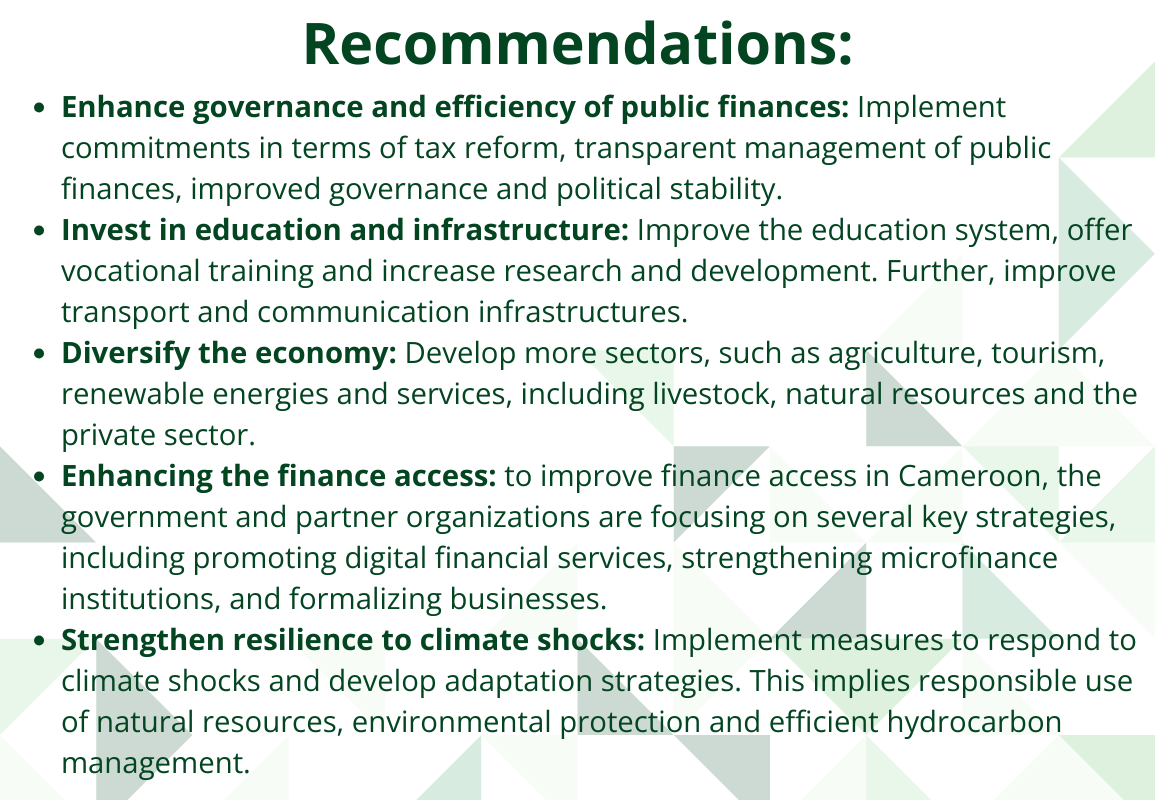
Page information
Contact at AFI team is Pierre Christian Tsopmo
This entry was last updated on 12 June 2026 using IFs v8.38.
Donors and sponsors


Reuse our work
- All visualizations, data, and text produced by African Futures are completely open access under the Creative Commons BY license. You have the permission to use, distribute, and reproduce these in any medium, provided the source and authors are credited.
- The data produced by third parties and made available by African Futures is subject to the license terms from the original third-party authors. We will always indicate the original source of the data in our documentation, so you should always check the license of any such third-party data before use and redistribution.
- All of our charts can be embedded in any site.
Cite this research
Pierre Christian Tsopmo (2026) Cameroon Development Futures. Published online at futures.issafrica.org. Retrieved from https://futures.issafrica.org/geographic/countries/cameroon/ [Online Resource] Updated 12 June 2026.