From deficit to driver: Africa’s infrastructure shift
Aligning infrastructure investment, governance and regional coordination at scale can transform Africa’s growth, trade and poverty outcomes to 2050.
Infrastructure is more than a collection of physical assets; it is the backbone of economic development and the foundation upon which societies thrive. Roads connect farmers to markets, electricity powers industries and homes, and digital networks link people to information and opportunity. In Africa, where demographic growth and economic ambitions are rising rapidly, infrastructure will play a decisive role in determining whether the continent can translate its potential into broad-based prosperity. Can the continent build it at the scale and speed required to match its demographic and economic trajectory?
Despite notable progress in recent decades, Africa continues to face a significant infrastructure deficit. Across much of the continent, electricity access remains limited and unreliable, transport networks are underdeveloped and digital connectivity is uneven. These gaps are particularly pronounced in sub-Saharan Africa, where infrastructure often falls short of supporting modern economic activity.
The consequences are far-reaching. Inadequate infrastructure raises the cost of doing business, reduces productivity and limits competitiveness. Firms frequently face power outages, inefficient logistics and high transport costs. At the macroeconomic level, these challenges are estimated to reduce Africa’s GDP growth by around two percentage points annually.
Beyond economic impacts, the infrastructure gap affects human development. Limited access to reliable electricity, clean water and transport services restricts access to education, healthcare and employment opportunities. As a result, infrastructure deficits reinforce poverty and inequality, particularly in rural and underserved areas.
Further, regional integration is significantly hindered. Africa’s trade potential remains underutilised, partly because of fragmented transport and logistics systems. Moving goods across borders is often costly and time-consuming, weakening intra-African trade and limiting the effectiveness of continental initiatives such as the African Continental Free Trade Area.
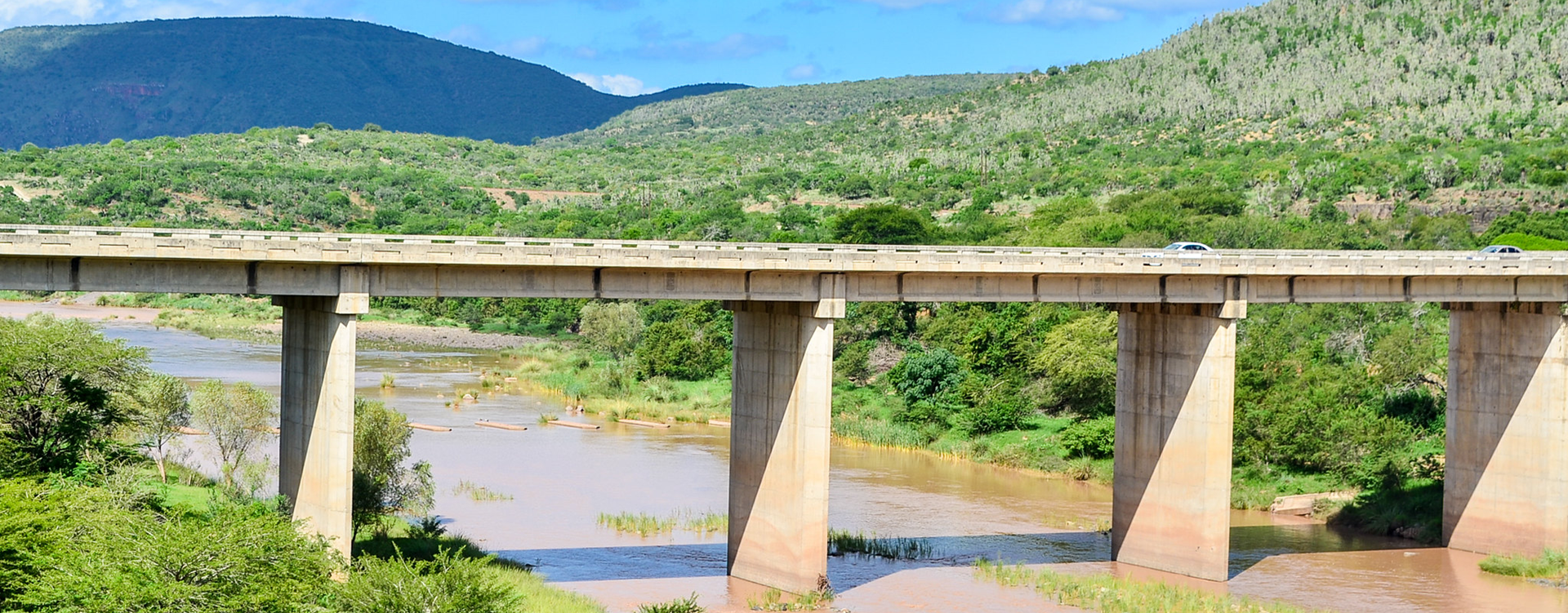
Africa’s infrastructure challenges are deeply rooted in history and policy choices. Much of the continent’s infrastructure was originally developed during the colonial period, primarily to serve extractive economic activities. Railways and roads were designed to transport raw materials from inland regions to coastal export points, rather than to connect domestic markets or foster regional integration.
Infrastructure was historically designed to transport raw materials from the inland to coastal export points, rather than to connect domestic markets or foster regional integration
This legacy left behind infrastructure networks that are fragmented and poorly aligned with current development needs. After independence, many countries struggled to maintain and expand these systems. Limited financial resources, governance challenges and shifting policy priorities contributed to underinvestment and deterioration. In some cases, infrastructure investments were driven by political considerations rather than economic viability, resulting in costly projects with limited returns. Economic crises in the 1980s further constrained public spending, leading to a decline in infrastructure investment and maintenance. Although private sector participation was expected to fill the gap, this did not materialise at the scale required, particularly in high-risk environments.
More recently, investment has increased, supported by international partners and emerging financiers. However, these efforts have not kept pace with rapid population growth, urbanisation and rising demand.
While the challenges are substantial, the potential gains from closing Africa’s infrastructure gap are just as significant. New research from the Institute for Security Studies (ISS) through its African Futures and Innovation programme highlights how a coordinated effort to expand infrastructure could transform the continent’s development trajectory. Using the International Futures modelling platform, the study assesses the long-term impact of increased infrastructure investment on Africa’s growth prospects through 2050.
The findings point to more than incremental gain; they suggest a structural shift in productivity, connectivity and market integration. By 2050, Africa’s GDP could be nearly US$1 trillion (in constant 2017 US dollars) higher than under the Current Path (business-as-usual scenario). All countries are projected to benefit, with the largest economies, such as Nigeria, Egypt, South Africa, Ethiopia, DR Congo, Ghana, Tanzania, Algeria and Kenya, expected to record the largest absolute gains. GDP per capita could rise by about US$510 above business-as-usual projections, reflecting higher productivity and more efficient economic activity. Meanwhile, total trade could expand by nearly US$478 billion.
The benefits would extend well beyond economic growth. Improved infrastructure could lift approximately 63 million people out of extreme poverty. Countries with the highest poverty burdens would see the largest reductions. In particular, DR Congo could have about 13 million fewer poor people by 2050 compared to the Current Path, followed closely by Nigeria with around 12 million fewer.
Importantly, the scenario emphasises sustainability and innovation. Investments in renewable energy, digital infrastructure and climate-resilient systems can allow Africa to leapfrog traditional development pathways, building a more sustainable and future-ready economy.
Realising this vision will require a shift from fragmented, reactive initiatives to a more strategic, coordinated approach to infrastructure development.
Infrastructure development needs a shift from fragmented, reactive initiatives to a more strategic, coordinated approach
First, infrastructure investment must be prioritised as a central driver of economic transformation. Governments should focus on projects that enhance productivity, support industrialisation and strengthen regional markets, rather than pursuing prestige projects with limited impact.
Second, financing strategies need to be strengthened and diversified. Given limited fiscal space, countries must mobilise domestic resources, attract private investment and leverage innovative financing mechanisms, such as public–private partnerships and blended finance.
Third, governance and institutional capacity must be improved. Strong project preparation, transparent procurement processes and effective implementation are essential to ensure that infrastructure investments deliver value for money and long-term benefits.
Fourth, regional integration should be placed at the core of infrastructure planning. Developing cross-border transport corridors, energy systems and digital networks can reduce trade costs, expand markets and unlock economies of scale.
Finally, investment in human capital is critical. Building the technical and managerial skills required for infrastructure planning, financing and maintenance will ensure that systems are not only built, but sustained over time.
Africa’s infrastructure deficit remains one of the continent’s most pressing challenges, yet it is also one of its greatest opportunities. The scenario demonstrates that, with the right investments and policies, infrastructure can become a powerful catalyst for transformation, driving economic growth, reducing poverty and creating a more connected and inclusive continent. The real risk lies not in a lack of vision but in the failure to align financing mechanisms with effective governance.
The path forward is clear: build smarter, invest strategically and strengthen institutions. By doing so, Africa can turn its infrastructure gap into a foundation for long-term prosperity and resilience, shaping a future where opportunity is not limited by connectivity, but enabled by it.
Image: jbdodane/Flickr
Read the full theme report here: Large Infrastructure
Republication of our Africa Tomorrow articles only with permission. Contact us for any enquiries.