 Nigeria
Feedback welcome
Our aim is to use the best data to inform our analysis. See our Technical page for information on the IFs forecasting platform. We appreciate your help and references for improvements via our feedback form.
The page provides an in-depth analysis of Nigeria's current and projected future development, examining various sectoral scenarios and their potential impacts on the country's growth. It explores the individual and combined impact of eight sectors, including demographic, economic, and infrastructure-related outcomes for Nigeria to 2043. The analysis offers insights into policy actions that could enhance Nigeria's developmental trajectory.
Please see the Technical Site for more information about the International Futures (IFs) modelling platform we use to develop the various scenarios.
The interactive Tableau Workbook can be found here.
Executive Summary
We begin this page with an introductory assessment of Nigeria's context, looking at the current population distribution and structure, climate and topography.
Nigeria is a lower-middle-income country in West Africa, the continent's most populous country and a key regional player. The country is a multi-ethnic and culturally diverse federation.
The following section, Nigeria's Current Path, outlines the country's likely development trajectory to 2043. It is based on current policy and geopolitical trends and assumes that no major shocks would occur in a 'business-as-usual' scenario.
Nigeria is experiencing rapid population growth. It is currently the sixth most populous nation in the world. If current demographic trends persist, Nigeria's population will grow from 241 million in 2025 to around 371 million by 2043, making it the third-most populous nation after India and China.
Between 1990 and 2025, Nigeria's GDP increased from US$193.5 billion to US$710.7 billion. On its current development trajectory, GDP is projected to reach US$1 536 billion in 2043, maintaining its position as Africa's largest economy, with an average annual growth rate of 4.4%.
Economic growth has not proceeded smoothly, and Nigeria's inability to sustain its growth, along with rapid population growth, has diluted its per capita income growth. On the Current Path, GDP per capita (PPP constant 2021) will increase from about US$7 715 in 2025 to only US$9 360 by 2043, below the projected average of US$10 430 for lower-middle-income Africa in that year.
The COVID-19 pandemic, sluggish economic growth and high inflation have pushed millions more into poverty in Nigeria. The poverty rate at US$4.20 rose from 55.1% in 2019 to 60.8% in 2025. On the US$4.20 basis, poverty will gradually decline to about 30.7% by 2043, remaining above the projected average of 27.9% for lower-middle-income countries in Africa.
Nigeria Agenda 2050 outlines policies to position the country as a regional and global economic power.
The scenario analysis that follows explores how ambitious but plausible policy interventions across key sectors could help narrow the gap between the Current Path and those aspirations across eight sectoral scenarios. These are: Demographics and Health; Agriculture; Education; Manufacturing; the African Continental Free Trade Area (AfCFTA); Large Infrastructure and Leapfrogging; Financial Flows; and Governance. Each scenario is benchmarked to present an ambitious yet reasonable aspiration for that sector relative to other countries at similar levels of development.
- Implementing the Demographics and Health scenario will accelerate Nigeria's demographic transition. In this scenario, the ratio of the working-age population to dependents will be at 1.7 by 2042, at which point the country will enter a potential demographic window of opportunity, provided other supporting conditions are in place. On the Current Path, this minimum ratio will only be achieved in 2061.
- In the Agriculture scenario, average crop yields increase to 9.1 metric tons per hectare in 2043, compared with 7.3 tons on the Current Path. Crop production will be 89.2 million metric tons higher by 2043 than under the Current Path, reducing food imports by US$19.5 bn.
- Implementing the Education scenario would raise the mean years of education for adults aged 15 to 24 in the country to almost 8.5 years by 2043, compared with about 7.4 years in the Current Path.
- The continued reliance on hydrocarbons (oil and gas) means the Nigerian economy is undiversified and vulnerable to exogenous shocks. The manufacturing sector's contribution to Nigeria's GDP fell from a peak of approximately 20% in the 1980s to just 6.5% in 2010, before gradually rising to 15.3% in 2025—aligning with the average for lower-middle-income countries in Africa. The share of the manufacturing sector in Nigeria's GDP will likely be 16% by 2043, similar to the projected average of 16.4% for lower-middle-income Africa. In the Manufacturing scenario, the sector will contribute 21% larger to GDP in 2043.
- Nigeria's trade pattern is similar to that of many other African countries, which rely on a few key commodity exports while importing higher-value manufactured goods, consumer items and foodstuffs. The country's trade balance is structurally in deficit—a trend which is likely to persist over the forecast horizon. On the Current Path, the trade deficit will equal -3.8% of GDP in 2043. In the AfCFTA scenario, its trade deficit would reduce to -3.5% of GDP in 2043.
- The infrastructure gap has long been a drag on productivity, growth and competitiveness, especially in Nigeria's manufacturing sector. Due to limited access to electricity, especially in rural areas, most households continue to rely on inefficient cooking fuels. In the Large Infrastructure and Leapfrogging scenario, which models ambitious yet realistic investment in renewable energy, the percentage of households with electricity access could increase from 62% in 2025 to 88% in 2043, compared to the projected 79% in the Current Path.
- Nigeria is an important destination of international capital flows in Africa, especially FDI and remittances, given its abundant natural resources and its large diaspora. In the Financial Flows scenario, government revenues would marginally increase above the Current Path forecast to 12% of GDP by 2043, up from 5.8% in 2023, equivalent to US$2.9 billion above the 2043 Current Path forecast.0
- Nigeria faces several governance challenges that have impacted its development. However, the government has, in recent years, removed a costly fuel subsidy that had kept petrol prices artificially low for decades, liberalised the exchange rate for its currency and overhauled the country's tax system. Governance in Nigeria is often marked by poor capacity, mismanagement and corruption. In the Governance scenario, Nigeria's overall governance performance is about 13% higher than the Current Path in 2043.
In the fourth section, we compare the impact of each of these eight sectoral scenarios with one another and subsequently with a Combined scenario (the integrated effect of all eight scenarios). In our forecasts, we measure progress on various dimensions such as economic size (in market exchange rates), gross domestic product per capita (in purchasing power parity), extreme poverty, carbon emissions, the changes in the structure of the economy and selected sectoral dimensions such as progress with mean years of education, life expectancy, the Gini coefficient and reductions in mortality rates.
- Nigeria's GDP per capita rises in all eight sectoral scenarios. By 2043, Nigeria's GDP per capita (PPP) is about US$3 164 higher than under the Current Path, indicating that an integrated push across all development sectors (in the Combined scenario) could significantly improve Nigerians' living standards. Among the sectoral scenarios, the Manufacturing scenario has the most significant positive impact on GDP per capita, increasing it by US$435 above the Current Path in 2043. The second-, third- and fourth most significant impacts on GDP per capita are achieved in the AfCFTA, Demographics and Health, and Governance scenarios.
- All scenario interventions contribute to poverty reduction in Nigeria. The Governance scenario has the largest impact by 2043, leading to the most substantial decline in extreme poverty, followed by the Manufacturing scenario. In the short term (up to 2035), the Agriculture scenario has the greatest impact on poverty reduction. Under the Combined scenario, the proportion of people living in extreme poverty falls to 3.1% (10.8 million people) by 2043, compared with 13.5% (50.5 million people) under the Current Path.
The Combined scenario significantly improves Nigeria's growth prospects. In this scenario, the average growth rate between 2025 and 2043 is 7.4%, compared with 4.6% on the Current Path over the same period. The size of the economy, measured by GDP at the market exchange rate (MER), is US$682 billion larger than the Current Path in 2043.
In the Combined scenario, the average Nigerian could expect to live about 5 years longer at age 75 in 2043 than under the Current Path for the same year.
We end this page with a summarising conclusion offering key recommendations for decision-making.
- Nigeria faces a complex web of interconnected challenges that hinder inclusive growth and sustainable development. Key obstacles include weak governance, pervasive corruption, insecurity, rapid population growth, inadequate infrastructure, a mismatch between skills and labour-market needs, and limited economic diversification. These factors significantly constrain the country's development trajectory.
- Addressing these challenges is essential to place Nigeria on a path toward long-term growth and shared prosperity. While macroeconomic stabilisation reforms are important, the government must prioritise comprehensive policy reforms and targeted investments. These should focus on strengthening security and governance, bridging infrastructure gaps, enhancing private-sector development, boosting agricultural productivity and accelerating economic diversification. Equally important is investing in high-quality human capital and ensuring that economic growth benefits the poor and economically vulnerable by improving labour market outcomes, particularly by creating productive, private-sector-driven employment that supports sustainable poverty reduction.
All charts for Nigeria Development Futures
- Chart 1: Political map for Nigeria
- Chart 2: Population structure in Current Path, 1990–2043
- Chart 3: Population distribution map, 2023
- Chart 4: Urban and rural population in the Current Path, 1990-2043
- Chart 5: GDP (MER) and growth rate in the Current Path, 1990–2043
- Chart 6: Size of the informal economy in the Current Path, 2022-2043
- Chart 7: GDP per capita in Current Path, 1990–2043
- Chart 8: Poverty in the Current Path, 2022–2043
- Chart 9: National Development Plan of Nigeria
- Chart 10: Relationship between Current Path and scenarios
- Chart 11: Mortality distribution in the Current Path, 2025 and 2043
- Chart 12: Infant mortality rate in Current Path and Demographics and Health scenario, 2022–2043
- Chart 13: Demographic dividend in the Current Path and the Demographics and Health scenario, 2022–2043
- Chart 14: Crop production and demand in the Current Path, 1990-2043
- Chart 15: Crop import dependence in the Current Path and Agriculture scenario, 2022–2043
- Chart 16: Progress through the education funnel in the Current Path, 2023 and 2043
- Chart 17: Mean years of education in the Current Path and Education scenario, 2022–2043
- Chart 18: Value-add by sector as % of GDP in the Current Path, 2025 vs 2043
- Chart 19: Value-add by the manufacturing sector in the Current Path and Manufacturing scenario, 2022–2043
- Chart 20: Exports and imports as % of GDP in the Current Path, 2000-2043
- Chart 21: Trade balance in the Current Path and AfCFTA scenario, 2022–2043
- Chart 22: Electricity access: urban, rural and total in the Current Path and Infra Scenario, 2000-2043
- Chart 23: Cookstove usage in the Current Path and Large Infra/Leapfrogging scenario, 2022–2043
- Chart 24: Access to mobile and fixed broadband in the Current Path and the Large Infra/Leapfrogging scenario, 2022–2043
- Chart 25: FDI, foreign aid and remittances as % of GDP in the Current Path and Financial Flows scenario, 1990-2043
- Chart 26: Government revenue in the Current Path and Financial Flows scenario, 2022–2043
- Chart 27: Government effectiveness score in the Current Path and Governance scenario, 2000-2043
- Chart 28: Composite governance index in the Current Path and Governance scenario, 2025 and 2043
-
Chart 28: Composite governance index in the Current Path and Governance scenario, 2023 and 2043
Chart 28: Composite governance index in the Current Path and Governance scenario, 2023 and 2043
 Source: Source goes here
 - Chart 29: GDP per capita in the Current Path and scenarios, 2022–2043
- Chart 30: Poverty in the Current Path and scenarios, 2022–2043
- Chart 31: GDP (MER) in the Current Path and Combined scenario, 2022–2043
- Chart 32: GDP per capita in the Current Path and Combined Scenario, 2022-2043
- Chart 33: Value added by sector in the Current Path and Combined scenario, 2025 and 2043
- Chart 34: Informal sector in the Current Path and Combined scenario, 2022–2043
- Chart 35: Poverty in the Current Path and Combined scenario, 2022-2043
- Chart 36: Life expectancy in the Current Path and Combined scenario, 2022–2043
- Chart 37: Carbon dioxide emissions in the Current Path and Combined scenario, 2022–2043
- Chart 38: Energy demand and production by type in the Current Path and Combined scenario, 2022-2043
- Chart 38: Policy recommendations


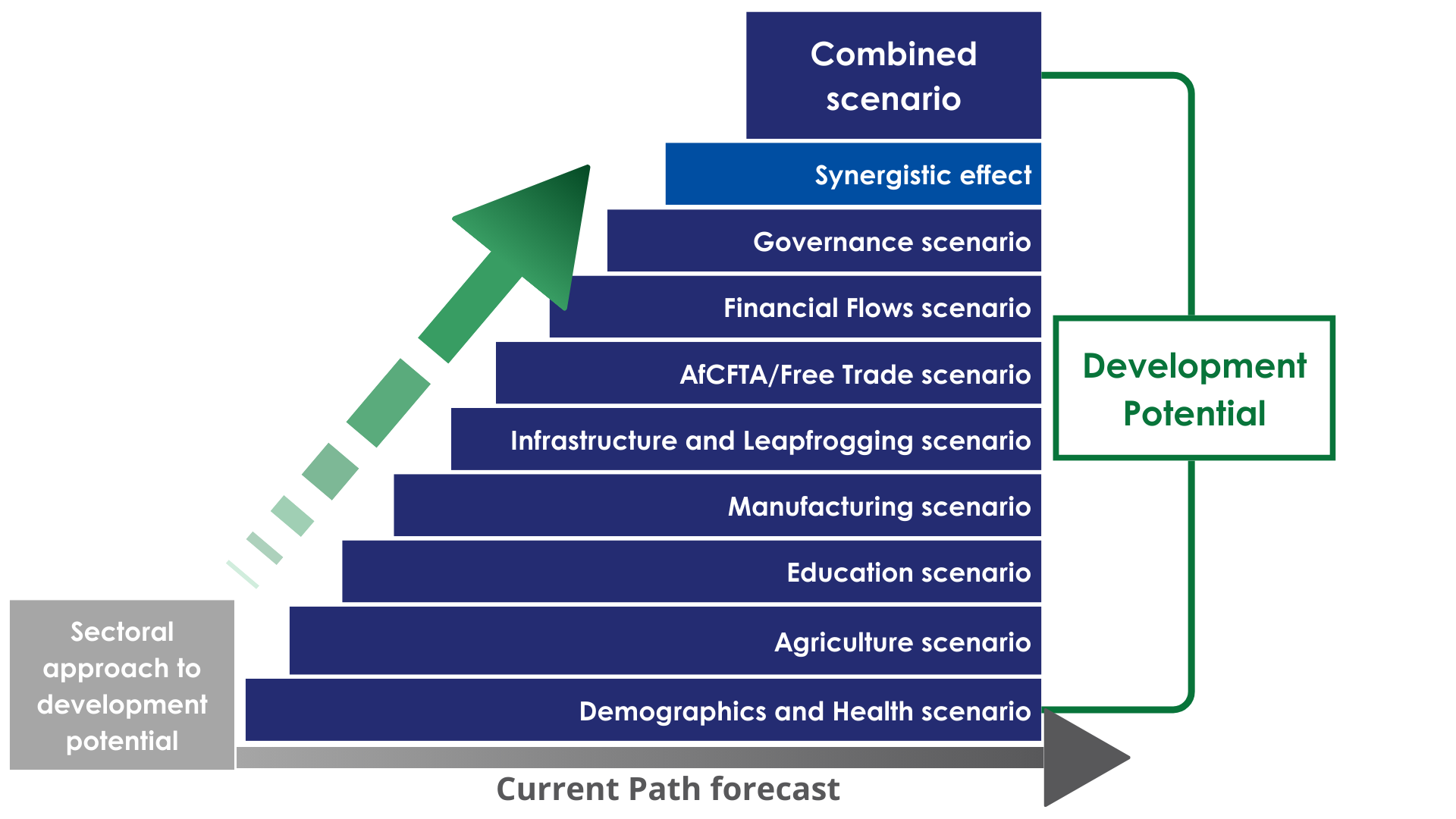



Chart 1 is a political map of Nigeria.
Located in West Africa, Nigeria is the continent's most populous country and a key regional player. The country is a multi-ethnic and culturally diverse federation comprising 36 states and the Abuja Federal Capital Territory (FCT), grouped into six geopolitical zones (North-West, North-Central, North-East, South-West, South-East and South-South).
For nearly four decades, following its independence in 1960, Nigeria was under military rule, with only brief periods of civilian governance (1960–1966 and 1979–1983). The First Republic (1960–1966) was a missed opportunity, particularly in realising its agricultural potential.
At independence, Nigeria had one of the strongest agricultural economies in Africa, but failed to transform that advantage into sustained productivity growth and structural transformation. Agriculture accounted for roughly two-thirds of GDP, more than 60% of exports and employed about 70% of the labour force. Nigeria was the world's largest exporter of palm oil and palm kernels, one of the largest exporters of cocoa and a major producer of groundnuts, cotton and rubber. Among many policy errors, commodity marketing boards established under colonial rule and intended to stabilise produce prices became instruments of revenue extraction from farmers after independence. With little investment in rural infrastructure such as roads, irrigation, electricity and storage, Nigeria’s promising agricultural sector declined as intense regional rivalry, corruption and ethnic competition took precedence over coherent national agricultural policy. Instead of modernising agriculture before oil wealth transformed the economy, political instability and short-term fiscal priorities accelerated the negative effects of oil.
Oil was first discovered in Nigeria in 1956, and Shell-BP's first commercial crude oil exports followed two years later. As oil's contribution to the economy grew, agricultural production collapsed, and Nigeria shifted from being food self-sufficient to a major food importer.
Before 1971, oil exploration and production in Nigeria were almost entirely controlled by multinational companies—including Shell-BP, Mobil, Gulf (later Chevron), Elf and Agip—with the Nigerian government holding no significant participation interests in their operations. Following the establishment of the Nigerian National Oil Corporation (NNOC) in 1971 and Nigeria's accession to the Organisation of Petroleum Exporting Countries (OPEC), the government negotiated participation agreements that acquired 35% equity stakes in the major oil companies in 1973. These were increased to 55% in 1974, giving the Nigerian state majority ownership in the principal joint ventures, and further expanded during the remainder of the decade. In 1976, the NNOC began its own exploration and production activities. In 1977, it merged with the Federal Ministry of Petroleum Resources to form the Nigerian National Petroleum Corporation (NNPC), which combined commercial operations with regulatory responsibilities.
The state now had a 55% stake in oil operations. It used the proceeds to expand the civil service and adopt various import-substitution industries in steel, fertiliser, oil refining and shipping. Civil service wages increased, driven by a belief that the state, not markets, was the engine of economic growth. The 1978 Land Use Act and subsequent constitutional provisions declared that all oil and minerals belonged to the federal government. During these years, oil revenues rose sharply as international prices increased. Nigeria's heavy dependence on oil exports became the core of the political economy, squeezing out other productive sources, even as tensions in the Niger Delta over environmental damage and the unequal distribution of benefits intensified. Import licenses were distributed as political patronage, and the Naira was maintained at an artificially high value, destroying export competitiveness.
Oil also came to dominate politics. The first military coups in January and July of 1966 triggered the Biafra War (1967–1970), which resulted in over a million deaths, mostly due to starvation. The war was preceded by a series of escalating political, ethnic and constitutional crises, including the January 1966 coup, the July counter-coup and widespread anti-Igbo massacres in northern Nigeria. In simple terms, the war began because the Eastern Region tried to break away, and the federal government moved to stop it.
In 1979, General Olusegun Obasanjo's military government handed over power to an elected civilian administration. However, economic mismanagement under President Shehu Shagari led to a military coup in 1983, bringing Major General Muhammadu Buhari to power. Two years later, he was overthrown by General Ibrahim Babangida, who, in 1986, was forced to accept a Structural Adjustment Program, devaluing the naira even as the government simultaneously maintained multiple exchange rate windows, signalling that it did not trust the market. Privatisation transferred state assets to political insiders at below-market prices, and ethnic divisions and patronage increasingly characterised political leadership.
In 1993, Babangida annulled the results of nationwide elections, prompting widespread unrest. Under pressure, he handed over power to an interim civilian government, which General Sani Abacha quickly overthrew. His regime, marked by extreme repression, became Nigeria's most brutal dictatorship. Huge sums of money were stolen from the CBN as multiple exchange rate windows were re-imposed and private business assets were seized by political decree. Following Abacha's death in 1998, General Abdulsalami Abubakar took over, released political prisoners and initiated democratic reforms. In 1999, elections were held, and former military ruler Olusegun Obasanjo was elected president, marking Nigeria's return to civilian rule.
Obasanjo embarked on various reforms, including banking consolidation, debt relief, privatisation and liberalisation, but the major challenge, the division and accountability of oil revenues, was left unaddressed.
Obasanjo was re-elected in 2003, though irregularities and violence marred the election. In 2007, he was succeeded by Umaru Yar'Adua, whose ill health led to Vice President Goodluck Jonathan assuming office shortly before Yar'Adua died in 2010. Jonathan later won the 2011 elections, even as fuel subsidies continued to increase, consuming 25% of the federal budget by 2012.
In 2015, Muhammadu Buhari returned to power, this time through democratic elections under the All Progressives Congress (APC), promising to combat terrorism, corruption and economic instability and secured a second term in 2019. Nigeria maintained multiple exchange rates during these years, despite IMF/World Bank advice to the contrary; restricted imports; combined state intervention and control, especially of oil and foreign exchange; and pursued anti-corruption and selective reforms, such as the introduction of social welfare programmes. Buhari’s policies were widely seen as mixed and contested. Despite more investment in infrastructure and social programs, slow growth and limited diversification contributed to persistent macroeconomic instability.
Bola Ahmed Tinubu succeeded Muhammadu Buhari as Nigeria's president on 29 May 2023. As in previous elections, the events were accompanied by numerous allegations of electoral fraud from opposition parties.
In the early 1970s, Nigeria had become the largest crude oil exporter in Africa (although Libya and, at times, Angola occasionally surpassed it during periods of severe disruption), and it holds the continent's largest natural gas reserves. However, despite some socioeconomic progress in recent years, the country continues to face serious economic, social and security challenges.
In 2025, Nigeria had the second-largest number of people living in extreme poverty in the world, and high youth unemployment. Overdependence on oil exports, leadership failures and weak institutions, deplorable infrastructure, human capital bottlenecks, low tax revenue mobilisation, deeply embedded corruption and decades of mismanagement have impeded economic development and made Nigeria a symbol of unfulfilled potential. In addition, security concerns, including banditry, kidnappings, terrorism, communal clashes and separatist agitations in the south-east, further threaten economic stability and limit foreign investment inflows. These issues, coupled with vast income inequality, have resulted in low socioeconomic indicators. Many Nigerians lack adequate healthcare, nutrition and education. As a result, Nigeria ranks 161st out of 193 countries in the 2024 UN Human Development Index.
However, there are reasons to be optimistic about Nigeria's future as its leadership confronts its manifold structural challenges. President Tinubu has, for example, pledged to turn around the economy and ensure security across the country. Since assuming office, he has introduced key socioeconomic reforms to address these challenges and revitalise the economy. One of his first major policy decisions was the removal of the longstanding fuel subsidy, intended to reallocate resources to critical sectors such as infrastructure and education. His administration has also unified exchange rates to stabilise the currency and attract foreign investment. In July 2026, he announced that these reforms are part of a broader strategy to foster economic resilience and sustainable growth, positioning Nigeria for long-term development. The ambitions have been boosted by the completion of the massive Dangote petroleum refinery and recent announcements of further expansion, which would make the facility, already the largest in Africa, one of the biggest in the world, with the promise to make Nigeria a significant refined-fuel exporter.
The subsequent section on its likely Current Path examines Nigeria's long-term development challenges, which are unusually complex because the country must simultaneously manage rapid population growth, structural economic transformation, governance reform, climate change and national cohesion. If current trends continue, Nigeria is likely to become the third most populous country in the world by around 2050, with a population approaching 400 million and potentially exceeding 500 million by the 2070s. This creates enormous opportunities but also unprecedented development pressures.
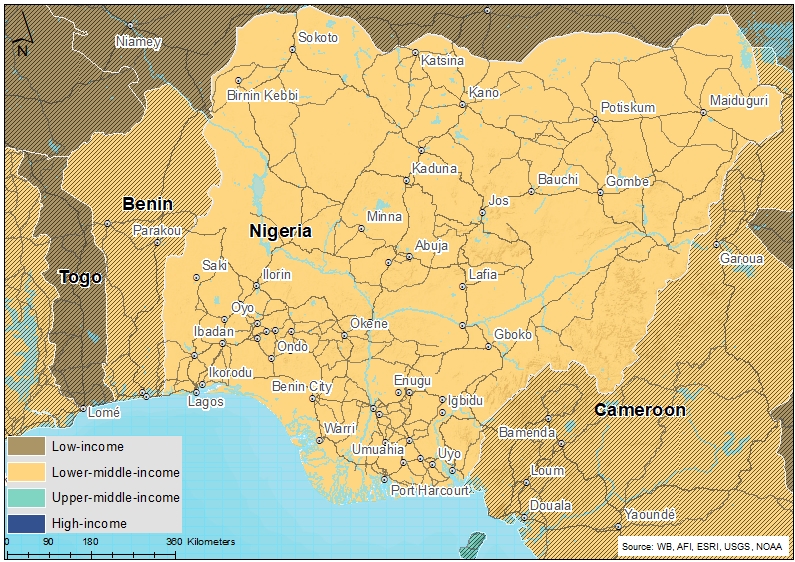
Chart 2 presents the Current Path of the population structure from 1990 to 2043.
The composition of a country's population plays a crucial role in shaping its long-term social, economic and political landscape. Analysing a nation's demographic profile provides valuable insights into its development prospects. Despite its importance for national planning, Nigeria's last completed population census was conducted in November 2006. Plans for a new census in 2023 were postponed. This means that Nigeria has relied on projections and estimates for almost two decades, complemented by periodic surveys such as the Demographic and Health Surveys (DHS) and Multiple Indicator Cluster Surveys (MICS), which provide updated estimates of fertility, mortality and health trends.
At independence in 1960, the country had about 45 million people. By 2025, its population had grown to roughly 241 million, making Nigeria the sixth most populous nation in the world. On the Current Path, the population will continue to expand across all age groups, reaching 371 million in 2043. This would position Nigeria as the third most populous country globally, behind only India and China.
Fertility is much higher in rural areas than in urban areas, and varies regionally. On average, women in rural areas give birth to 5.6 children over their lifetimes, while urban women give birth to 3.9. The population of the northern states is also growing much faster than that of the southern states.
With a median age of 18.2 years in 2025, Nigeria has one of the most youthful populations in the world. Even in 2043, its median age will still be only 21.6 years. This youthful age structure means that children make up a large share of the population, resulting in a high dependency ratio, which constrains savings and investment in human and physical capital.
Because of its youthful age structure, Nigeria is unlikely to fully benefit from its demographic dividend within the Current Path forecast horizon. The under-15 cohort still outnumbers the entire adult 30–64 cohort in 2043 (132.3 million versus 122.4 million), and the over-65 group remains small at 18.3 million.
The large cohort of children under 15 requires sustained investment in education, health and infrastructure. An increase in the working-age population relative to dependent children and elders can drive income growth, a phenomenon known as the demographic dividend. Generally, the demographic dividend materialises when a country reaches a ratio of at least 1.7 working-age people for each dependant. When there are fewer dependants to take care of, resources are freed up for investment in physical and human capital, and female labour force participation eventually rises.
Nigeria’s working-age population aged 15–64 expands strongly on the Current Path, rising from about 135.6 million in 2025 to 220.3 million in 2043. However, growth in the working-age population relative to dependants does not automatically translate into rapid economic growth unless it is accompanied by growth in the labour force relative to dependents and by the labour force acquiring the necessary skills and being absorbed by the labour market. Without sufficient education and employment to harness their productive potential, the growing labour force could turn into a demographic 'bomb' rather than a demographic dividend, as many people of working age may remain in poverty, potentially creating frustration, social tension and conflict.
Nigeria also has a sizeable youth bulge. In 2025, 68.3 million people were aged 15–29, rising to 97.9 million by 2043. Beyond the need for greater spending on education, health services and job creation, large numbers of young adults can drive positive political change through youth activism. Still, they can also increase the likelihood of criminal violence, conflict and instability, particularly when needs such as employment cannot be met. Nigeria has long faced severe youth labour market challenges, although official unemployment estimates have fallen sharply since the National Bureau of Statistics adopted a new labour force methodology in 2023.
Successive Nigerian governments have recognised the need to reduce rapid population growth, but efforts to implement a comprehensive demographic policy have often met religious objections. Family planning remains a contested topic among religious leaders. According to the 2023–2024 DHS, the contraceptive prevalence rate is only 20% among currently married women and 50% among sexually active unmarried women aged 15–49.
Better management of population growth is key to the country's development. Lower fertility would enable governments and parents to invest more in each child's education and health, with positive implications for human capital formation and long-run economic growth.
Chart 3 shows a population distribution map for 2023.
Nigeria's population is unevenly distributed across the country, concentrating along trade routes and in areas rich in natural resources. The highest rural densities are found in the South-West region, known for its agricultural productivity and strategic trade routes. Urban population densities are notably high in major cities such as Lagos, Kano, Ibadan, Kaduna, Port Harcourt, Benin City and Maiduguri. These cities serve as economic hubs, attracting migrants from rural areas seeking employment opportunities, better living standards and improved access to services.
Lagos, as Nigeria's largest city and commercial centre, exemplifies this urban concentration. The city's strategic coastal location and its infrastructure supporting trade and industry attract a diverse population, contributing to its high density. Kano serves as the economic and cultural heartbeat of Northern Nigeria, with its rich history as a trade centre and its current role in manufacturing and agriculture. These urban centres, while contributing significantly to Nigeria's GDP, face challenges such as congestion, inadequate infrastructure and environmental degradation due to their burgeoning populations.
Compared with many lower-middle-income African countries, Nigeria's population density is higher. This is partly due to its large population base and the rapid urbanisation rate driven by both natural population growth and rural-to-urban migration. The demographic trend in Nigeria aligns with the broader African experience, where urban areas are expanding rapidly, creating both opportunities and challenges for sustainable development.
Anticipated population growth underscores the urgent need for comprehensive urban planning and policy interventions to manage the pressures of urbanisation and harness a demographic dividend. Realising this potential depends on strategic investments in education, healthcare and infrastructure to enhance productivity and economic growth.
For Nigeria, capitalising on this demographic transition could significantly boost economic development, provided the labour force is adequately skilled and employed. The challenge is to ensure that the benefits of growth are equitably distributed across regions and to address the rural-urban divide.
Policy implications of Nigeria's population distribution are profound. Government and policymakers must prioritise infrastructure investments, such as transportation and housing, to accommodate the growing urban population. Enhancing rural development through improved agricultural practices and rural industrialisation can help balance the population distribution, reducing excessive pressure on urban centres.
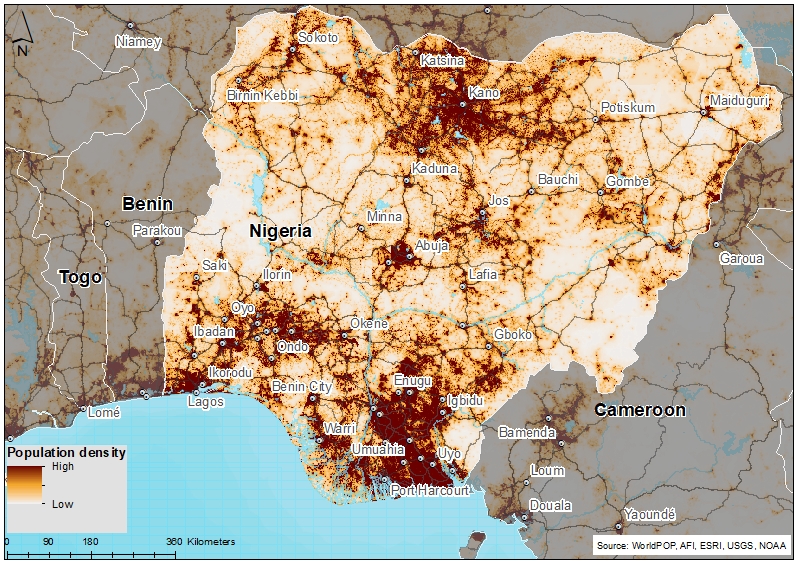
Chart 4 presents the urban and rural population in the Current Path from 1990 to 2043.
Nigeria's rapid population growth is closely tied to accelerated urbanisation. The urban share crossed the 50% threshold in 2018. By 2025, 55.1% of the population lived in urban areas, compared with a lower-middle-income Africa average of 50.8% in the same year, placing Nigeria ahead of the regional aggregate in the timing of its urban transition. Lagos illustrates the scale of this shift, having grown from 325 000 in 1950 to 17.8 million in 2026. Nigeria is among the world's fastest urbanising nations and cities generate 60% or more of national GDP with Lagos State, which includes the country’s largest city, at approximately 33% of national GDP.
If current trends continue, the urban share will rise to 62.0% by 2043. Rapid urbanisation has historically been a powerful driver of economic growth, innovation and structural transformation by concentrating people, firms and ideas. For Nigeria, this presents a major opportunity to accelerate development. However, realising these benefits will depend on whether cities can absorb the growing population through adequate investments in infrastructure, housing, sanitation, healthcare and employment. Without effective urban planning and sufficient job creation, rapid urban expansion could instead exacerbate congestion, informal settlements, environmental degradation and urban poverty. UN-Habitat estimates that half of Nigeria's urban population already lives in slum conditions, underscoring the importance of managing this transition well.
Chart 5 depicts GDP in market exchange rates (MER) and the growth rate under the Current Path from 1990 to 2043.
At the time of Nigeria's independence, its economy showed significant potential, with agriculture serving as its backbone. The country embraced an import-substitution industrialisation policy, aiming to produce most of the goods it previously imported locally. However, the discovery of crude oil in commercial quantities marked a turning point in Nigeria's economic trajectory. As oil prices surged and demand increased, crude oil extraction and export became the dominant economic activity. The influx of petrodollars made it easier to import a variety of goods and services, which led to the neglect of agriculture and manufacturing. Over time, these sectors have become less competitive, while Nigeria's economic growth has been marked by volatile boom-and-bust cycles driven by oil price fluctuations. The historical record reflects this volatility, with GDP contracting by 15.7% in 1967 before rebounding by 25.0% in 1970, and falling 28.7% between 1980 and 1984 as oil prices collapsed.
Between 2000 and 2015, Nigeria's GDP expanded by 174.4%, rising from US$227 billion to US$623 billion, with annual growth peaking at 15.3% in 2002. However, a sharp drop in oil prices from mid-2014 to 2016 plunged the economy into a recession, with growth falling to -1.6% in 2016 and triggering a budgetary crisis. The subsequent recovery was slow, and the collapse of commodity prices during the COVID-19 crisis led to a contraction of -1.8% in 2020. This was Nigeria's deepest recession in four decades, although growth resumed in 2021 as pandemic restrictions were eased and oil prices recovered, supported by increased oil production, expanded refining capacity and continued growth in the services sector, although growth remains below the level required to reduce poverty and keep pace with rapid population growth substantially.
Since the May 2023 elections, the administration of President Tinubu has launched ambitious reforms (to restore economic stability and growth). Key actions include removing most gasoline subsidies, unifying the exchange rate to reflect market conditions and tightening monetary policy. These steps have improved fiscal performance and reduced economic distortions. The Central Bank of Nigeria has also refocused on its price stability mandate, facilitated by the authorities' commitment to end budget deficit monetisation. Despite progress, inflation and poverty remain high, despite efforts to cushion the impact on vulnerable groups through cash transfers to poor and vulnerable households following the removal of fuel subsidies and exchange-rate reforms.
Between 1990 and 2025, Nigeria's GDP more than tripled, rising from US$193.5 billion to US$710.7 billion. On the current development trajectory, it will cross the US$1 trillion threshold in 2034 and reach US$1 536 billion in 2043, maintaining its position as Africa's largest economy. However, Nigeria’s growth trajectory is forecast to remain below the lower-middle-income Africa peer group, whose aggregate GDP is projected to expand by 134.5% between 2025 and 2043, compared with Nigeria's 116.1%. The outlook is contingent upon tackling longstanding and potentially binding constraints to growth, including inadequate infrastructure, particularly unreliable power supply, trade barriers, an unfriendly business environment and insecurity, among other structural issues.
Chart 6 presents the size of Nigeria's informal economy as a percentage of GDP and of total labour, from 2022 to 2043. The data used in this modelling are largely estimates and may therefore differ from other sources.
The size of Nigeria’s informal economy was estimated at 39.5% of GDP in 2025, well above the lower-middle-income Africa average of 31.1% in the same year. On the Current Path, Nigeria's informal sector is expected to decline gradually to 35.8% of GDP by 2043, while informal labour is expected to edge down from 64.6% in 2025 to 63.1% in 2043. Both measures, contribution to GDP and share of labour, will remain above the lower-middle-income Africa projections of 27.7% of GDP and 53.1% of labour in 2043, indicating that informality will continue to define the Nigerian economy over the projection horizon.
A recent World Bank study found that about 30% of the increase in aggregate output driven by higher productivity is linked to a roughly 25% reduction in the average size of informal enterprises.
Nigeria's growth has historically been weakly linked to employment creation. World Bank analysis shows that economic expansion has been concentrated in capital-intensive sectors, particularly oil, resulting in very low employment elasticity. Estimates suggest that a 1% increase in GDP has generated only about a 0.1% increase in employment, illustrating the largely jobless nature of Nigeria's oil-driven growth model. The informal sector has therefore become the lifeblood of millions of Nigerians, with informal labour accounting for 64.6% of total employment in 2025.
While the informal sector contributes a significant portion of GDP, its productivity is markedly lower than that of the formal sector. It is precarious, characterised by a lack of job security, legal protection and sufficient earnings, which, overall, contribute to social and economic vulnerabilities.
The persistence of informality in Nigeria can be attributed to several structural challenges. Rapid population growth, coupled with inadequate formal job creation, exacerbates the reliance on the informal sector. Regulatory complexity and the high cost of compliance deter small businesses from entering the formal economy. Limited access to finance and inadequate education systems restrict opportunities for formal employment and entrepreneurship. Gender disparities also play a role, as women are often overrepresented in the informal sector, engaging in lower-paid and less secure forms of employment.
The implications of a dominant informal sector are profound. The low productivity associated with informal employment constrains economic growth and reduces potential fiscal revenues, as these activities are largely untaxed. The lack of formal employment opportunities limits economic resilience and exacerbates socio-economic inequalities. For Nigeria to foster a more dynamic and inclusive economy, targeted policy interventions are necessary. Improving governance, simplifying regulatory frameworks, and expanding access to education and financial services are crucial steps toward facilitating the transition to formal employment.
Chart 7 shows GDP per capita in the Current Path, from 1990 to 2043.
Nigeria boasts Africa’s largest economy; however, its GDP per capita remains modest by continental standards. GDP per capita growth has increased since 2000, then peaked in 2015, declined for several years and has stabilised in recent years. Projections on the Current Path suggest that Nigeria's GDP per capita will only surpass its 2015 peak at around 2040, eventually reaching US$9 360 by 2043.
The country's inability to sustain economic growth amidst rapid population growth dilutes per capita income growth. On the Current Path, Nigeria's GDP per capita will increase by 21.3% from 2025 to 2043, but will remain well below the projected lower-middle-income African average of US$10 430 in the same year. The gap with the peer average has widened over time: in 2025, Nigeria's GDP per capita was already 3.5% below the lower-middle-income Africa average.
An over-reliance on crude oil, policy missteps, corruption and poor governance have hindered Nigeria's economic development. For instance, Malaysia, once as poor as Nigeria in the 1960s, now has a GDP per capita several times higher. From 1960 to 1975, the two countries had comparable GDP per capita levels. However, Malaysia pulled ahead significantly after it began diversifying its economy to reduce dependence on volatile commodity prices. In 1957, tin and rubber made up 85% of Malaysia's exports, but starting in the 1970s, the country pursued a robust diversification strategy centred on commodity-based manufacturing. As a result, crude oil's share in Malaysia's petroleum exports fell from 95% to 20%, while processed palm oil exports rose from 0% in 1974 to 99% by 1994. Nigeria, by contrast, has remained heavily dependent on crude oil exports, leaving its economy vulnerable to external shocks and limiting growth in per capita GDP. The historical record reflects this vulnerability: GDP per capita fell by 39.1% between 1977 and 1984, and again by 11.8% between 1990 and 1999, with the strongest sustained expansion confined to the 1999–2015 period when output per person rose by 86%.
Chart 8 depicts the rate and number of poor people in Nigeria on the Current Path from 2022 to 2043.
In June 2025, the World Bank announced an update of its extreme poverty line to 2021 PPP values, with extreme poverty now at US$3.00 per person and US$4.20 as the poverty line for lower-middle-income economies such as Nigeria.
Like many sub-Saharan African countries, Nigeria presents a paradox: despite its wealth of natural resources, a majority of its population lives in poverty. At the lower-middle-income poverty line (US$4.20), the poverty rate peaked at 75.8% in 199, before declining to 55.1% in 2019, its lowest level since the early 1980s. The 2025 figures are 146.2 million and 60.8%.
According to the IMF, Nigeria's economic growth has not translated into substantial reductions in poverty. Despite periods of positive GDP growth, per capita incomes have stagnated over the past decade while poverty and food insecurity have increased, indicating that the benefits of growth have not been widely shared. The IMF and the World Bank list a host of reasons, including the ineffectiveness of successive poverty alleviation programmes, often undermined by corruption and poor governance. Corruption diverts public spending from critical sectors such as education and healthcare, limiting the impact of these initiatives on vulnerable populations.
Since 2019, poverty and hardship levels have worsened, similar to the situation during the 1980s. The COVID-19 pandemic, sluggish economic growth and high inflation have pushed millions more into poverty. The poverty rate rose from 55.1% in 2019 to 63.1% in 2023, while the number of poor Nigerians increased from 115.3 million to 144.5 million over the same period — an additional 29.2 million people in just four years - before modestly declining to 60.8% in 2025.
To support the poorest and most economically vulnerable households, the Nigerian government is implementing targeted, temporary cash transfer programmes. These efforts need to be significantly scaled up and sustained to make a meaningful impact.
Projections suggest that on the Current Path, the poverty rate will decline gradually to 30.7% by 2043. This remains above the projected average of 27.9% for lower-middle-income African countries in 2043.
The number of poor Nigerians is projected to keep rising in the near term, reaching 146.4 million by 2026 — the peak in the series — before declining to 113.9 million by 2043. Even with this projected decline, the absolute number of poor Nigerians in 2043 would still be more than double the 45.3 million recorded in 1981. Needless to say, the country is set to fall far short of the Sustainable Development Goal to eradicate extreme poverty by 2030.
Poverty in Nigeria is heavily concentrated in the northern regions and in rural areas, while the southern states and major urban centres generally record much lower poverty rates. States such as Sokoto, Taraba and Jigawa report poverty rates well above the national average, and the northern region lags behind the south across almost all human development indicators. According to the World Bank, 87% of Nigeria's poor reside in the northern region, with nearly half located in the North-West.
Ongoing conflicts between farmers and herders have further deepened poverty in the North. The violence has severely disrupted agricultural activity, which provides livelihoods for about 80% of the region's population. Farmlands have been destroyed or rendered inaccessible, contributing to increased food insecurity, poverty and malnutrition.
Even those who do not fall below the income poverty line may still lack access to essentials such as nutritious food, clean water, healthcare, housing, security and education. According to Nigeria's (National Multidimensional Poverty Index (MPI) 2022)).
63% of Nigerians (133 million people) were multidimensionally poor. The highest poverty rates are found in the North-West (76.5%) and the North-East (75.5%). The lowest rates are in the South-West (46.3%) and the South-East (49.0%).
Poverty in Nigeria is also predominantly rural. Access to infrastructure, financial services and economic opportunities remains limited in rural communities. Approximately 78% of financially excluded adults live in rural areas, compared to 22% in urban settings.
However, monetary poverty alone does not fully capture deprivation in Nigeria, where poverty is also expressed through deficits in education, health, nutrition, housing quality, sanitation, electricity and access to basic services. This is why Nigeria’s monetary poverty trend must be read alongside multidimensional poverty.
The multidimensional lens is particularly important because a household can rise above an income poverty threshold while remaining deprived in areas such as schooling, child nutrition, cooking fuel, drinking water, housing materials or asset ownership. The global Multidimensional Poverty Index (MPI), produced by UNDP and the Oxford Poverty and Human Development Initiative, consistently shows that a large share of Nigerians experience overlapping deprivations rather than income shortfalls alone.
According to the National Multidimensional Poverty Index, poverty rates exceed 75% in both the North-East and North-West, compared with less than 50% in most southern regions. Rural poverty is particularly severe, with 72% of rural residents classified as multidimensionally poor compared with 42% of urban residents. These disparities reflect unequal access to education, healthcare, infrastructure and economic opportunities, as well as the effects of conflict, climate vulnerability and demographic pressures in northern Nigeria.
In summary, the face of poverty in Nigeria is largely rural, mostly illiterate and deeply entrenched in the informal sector. There is strong evidence that women are disproportionately vulnerable to poverty and experience more severe forms of deprivation. Addressing this complex challenge is crucial not only for national development but also for ensuring peace and stability.
Chart 9 depicts Nigeria's National Development Plan.
The Nigeria Agenda 2050 (NA 2050) is a long- and medium-term development plan designed to tackle the country's persistent economic and social challenges. It aims to transform Nigeria into an upper-middle-income country by 2050 through sustained economic diversification, industrialisation, infrastructure development, investment in human capital and improved governance. It is implemented through a series of six five-year National Development Plans. The Agenda was approved in 2023 and has not yet established a clear track record of implementation, so it is best viewed as an aspirational framework rather than a fully institutionalised long-term planning system.
The Nigeria Agenda 2050 espouses policies, strategies and initiatives to position Nigeria as an African regional power and a global economic force. The plan envisages an average annual GDP growth rate of 7% during 2021–2050 and a per capita income of US$33 328 by 2050. Nigeria Agenda 2050 is premised upon three key factors that are critical to realising the nation's potential:
- Reforming governance structure with strong institutions and administrative machinery capable of responding to the needs of the people;
- Inclusive and sustainable growth of a private sector-driven economy through the concentric diversification of the economy; and
- Empowerment of the Nigerian people by ensuring a balance between economic growth and social welfare.
The National Development Plan (NDP) 2021–2025 was the first medium-term implementation phase of Agenda 2050, dealing with economic growth and diversification, infrastructure, power and energy, agriculture, manufacturing, education, health, governance, and climate resilience and environmental management. The plan targets lifting 35 million Nigerians out of poverty, creating 21 million jobs and laying the foundation for the longer-term Agenda 2050 vision. By mid-2026, a successor to the National Development Plan 2021–2025 has not yet been publicly released. As a result, economic policy is currently guided by Agenda 2050, the Tinubu administration's Renewed Hope Agenda, annual budgets and a range of sector-specific strategies.

The Technical Page explains the eight sectoral scenarios and their relationship to the Current Path and the Combined scenario. Chart 10 summarises the approach.
Chart 11 shows the mortality distribution in the Current Path for 2023 and 2043.
Access to quality healthcare is necessary for citizens to live socially and economically productive lives and contribute to sustainable development. Over the years, the federal and state governments of Nigeria have devoted significant resources to developing and implementing numerous health plans and strategies to achieve a modern, efficient and effective healthcare delivery system. However, Nigeria's health indices remain below expectations and face significant challenges that hinder its effectiveness and accessibility, particularly for vulnerable populations. It is plagued by mismanagement, corruption and inadequate resources, all of which contribute to poor health outcomes. A major issue is insufficient healthcare financing, compounded by the limited reach of the universal health insurance program, which leaves many Nigerians without adequate medical coverage. Currently, only about 5.2% of Nigeria's annual budget is allocated to the health sector, far below the 15% target set by African leaders in the 2001 Abuja Declaration.
High out-of-pocket health expenditures in Nigeria significantly limit poor households' ability to access and utilise basic healthcare services. It is estimated that over half of the country's total health spending is out-of-pocket, which disproportionately affects millions of Nigerians, particularly those who are multidimensionally poor, by depriving them of access to modern healthcare facilities.
The health sector also suffers from a high rate of brain drain, with skilled professionals leaving the country in search of better working conditions and pay abroad.
Communicable diseases remain the leading causes of death in absolute terms, although the structure of mortality is shifting towards non-communicable diseases. In 2025, most mortality came from other communicable diseases (26.6%), followed by cardiovascular diseases (13.5%), malaria (12.6%) and respiratory infections (8.4%). In 2043, other communicable diseases remain the largest cause (21%), followed by cardiovascular diseases (19%), malignant neoplasms (9%) and malaria (9%).
The World Health Organisation's last comprehensive ranking of national health-system performance, published in 2000, placed Nigeria 187th out of 191 countries. WHO has since abandoned overall league-table rankings in favour of monitoring specific dimensions of health-system performance, particularly progress towards Universal Health Coverage (UHC). Contemporary indicators continue to paint a challenging picture. Nigeria's UHC Service Coverage Index is only 38.4 out of 100, reflecting limited access to essential health services, inadequate infrastructure, shortages of health workers and high out-of-pocket spending.
The Demographics and Health scenario envisions ambitious improvements in child and maternal mortality rates, enhanced access to modern contraception, and decreased mortality from communicable diseases such as malaria and non-communicable diseases such as cardiovascular conditions, alongside advancements in safe water access and sanitation. This scenario assumes a much more rapid demographic transition supported by heightened investments in health and water, sanitation and hygiene (WaSH) infrastructure.
Visit the themes on Demographics and Health/WaSH for more details on the scenario structure and interventions.
Chart 12 presents the infant mortality rate in the Current Path and in the Demographics and Health scenario, from 2020 to 2043.
The infant mortality rate is the probability of a child born in a specific year dying before reaching the age of one. It measures the child-born survival rate and reflects the social, economic and environmental conditions in which children live, including their health care. It is measured as the number of infant deaths per 1 000 live births and is an important marker of a country's overall health system quality.
Infant mortality in Nigeria has declined significantly, from 97.4 deaths per 1 000 live births in 1990 to 48.8 deaths in 2025. On the Current Path, infant mortality will continue to decline to about 44.2 deaths per 1 000 live births by 2030 (well above the SDG target of 25) and 34.8 deaths per 1 000 live births by 2043.
Nigeria's high infant mortality rate reflects the combined effects of poverty, malnutrition, inadequate maternal and neonatal healthcare, infectious diseases, poor sanitation and regional inequalities. Mortality rates are highest in the poorer northern regions and rural areas, where access to skilled birth attendance, immunisation, clean water and healthcare services remains limited. Despite steady improvements over recent decades, progress has been slower than in many comparable countries because rapid population growth continues to place pressure on health systems and public services.
The interventions in the Demographics and Health scenario will see Nigeria's infant mortality rate drop to 38.7 deaths per 1 000 live births by 2030 and to 21.6 deaths per 1 000 live births in 2043, below the projected Current Path average of 24.8 deaths per 1 000 live births for lower-middle-income Africa in 2043.
Chart 13 depicts the demographic dividend under the Current Path and the Demographics and Health scenario from 1960 to 2043.
The demographic dividend is the window of economic growth opportunity that opens when the ratio of working-age persons to dependants rises to 1.7 or higher.
Nigeria's ratio stood at 1.29 in 2025 compared to an average of 1.4 among lower-middle African states, having recovered from a historical low of 1.05 in 1987, suggesting that Nigeria's demographic transition is progressing more slowly than that of comparable African economies. On the Current Path, the ratio rises to 1.39 by 2030 and 1.46 by 2043, falling short of the 1.7 threshold within the forecast horizon. The implementation of the Demographics and Health scenario accelerates the transition, crossing the 1.7 threshold in 2042. The gap between the two scenarios underscores the value of sustained investment in family planning, child health and female education to unlock Nigeria's demographic dividend within the next two decades.
Although female empowerment is highly associated with fertility reduction, the availability of modern contraceptives is particularly powerful in advancing the point at which a country enters a potential demographic dividend in the shorter term. Contraceptive use in Nigeria is very low compared to the average use in lower-middle-income African countries. It can quickly increase from a very low base. For example, between 2000 and 2005, the contraceptive use rate doubled in Ethiopia.
From a very low base in 2025, contraceptive use in Nigeria increases to about 52.6% in 2043, compared with a projected rate of 26.8% on the Current path in the same year.
Chart 14 shows crop production and demand in the Current Path from 1990 to 2043.
Nigeria's agricultural strategy is being pursued against rapid population growth, rising climate risks, high post-harvest losses and persistent insecurity in key farming regions. As a result, even when agricultural output grows, it often struggles to keep pace with food demand. Thus, many Nigerian planning documents focus not only on increasing production but also on productivity, storage, irrigation, value addition and market integration rather than simply expanding cultivated land.
The focus of government efforts is on achieving food security, including reducing dependence on food imports, by increasing productivity and developing agro-industrial value chains. Through the National Development Plan 2050 and more specifically the National Agricultural Technology and Innovation Policy (NATIP, 2022-2027) the government seeks to modernise agriculture through greater mechanisation, irrigation, fertiliser use and climate-smart technologies while expanding agricultural exports and creating employment opportunities.
Nigeria's policies increasingly emphasise productivity growth rather than simply expanding cultivated land. Given rapid population growth, the sector's success will depend less on increasing acreage and more on improving yields, reducing post-harvest losses, and strengthening links between agriculture and industry.
The reality is that Nigeria has immense agricultural potential. Yet, the sector continues to underperform due to a range of persistent challenges, particularly the extent to which oil income elevated the value of the naira, thereby effectively subsidising food imports above domestic productivity improvements. The sector continues to suffer from low productivity, relying heavily on rainfall and therefore remaining highly vulnerable to precipitation fluctuations. The country's irrigation potential also remains largely underutilised.
Other factors include the use of low-quality, inefficient technologies and inputs, poor distribution systems (including insufficient storage facilities and poor market access), and low yields of both arable crops and forest products. Traditional livestock practices and artisanal fishing are less efficient than modern practices, while limited financing and inadequate government budgetary allocations constrain growth.
According to the FAO, Nigeria loses up to 50% of its agricultural produce along the food supply chain, posing serious threats to food security, economic growth and environmental sustainability. Key challenges contributing to these losses include technological limitations, inefficient harvesting methods, pest infestations and limited access to modern farming equipment. Poor handling practices and weak transportation infrastructure further exacerbate post-harvest losses.
Environmental challenges such as desertification, soil erosion, land degradation and farmers' limited access to climate information compound these difficulties, leaving agriculture unable to meet the nutritional needs of Nigeria's rapidly growing population.
The sector is dominated by crop production, which accounts for around 87% of its output. Other subsectors, such as livestock (9%), fishing (2.2%) and forestry (1.4%), account for lower shares of the sector's output. Major crops are maize, cassava, guinea corn, yams, beans, millet and rice.
Agriculture remains a cornerstone of Nigeria's economy and labour market. According to the World Bank/ILO estimates, approximately 34% of all employed Nigerians work in agriculture, forestry and fishing, making it the country's largest source of employment. It is the main source of livelihood for the majority of rural Nigerians.
Going forward, the large and rapidly growing population will undoubtedly place enormous pressure on food production and land administration. For the Nigerian agricultural sector to meet the food and fibre needs of the population and industries, it needs to increase productivity dramatically. For example, in the Current Path, crop demand is set to increase from 261.2 million metric tonnes in 2025 to 440.8 million metric tonnes by 2043, while crop production rises much more slowly from 246 million metric tonnes to 289.8 million metric tonnes over the same period. The gap between demand and production widens from 15.2 million metric tonnes in 2025 to 151.0 million metric tonnes by 2043. Nigeria’s deficit, which began below the lower-middle-income African average, overtakes it over the projection period, reaching 34.3% of demand against the peer group’s 25.1% by 2043. Without improved agricultural productivity, this widening deficit will substantially increase Nigeria's import bill, further pressuring foreign reserves and the exchange rate.
Enhancing agricultural productivity through the adoption of new technologies and innovations, as well as through climate-smart agriculture, is crucial to ensuring food security and nutrition in Nigeria. In this regard, the US$2.5 billion Dangote fertiliser plant set to expand production from its current capacity from 3 to 9 million metric tons of urea per annum, will help Nigeria meet the domestic demand for fertiliser, a critical requirement to advance food sufficiency.
The Agriculture scenario envisions an agricultural revolution that ensures food security through ambitious yet feasible increases in yields per hectare (supported by improved management, seed and fertiliser technologies), expanded irrigation and land equipped for irrigation, and expanded rural road access to facilitate farm-to-market linkages. By 2043, irrigated land will increase by an additional 90 000 ha, plus 31 000 ha of land equipped for irrigation. Given productivity inefficiencies, efforts to reduce food loss and waste are particularly impactful. Instead of losing 31% of agricultural crop production to loss and waste in 2043, the sector will lose only half that amount. Finally, the scenario includes enhanced forest protection, signifying a commitment to sustainable land-use practices, as well as modest increases in groundwater extraction. The Agriculture scenario, therefore, increases yields, reduces vulnerability of rain-fed crops through irrigation schemes, reduces post-harvest losses, and taps into the country's agricultural potential.
In the Agriculture scenario, crop production narrows the gap with demand to 9.6 million metric tons by 2040, but does not close it. However, by 2043, demand exceeds production by 38.1 million metric tons, a significantly lower gap than the 151.0 million metric tons in the Current Path.
Although there is no single agricultural "Vision 2050" with quantified targets comparable to Ethiopia's or Rwanda's sector plans, Nigeria's long-term objectives are broadly to:
- Achieve national food security;
- Reduce dependence on food imports;
- Increase agricultural productivity and yields;
- Expand irrigation and mechanisation;
- Develop agro-processing industries;
- Increase agricultural exports;
- Create jobs for a rapidly growing population;
- Build climate resilience.
Visit the theme on Agriculture theme for our conceptualisation and details on the scenario structure and interventions.
Chart 15 depicts crop import dependence under the Current Path and the Agriculture scenario from 2022 to 2043.
Nigeria faces a paradoxical food-security situation: it is one of Africa's largest agricultural producers. It employs roughly one-third of its workforce in agriculture, yet it remains a major food importer and experiences widespread food insecurity.
According to the 2025 Global Report on Food Crises, approximately 31.8 million Nigerians were projected to face acute food insecurity during the 2025 lean season, making it one of the largest food-insecure populations globally. The most severe conditions are concentrated in the North-East and North-West. The report also estimates that about 16 million people faced acute food insecurity in 2024, indicating a worsening trend, and the situation is particularly difficult for children. UNICEF estimates that millions of children suffer from chronic malnutrition and stunting, especially in northern Nigeria.
Despite these challenges, Nigeria is largely self-sufficient in many staple foods but remains vulnerable to food insecurity because agricultural productivity has not kept pace with rapid population growth. The country relies heavily on imports of wheat, fish, dairy products and sugar, while conflict, climate shocks, weak infrastructure and high post-harvest losses constrain domestic food production.
Nigeria's food challenge is increasingly one of productivity growth rather than land availability. The country has sufficient agricultural potential to feed itself, but achieving that outcome will require major improvements in irrigation, storage, logistics, security, fertiliser use and climate resilience.
In the Agriculture scenario, crop import dependency will be 9.2% of total demand in 2043, compared with 34.8% in the Current Path and below the projected average of 26.3% for lower-middle-income Africa in 2043.
Chart 16 depicts the progress through the educational system in the Current Path, for 2025 and 2043.
The education system in Nigeria is administered at different levels. The Federal Ministry of Education oversees overall policy formation and ensures quality control, but is mainly involved with tertiary education. Basic and senior secondary education remain primarily under the jurisdiction of the state and local governments. The Nigerian education system can be described as a ‘1-6-3-3-4’ system: one pre-primary year (recently introduced) and six years of primary, followed by three years of junior secondary education, which together comprise basic education. The next three years are senior or secondary education, followed by four years of tertiary education for a basic degree.
According to Nigeria’s national policy on education, the language of instruction for the first three years of elementary school should be the “Indigenous language of the child or the language of his/her immediate environment,” most commonly Hausa, Igbo or Yoruba. After that, English is used from Grade 4. This policy, however, is not always followed, and instruction at lower grades is often delivered in English.
The education sector has not received sufficient attention in Nigeria, as reflected in chronically low public funding, decaying educational infrastructure, deteriorating teaching quality and high levels of illiteracy, among other issues.
The national literacy rate has modestly improved from 54.7% in 2003 to about 63.8% in 2023, eight percentage points below the average for lower-middle-income Africa. However, despite the progress made, more than 30% of Nigeria's population aged 15 years and older cannot read or write, many of whom are in the country's Northern states. For instance, the literacy rate in North West Nigeria is estimated at about half the national rate. These distressing statistics suggest that a significant proportion of Nigeria’s working-age population is employable only in an economic environment that requires manual labour. The absence of appropriate knowledge and skills leads to poverty. On the Current Path, Nigeria's literacy rate will likely increase to 71% in 2030 and 89% by 2043, slightly below the projected average of 90% for lower-middle-income Africa.
The country has made progress in primary school enrolment, with gross enrolment at 103% in 2023, slightly below the average of 108% for Africa’s lower-middle-income countries. This high percentage, however, reflects the continued presence of over-aged learners at the primary level, as the net primary school enrolment was 76% in 2023, reflecting challenges in getting all school-age children into classrooms. The out-of-school children, which were 6.56 million in 2000, now stand at more than 10 million, with 60% of them in northern Nigeria. In addition to those who do not attend school, millions of children are in the poorly resourced and under-supervised Quranic school system, which is notorious for producing unskilled youth cohorts.
While primary enrolment has improved, completion rates remain relatively low (73% in 2021, the last year of available data), even though they are on par with the average for lower-middle-income Africa. On the Current Path, primary school completion rate will be 87.7% by 2030 and 85.9% by 2043, still below the SDG target of 97%. High dropout rates, especially among girls, and disparities between urban and rural areas are major concerns.
The education system can be viewed as a pipeline in which completion or attainment at one level provides access to the next. The more students are allowed to enrol and complete primary school, the greater the pool of students that can proceed to secondary and tertiary levels. Because of relatively low completion and transition rates from the primary level, fewer students are eligible for subsequent education levels, and the resulting outcomes worsen (Chart 16), which in turn reduces human capital accumulation.
Enrolment rates drop significantly after primary school, with a sharp decline in both lower- and upper-secondary levels. Many students do not transition from primary to secondary education, and those who do often face overcrowded classrooms and insufficient resources. In 2023, gross lower-secondary school enrolment stood at 52.9% while gross upper-secondary school enrolment was only 43%. On the Current Path, gross lower- and upper-secondary school enrolment will likely reach 75% and 45.5% in 2030, and 76% and 58.6% in 2043, respectively.
The lower-secondary education completion rate stood at 30.5% in 2023 (50.8% for lower-middle-income Africa), while the upper-secondary education completion rate was only 26.8% (34.5% for lower-middle-income Africa). On the Current Path, lower- and upper-secondary education completion rates will improve, but the country will likely miss the SDG target of 97% in 2030 by a substantial margin. Indeed, lower- and upper-secondary school completion rates will likely reach only 42.6% and 26% in 2030, and 57.5% and 39.4% in 2043, respectively.
At the tertiary level, universities and other higher education institutions offer undergraduate, graduate and vocational programs. The higher education sector faces issues related to limited capacity, outdated curricula and inadequate infrastructure. Nigeria's deteriorating tertiary education system has pushed many secondary school graduates to migrate in search of quality education abroad.
The gross tertiary enrolment rate was just 11% in 2023, above the average of 16% for lower-middle-income Africa. On the Current Path, it could reach 15% in 2043, compared with the projected average of 22.5% for lower-middle-income Africa.
Furthermore, gender imbalance in the education sector also affects enrolment and educational outcomes. While the gender parity index (ratio of females to males) for primary school and secondary school has improved to 1.00 and 0.98, respectively, UNICEF reports that about 60% of out-of-school children in the country are girls. Many girls are not in school due to stereotypes about education for girls, financial constraints, early marriages and teenage pregnancy, among others. However, the situation of female education varies by state or region. Girls in the southern regions have more than twice the chance to attend school than their peers in the north, where jihadist insurgency and poverty are rampant.
On top of the alarming number of out-of-school children, the quality of education for those who have the opportunity to attend school has significantly declined. Getting more children into school is essential, but ensuring that they actually learn is even more important. Many empirical studies have reported that educational quality impacts economic growth more than educational quantity. The quality of education is usually tracked using Harmonised Test Scores. According to the World Bank Human Capital Project report, students in Nigeria score 308 on a scale where 625 represents advanced attainment, and 300 represents minimum attainment.
Dilapidated school infrastructure, obsolete educational materials, insufficiency of qualified teachers, limited STEM (science, technology, engineering and mathematics) training, lack of high-quality Technical and Vocational Education and Training (TVET) programs, among others, affect the quality of education and create a disconnect between graduates' skills and the labour market’s needs. The end result is low labour force employability and high youth unemployment in the country.
Overall, Nigeria has made progress in improving access to education, particularly at the primary level. However, significant challenges remain in ensuring quality, reducing dropout rates and expanding access to secondary and higher education. Efforts to address gender disparities, improve infrastructure and enhance teacher training are critical for the future development of the country’s education system.
Investing in people and ensuring that every Nigerian has access to quality education is crucial for promoting equity, sustaining economic growth and unlocking new opportunities for disadvantaged populations.
The Education scenario, therefore, aims to build high-quality human capital in Nigeria. It represents reasonable but ambitious improvements in intake, transition and graduation rates from primary to tertiary levels, with a particular focus on both lower- and upper-secondary levels and on better quality of education. It also models substantive progress towards gender parity at all levels, additional vocational training at the secondary school level and increases in the share of science and engineering graduates.
Visit the Education theme for our conceptualisation and details on the scenario structure and interventions.
Chart 17 presents the mean years of education in the Current Path from 2022 to 2043 for the 15-24 age group.
The average years of education in the adult population aged 15 to 24 is a good first indicator of how the stock of knowledge in society is changing. Nigeria has one of the lowest rates in Africa, at 7.28 years in 2025, compared with an average of 8.3 years for its income group. Under the Current Path, the mean years of education for adults aged 15 to 24 in the country is projected to reach 8.0 years by 2043 .
While higher levels of education enable Nigerians to pursue high-skilled jobs, such opportunities remain limited, even for those with secondary or post-secondary qualifications—only 8.7% of employed Nigerians work in high-skilled occupations. Even among workers with post-secondary education, most are not employed in high-skilled jobs, indicating a significant mismatch between educational attainment and labour-market opportunities. Among workers with only secondary education, the share employed in high-skilled occupations is just 7.2%. This gap highlights not only a potential mismatch between available skills and job opportunities but also a fundamental shortage of high-skilled jobs in the economy. Nigeria's low economic complexity contributes to a labour market dominated by demand for low-skilled workers. As the economy becomes more complex, the demand for skilled labour, especially within the formal sector, is expected to increase. To remain competitive and boost productivity, Nigeria must proactively equip its workforce with relevant skills aligned with future labour market demands.
The Education scenario emulates the effect of such a pathway in addressing these challenges, lifting the share of science and engineering graduates among tertiary graduates and accelerating the gradual gains visible in the Current Path, where mean schooling for the 15 to 24 cohort rises by only 0.39 years between 2025 and 2043. In the Education scenario, the increase is 1.76 years.
Strengthening the quality and relevance of education, particularly through expanded support for science, engineering and vocational training, will help Nigeria cultivate a more skilled workforce.
Chart 18 depicts the value added by sector as a share of GDP under the Current Path for 2025 and 2043.
Compared with other lower-middle-income countries (LMICs), Nigeria's manufacturing sector is generally smaller, less productive, less export-oriented, and less integrated into global value chains than one would expect given the country's size and income level. Nigeria’s manufacturing export performance is particularly unimpressive, accounting for only a small share of total exports.
In 2025, the manufacturing sector contributed approximately 15% to Nigeria's GDP. It will stagnate at that level to 2043, although its absolute size will more than double given the forecast of steady economic growth across all sectors. Third in its contribution to GDP in 2025, manufacturing's contribution to the economy will overtake agriculture to occupy second position from 2036, declining from 19.3% to 10.0% over the same period, reflecting the slow structural transformation of the Nigerian economy.
The services sector will continue to dominate Nigeria's economy, with its share of GDP rising from 49.6% in 2025 to 57.4% by 2043. Among the smaller reported sectors, energy falls from 8.7% in 2025 to 5.1% in 2043, while ICT rises from 4.8% to 7.1% and materials from 2.3% to 4.2% over the same period.
Strengthening the manufacturing sector can drive inclusive growth by creating more wage-paying jobs that enable workers to lift themselves out of poverty. While a large share of Nigeria's working-age population — about 76% — is employed, most live in poverty, and eak out a living in the informal services sector. This is because many Nigerians are engaged in low-productivity jobs that offer insufficient income to ensure a decent standard of living. Nigeria’s large informal sector is both a symptom and a cause of weak industrialisation. Expanding and enhancing the manufacturing sector can help address this issue by creating more productive, better-paying jobs. This can create a virtuous cycle: as employment becomes more productive, incomes rise, capacities are strengthened, and broader economic growth is stimulated, ultimately contributing to sustainable poverty reduction.
However, unlocking this virtuous cycle requires Nigeria to aggressively overcome deep structural constraints, including an unreliable, expensive electricity, transport bottlenecks, port congestion, logistics costs and limited industrial infrastructure and provide access to affordable, long-term credit.
Visit the Manufacturing theme for our conceptualisation and details on the scenario structure and interventions.
Chart 19 presents the manufacturing sector's contribution to GDP under the Current Path and the Manufacturing scenario from 2022 to 2043. The data is expressed as a percentage of GDP.
Nigeria’s manufacturing value-added has followed a long, uneven trajectory. From 20.3% of GDP in 1981, it fell steadily to a trough of 6.6% in 2010, before recovering to 14.9% by 2025. According to the African Development Bank's Africa Industrialisation Index 2025, which measures African progress on industrialisation, Nigeria ranks 14th among African countries, reflecting persistent challenges in translating its large market size and resource base into sustained industrial development. The manufacturing sector in Nigeria underperforms in its contribution to exports, accounting for only about 6% of total exports compared to other countries such as Malaysia, where manufacturing accounts for over 70% of exports. On the Current Path, the manufacturing share rises to 16.0 % by 2043, below the projected 17.0% average for lower-middle-income Africa, and overtakes agriculture to become Nigeria's second-largest sector in 2036.
Industrialisation is a long-term process. It requires constructive relationships between the state and the private sector that encourage and support it. Firms need a state with strong capabilities to set an overall economic vision and strategy, efficiently provide supportive infrastructure and services, maintain a regulatory environment conducive to entrepreneurial activity, and facilitate the acquisition of skilled labour and new technology, as well as entry into new economic activities and markets.
The Manufacturing scenario models the impact of a manufacturing push in Nigeria. Recent investments in refining, fertiliser production and petrochemicals already suggest a gradual shift towards greater domestic value addition. A reasonable but ambitious growth in manufacturing is envisaged through increased investment in the sector, research and development (R&D) and improved government regulation of businesses, thereby increasing employment, particularly among females. In this scenario, manufacturing value added contributes 21.0% to GDP in 2043, up from 16.0%, a difference of US$117 billion. Because of the effect of an expanded manufacturing sector on productivity, the Nigerian economy is US$191 billion larger. All other sectors are also larger in 2043.
Nigeria's manufacturing sector presents significant potential to drive economic diversification and job creation. Priority growth areas include agro-processing, petrochemicals and plastics (leveraging the country's oil and gas resources), textiles and garments, building materials (such as cement and steel) and consumer goods and packaging. Notably, the food and beverage, tobacco, cement, textile, apparel and footwear industries contribute over 70%] of the sector's total GDP, underscoring their significant role in the country's industrial landscape. Lagos, Ogun, Kano and Kaduna are key industrial hubs, hosting a variety of manufacturing companies that serve both local and regional markets. To fully unlock this potential and enhance Nigeria's competitiveness in regional and global markets, it is essential to address key challenges related to infrastructure, access to finance and workforce skills development. Key among these is infrastructure deficit, including unreliable energy supply and limited transport options, which result in high production costs, policy inconsistencies, lower product quality and reduced global competitiveness. An unstable macroeconomic environment — marked by high inflation, volatile exchange rates, multiple taxation and limited access to affordable financing — has further constrained the sector's ability to thrive. Insecurity in some regions of the country disrupts supply chains and discourages investment in the sector.
Nigeria's manufacturing sector's competitive advantages include a large and growing domestic market, access to raw materials, low labour costs and the potential to serve as a manufacturing hub for the ECOWAS region.
Chart 20 depicts exports and imports as a percentage of GDP from 2000 to 2043 under the Current Path.
Nigeria has long maintained a relatively protectionist trade regime in selected sectors through import prohibitions, high tariffs, foreign-exchange restrictions, local-content requirements and, at times, border closures. These measures have aimed to promote domestic production, improve food security, conserve foreign exchange and accelerate industrialisation. While protection has contributed to the emergence of successful industries—notably cement, where Nigeria has become largely self-sufficient and a regional exporter, and fertiliser production following the commissioning of the Dangote Fertiliser plant—it has generally fallen short of delivering the broad-based structural transformation envisaged by policymakers. Manufacturing exports remain limited, productivity growth has been modest, integration into global value chains is weak, and employment creation has lagged behind the needs of the rapidly growing labour force. Rice production has increased substantially under import restrictions. Still, it has not eliminated imports or cross-border smuggling, while backward integration programmes have yielded mixed results in sectors such as sugar and consumer goods.
Nigeria's long-standing protectionist trade policies have had a clear macroeconomic effect: they have contributed to making Nigeria one of the least trade-open large economies in Africa. Imports, in particular, are relatively low as a share of GDP, while exports remain heavily concentrated in crude oil rather than diversified manufactured goods.
The strategy has been more successful at substituting some imports than at creating a competitive export sector. It has fostered a few globally competitive industries—notably cement and fertiliser—but has not delivered the broad structural transformation seen in countries such as Vietnam, China or, more recently, Ethiopia. The result is a relatively closed economy, with total trade amounting to only about 48% of GDP, below the peer group at 53.6%. This limited openness has constrained productivity growth, technology transfer and integration into global value chains.
Since the Dangote Refinery began operating, the country has increasingly exported refined petroleum products, thereby creating greater domestic value. The refinery is reshaping Nigeria's export structure by reducing dependence on imported fuels and increasing exports of refined petroleum products. In 2026, Nigeria became a net exporter of petrol for the first time in its history, while refined-product exports from the refinery generated billions of dollars in foreign-exchange earnings and strengthened the country's trade balance. This is one of the most significant changes to Nigeria's export economy since the expansion of crude oil production in the 1970s.
Historically, Nigeria's exports remain heavily concentrated in hydrocarbons, with crude oil and liquefied natural gas accounting for the overwhelming majority of export earnings. This dependence makes the economy vulnerable to fluctuations in global energy prices. However, large-scale industrial projects such as the Dangote Refinery and the Dangote Fertiliser Plant are gradually diversifying the export basket towards higher-value-added products, including refined petroleum products and fertiliser. Agricultural exports such as cocoa, sesame and cashew also contribute to non-oil export earnings, although manufactured exports remain comparatively limited.
Chart 21 presents the trade balance in the Current Path and in the AfCFTA scenario from 2022 to 2043, measured in billion US dollars.
On 5 December 2020, Nigeria became the 34th country to ratify the AfCFTA agreement, signalling its formal commitment to the initiative. Nigeria officially began trading under AfCFTA preferences through the Guided Trade Initiative (GTI) in July 2024, when the government launched its first AfCFTA exports and certified the first Nigerian companies to trade under AfCFTA rules of origin.
Nigeria begins the projection period with a substantial trade surplus that erodes steadily, turning into a structural deficit from 2032 onwards. On the Current Path, Nigeria has a trade deficit of 7.9% of GDP in 2043 and 6.2% in the AfCFTA scenario, a difference equivalent to US$16.6 billion.
In the AfCFTA scenario, where trade restrictions are loosened and productivity is lifted through competition and technology diffusion, Nigeria would not return to a trade surplus by 2043, but its deficit would be materially smaller.
The AfCFTA presents a major opportunity for Nigeria to advance its economic prosperity, particularly through job creation, poverty reduction, increased investment and stronger trade ties with other nations.
Chart 22 presents the Current Path and the Large Infrastructure and Leapfrogging scenario for access to electricity for the urban, rural and total populations from 1990 to 2043.
Nigeria's infrastructure stock is estimated at only 30–35% of GDP, substantially below the roughly 70% level typical of emerging economies. The resulting infrastructure deficit—particularly in energy, transport, water and logistics—remains a major constraint on productivity, industrialisation and economic growth. In 2024, with a score of 25.7 out of 100, Nigeria ranked 22nd out of 54 African countries on the African Infrastructure Development Index (AIDI) produced by the African Development Bank (AfDB). This infrastructure gap has long been a drain on productivity, growth and competitiveness, especially in the manufacturing and trade sectors.
Nigeria’s low ranking contrasts with its rich endowment of energy resources, including oil, gas, hydro, solar and biomass. Yet it faces one of the world's highest rates of energy poverty, struggling to meet its population's electricity demands. In 2025, 63.2% of Nigerians had access to electricity, well below the lower-middle-income African average of 72%. In response to Nigeria's electricity sector roadmap, Vision 30:30:30, which targets 30 GW of installed electricity generation capacity by 2030, with 30% of generation from renewable sources. In 2025, renewables contributed less than 2% to total energy production, with the Current Path forecast to 2030 at less than 4%, underscoring the scale of the ambition. These targets are incorporated into broader power-sector planning and the Energy Transition Plan, discussed in Chart 38 below, which aims to achieve universal electricity access by 2030. We forecast that electricity access in Nigeria will rise to 80.0% on the Current Path by 2043, below the projected average of 84.4% for Nigeria's peer-income group on the continent.
Access remains highly uneven between urban and rural areas. In 2025, 90% of the urban population had access to electricity, compared with just 31% in rural areas, a gap of almost 60 percentage points. In rural communities, many households rely on biomass sources such as firewood and coal, contributing to indoor air pollution and deforestation. On the Current Path trajectory, urban and rural electricity access rates will reach 95% and 56%, respectively, by 2043, narrowing the gap to 38 percentage points.
In response, the Large Infrastructure and Leapfrogging scenario models ambitious investments in road and energy infrastructure, improved electricity access and accelerated broadband connectivity. It emphasises adopting modern technologies to enhance government efficiency. It incorporates significant investments in major infrastructure projects, such as rail, ports and airports, while highlighting the positive impacts of renewables and ICT. Total energy production increases from 1 020 million barrels of oil equivalent (BOE) in 2025 to 1.6 Bn BOE, some 9.4 percentage points higher than the 2043 Current Path forecast. Total paved roads increase by 24 720 km to 257 900 km, compared to 233 200 km on the Current Path forecast. In 2025, Nigeria had fewer than 70 000 km of paved roads.
In the Large Infrastructure and Leapfrogging scenario, electricity access improves to 88.5% of the population in 2043. The scenario also reduced the urban-rural gap. By 2043, urban access will be at 100%, a rate already achieved in 2037.
Reliable electricity is essential for economic development and improved living standards. However, in Nigeria, being connected to the national grid does not guarantee a steady supply. Power outages are frequent due to ageing infrastructure, poorly maintained or non-functional power plants, weak transmission networks, corruption and power theft. These issues contribute to the wide gap between installed capacity and actual electricity distributed.
As a result, many households and businesses rely heavily on petrol or diesel-powered back-up generators. Nigeria has become the largest generator importer in Africa and ranks among the top six countries globally, alongside India, Iraq, Pakistan, Venezuela and Bangladesh, for generator-based electricity generation.
In summary, Nigeria's energy sector urgently requires substantial investment and institutional strengthening to provide reliable electricity for its rapidly growing population.
In addition to Vision 30:30:30, a range of large-scale infrastructure projects have been launched. For example, the 614-kilometre Ajaokuta-Kaduna-Kano gas pipeline, at a cost of US$2.8 billion, is nearing completion, linking southern gas fields to northern demand centres and supporting power generation and industrialisation. Planning is also progressing for the much more ambitious Nigeria-Morocco gas pipeline, to be developed in phases across 6 900 km and crossing 13 countries. Once completed, it will link West African gas resources to North Africa and European markets.
Among planned electricity projects is the proposed 460 MW Katsina-Ala Hydropower Project in Benue State, estimated to cost approximately US$878 million. Despite these projects, Nigeria's electricity generation per capita remains among the lowest of major emerging economies, making reliable power supply a central prerequisite for sustained industrialisation.
Visit the themes on Large Infrastructure and Leapfrogging for our conceptualisation and details on the scenario structure and interventions.
Chart 23 shows the number of people using cookstoves in the Current Path and in the Large Infrastructure and Leapfrogging scenario, from 2022 to 2043.
Due to limited access to electricity, especially in rural areas, most Nigerian households rely on inefficient cooking fuels, such as firewood and charcoal, for cooking (used in traditional cookstoves). In 2021, Nigeria's consumption of firewood and charcoal was estimated at 23.7 million tons and 4.8 million tons, respectively. This poses a risk to the environment by accelerating deforestation and affects the health of infants and children by causing respiratory problems. The daily collection of firewood (unpaid domestic work), which involves more women and young girls, limits their time for paid work and reduces girls' study hours, depriving them of opportunities to focus on education.
Expanding access to clean cooking is a key objective of Nigeria’s Energy Transition Plan, 2022-2060.
In the Large Infrastructure and Leapfrogging scenario, the share of households using traditional cookstoves would decline from 65% (or 31 million households) in 2025 to 23% in 2043, compared with 33% in the Current Path for 2043, then representing 19 million versus 27 million households.
The decline in the use of traditional cookstoves implies increased use of improved and modern fuel stoves, which improves by 9.6 percentage points compared to the Current Path forecast in 2043, but falls far short of the target set out in the National Clean Cooking Policy and the Energy Transition Plan (ETP) to achieve universal access to clean cooking by 2030. Transitioning households from traditional cooking methods to modern alternatives lowers emissions and reduces the burden of unpaid domestic work for women and girls. The shift frees up valuable time, enabling females to engage in paid work, study and leisure, as well as personal care, but much more effort would be required to eliminate the use of traditional stoves.
Chart 24 presents the percentage of the population and number of people with access to mobile and fixed broadband in the Current Path and in the Large Infrastructure and Leapfrogging scenario from 2022 to 2043. The user can toggle between mobile and fixed broadband.
Because mobile broadband subscriptions (defined here as access to the public Internet via a mobile cellular network using broadband technologies such as 3G, 4G/LTE and 5G) are already increasing rapidly and approaching saturation on the Current Path, the scenario intervention does not materially improve mobile broadband uptake which improves by only 0.5 subscriptions per 100 people above the Current Path by 2043. Nigeria nonetheless lags the lower-middle-income Africa peer average, which reaches 146.9 mobile broadband subscriptions per 100 people in 2043 on the Current Path.
In the Large Infrastructure and Leapfrogging scenario, fixed broadband subscriptions (defined here as connection speeds of at least 256 kbit/s) reach 67.5 million people in 2043, up from 51.6 million. Fixed broadband remains far below mobile broadband throughout the projection, having risen from effectively zero in 2005 to 1.4 subscriptions per 100 people in 2025. Even under the Leapfrogging scenario, Nigeria's 2043 fixed broadband level remains below the average for lower-middle-income African peers.
Chart 25 shows the trends in foreign direct investment (FDI), aid and remittances in the Current Path from 2022 to 2043 as a percentage of GDP.
The Financial Flows scenario represents a reasonable but ambitious increase in inward flows of worker remittances, aid to Nigeria, the stock of foreign direct investment (FDI), and additional portfolio investment inflows. We reduce outward financial flows to emulate a reduction in illicit financial outflows. Visit the theme on Financial Flows for our conceptualisation and details on the scenario structure and interventions.
An examination of flows since independence in 1960 indicates that inflows to Nigeria have generally been below those of its peers, although there have been some exceptions. Yet Nigeria is an important destination for international capital flows in Africa, given its large economy, potential domestic market, abundant natural resources and large diaspora. According to the World Investment Report, 2024, it was among the top ten destinations of FDI inflows into Africa in 2023, with US$1.8 billion, which is unsurprising but low given the size of the Nigerian economy.
In 2025, FDI inflows to Nigeria represented 1.8% of GDP, significantly below the LMIC Africa average of 2.8% that year. On the Current Path, FDI is projected to rise gradually to 2.2% of GDP by 2043, still below the LMIC Africa projection of 3.3% of GDP for the same year. Realising even this modest outlook hinges on achieving greater macroeconomic stability, along with substantial security improvements, a more business-friendly environment, and a more stable and predictable investment climate, particularly in the power sector. The Financial Flows scenario boosts inward FDI inflows to almost 4% of GDP in 2043, equivalent to US$60.7 bn up from US$33.4 bn on the Current Path forecast for that year, and from only US$12.8 bn in 2025.
Foreign direct investment in Nigeria has gradually diversified beyond oil and gas into sectors such as financial services, telecommunications, digital technology, manufacturing, logistics, renewable energy and large-scale refining and petrochemicals, particularly following the development of the Dangote Refinery and Petrochemical Complex. In July 2026 Dangote announced that he had secured US$2.5 billion to significantly grow the capacity of the refinery.
The principal sources of investment include the United Kingdom, the Netherlands, the United States, France and China, although their relative importance varies over time. Greater investment in manufacturing could accelerate Nigeria's economic diversification, increase the sophistication of its exports, strengthen participation in global value chains and support sustained economic growth. However, inadequate infrastructure, unreliable electricity, corruption, regulatory uncertainty, foreign-exchange constraints and periodic difficulties in repatriating profits continue to discourage investment and limit Nigeria's ability to attract larger volumes of export-oriented manufacturing FDI.
Nigeria has a large diaspora and, as a result, is the largest recipient in sub-Saharan Africa and a major remittance sender. Remittances are one of Nigeria's most important external financial flows and have historically exceeded both FDI and official development assistance, much of it from Europe and North America, as well as from South Africa and the Gulf States. They provide a crucial source of household income, foreign exchange and poverty reduction. Many Nigerians living abroad send money back home, and the country is the largest recipient of remittances in sub-Saharan Africa. Remittance inflows into Nigeria amounted to US$21.9 billion in 2025, equivalent to 3.1% of GDP. These official statistics may, however, be a significant underestimation, as a large share of remittances to Nigeria use informal channels. According to the World Bank and the IMF, if remittances sent through informal channels are taken into account, total gross remittances could be as much as 50% higher than the official numbers.
Remittances are a crucial lifeline for many households in Nigeria. It enhances recipients' ability to avoid poverty and hunger and promotes gender equity in education. In addition to its contribution to poverty reduction and human development, remittance inflows serve as a stable source of foreign exchange, playing a crucial role in supporting macroeconomic stability. It bolsters foreign exchange reserves, enabling countries to finance imports. Diaspora finances can also be mobilised for infrastructure development. Thus, Nigeria successfully raised US$300 million from its first-ever diaspora bond in 2017 for infrastructure projects. In May 2025, the Nigerian Government announced plans for a US$10 billion Nigeria Diaspora Fund, which includes the issuance of diaspora bonds as part of its broader strategy to attract investment from Nigerians living abroad and stabilise the economy. In recent years, remittances have become something of a counterweight to Nigeria's dependence on oil exports. While oil revenues fluctuate with global prices, remittances tend to be more resilient and are directly linked to household welfare rather than government finances.
As a percentage of GDP, Nigeria is not a large aid recipient relative to its economy. Development partners have traditionally supported Nigeria in addressing key development challenges, including improving maternal and child health, reducing malaria rates and responding to complex crises. After peaking at 4.9% of GDP in 2006, foreign aid to Nigeria as a share of GDP had declined to 0.8% by 2025 (US$5.7 billion), well below the LMIC African average of 1.6% that year. In 2025, it was the fourth-lowest among African LMICs as a % of GDP, but the largest in absolute terms.
On the Current Path, aid as a percentage of GDP will decline further to 0.1% by 2043, compared to an average of 0.7% of GDP in LMIC Africa, marking a clear shift in the composition of recorded inward financial flows.
The European Union is one of the leading providers of humanitarian assistance in Nigeria. In 2024, the EU allocated €48.7 million in humanitarian aid to the country. Since 2014, EU humanitarian assistance to Nigeria has exceeded €570 million. In 2026, the EU committed an initial €33 million to support conflict-affected and vulnerable populations, particularly in northern Nigeria.
Nigeria was also a significant recipient of US foreign aid, receiving US$1.02 billion in 2023, much of it through agencies like USAID. This funding played a pivotal role in HIV/AIDS treatment, maternal and child care and disease prevention efforts. The Trump administration's 2025 reductions in US development aid, therefore, hurt the country's efforts to combat malaria and other diseases. In response, Nigerian lawmakers have approved an additional US$200 million for the health sector budget to help fill the gap left by the suspension of US foreign aid.
Historically, aid cuts tend to be temporary, driven by economic and political cycles. Worsening humanitarian and security issues may push European countries to reinvest in aid to stabilise the region. Additionally, climate change, strategic interests, and rising competition from China and Russia could motivate Western powers to re-engage. As economic conditions improve, post-austerity budget adjustments may allow more aid funding. The current aid reduction cycles, such as those of the US, Sweden, the UK and the Netherlands, are not expected to last indefinitely.
Chart 26 presents government revenue under the Current Path and the Financial Flows scenario from 2022 to 2043. The data is in US$ 2021 and as a % of GDP.
Nigeria's government revenues are exceptionally low by international standards. The country's general government revenue typically amounts to about 7–10% of GDP, compared with roughly 15–20% in Sub-Saharan Africa and more than 25% in many middle-income countries.
Low government revenue levels are among the most important constraints on Nigeria's development because they limit spending on infrastructure, education, health, security and social protection. The biggest reason is that only a small share of economic activity is effectively taxed, given the large number of informal enterprises, smallholder agriculture, micro-businesses, and self-employment. Since much of this activity occurs outside the formal tax system, the government struggles to collect income taxes and business taxes.
Chart 26 presents government revenue under the Current Path and the Financial Flows scenario from 2022 to 2043. The data are in US$ and as a % of GDP.
In the Financial Flows scenario, total government revenue rises continuously from US$41.3 billion in 2025 to US$185.0 billion in 2043. By 2043, the Financial Flows scenario delivers US$3 billion more in total revenue than the Current Path, which reaches US$181.1 billion.
When rounded, government revenue as a share of GDP rises from 5.8% in 2025 to 12.0% in 2043 in both the Current Path and Financial Flows scenarios. This remains well below the projected LMIC Africa average of 18% of GDP in 2043, indicating a persistent structural weakness in Nigeria's domestic resource mobilisation relative to its peers.
The very small scenario gap in the revenue-to-GDP measure indicates that additional capital inflows, by themselves, do not substantially increase Nigeria's revenue mobilisation capacity over this horizon. Closing the gap with peer averages will require deeper tax administration reforms and base broadening alongside stronger capital inflows.
Chart 27 depicts the Current Path of government effectiveness comparing the country to the average for the African income group, from 2002 to 2043.
Good governance is key to economic progress. It creates an enabling environment for domestic and foreign investment and for governments to pursue effective, sustainable development strategies.
Governance in Nigeria is often marked by mismanagement, corruption, nepotism and favouritism. For many members of the elite, politics serves primarily as a means of personal enrichment. Consequently, political leadership in the country tends to prioritise self-interest over the collective good or national development. As a result, six decades after independence, petroleum-rich Nigeria is still grappling with a high level of poverty, ailing infrastructure and underdevelopment.
Since 2002, Nigeria’s score on the World Bank’s Governance Effectiveness Index has remained relatively low, fluctuating between 1.3 and 1.6 on a scale of 5. In 2022 (the most recent year with available data), Nigeria ranked 37th out of 54 African countries, with a score of 1.46, falling below the average for countries within its income group on the continent. Nigeria’s performance in delivering public services and formulating and implementing policies lags behind that of its peers. While projections indicate a gradual improvement in governance effectiveness, Nigeria is expected to remain below the average for its income group over the forecast period. On the Current Path, the score will rise modestly to 1.9 by 2043, still below the projected average of 2.3 for lower-middle-income African countries (Chart 27).
The intervention improves Nigeria’s score on the government effectiveness index by 25% in 2043. Between 2002 and 2012, Rwanda increased its government effectiveness score by 86%, and more than doubled it by 2023. In 2025, Nigeria was ranked 19th amongst LMICS, comparable to Cameroon and Angola. The scenario improves its ranking to 12th by 2043, then becomes comparable to Egypt.
Visit the Governance theme for a full conceptualisation and details on the scenario structure and interventions.
Chart 28 shows the security, capacity and inclusion index for the Current Path versus the Governance scenario, for 2025 and 2043.
In our modelling, governance is conceptualised along three dimensions – security, capacity and inclusion – reflecting the traditional sequencing of the state formation process. The score for each governance dimension ranges from 0 (bad) to 1 (good). The security dimension measures the probability of intra-state conflict and the general level of risk. The second dimension, capacity, is related to government revenue, corruption, regulatory quality, economic freedom and government effectiveness. The third dimension, inclusiveness, measures the level of democracy and gender empowerment. It measures a state's progress by averaging these three indices. To this end, it includes an index (0-1) for each dimension, with higher scores indicating better outcomes. The scenario also increases government spending on social protection for vulnerable people, financed through more progressive taxation rather than borrowing.
Nigeria’s governance indices are generally weak. With a score of 0.44 out of 1 on the composite governance index, where 1 indicates the full provision of political, social and economic public goods and services that a citizen expects from their government.
Nigeria ranked 33rd of 54 African countries on the 2023 Ibrahim Index of African Governance (IIAG). This marks a decline from its previous position at 30th in earlier years. Nigeria's performance falls below both the African average of 0.49 and the West African regional average of 0.53.
Nigeria is grappling with multidimensional security threats, including insurgencies, terrorist attacks, kidnappings, armed robberies and communal violence, particularly between farmers and herders. According to the 2024 Global Terrorism Index, Nigeria ranks 6th among 163 countries, with a high score of 8.6 out of 10 (0 indicates no impact, and 10 denotes the highest measurable level of terrorism).
The regions mostly affected by violence are the North East, North Central and North West. Terrorist groups like Boko Haram and the Islamic State West Africa Province (ISWAP) are primarily active in the North East. At the same time, the North West faces issues with banditry and farmer-herder clashes. Urban areas, particularly Lagos, experience high rates of organised crime.
Violence in North West Nigeria includes violence from competition between Fulani herders and Hausa farmers over land and water resources. Then there is the violence perpetrated by criminal gangs seeking to enrich themselves amid the proliferation of small arms in the region. These criminal gangs generate revenue by rustling cattle, pillaging villages and kidnapping people for ransom. Boko Haram and its splinter faction, the Islamic State West Africa Province (ISWAP), have recently intensified their activities and increasingly act in coordination against external forces and have adapted their tactics, employing drones and improvised explosive devices.
The human toll of this insecurity is staggering. According to the UN Refugee Agency (UNHCR), Nigeria was home to more than 3.7 million internally displaced persons (IDPs) in 2026, making it one of the world's largest internal displacement crises that followed recurrent flooding and other climate-related disasters.
The result is that Nigeria performs poorly on security relative to other lower-middle-income countries in Africa, scoring 0.61 on the governance security index in 2025, compared with the lower-middle-income African average of 0.70.
During the 11th North-East Governors' Forum in 2025, state governors from the region urged national security forces to reassess and strengthen their counter-insurgency strategies. In June 2025, Nigeria’s Senate passed a bill establishing state police services. Once signed into law by Nigerian President Bola Tinubu, the bill will shift the West African nation from a unitary policing structure to a federal model that allows individual states to establish and operate their own police services. Further, in July 2026, President Tinubu approved the expansion of the Nigerian Army from 8 to 12 divisions and authorised the recruitment of 28 000 additional personnel, a major move aimed at strengthening Nigeria’s security architecture and enhancing the military’s operational effectiveness. Shortly thereafter, the government announced a large increase in military salaries.
The country also performs poorly on government capacity, with a 2025 score of 0.18 out of 1, well below the lower-middle-income African average of 0.27. This reflects low government revenue, poor regulatory quality and weak government effectiveness. Nigeria's tax-to-GDP ratio in 2022 (7.9%) is significantly lower than the sub-Saharan Africa average of 16%. This low domestic revenue mobilisation limits the government's ability to fund public goods and services. Structural corruption compounds the inefficiencies in raising tax revenue. President Bola Tinubu has pursued an overhaul of the country's tax system, signing a raft of bills in June 2025 to simultaneously increase revenue and reduce the tax burden on low-income earners, exempting low-revenue small businesses from paying company tax and reducing the corporate tax rate to 25% from 30%. The legislation also streamlines tax collection and reorganises revenue-sharing between federal and state governments.
In 2025, Nigeria scored 0.52 out of 1 on the inclusion index, slightly above the lower-middle-income African average of 0.47. The inclusion index assesses the extent of democratic governance and gender empowerment. Despite the critical role of gender empowerment in driving inclusive and sustainable development, Nigeria continues to lag behind its peers on key gender equality indicators. According to the World Economic Forum's 2023 Global Gender Gap Report, Nigeria ranks 130th out of 146 countries, having closed only 63% of its overall gender gap.
On the Current Path, Nigeria makes modest progress across all three governance dimensions between 202 and 2043. Capacity rises from 0.17 to 0.27, inclusion from 0.52 to 0.56, and security from 0.61 to 0.66. By 2043, in the Governance scenario, capacity reaches 0.35, inclusion reaches 0.64, and security reaches 0.70. Inclusion records the largest scenario gap in 2043 at 0.09 index points, followed by capacity at 0.08 and security at 0.04. Capacity remains Nigeria's weakest governance component throughout, while security remains its strongest, mirroring the ranking observed across lower-middle-income African countries.
To strengthen governance outcomes, Nigeria should prioritise: scaling up domestic revenue mobilisation through full implementation of the 2025 tax reforms; deepening counter-insurgency coordination across North East, North Central and North West states; advancing gender-inclusive electoral and economic reforms to close persistent participation gaps; reinforcing regulatory quality and anti-corruption institutions to lift government effectiveness; and aligning federal-state revenue-sharing with measurable service-delivery outcomes.
Chart 29 presents GDP per capita in purchasing power parity (PPP) for the Current Path and each of the eight sectoral scenarios, as well as the Combined scenario. The chart runs from 2022 through 2043.
GDP per capita increases in all the scenarios above the Current Path. The Manufacturing scenario has the most significant positive impact at at an increase of US$780. While this does not reflect income distribution, it indicates a general improvement in productivity and potential income. It aligns with broader evidence that industrial deepening offers Nigeria a major opportunity to advance economic prosperity.
The second most significant impact on GDP per capita is achieved in the AfCFTA scenario followed by the Demographics and Health scenario. The growth in GDP per capita in the Demographics and Health scenario occurs despite Nigeria's economy being smaller than in other scenarios, because lower population growth means more income for fewer people. Nigeria could thus mechanically improve some of its development indicators if its demographic challenges are effectively tackled. Deepening regional trade through the AfCFTA likewise presents a major opportunity to advance economic prosperity, as confirmed by other studies.
GDP per capita in the Governance scenario improves ranks it fourth in terms of impact. If the government of Nigeria invested in more efficient tax systems, strengthened its efforts to combat corruption, enhanced government effectiveness, promoted social stability, addressed insecurity and fostered social inclusion through improved democracy, gender empowerment and additional well-targeted social grant programs to support the poorest and most vulnerable households, it could significantly boost economic growth and improve the living standards of its citizens. Social protection, for instance, can affect growth at different levels. At the micro level, by supporting vulnerable populations, social expenditure can increase household consumption, productivity and employment. At the macro level, social expenditure can affect GDP directly, especially during economic downturns, as an important countercyclical tool, and indirectly through channels such as enhancing human capital and reducing inequality. Good governance is crucial for the efficient use of public funds for development and improving the well-being of the population. When governance is good, public investments crowd in private investment by providing the energy, roads, logistics and communications links necessary for firms to function productively.
Agriculture also contributes meaningfully to GDP per capita (US$220 above the 2043 Current Path forecast), followed by education (US$214) and Large Infrastructure and Leapfrogging (US$199).
The Financial Flows scenario, consisting of aid, FDI and remittances, has the smallest impact on GDP per capita.
Given the size of the Nigerian economy and widely reported corruption, aid plays a declining role in Nigeria and is tied to burdensome reporting requirements and conditionalities, limiting its effectiveness.
FDI in Nigeria is largely concentrated in the extractive industries, particularly oil and gas, which generate limited economy-wide benefits and contribute little to diversification or technology transfer. The absence of a strong industrial base further constrains the positive spillovers from FDI. The country has embarked on a raft of public-private partnerships (PPPs) as a critical mechanism to bridge its financing gaps in energy, deep-sea ports (such as the Bakassi Deep Seaport and the Port of Ondo) and power generation. The slow progress of the 360MW Gurara II hydropower project, which was expected to start construction in 2023 but has been repeatedly delayed, demonstrates the associated challenges. Poor infrastructure limits the country's ability to benefit from FDI's potential spillover effects, underscoring the importance of shifting to public-private partnerships to fund the large investments required.
Remittances are predominantly used for immediate consumption, such as food, housing and healthcare, rather than being channelled into investments that support sustainable growth. While remittances can support household welfare, recent research shows they have a limited direct impact on economic growth unless complemented by strong domestic financial systems.
Local financial development is critical for converting remittances and FDI into productive investments. In underdeveloped financial environments, limited access to credit, weak financial infrastructure and low banking penetration hinder the mobilisation of remittances and FDI for business creation, capital accumulation or infrastructure development. Remittances are then often directed toward informal or short-term consumption. By contrast, in countries with robust financial systems, well-functioning institutions can help channel remittances and FDI into growth-enhancing activities such as education, entrepreneurship and infrastructure. This underscores the importance of improving domestic conditions, especially financial sector development, infrastructure and governance, to unlock the full growth potential of international capital inflows.
The sectoral scenarios modelled for Nigeria are strongly interlinked. Infrastructure and human capital development are crucial for industrialisation and economic diversification. The provision of rural roads is vital for agricultural commercialisation and food self-sufficiency. Agriculture can pave the way to manufacturing through agro-processing, while improving governance and security cuts across all sectors. A holistic approach or a coordinated policy push across industries is the best option to achieve inclusive, sustained growth in Nigeria. The Combined scenario brings together all eight sectoral scenarios and represents an integrated development push to remove the binding constraints on sustained, inclusive growth and development in Nigeria.
Chart 30 shows poverty in the Current Path and for each scenario, from 1981 to 2043, using the US$4.20 poverty line for low-middle-income countries.
All scenario interventions contribute to reducing poverty in Nigeria, with Governance emerging as the most impactful single-sector intervention by 2043. Under the Governance scenario, the extreme poverty rate (measured at US$4.20 per day) falls to 26.1% by 2043 (96.8 million), compared to 30.7% (113.9 million) in the Current Path, a difference of 17.1 million people. Most of the decline is due to the additional social transfers included in the scenario. In addition, good governance, as embodied in the control of corruption and the design and implementation of effective regulatory policies, significantly improves the poor's ability to participate in and benefit from economic growth. Corruption reduces the government's ability to allocate public services efficiently and equitably, and weak regulatory environments deter the investment needed to generate broad-based employment.
By 2043, the Governance scenario has the largest impact on poverty, followed by Manufacturing, Education, AfCFTA, then Demographics and Health, and Large Infrastructure and Leapfrogging.
The Agriculture and Financial Flows scenarios deliver modest improvements in poverty rates by 2043, though in the short term, the Agriculture scenario performs well.
Chart 31 depicts GDP in the Current Path and in the Combined scenario from 2022 to 2043.
The Combined scenario combines all eight sectoral scenarios: Governance, Demographics and Health, Education, Large Infrastructure and Leapfrogging, Agriculture, Manufacturing, AfCFTA and Financial Flows.
In the Combined scenario, Nigeria experiences a significant improvement in its growth prospects to 2043. The size of the Nigerian economy in 2043 reaches US$2 358 billion under the Combined scenario, US$822 billion (or 54%) larger than the Current Path value of US$1 536 billion, reflecting the compounding effect of integrated sectoral reforms over the projection horizon.
Chart 32 presents GDP per capita in the Current Path and Combined Scenario, 2022-2043.
If the Combined scenario were realised, Nigeria could expect a significant improvement in its human and economic development prospects. By 2043, GDP per capita (PPP) would reach US$13 190, US$3 830 (or 41%) above the Current Path value of US$9 360, indicating that an integrated push across all the development sectors could significantly improve the living standard of the people of Nigeria.
Compared to the Current Path, by 2043, GDP per capita in Nigeria will be 41% larger. In 2025, Nigeria’s GDP per capita was 3.5% below the average for Africa’s lower-middle-income countries. On the Current Path trajectory, it would decline to 10% below the 2043 average as Nigeria continued to fall further behind its peers. In the Combined scenario, Nigeri’s 2043 GDP per capita would be 126% of the average for low-middle income countries (US$13 190 vs US$10 430), now overtakes the peer average.
Chart 33 shows the composition of Nigeria's economy by sector value added from 2023 to 2043, comparing the Current Path with the Combined scenario.
Services have long been the dominant sector in Nigeria's economy. It accounted for 47.5% of GDP in 1981, dipped to 42.1% in 1990, and reached a historical peak of 59.8% in 2016. By 2025, services accounted for 48.6% of GDP, totalling US$345.1 billion. Under the Current Path, services rise to 57.5% of GDP and US$884 billion by 2043. In the Combined scenario, the sector's share is lower at 52.1% of GDP, but its absolute value is considerably higher at US$1 229 billion, reflecting a larger overall economy.
Agriculture's trajectory illustrates the structural shift away from primary production. Its share rose from 12.2% of GDP in 1981 to a peak of 37.0% in 2002, before declining to 19.3% of GDP and US$137.1 billion by 2025. By 2043, agriculture falls to 10.0% of GDP in the Current Path and 9.6% in the Combined scenario. The absolute value of agricultural output continues to expand, reaching US$153 billion in the Current Path and US$225 billion in the Combined scenario, indicating productivity gains rather than sectoral contraction.
Manufacturers have followed a more turbulent path. The sector accounted for 20.3% of GDP in 1981 but had collapsed to 6.6% by 2010. It recovered to 14.9% of GDP by 2025. In the Current Path, manufactures reach 16.0% of GDP and US$246 billion by 2043. The Combined scenario produces the largest sectoral divergence, with manufactures rising to 22.6% of GDP and US$532 billion — more than double the Current Path value — reflecting a substantive reindustrialisation.
Energy stood at 10.1% of GDP and US$72 billion in 2025. The sector's contribution declines to 5.2% of GDP and US$80 billion under the Current Path by 2043. In 2043, the Combined energy share (5.1%) is marginally below the Current Path (5.2%), with the larger absolute value (US$121 billion vs US$80 billion) reflecting an envisioned nuclear build, which is included in this scenario. Materials remain a small contributor, at 2.3% of GDP in 2025, rising to 4.1% and 3.8% of GDP in the Combined scenario. ICT expands from 4.9% of GDP to around 7% of GDP in both scenarios by 2043, reaching US$111 billion in the Current Path and US$161 billion in the Combined scenario.
The combined sectoral picture in 2043 underscores the scale of the reform dividend. Total value added across the six listed sectors indicates that the Combined scenario is US$822 billion larger in 2043 than the Current Path forecast. Every sector records a higher absolute value added in the Combined scenario, even where its GDP share is lower. Manufactures show the largest scenario gap in share, signalling reindustrialisation as the most policy-sensitive structural lever. Services remain the largest sector by value in both scenarios, while agriculture and energy decline as shares of GDP but expand in absolute terms — consistent with diversification toward higher-productivity activities.
Chart 34 depicts the estimated size of the informal sector under the Current Path and the Combined scenario from 2022 to 2043.
Estimates of Nigeria's informal economy vary depending on the methodology and definition used. IFs uses a modelled approach with the results on the lower end of most other estimates.
Nigeria has a very large informal sector at 39.5% of GDP in 2025. On the Current Path, the level of informality declines marginally, reaching 35.8% by 2043. Assuming that all policies and reforms in the Combined scenario are implemented, the informal sector could decline to 28.0% of GDP in 2043, 7.8 percentage points below the Current Path.
With limited formal-sector opportunities, most of Nigeria's workforce is employed in the low-value-added informal sector. Informal labour, which accounted for 65% of total labour in 2025, edges down to 63% by 2043 under the Current Path, but falls much more sharply to 46% under the Combined scenario.
Chart 35 shows the number and % of the population living below US$4.20 from 2022 to 2043.
Nigeria’s demographic transition has lagged behind its economic transition, leading to a situation in which labour force growth outpaces economic growth. Whereas 146.2 million Nigerians lived in poverty in 2025 (equivalent to 61% of the population), the Current Path forecast is a reduction to 113.9 million (or 30.7%) in 2043. The Combined scenario demonstrates that an integrated, cross-sectoral policy approach can significantly accelerate poverty reduction in Nigeria. This represents a reduction of more than 68 million people living in extreme poverty.
While the Combined scenario yields significant gains, it does not fully eliminate extreme poverty by 2043, underscoring the scale of the challenge and the sustained effort required to eradicate poverty in Nigeria.
Nigeria's high poverty levels reflect a combination of rapid population growth, weak job creation, low agricultural productivity, regional inequalities and limited state capacity. Although the economy has expanded substantially over recent decades, growth has been concentrated in capital-intensive sectors, particularly the oil industry, generating relatively few jobs. At the same time, poverty reduction has been constrained by conflict, inadequate infrastructure, low levels of human capital and one of the lowest government revenue-to-GDP ratios in the world. As a result, economic growth has not translated into broad-based improvements in living standards for much of the population.
Chart 36 presents the trend in life expectancy in Nigeria from 2022 to 2043 under the Current Path and Combined scenarios.
Life expectancy is a key indicator of overall human development, reflecting the combined effects of health systems, nutrition, sanitation and broader socio-economic conditions. In Nigeria, gains have been substantial but uneven. At independence in 1960, Nigeria's average life expectancy was barely 43 years. By 2025, life expectancy had increased significantly to 65 years, with women's life expectancy three years longer than men's. By 2043, the Current Path average forecast is a life expectancy of 70.3 years, potentially rising to 74.9 years. In the Combined scenario, male life expectancy increases to 73.4 years, and female life expectancy increases to 76.3 years.
The 4.6-year improvement in the Combined scenario over the Current Path by 2043 underscores the cumulative impact of integrated interventions across health, education, infrastructure and governance. Achieving this outcome will require sustained investment in primary healthcare, maternal and child health services, disease prevention and the social determinants of health, alongside broader economic and institutional reforms that lift living standards across the population.
Chart 37 compares carbon dioxide emissions from fossil fuels under the Current Path with those under the Combined scenario from 2022 to 2043.
Given its heavy reliance on oil and gas, Nigeria was the fourth-largest carbon dioxide emitter in Africa in 2025, and on the Current Path, it would, by 2043, be the largest in Africa, overtaking Algeria, South Africa (which is the largest in 2025), and Egypt. In the Combined scenario, emissions rise to 2.5 times, from 140 million tons in 2025 to 355 million tons, compared to 532 million tons in the Current Path forecast, on the back of nuclear build and aggressive increases in solar.
Yet, at COP26, President Tinubu announced Nigeria’s commitment to carbon neutrality by 2060.
Nigeria’s Energy Transition Plan (ETP) was unveiled shortly after, highlighting the scale of effort required to achieve the 2060 net-zero target whilst also meeting the nation’s energy needs.
The importance of reduced carbon emissions is reinforced by Nigeria’s increasing climate unpredictability, which is leading to more severe and unexpected rainfall. Flash floods, landslides and gully erosion have exacerbated land degradation. The National Emergency Management Agency NEMA stated in its 2022 reports on the consequences of climate change in Nigeria that disastrous floods killed 612 Nigerians and displaced 1.4 million. The impacts reported for 2024 were considerably worse, affecting 5.28 million people, displacing 1.24 million and causing 1 237 deaths across 35 states, underscoring the growing threat that climate-related disasters pose to food security, livelihoods and infrastructure. Flood severity and exposure are increasing despite improved forecasting and preparedness efforts. In Africa, Nigeria is generally not among the most vulnerable countries, unlike Chad, the Central African Republic, South Sudan, Somalia, Niger and Sudan. However, it remains highly vulnerable due to its dependence on rain-fed agriculture, rapid population growth, high levels of poverty, coastal exposure in the Niger Delta and Lagos, desertification in the north, increasing flood and drought risks, and limited adaptive infrastructure.
The northern part of Nigeria is already experiencing increasing levels of drought and desertification due to rising temperatures and declining rainfall, leading to soil degradation, erosion and biodiversity loss. This has negative impacts on agriculture, food security and the livelihoods of many communities.
In addition to achieving net-zero emissions by 2060, Nigeria’s Energy Transition Plan [ETP] 2022–2060 include:
- Expanding electricity access to the approximately 85 million Nigerians without reliable power;
- Increasing renewable energy deployment, particularly solar;
- Using natural gas as a transition fuel under the Decade of Gas strategy;
- Expanding clean cooking access; and
- Supporting industrialisation while reducing emissions.
The plan estimates that Nigeria will require approximately US$410 billion in additional investment by 2060.
Chart 38 compares energy demand and production in the Current Path with the Combined scenario from 2022 to 2043. Production is broken down into nine types: oil, gas, coal, hydro, nuclear, solar, wind, geothermal and other renewables. The data are converted to billion barrels of oil equivalent (BBOE) to facilitate comparisons. Energy production (such as oil in Nigeria) could be for domestic use or for export.
Nigeria has adopted an ambitious long-term energy strategy centred on its Energy Transition Plan, which aims to achieve net-zero emissions by 2060 while expanding access to affordable and reliable electricity. Amongst many targets, the plan seeks to increase installed generation capacity to 30 GW by 2030, with renewables accounting for 30% of supply. Already, the Decade of Gas Initiative, launched in 2021, positions natural gas as a transition fuel to support industrialisation, power generation and export earnings.
Nigeria possesses Africa's largest proven natural gas reserves, estimated at more than 200 trillion cubic feet, and is investing in additional liquefied natural gas capacity, including floating LNG projects. Natural gas production has increased substantially over the past three decades and is expected to play an increasingly important role in electricity generation, industrial development and export earnings.
By contrast, crude oil production remains below its historical peak because of underinvestment, theft, pipeline vandalism and operational disruptions.
Together, these initiatives reflect a dual strategy of accelerating energy access and economic development while gradually reducing the carbon intensity of the energy system. Studies indicate that the most cost-effective and optimal scenario involves coupling natural gas power plants with solar and other renewables to ensure grid stability and lower carbon emissions. Nigeria's roadmap is therefore not a rapid phase-out of fossil fuels. Instead, it argues that:
- Natural gas will drive industrialisation and electricity expansion for several decades;
- Solar energy will be the main source of new electricity access, especially through distributed systems and mini-grids; and
- Long-term decarbonisation will occur alongside, rather than before, economic development.
This approach seeks to balance climate commitments with the continent's pressing energy-poverty challenge.
Key elements of Nigeria’s energy strategy are already falling in place.
Until recently, the country was unable to refine sufficient fuel for domestic use because its refining capacity was both limited and poorly maintained. As a result, most of its crude oil was exported, while refined petroleum products were imported, often at high costs and subject to supply delays. For example, in 2023, crude petroleum accounted for 71.3% of Nigeria's merchandise exports, while refined petroleum products made up 26.6% of imports. In 2025, crude oil remained Nigeria's dominant export, but accounted for only 63% of total exports in the first quarter. The rapid expansion of domestic refining capacity, led by the Dangote Refinery, is significantly altering the country's trade profile, with the 2026 announcement of a potential increase in refining capacity to 1.4m b/d by 2028. Already exports of refined petroleum products are increasing sharply. By contrast, imports of refined fuels decline substantially, moving Nigeria towards net-exporter status in refined petroleum products, marking an important shift towards greater domestic value addition within the energy sector. This transformation has allowed Nigeria to move further up the value chain without increasing overall hydrocarbon extraction. However, the country still needs to address persistent inefficiencies in the electricity sector and improve security in oil-producing regions to fully realise the benefits of its energy endowment.
If these reforms are sustained and accompanied by improvements in governance, security and electricity supply, Nigeria's long-term economic prospects could improve considerably. Nevertheless, the challenge of accommodating one of the world's fastest-growing populations will continue to place pressure on employment creation, public services and infrastructure provision.
The government has also removed long-standing fuel subsidies, creating additional fiscal space for infrastructure and development spending. However, the full fiscal gains have been partly offset by broader macroeconomic adjustment costs. In the Current Path, Nigeria's total energy demand continues to rise each year. It was 846 million BOE in 2025, reaching 2.00 billion BOE by 2043, while production rises from 1 020 million BOE to only about 1.25 billion BOE by 2043.
Oil and gas will continue to dominate Nigeria's energy production for many years, although renewable energy is projected to grow rapidly. Estimates of Nigeria’s solar potential vary widely, ranging from 400 to 600 GW (some estimates exceed 600 GW). By far Nigeria's largest renewable resource, solar should grow from a very low base, reaching 29 million BOE in the Current Path and 445 million BOE in the Combined scenario by 2043.
The most notable shifts over the projection period are the rising contribution of natural gas, the declining role of oil, and rapid increases in solar and nuclear. The scenario seeks to balance investment in gas with parallel investments in renewables (solar, wind and hydro) and energy efficiency to avoid carbon lock-in, in which long-lived assets lock Nigeria into fossil-fuel dependence for decades. Nigeria has enormous renewable energy potential across multiple sources, and tapping into it is key to achieving energy security, rural electrification, economic development, and climate resilience. However, the large investments in renewables are unable to close the demand-and-production gap, requiring additional baseload from nuclear (or other technologies should they become commercially viable).
Under the Combined scenario, which assumes aggressive investment in energy efficiencies, solar, wind, a large nuclear build is included that comes online from 2037, expanded gas and other renewables in addition to comprehensive policy reforms, total energy production rises to about 1.838 billion BOE in 2043, still only 77% of demand, a gap of 558 million BOE, implying future reliance on imports.
Production in the Combined scenario would, by 2043, be about 1.5 times the Current Path forecast.
Overall, Nigeria could look forward to a significantly brighter future if the Combined scenario were successfully implemented. Achieving this vision will require strong political will and unwavering commitment from the country's leadership, along with substantial financial resources. Until recently, the federal government's revenues relied heavily on crude oil exports, leaving the economy vulnerable to fluctuations in global commodity prices. This dependency directly challenges the government's capacity to finance the Combined scenario. The development of robust domestic financial markets, increased foreign investment, enhanced domestic revenue mobilisation and strategic public–private partnerships will be essential to turning this scenario into reality.
Chart 38 summarises the policy recommendations for Nigeria.
This report sheds light on the critical development challenges Nigeria faces and the bold steps needed to unlock its vast potential. Despite a well-educated elite, strong entrepreneurial spirit and abundant natural resources, Nigeria has long struggled to translate its immense potential into tangible progress. Six decades after gaining independence, Nigeria continues to grapple with underdevelopment. This is reflected in persistent issues such as non-inclusive economic growth, a rapidly growing population, insecurity, limited economic diversification and structural transformation, low agricultural productivity, an unfavourable business environment and severe infrastructure gaps, especially in transport and energy.
Without decisive, transformative action, the country risks remaining stuck in a cycle of underdevelopment. In 2025, Nigeria hosted the largest number of people living in extreme poverty (using US$3 per person) globally, although it has now been overtaken by DR Congo. By 2043, only DR Congo and Yemen would have more extremely poor people. The time to act is now, before this stark future becomes a reality.
In light of this distressing forecast, we list a set of bold yet achievable policy interventions across key sectors that could set Nigeria on a path to shared prosperity. Among the eight intervention clusters, a manufacturing transition and the full implementation of the African Continental Free Trade Agreement (AfCFTA) stand out as the most transformative for long-term development. In the near term, revitalising the agriculture sector offers the most immediate and accessible opportunity to reduce poverty — a true low-hanging fruit.
The Combined scenario, which integrates all intervention clusters, demonstrates that coordinated, cross-sectoral action holds the key to a dramatically brighter future for Nigeria.
Translating these possibilities into reality will require more than good policies: it demands bold, visionary leadership, an unwavering political will and the ability to cohere Nigerians behind such a direction, which will require sacrifice and pain. Nigeria's leaders must rise above personal interests and reorient the public purse toward inclusive, sustainable development. Their largest obstacle is likely to be convincing citizens that this time things are different.
The first and most urgent step toward Nigeria's development is addressing the country's security challenges. Nigeria faces a complex and multifaceted security crisis, ranging from terrorism and armed banditry to separatist movements. In the North, the threat of Boko Haram and other insurgent groups remains persistent. In the South, secessionist agitations, such as the Biafra movement in the Southeast and the Yoruba nation campaign in the Southwest, further complicate the national security landscape. These challenges pose a serious threat to the nation's unity, stability and development.
To this end, the capacity of security forces must be significantly strengthened, as envisioned in the proposed expansion of the Nigerian Army announced in mid 2026, followed by announcements of improved pay. This includes increasing funding for operations, modern equipment, training and logistics to enable rapid and effective responses to armed threats and unconventional security challenges. The coordination among security agencies needs improvement. Streamlined collaboration will ensure optimal resource allocation and more strategic deployment of personnel and assets. Agencies must shift toward a more proactive security posture that emphasises advanced intelligence gathering, data-driven decision-making and strategic partnerships.
Enhanced cooperation with neighbouring countries and international partners is critical to dismantling transnational criminal networks involved in kidnapping, trafficking and other illicit activities.
Strengthening governance, enhancing transparency, promoting accountability and intensifying the fight against corruption are essential steps to ensure that public funds earmarked for development are used effectively. Good governance and transparency in spending (including on security) will enable Nigeria to manage its resources more effectively and address the pressing needs of its population.
Unemployment, poverty, economic hardship and unequal distribution of wealth are key drivers of insecurity in the country, including kidnapping for ransom, terrorism and separatist movements. Deep spatial inequalities further compound the problem. While some regions of Nigeria perform on par with upper-middle-income countries, others, particularly in the North, lag far behind, falling below the average for low-income countries.
In regions where livelihoods are scarce, unemployed youth are especially vulnerable to recruitment by armed groups and criminal networks. To address these disparities and reduce instability, the government must focus on improving access to quality social services and expanding economic opportunities, particularly in these most impoverished areas. The government must scale up its targeted social protection programs to support the poorest and most vulnerable households, thereby reducing inequalities and poverty, which are destabilising factors in Nigeria.
Nigerian authorities must prioritise strategic investments in the agricultural sector to boost productivity, ensure food security and reduce poverty. A first step is to improve the basic infrastructure, roads in particular, that allow access to the market, then investments to increase crop yields through improved land-use practices and the adoption of modern, climate-smart technologies. This includes facilitating farmers' access to high-yield, disease- and drought-resistant seedlings, affordable fertilisers and credit guarantees. To this end, the government should increase public investment in key agricultural infrastructure, such as irrigation systems and storage facilities, while scaling up research and development (R&D) to drive innovation and support sustainable agricultural practices.
Sustainable management of agricultural resources will be crucial for long-term food security and national stability.
To reduce tension and promote equitable access, the country needs a robust land management system that addresses land-use and tenure disputes. To this end, federal and state governments should work collaboratively to foster peaceful coexistence between farmers and herders. This requires resolving conflicts through dialogue, implementing resource-sharing agreements, and reforming livestock production systems. By doing so, Nigeria can unlock the immense potential of its agricultural sector to reduce poverty significantly.
To address the dual challenges of human capital bottlenecks and rapid population growth, Nigeria must prioritise expanded access to family planning services, quality healthcare and education, clean water and improved sanitation. These foundational investments are essential to unlock the country's development potential. It is particularly important to enact policies that would advance Nigeria's demographic dividend, including raising the minimum legal age for marriage, much larger access to modern contraceptives and promoting girls' education and women's economic empowerment. These measures will contribute to lower fertility rates, improved health and education outcomes and greater gender equality.
Recognising the central role of religion in Nigeria's socio-cultural landscape, the active involvement of religious leaders is critical to the success of counter-insurgency and family planning initiatives. These leaders hold significant influence over community attitudes and can either support or hinder efforts to advance security and reduce fertility rates. The government should engage religious leaders as key partners in both.
In the oil and gas sector, boosting domestic refining capacity is critical to achieving energy self-sufficiency. The Dangote Refinery will effectively end reliance on imported fuel, strengthen the local value chain and enhance energy security in Nigeria. The governance implications of Nigeria's reliance on oil revenue have been profound. The country has long epitomised the 'resource curse', in which large oil revenues fuel corruption, patronage and inefficiency rather than broad-based development. Easy money from oil has undermined agriculture and manufacturing, leaving the country unable to benefit from its significant potential in both sectors. Over time, weak governance and rising insecurity, particularly in the Niger Delta, have discouraged investment, leading major international oil companies to scale back or shift their operations offshore, and contributing to a decline in exploration.
Nigeria must undertake bold reforms to deepen economic and export diversification, with a particular focus on expanding the manufacturing sector to drive domestic value addition, productive job creation and poverty reduction.
A pragmatic entry point would be to promote labour-intensive, commodity-based manufacturing. This approach would leverage Nigeria's existing comparative advantages in agribusiness, solid minerals and metals, and oil and gas. In May 2025, the Raw Materials Research and Development Council published its Raw Materials Sector Development Plan for 2025 to 2034, aimed at transforming Nigeria's raw materials sector into a globally competitive industry to support the economy's structural transformation. The goal is to add 95% value to Nigeria's raw materials by 2034.
Over the long term, as comparative advantages evolve, Nigeria can move toward horizontal integration by expanding into higher-value manufacturing sectors. This progression will require sustained investments in industrial learning, capability development and technological upgrading.
In 2024, Nigeria imported approximately US$18 billion worth of manufactured goods, accounting for about 44% of its total merchandise import bill. A robust local manufacturing sector could significantly reduce this dependence. The government should prioritise reforms to improve the business climate, ensure macroeconomic stability and enhance economic freedom to attract both domestic and foreign investment into the manufacturing and other non-oil sectors. Public procurement should be strategically leveraged to promote locally manufactured goods, creating a stable demand base for domestic industries. Nigeria should scale up investments in transport and digital infrastructure, in partnership with the private sector, to better integrate the domestic market and support business expansion.
Key to a positive future in manufacturing and trade, Nigeria should prioritise the full implementation of the AfCFTA, which is essential for expanding export markets, providing upstream support to domestic firms, and imposing competitive discipline to drive up productivity and earnings. By unlocking broader regional markets, the AfCFTA presents a vital opportunity to diversify exports beyond hydrocarbons, boost industrialisation, attract investment and accelerate economic diversification and job creation, ultimately contributing to sustainable poverty reduction.
The government should leverage digital technologies to improve tax administration and significantly increase domestic revenue mobilisation. New tax legislation signed into law in June 2025 has already gone a long way toward this direction. The adoption of e-government tools, such as e-filing and e-invoicing, has proven effective in other African countries, such as South Africa, Kenya, and São Tomé and Príncipe, where these reforms have broadened the tax base, improved efficiency, and helped reduce corruption in the tax-collection system. Nigeria can draw on these examples to implement similar digital solutions to create more fiscal space and improve public sector performance.
Nigeria needs more productive jobs to sustainably reduce poverty, but such jobs are scarce. In Nigeria, as in many African countries, in-work poverty — a situation where individuals are employed but still live in poverty — is common, as many jobs are not productive and therefore do not generate sufficient earnings to escape poverty. To ensure that economic growth benefits poor and economically insecure Nigerians, it is essential to improve labour market outcomes. This requires labour-market policies that promote the creation of productive private sector jobs, which are key to lifting people out of poverty.
Efforts to address all these structural constraints must be anchored in a sustained commitment to maintaining macroeconomic stability.
Finally, none of these policy recommendations will yield results without strong political will and consistent implementation. Nigeria has formulated numerous development plans, but execution has often fallen short. What is urgently needed is a commitment by Nigeria's political elite to visionary, development-oriented delivery that promotes inclusive economic growth, builds strong institutions and improves social service delivery for the Nigerian population.
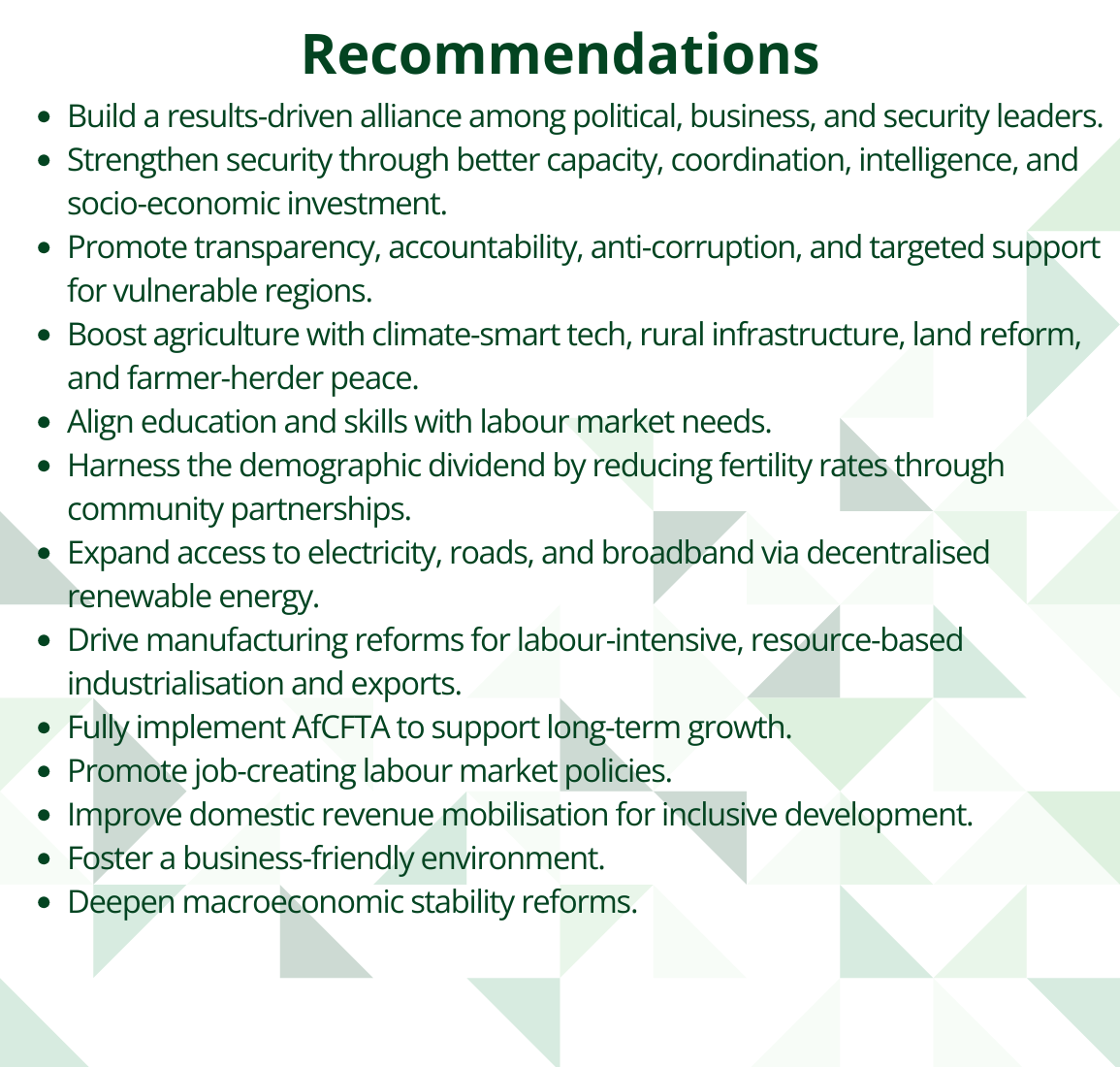
Page information
Contact at AFI team is Jakkie Cilliers
This entry was last updated on 16 October 2026 using IFs v8.72.
Donors and sponsors


Reuse our work
- All visualizations, data, and text produced by African Futures are completely open access under the Creative Commons BY license. You have the permission to use, distribute, and reproduce these in any medium, provided the source and authors are credited.
- The data produced by third parties and made available by African Futures is subject to the license terms from the original third-party authors. We will always indicate the original source of the data in our documentation, so you should always check the license of any such third-party data before use and redistribution.
- All of our charts can be embedded in any site.
Cite this research
Jakkie Cilliers (2026) Nigeria Development Futures. Published online at futures.issafrica.org. Retrieved from https://futures.issafrica.org/geographic/countries/nigeria/ [Online Resource] Updated 16 October 2026.